


You can have the smartest people in the room, but if they don’t work well together, things fall apart. That’s not just opinion!
86% of business leaders blame workplace failures on poor teamwork and lack of collaboration.
Think about that.
Not skill gaps. Not a lack of resources. But the way people work together.
This post on teamwork and collaboration statistics is your shortcut to understanding why collaboration matters more than ever, and the numbers that prove it.
If you’re leading a team, joining one, or trying to fix an off-track one, what you’ll find here could shift how you think about working with others for good.
The stats you’ll see here come from verified and reputable sources. And if you want to fact-check or dig deeper, there’s a complete list of references waiting for you at the bottom of this post.
🔑 Key Teamwork & Collaboration Statistics:
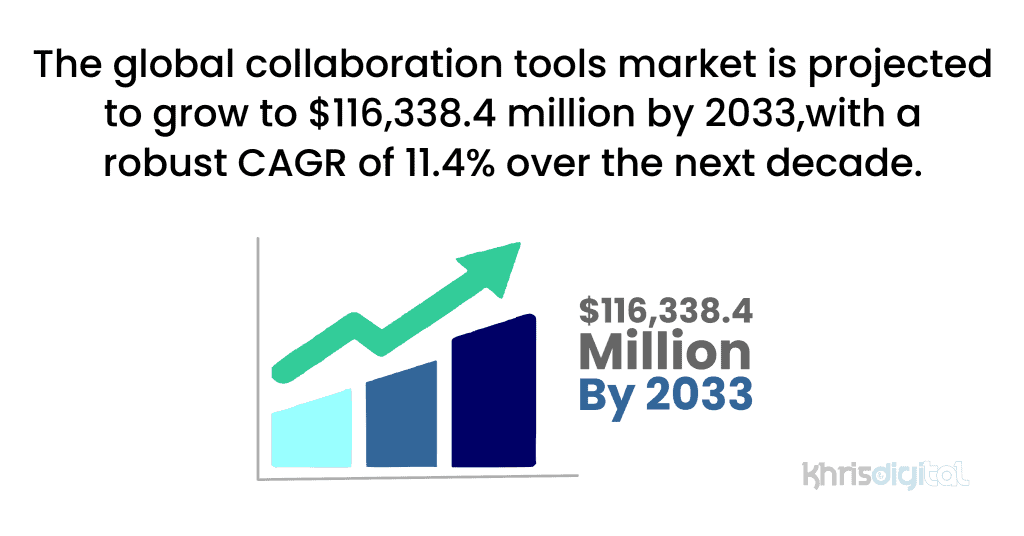
1. The global collaboration tools market is projected to grow to $116,338.4 million by 2033, with a robust CAGR of 11.4% over the next decade.
(Future Market Insights)
That kind of growth doesn’t happen unless something is essential.
An 11.4% annual growth rate signals more than market momentum. It shows a shift in how work gets done as remote teams, cross-functional projects, and faster communication are now business-critical.
Companies that ignore this trend risk falling behind not just in tech but also in teamwork.
2. About 75% of employers agree that teamwork and collaboration are essential in the workplace.
(Queens University of Charlotte)
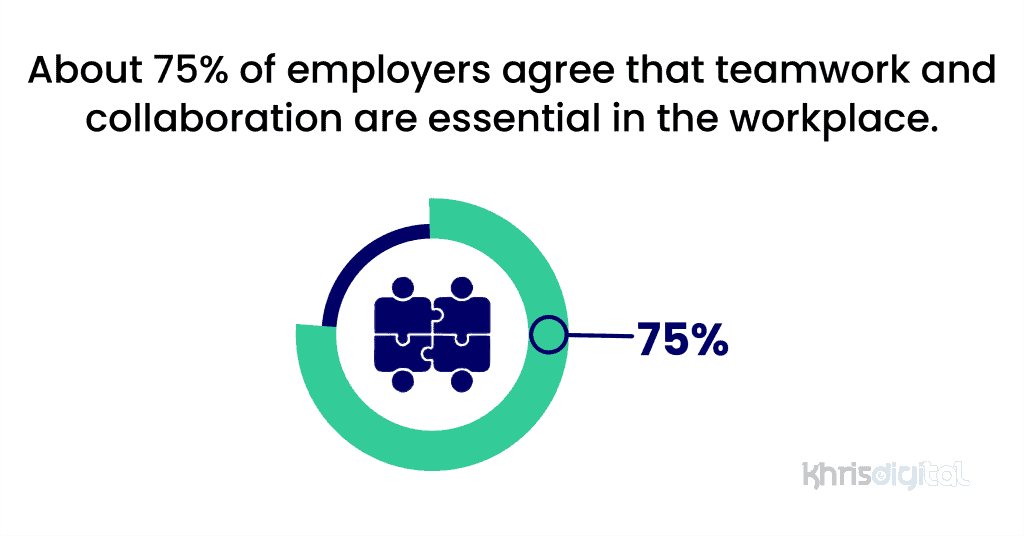
When three out of four employers call something essential, it’s no longer just a “soft skill.” Collaboration shapes how decisions are made, how problems get solved, and how fast teams move.
It’s tied directly to performance, innovation, and retention. In workplaces where teamwork is weak, ideas, execution, and morale slow down.
Employers are catching on. The real question is, are teams keeping up?
3. 86% of business leaders attribute workplace failures to a lack of collaborative teamwork.
(Salesforce)
When failure happens, most leaders aren’t blaming budgets or bad strategy, they’re pointing straight at how people work together.
Poor collaboration breaks trust, causes miscommunication, delays decisions, and kills momentum. It creates silos where problems get hidden and solutions stall. In a high-stakes environment, that’s a recipe for chaos.
Teams that don’t click, don’t win.
4. 73% of employees who engage in collaborative work report improved performance, while 60% say it sparks their innovation.
(Deloitte)

Collaboration pushes people to do better work. When employees collaborate, they’re not just more productive, they’re more creative.
That’s because bouncing ideas off others, solving problems together, and seeing different perspectives unlock new thinking. It fuels momentum. You get faster decisions, more innovative solutions, and more energy in the room.
5. 97% of employees and employers agree that lack of collaboration undermines workplace success.
(Fierce Inc)

When 97% of people agree on something, it’s not a debate, it’s a fact. Collaboration is the backbone of workplace success. Without it, misalignment creeps in, goals get missed, and frustration builds.
This kind of near-unanimous agreement is rare, and it should be a red flag for any organization not prioritizing collaboration right now.
6. Team collaboration can result in a 41% increase in customer satisfaction.
(Institute for Collaborative Working)
That 41% boost isn’t magic. It’s the result of internal alignment showing up externally. When departments share info and solve problems together, customers get what they need without the runaround.
The smoother the inside works, the happier the people on the outside. Simple as that.
7. 70% of employees believe better collaboration can have a positive impact on employee productivity and time savings.
(Alludo)
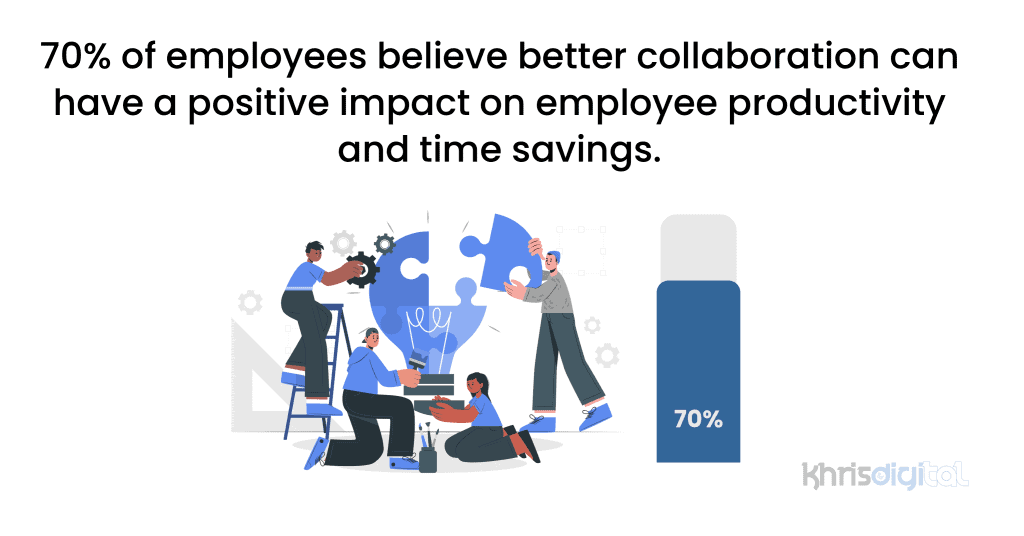
When collaboration works, work feels lighter. Fewer back-and-forths. Less duplicate effort. Faster decisions.
That’s what drives productivity and saves time. Most employees know this as they’ve seen how the right tools and teamwork can turn a cha