


In the world’s most powerful companies, something’s quietly changing the culture from the inside.
It’s not a new app. Not another leadership seminar. It’s employee resource groups, and they’re everywhere.
Over 90% of Fortune 500 companies now have ERGs, and that statistic alone should make people pay attention. These aren’t just casual meetups or internal social clubs. They’re strategic. Purpose-driven.
And in many cases, they’re helping reshape how employees experience belonging, support, and leadership.
Still, most people only hear surface-level praise about ERGs. What’s missing? The data.
This article breaks down the most eye-opening verified Employee Resource Groups statistics, pulled from trusted, reputable sources (linked at the bottom), to show the real impact these groups are having, one stat at a time.
1. 90% of Fortune 500 companies have ERGs.
(McKinsey)

This number sends a clear message that employee resource groups aren’t optional anymore. When 9 out of 10 of the world’s most influential companies make space for ERGs, it shows these groups are a core part of modern workplace strategy.
This stat also hints at the competitive edge ERGs bring, from talent retention to innovation. Companies without them risk falling behind in both culture and performance.
2. 96% of respondents shared that their ERGs are “very effective” or “somewhat effective” in achieving their goals.
(ACCP)
This stat cuts through the noise. Nearly all ERG leaders and participants believe their groups are working. Whether it’s boosting engagement, advancing equity, or building community, ERGs aren’t just well-intentioned; they’re delivering results.
The high percentage also suggests that ERGs, when properly supported, consistently meet the needs they were designed to address.
3. ERGs are more likely to be effective in community building than any other dimension.
(McKinsey)
Community is where ERGs shine brightest. While many aim to influence policy or leadership development, their strongest and most consistent impact is creating safe, supportive spaces.
This stat shows that ERGs are most effective at helping employees feel seen, heard, and connected, especially those from underrepresented groups. It’s the human layer that makes everything else possible.
4. There are 5 ERG dimensions: leadership connection, external engagement, employee community building, allyship, and career advancement.
(McKinsey)
These five dimensions define what ERGs aim to achieve. Leadership connection ensures ERGs have executive backing. External engagement ties their work to broader community or brand goals. Community building creates safe internal networks.
Allyship expands support beyond identity groups. Career advancement focuses on growth and opportunity. Together, these dimensions give ERGs a clear framework for impact across both culture and business.
5. 66% of employees believe that their ERG is effective at creating a sense of community.
(Forbes)
That’s a strong sign that these groups aren’t just performative. They’re creating real bonds, safe spaces, and support systems that employees feel and value. In a time when connection at work is more important than ever, this kind of feedback matters.
6. 90% of organizations use their ERGs to assist new recruits during the onboarding process.
(McKinsey)
Most companies now tap into ERGs to welcome new hires, and it’s a smart move. ERGs give new employees an immediate sense of belonging, especially those from underrepresented backgrounds.
They connect recruits to peers, mentors, and support systems from day one.
7. 75% of companies with ERGs list employee retention as a benefit.
(Forbes)
When employees feel supported, seen, and part of a community, they’re more likely to stay. ERGs offer that support, often becoming a key reason people choose to grow within a company rather than leave it.
8. Employees who consider their ERGs effective report higher inclusion scores (83%) compared to those who view them as ineffective (59%).
(McKinsey)
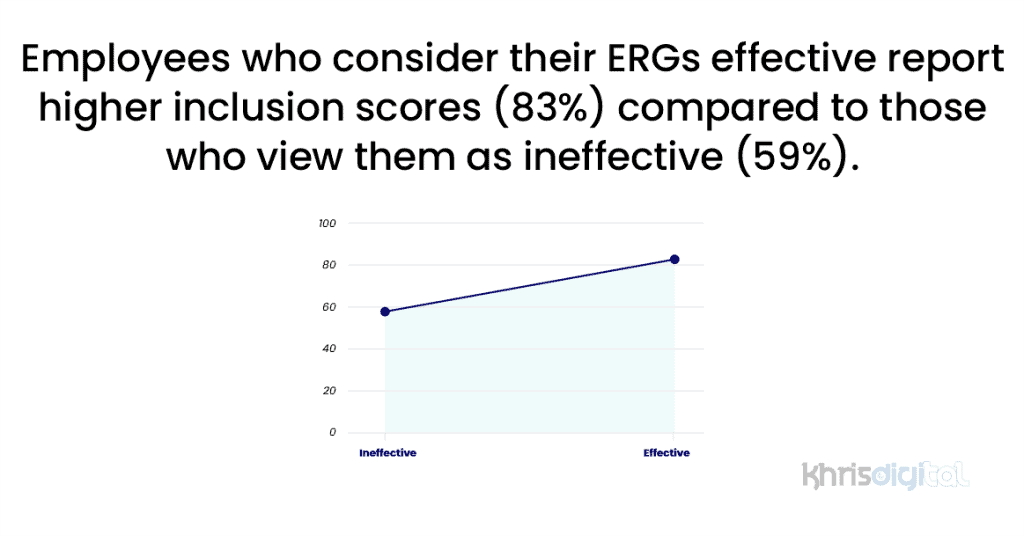
When ERGs are seen as effective, employees feel significantly more included. That gap shows how much influence a well-run ERG can have on workplace culture. It’s not just about having a group, it’s about making sure it works.
9. ERGs can contribute to a 20% sales and productivity increase.
Companies have seen up to a 20% boost in sales and productivity when ERGs are active and supported. The reason is simple: when employees feel included, engaged, and heard, they perform better. That energy translates into real business gains.
10. The most common ERGs serve LGBTQIA+, women, Black, Asian American/Pacific Islander, and Latina/Hispanic employees.
(The Rise Journey)
These groups reflect where workplace support is most urgently needed. ERGs for LGBTQIA+ employees, women, and communities of color are the most widely established across companies.
It shows that organizations are responding to historical gaps in representation and equity, starting with the groups that have often been left out.
11. 67% of ERG group leads spend an average of 0–3 hours per week fulfilling ERG-related duties.
Most ERG leaders are balancing their roles with limited time. Two-thirds spend just a few hours a week on ERG responsibilities, often unpaid and on top of their day jobs. The demand for ERG impact is growing, but the time and support leaders receive often aren’t.
12. 100% of the DiversityInc Top 50 have ERG programs.
(MentorCliQ)
Every single company on the DiversityInc Top 50 (which ranks the best in diversity and inclusion) has ERGs in place. It shows that ERGs are a key part of any serious DEI strategy. If a company wants to lead in inclusion, having ERGs isn’t optional. It’s expected.
13. 80% or more of the DiversityInc Top 50 companies have ERGs for the following affinities and demographics: Women, LGBTQIA+, People with Disabilities, Veterans, Black/African American, and Hispanic/Latino.
(MentorCliQ)
These aren’t just the most common ERGs; they’re a baseline among top diversity-focused companies.
Over 80% of the DiversityInc Top 50 have ERGs supporting these six groups. It shows a shared understanding among leading companies of where support is most needed and who must be prioritized in DEI efforts.
14. Companies that support Cultural and Religious ERGs tend to have the highest average profits.
(MentorCliQ)
Only 17 of the DiversityInc Top 50 support Cultural and Religious ERGs, but those companies report the highest profits. These groups include Middle Eastern, Indigenous American, Christian, Muslim, Jewish, and Hindu employees.
It suggests that when companies create space for deeper identity and belief-based inclusion, the business benefits follow.
15. 36% of DiversityInc Top 50 companies prefer the term “Employee Resource Groups,” while 32% opt for the term “Business Resource Groups”.
(MentorCliQ)
The terminology matters. “Employee Resource Group” emphasizes support and belonging. “Business Resource Group” leans into impact and strategy.
This near-even split shows how companies frame ERGs as either people-first communities or business-driving partners. Both labels reflect different but valid approaches to inclusion.
16. The average number of ERGs at DiversityInc Top 50 companies is around 10.
(MentorCliq)
Top-performing companies don’t stop at one or two ERGs. On average, they have about 10. This shows a broad commitment to inclusion across identities, interests, and experiences.
It also reflects the complexity of modern workforces and the need for multiple spaces where different communities can connect and lead.
17. 65% of employees who participate in ERGs say that these groups positively impact their careers.
(Institute for Diversity Certification)
ERGs are good for community and for careers. Whether it’s through mentorship, leadership experience, or visibility, ERGs are creating real career pathways for those who get involved.
18. 91% of surveyed employees say ERGs boost company culture.
(Workramp)
That means stronger trust, deeper connection, and a workplace that feels more human. ERGs shape how people experience the company every day.
19. Employees not in an ERG were 1.4x more likely to report feeling a lack of belonging within their organization.
(Perceptyx)
Employees outside of ERGs are significantly more likely to feel isolated.
ERGs clearly fill a gap. They create spaces where people feel seen, supported, and part of something. Without that, it’s easier to feel disconnected from the workplace culture.
20. LGBTQ+ ERGs are present in 89% of companies, a 16% increase from 2022.
(The Rise Journey)
Support for LGBTQ+ employees is growing fast. In just a year, LGBTQ+ ERG presence jumped by 16%, bringing it to 89% of companies. This growth shows rising recognition of the need for dedicated spaces and advocacy.
It also signals progress as more companies are stepping up to create inclusive environments where LGBTQ+ employees feel seen and supported.
21. ERGs for women and Black or African American employees rose to 75% and 56%.
(The Rise Journey)

More companies are investing in targeted support. These increases reflect a growing commitment to addressing systemic gaps in representation, leadership, and equity within the workplace.
22. Disability ERGs saw an 18% increase, reaching 39%.
(The Rise Journey)
Disability inclusion is finally gaining traction. That growth signals a shift, as more organizations are recognizing the need to support employees with disabilities through dedicated groups, resources, and visibility.
23. 79% of employees stated that ERGs improve employee well-being and mental health.
(Workramp)
These groups offer more than networking or leadership exposure. They provide a space to be understood, to connect, and to release stress. For many, that emotional support translates into better mental health and overall well-being at work.
24. 75% of employees said ERGs help with employee retention.
(Workramp)
These groups build loyalty by creating connections, offering support, and making workplaces feel more human, especially for those who might otherwise feel overlooked.
25. 55% of employees reported that ERGs participate in the recruiting and hiring process.
(Workramp)
Over half of employees say ERGs are involved in hiring, and that’s a big deal. Their input helps companies attract diverse talent and build trust from the start. ERG involvement also signals that inclusion is baked into how the company grows its teams.
26. 53% of employees stated that ERGs are used as internal focus groups for HR.
(Workramp)
HR teams use these groups to test ideas, gather feedback, and understand employee needs from the inside. It turns ERGs into sounding boards that help shape policies, programs, and culture in real time.
27. 53% of surveyed companies say their HR department manages their ERG program.
(Salesforce)

In most companies, ERGs fall under HR’s leadership. That makes sense as HR is often responsible for culture, engagement, and DEI. But it also raises questions about structure and support.
When HR leads ERGs, it’s crucial that they treat them as strategic assets, not just side projects.
28. Only 13% of employees feel that resource groups are ineffective.
(Perceptyx)

The vast majority believe ERGs are doing something right. While there’s always room to improve, this low percentage shows that ERGs are meeting real needs across a wide range of workplaces.
29. 82% of the surveyed companies designate a budget for their ERGs.
(Salesforce)
That shows these programs are supported. Funding helps ERGs run events, develop leaders, and make a visible impact. Without a budget, it’s harder for these groups to grow or be taken seriously.
30. 87% say they promote cultural activities for all employees.
(Salesforce)
Most ERGs go beyond internal support and they promote cultural awareness across the whole company. These events foster understanding, break down bias, and create moments that bring people together.
31. 81% of companies say they participate in volunteer activities coordinated by ERGs.
(Salesforce)
ERGs drive action in the community. It’s a powerful way to align values with real-world impact, strengthening both company culture and social responsibility.
32. 74% of companies say they host workshops for all employees.
(Salesforce)
Most companies with ERGs are using them as platforms for education. These groups are helping spread awareness, build skills, and spark important conversations. It’s one way ERGs are creating ripple effects beyond their core members.
33. Companies with ERGs experienced 18% higher employee productivity than those without.
(Aquent)
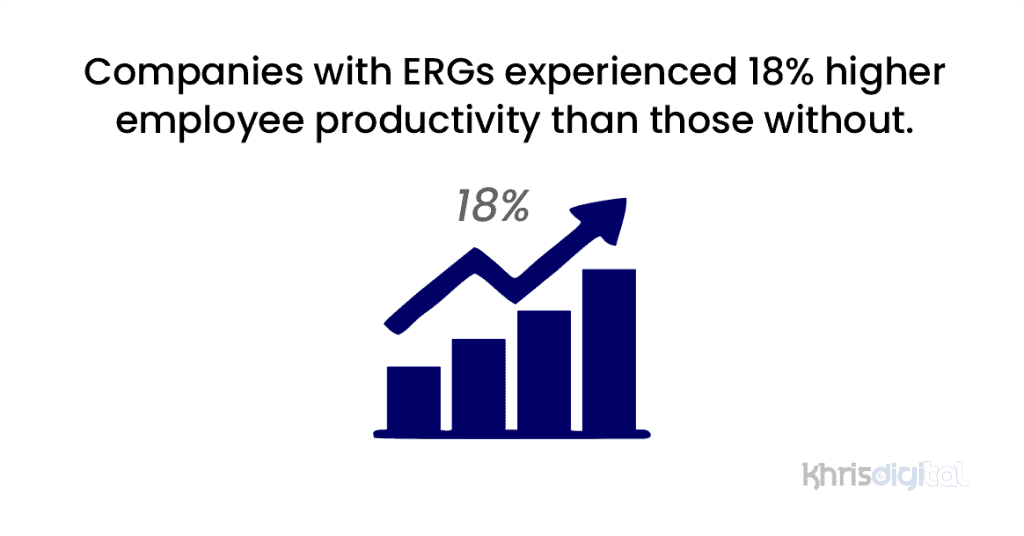
ERGs make employees feel better and help them perform better, too. That’s a clear signal that inclusion and engagement directly impact output. When people feel connected and supported, they bring more energy and focus to their work.
34. Microsoft’s “Women in Technology” ERG led to a 40% increase in female representation in technical roles within five years.
(Aquent)
This is what intentional ERG leadership can do. It’s a clear example of how targeted support and advocacy can drive real, measurable change in industries where women are still underrepresented.
35. 52% of seasoned professionals said an ERG positively impacted their decision to apply for a role.
Over half of seasoned professionals say knowing a company had ERGs influenced their decision to apply. For experienced talent, ERGs signal that the organization values inclusion, community, and real employee support.
36. 21% of ERG groups have an annual budget between $1,500 and $5,000.
(The Rise Journey)
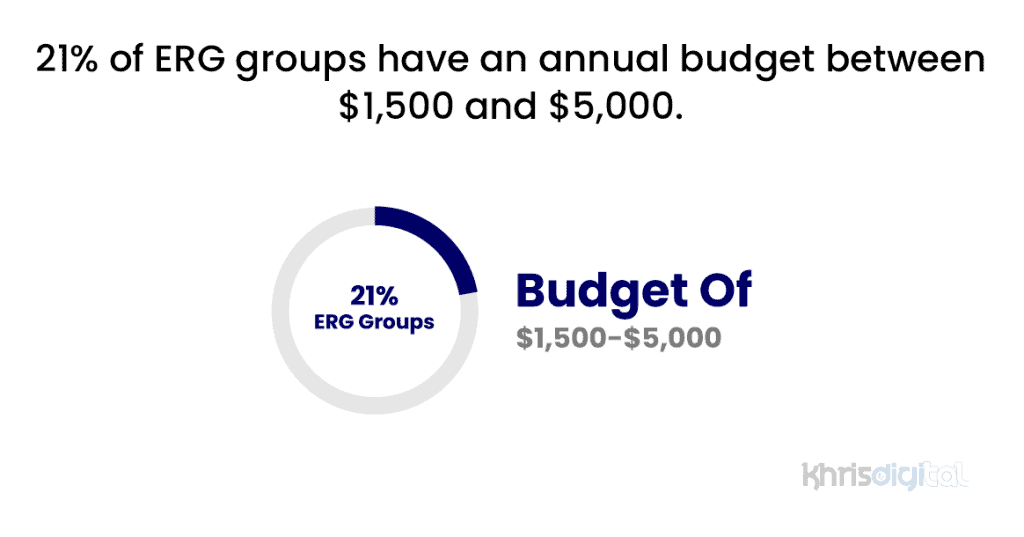
Not every ERG operates on a large budget. In fact, 21% run with just $1,500 to $5,000 per year. While that may seem modest, it’s often enough to host events, run programs, and provide basic resources.
But it also highlights how many ERGs are expected to deliver impact with limited financial support.
37. 21% of ERG groups do not have a budget at all.
(The Rise Journey)
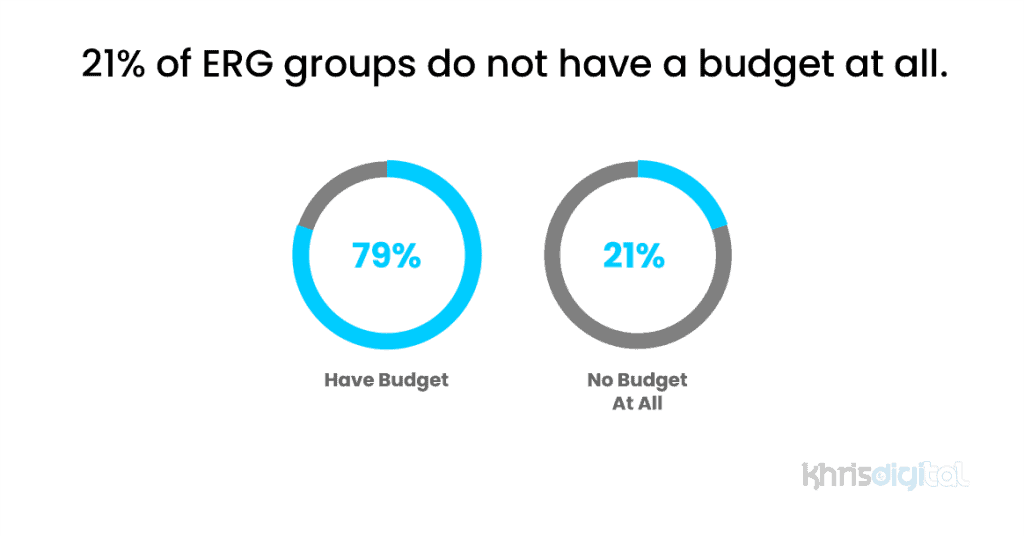
That means no funds for events, programs, or even basic logistics. It’s a clear disconnect as companies expect ERGs to drive inclusion and impact, yet many offer no financial backing. Without a budget, their reach and effectiveness are limited from the start.
38. 17% of ERG groups have a budget of $5,000 to $10,000.
(The Rise Journey)

This level of funding allows for more robust programming, guest speakers, workshops, and outreach. It’s enough to move beyond the basics and create more consistent, visible impact throughout the organization.
39. 28% of organizations increased their ERG investment by 22%, with an average budget of $20,000 – $50,000.
(The Rise Journey)
Some companies are putting real money behind their commitment. That kind of investment signals ERGs are being taken seriously, not just as employee groups, but as strategic contributors to culture and business outcomes.
40. ERG leads are increasingly being compensated for their time, rising from 6% in 2020 to 42% in 2022.
(The Rise Journey)
More companies are finally recognizing the labor behind ERG leadership. Just 6% of ERG leads were paid in 2020. By 2022, that number jumped to 42%.
The average compensation is just over $2,000 annually, not huge, but a step toward valuing the time, effort, and emotional labor these leaders put in.
41. Only 24% of organizations include ERG leadership in performance reviews, though 47% say they’d like to.
(The Rise Journey)
Most ERG leaders aren’t receiving formal credit for their work. Only 24% of companies include ERG leadership in performance reviews, despite the time and impact involved.
The good news? Nearly half say they want to change that, suggesting a shift toward treating ERG leadership as a real, measurable contribution.
42. 53% of ERG leads have individual goals, and only 36% of groups have collective goals.
(The Rise Journey)
Most ERG leads are working toward personal targets, but fewer groups have shared, aligned goals. That lack of collective focus can limit impact. Without unified objectives, it’s harder to track progress, measure success, or build momentum as a group.
43. According to 41% of respondents, the primary business case for DEI is enhancing employee well‑being.
(Workday)
A significant portion of business leaders see employee well‑being as the main reason to invest in diversity, equity, and inclusion.
In surveys of DEI decision‑makers, 41% say improving staff well‑being is the top business case for DEI efforts, ahead of some traditional drivers like recruitment or innovation.
This indicates that companies increasingly view DEI not just as a moral or compliance initiative, but as a core factor in supporting employees’ mental and emotional health at work.
44. 60% of respondents found it challenging to record DEI data.
(Workday)
A majority of organizations struggle to track diversity, equity, and inclusion data. This challenge often stems from gaps in tools, processes, and transparency, making it harder for companies to measure progress or understand where improvements are needed.
Better data systems and clearer practices are essential for DEI efforts to be strategic and accountable.
45. 39% of respondents have no strategic approach to diversity, equity, inclusion, and belonging.
(Workday)
That means nearly 4 in 10 are operating without a roadmap, no defined goals, metrics, or structured plans. This disconnect weakens progress and risks turning DEI into surface-level talk rather than meaningful action.
46. While 36% say their organizations value diversity, 18% believe there’s not enough focus on recognizing differences.
(Workday)
This gap shows that even when DEI messaging exists, it doesn’t always translate into real recognition or everyday inclusion. Companies need more than values on paper; they need actions people can feel.
47. Companies that support cultural and religious Employee Resource Groups tend to have the highest average profit.
(MentorCliQ)
Supporting cultural and religious ERGs is good business. Companies that make space for groups like Muslim, Jewish, Hindu, Indigenous, or faith-based ERGs tend to see higher average profits.
It shows that deeper inclusion leads to stronger engagement, better decision-making, and ultimately, stronger financial results.
48. About 80% of companies are just going through the motions of having ERGs and not holding themselves accountable.
(PR Newswire)
Most companies have ERGs, but many aren’t doing the work to support them meaningfully.
ERGs in name only won’t move the needle. Without action, structure, and leadership buy-in, the presence of an ERG means little to the people it’s meant to serve.
49. Microsoft runs nine ERGs, including Asians at Microsoft, Blacks at Microsoft, Disability at Microsoft, Women at Microsoft, the Families ERG, and the Military ERG.
(Microsoft)
Microsoft’s ERG network is wide and well-defined. With nine ERGs covering race, gender, disability, military service, and family life, the company shows how a structured, identity-based approach can create space for diverse communities.
It also reflects Microsoft’s commitment to inclusion as an embedded part of its culture, not just a side initiative.
50. Cision reported a 20% increase in employee resource group membership.
(Cision)
More employees are getting involved. As more people join, ERGs gain greater visibility, influence, and momentum, making them even more effective at shaping workplace culture and community.
51. At Cision, almost 2,000 employees engage in DEI‑specific webinars and events.
(Cision)
At Cision, DEI isn’t just lip service; thousands of employees are actively involved. This level of participation reflects a workplace culture that values learning, awareness, and collective involvement in DEI efforts.
52. 981 employees at Cision actively participated in four ERGs.
(Cision)
With participation across four different groups, this level of engagement shows how ERGs can become a core part of company culture when they’re accessible, supported, and aligned with employee interests.
53. Gen Z employees are 70% more likely to apply to a company with ERGs.
(Everyone Social)
It shows that younger workers are looking for belonging, representation, and a company that lives its values. ERGs help send that message loud and clear.
54. Over 70% of companies rely on their ERGs to build a workforce that reflects the demographics of their customer base.
(Everyone Social)
It’s a smart move as diverse teams better understand and connect with diverse markets. ERGs provide insight into culture, language, and lived experience that can guide hiring, marketing, and decision-making to reflect real-world demographics.
55. Since starting ERGs, AT&T has reported an 85.6% retention rate for its Black employees.
(Harvard Business Review)
AT&T’s ERGs are doing more than creating community; they’re helping people stay. With a 85.6% retention rate among Black employees, the company demonstrates how ERGs can directly influence retention, especially for underrepresented groups.
It proves that when employees feel supported and valued, they’re more likely to grow with the company.
56. 56% of workers say that companies focusing on DEI is a “good thing”.
(Pew Research Center)
A majority of workers view workplace diversity, equity, and inclusion efforts positively.
This reflects broad support for companies that prioritize inclusive policies, diverse representation, and equitable practices, even as opinions vary across groups and over time.
57. Fewer than half of White workers (47%) consider DEI a “good thing,” while 21% call it a “bad thing”.
(Pew Research Center)
Opinions about workplace diversity, equity, and inclusion vary sharply by race. In a Pew Research Center survey, only 47% of White workers said that focusing on DEI at work is a good thing, and 21% said it’s a bad thing.
That contrasts with workers of other racial and ethnic groups, who were much more likely to view DEI positively.
This split shows how perceptions of DEI can differ significantly across demographic lines, even as overall support for inclusion initiatives remains majority-positive.
58. 78% of Black employees say DEI is a good thing, compared to 65% of Hispanic and 72% of Asian employees.
(Pew Research Center)
The support for DEI is clear among employees of color. 78% of Black employees say focusing on DEI at work is a good thing, and only 1% say it’s a bad thing.
Among Hispanic workers, 65% view it positively, while just 5% view it negatively. For Asian workers, it’s 72% positive and 10% negative.
These numbers show that for many underrepresented groups, DEI is seen as a meaningful and necessary part of workplace equity.
59. 61% of employees say they haven’t received any DEI training.
(Culture Amp)
With more than half of employees lacking DEI training, gaps in understanding are inevitable. This lack of education helps explain why some workers, especially White employees, may struggle to see the value of DEI efforts.
Without context, training, or dialogue, DEI can feel abstract or unnecessary. The solution? Better education that connects inclusion to real workplace outcomes.
60. Companies with more women leaders are more likely to rank in the top 10 for financial performance.
(DDI)
The data is clear that companies with more women in leadership perform better. Those with higher percentages of female leaders are significantly more likely to land in the top 10 for financial performance.
Gender-diverse leadership brings broader perspectives, stronger decision-making, and better representation, which fuel smarter, more inclusive growth.
61. 75% of companies have a DEI budget, and 35% plan to increase it.
(Workday)
In a survey of over 3,000 HR leaders, most companies confirmed they’re backing DEI with real dollars. 75% already have a dedicated DEI budget, and 35% plan to increase it within the year.
This shows that despite shifting public narratives, many companies are still prioritizing and expanding their inclusion efforts.
62. Only 20% of companies are measuring the impact of their DEI initiatives, including ERGs.
(Workday)

Most companies are investing in DEI, but few are tracking results. That means many are spending time and money without knowing what’s working or what’s not. Without metrics, progress becomes guesswork.
Final Thoughts on Employee Resource Groups Statistics
The numbers don’t lie.
ERGs are reshaping the workplace from the inside out. From boosting retention and productivity to building community and advancing careers, the data proves that these groups aren’t just about belonging. They’re about business.
But impact doesn’t happen by accident. ERGs thrive when they’re funded, supported, measured, and treated as essential.
That means giving leaders time, pay, and visibility. It means setting real goals. And it means making ERGs part of the company’s core strategy, not just a side program.
The future of work is more inclusive, and ERGs are leading the way. The question is no longer if they matter; it’s whether companies are doing enough to help them succeed.
FAQs on ERG Statistics
What is the Purpose of Employee Resource Groups?
The purpose of employee resource groups is to foster a diverse, inclusive workplace culture.
What are the 4C’s Framework for ERGs?
The 4C’s framework for ERGs are culture, career, commerce, and community.
What are the Benefits of ERG?
The main benefit of ERG is to create a sense of community and belonging. ERGs also enhance professional development, offering mentorship and leadership opportunities.
What is an example of an ERG?
An example of an Employee Resource Group (ERG) could be a Women in Tech group within a technology company. This group would aim to support and empower women in a male-dominated industry by providing networking opportunities, organizing events, and fostering a sense of community.
Sources:
Check out my other Statistics round up:
