

B2B used to be all handshakes, decks, and emails. Not anymore.
These days, if a brand isn’t using video, it’s invisible.
Video is how today’s buyers learn, compare, and decide. It’s fast, persuasive, and everywhere. Around 70% of B2B buyers and researchers watch videos at some point during their buying journey. That’s a wake-up call!
Smart brands aren’t asking if video works. They’re asking how to use it better.
This post is packed with over 100 hard-hitting B2B video marketing statistics that show exactly where B2B video is heading and how the best marketers are staying ahead.
Every number comes from a trusted, verified source, and the full list of citations is available at the end of the article.
1. B2B video content now achieves an average engagement rate that is 1200% higher than text and image-based content combined.
(Vidico)
That number is a complete shift in how people interact with content. In a noisy B2B landscape where attention is currency, video performs better and dominates. Buyers scroll past static posts, skim blogs, and ignore whitepapers.
But video? They stop, watch, and engage. It combines storytelling, visuals, and sound, which triggers stronger emotional responses and longer attention spans.
For B2B marketers, if the goal is to get noticed, clicked, or remembered, video is the new baseline.
2. Viewers retain 95% of a message when they watch it in a video compared to just 10% when reading text.
(Forbes)
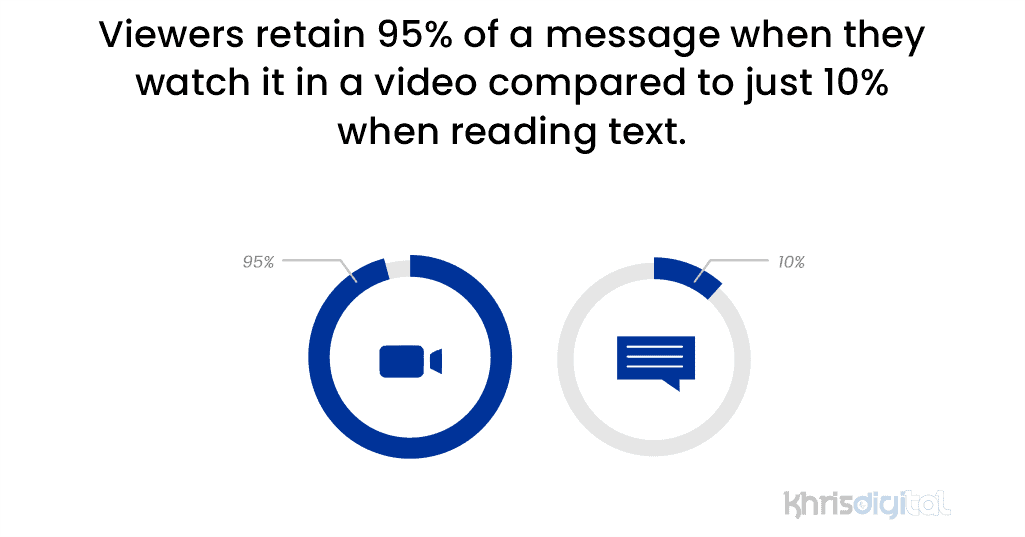
Retention is where video quietly outperforms every other format. B2B buyers are often dealing with complex ideas, long buying cycles, and multiple stakeholders.
Video makes information easier to absorb and harder to forget by combining visuals, spoken explanations, and real-world context.
This is especially important for product walkthroughs, onboarding content, and thought leadership, where clarity matters more than volume. When viewers remember what they watched, brands stay top of mind long after the content ends.
3. 96% of individuals rely on videos to gain deeper insights into products and services, choosing to watch videos rather than read manuals or text instructions.
(Vidico)
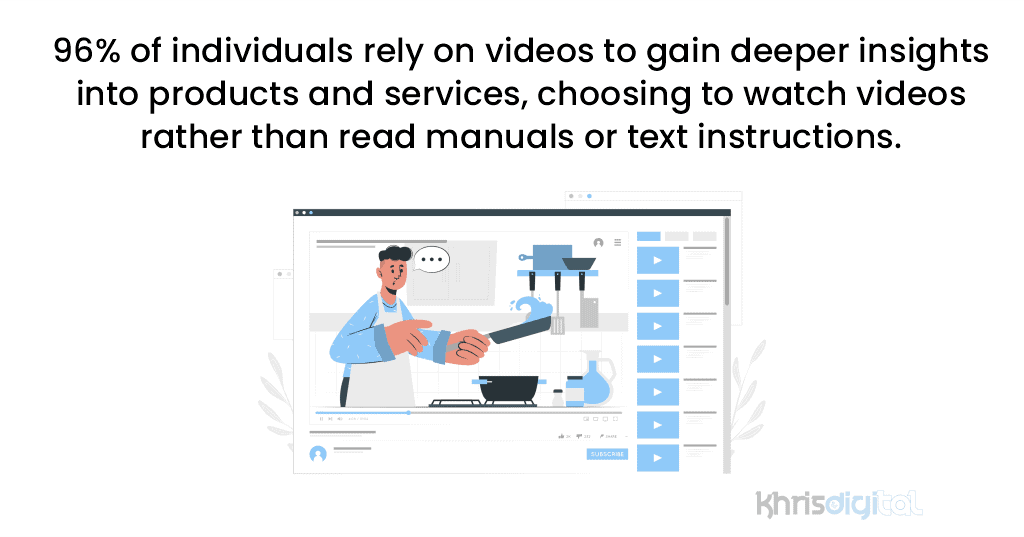
People don’t want to dig through PDFs or dense text when trying to understand a product. They want quick, visual explanations that show rather than tell.
In the B2B space, where products are often technical or abstract, video bridges the gap between curiosity and comprehension. It reduces friction, speeds up learning, and builds confidence in the buying decision.
For companies selling software, tools, or platforms, customers prefer to learn through explainer videos or visual demos.
4. The average length of B2B marketing videos consumed has decreased from 6 minutes in 2022 to 4 minutes and 15 seconds now.
(Zebra Cat)
Long-winded videos are losing ground to tighter, more focused content that gets to the point quickly. It doesn’t mean depth is no longer valued. It means the packaging needs to be sharper.
Marketers should front-load key messages, cut filler, and focus each video on a single idea. Shorter videos are easier to finish, easier to share, and more likely to drive action.
5. 81% of businesses use video for marketing.
(Neighborhood)
Video has officially moved from experimental to essential. This stat signals that most brands already recognize the power of video to educate, engage, and convert.
For B2B marketers still lagging, the takeaway is clear. Not using video puts a company at an immediate disadvantage. It means missing out on reach, relevance, and results in a content landscape that increasingly favors motion over static.
6. Video is a crucial component of any marketing plan, according to 96% of marketers.
(HubSpot)
When nearly all marketers agree on something, it’s worth paying attention. Marketers see video as a central part of strategy, not just a content add-on. It plays a role across the entire funnel, from awareness to retention.
Whether it’s a brand story, a case study, or a how-to tutorial, video helps simplify messages and connect with audiences faster.
7. 87% of B2B marketers integrate video into their marketing strategies.
(Gumlet)
Marketers in this space know they’re dealing with informed buyers, long sales cycles, and complex offerings.
Video helps cut through that complexity and build trust faster. From product demos to customer testimonials, it allows brands to show value rather than just talk about it.
8. 73% of B2B decision-makers prefer videos under 60 seconds when viewing on mobile.
(Black Rabbit)
Mobile has changed how business content is consumed. Short videos win because they fit into busy schedules and smaller screens without losing impact. B2B decision-makers want quick clarity, not drawn-out pitches.
This stat is a clear signal to marketers to optimize for mobile-first viewing with tighter scripts, vertical formats, and fast-loading content. The message needs to land in under a minute, or it risks being skipped.
9. Mobile devices account for 48% of all B2B video views, up from 34% in 2021.
(Zebra Cat)
The jump in mobile viewership shows just how quickly B2B habits are shifting. Decision-makers aren’t just watching videos at their desks anymore. They’re watching on mobile during commutes, between meetings, or while multitasking.
10. Around 70% of B2B buyers and researchers engage with videos during their purchasing journey.
(Vidico)

Video plays a direct role in influencing buying decisions. Buyers are using video to research solutions, evaluate vendors, and build internal purchase cases.
That means every video, from explainer to testimonial, can impact the outcome. For marketers, this is a strong push to align video content with each stage of the buyer journey.
11. 70% of B2B buyers report that watching a video helped them make a purchasing decision faster.
(Zebra Cat)