
67+ Incredible B2B Video Marketing Statistics (Updated)

B2B Video Marketing Statistics

B2B used to be all handshakes, decks, and emails. Not anymore.

These days, if a brand isn’t using video, it’s invisible.

Video is how today’s buyers learn, compare, and decide. It’s fast, persuasive, and everywhere. Around 70% of B2B buyers and researchers watch videos at some point during their buying journey. That’s a wake-up call!

Smart brands aren’t asking if video works. They’re asking how to use it better.

This post is packed with over 100 hard-hitting B2B video marketing statistics that show exactly where B2B video is heading and how the best marketers are staying ahead.

Every number comes from a trusted, verified source, and the full list of citations is available at the end of the article.

Key Statistics on B2B Video Marketing

  • B2B video content now achieves an average engagement rate that is 1200% higher than text and image-based content combined.
  • Viewers retain 95% of a message when watching a video, compared to just 10% when reading text.
  • 96% of individuals rely on videos to gain deeper insights into products and services
  • 87% of B2B marketers integrate video into their marketing strategies.
  • 73% of B2B decision-makers prefer videos under 60 seconds when viewing on mobile.
  • Around 70% of B2B buyers and researchers engage with videos during their purchasing journey.
  • 52% of B2B marketers say video is the content type with the best ROI.
  • 85% of B2B marketers say video is an effective way to get online attention.
  • Product demos (39%), product reviews (39%), and tutorials (33%) are the top video types watched by B2B buyers.
  • 80% of B2B marketers measure the success of their video marketing efforts through engagement metrics, such as views, likes, and shares.

1. B2B video content now achieves an average engagement rate that is 1200% higher than text and image-based content combined.

(Vidico)

That number is a complete shift in how people interact with content. In a noisy B2B landscape where attention is currency, video performs better and dominates. Buyers scroll past static posts, skim blogs, and ignore whitepapers.

But video? They stop, watch, and engage. It combines storytelling, visuals, and sound, which triggers stronger emotional responses and longer attention spans.

For B2B marketers, if the goal is to get noticed, clicked, or remembered, video is the new baseline.

2. Viewers retain 95% of a message when they watch it in a video compared to just 10% when reading text.

(Forbes)
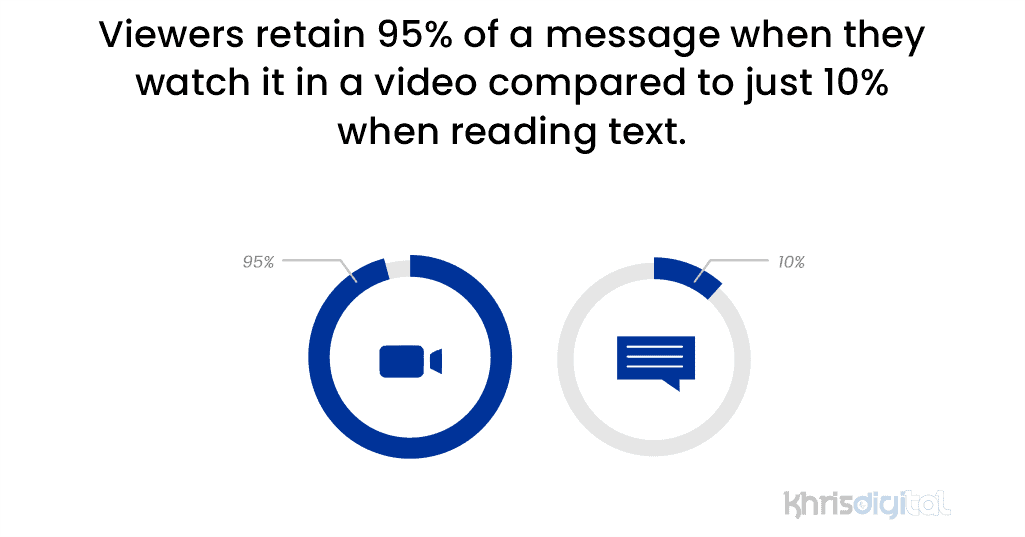
Retention is where video quietly outperforms every other format. B2B buyers are often dealing with complex ideas, long buying cycles, and multiple stakeholders.

Video makes information easier to absorb and harder to forget by combining visuals, spoken explanations, and real-world context.

This is especially important for product walkthroughs, onboarding content, and thought leadership, where clarity matters more than volume. When viewers remember what they watched, brands stay top of mind long after the content ends.

3. 96% of individuals rely on videos to gain deeper insights into products and services, choosing to watch videos rather than read manuals or text instructions.

(Vidico)
People don’t want to dig through PDFs or dense text when trying to understand a product. They want quick, visual explanations that show rather than tell.

In the B2B space, where products are often technical or abstract, video bridges the gap between curiosity and comprehension. It reduces friction, speeds up learning, and builds confidence in the buying decision.

For companies selling software, tools, or platforms, customers prefer to learn through explainer videos or visual demos.

4. The average length of B2B marketing videos consumed has decreased from 6 minutes in 2022 to 4 minutes and 15 seconds now.

(Zebra Cat)

Long-winded videos are losing ground to tighter, more focused content that gets to the point quickly. It doesn’t mean depth is no longer valued. It means the packaging needs to be sharper.

Marketers should front-load key messages, cut filler, and focus each video on a single idea. Shorter videos are easier to finish, easier to share, and more likely to drive action.

5. 81% of businesses use video for marketing.

(Neighborhood)
Video has officially moved from experimental to essential. This stat signals that most brands already recognize the power of video to educate, engage, and convert.

For B2B marketers still lagging, the takeaway is clear. Not using video puts a company at an immediate disadvantage. It means missing out on reach, relevance, and results in a content landscape that increasingly favors motion over static.

6. Video is a crucial component of any marketing plan, according to 96% of marketers.

(HubSpot)

When nearly all marketers agree on something, it’s worth paying attention. Marketers see video as a central part of strategy, not just a content add-on. It plays a role across the entire funnel, from awareness to retention.

Whether it’s a brand story, a case study, or a how-to tutorial, video helps simplify messages and connect with audiences faster.

7. 87% of B2B marketers integrate video into their marketing strategies.

(Gumlet)
Marketers in this space know they’re dealing with informed buyers, long sales cycles, and complex offerings.

Video helps cut through that complexity and build trust faster. From product demos to customer testimonials, it allows brands to show value rather than just talk about it.

8. 73% of B2B decision-makers prefer videos under 60 seconds when viewing on mobile.

(Black Rabbit)

Mobile has changed how business content is consumed. Short videos win because they fit into busy schedules and smaller screens without losing impact. B2B decision-makers want quick clarity, not drawn-out pitches.

This stat is a clear signal to marketers to optimize for mobile-first viewing with tighter scripts, vertical formats, and fast-loading content. The message needs to land in under a minute, or it risks being skipped.

9. Mobile devices account for 48% of all B2B video views, up from 34% in 2021.

(Zebra Cat)

The jump in mobile viewership shows just how quickly B2B habits are shifting. Decision-makers aren’t just watching videos at their desks anymore. They’re watching on mobile during commutes, between meetings, or while multitasking.

10. Around 70% of B2B buyers and researchers engage with videos during their purchasing journey.

 (Vidico)
Video plays a direct role in influencing buying decisions. Buyers are using video to research solutions, evaluate vendors, and build internal purchase cases.

That means every video, from explainer to testimonial, can impact the outcome. For marketers, this is a strong push to align video content with each stage of the buyer journey.

11. 70% of B2B buyers report that watching a video helped them make a purchasing decision faster.

(Zebra Cat)

Speed matters in B2B, especially when deals involve multiple layers of approval. By clearly showing value, answering objections, and reducing uncertainty, video helps buyers move forward with confidence.

It streamlines the research phase and shortens the sales cycle. For marketers, this reinforces the need for clear, informative video content that removes friction and accelerates buy-in among decision-makers.

12. 52% of B2B marketers say video is the content type with the best ROI.

(LakeOne)

Marketers closely track results, and over half say video outperforms everything else in terms of return on investment.

Video’s ability to capture attention, explain complex ideas, and build trust gives it a strong edge. It works harder across more channels, from social to sales enablement.

13. 85% of B2B marketers say video is an effective way to get online attention.

 (Digital Marketer World)

Standing out online is harder than ever, especially in B2B, where content often looks and sounds the same. Video breaks that pattern. It stops the scroll, delivers the message faster, and encourages engagement.

14. Product demos (39%), product reviews (39%), and tutorials (33%) are the top video types watched by B2B buyers.

(MarketingProfs)

Buyers aren’t looking for hype. They want proof. Demos show how something works. Reviews offer social proof. Tutorials build confidence.

Together, they reduce uncertainty and help buyers feel informed. B2B marketers should focus less on flashy brand videos and more on content that answers real questions. These formats build trust where it matters most.

15. 80% of B2B marketers measure the success of their video marketing efforts through engagement metrics, such as views, likes, and shares.

(LinkedIn)

Engagement is the pulse check for video performance. Views, likes, and shares may not close deals directly, but they reveal how well content is resonating with the audience.

While deeper metrics like lead quality and conversion rates matter too, engagement provides the first signal of what’s working. It’s a fast, accessible way to understand what’s connecting, and what’s getting ignored.

16. According to a recent study by HubSpot, video marketing is a top priority for B2B businesses.

(HubSpot)

When a major platform like HubSpot highlights video as a top priority, it reflects what’s happening across the industry. B2B brands are doubling down on video because it drives results across the funnel, from awareness to retention.  

Prioritizing video means dedicating budget, tools, and talent to create consistent, high-impact assets.

17. B2B marketing experts who harness the power of video experience a jaw-dropping 49% faster growth in revenue compared to those who don’t.

(Vidico)

Revenue growth is the ultimate benchmark, and this stat makes the impact of video impossible to ignore. A 49% boost is a game-changer.

Video helps speed up sales cycles, improve lead quality, and enhance customer education, all of which directly contribute to revenue.

18. 73% of B2B marketers report a positive impact of video on their marketing results.

(Vidico)

Whether it’s increased engagement, better lead quality, or improved conversion rates, video is delivering measurable gains.

This stat confirms that video isn’t a gamble or a guess. It’s a proven tactic that consistently moves the needle. For teams still hesitant to commit, this kind of widespread success should push it higher on the priority list.

19. In the last three months, 88% of B2B buyers surveyed have watched videos to learn about a company’s products or services.

(BrightCove)

It’s faster than reading, easier to follow, and more engaging than static content. For B2B marketers, this means having high-quality product videos is no longer optional. It’s expected.

If a potential customer can’t quickly find a clear, useful video about what a company offers, they’ll move on to one that provides it.

20. LinkedIn is the top B2B social media platform for video marketing, with 87% of B2B marketers publishing videos on it.

(Testimonial Hero)

LinkedIn has become the go-to platform for B2B video content, and for good reason. It’s where decision-makers spend time, engage with industry content, and build professional relationships.

Posting videos on LinkedIn increases visibility, sparks conversations, and drives targeted engagement.

21. Videos posted on company websites generate 48% more engagement than videos shared on social media platforms, which only receive 32% engagement on average.

(Zebra Cat)

This stat flips the common assumption that social media is the best place for video. While social platforms help with reach, company websites deliver deeper engagement.

Visitors there are already interested and more likely to stick around, watch longer, and take action. That makes the website a high-value space for video content like demos, testimonials, or explainer clips.

22. 65% of B2B companies have gained customers through LinkedIn video marketing.

(Vidico)

LinkedIn offers targeted reach, professional context, and a more focused audience than other platforms. When videos speak directly to the problems decision-makers face, they respond.

23. LinkedIn is a primary platform, with 80% of B2B leads generated there and 277% more leads than Facebook/Twitter.

(Kinsta)

This stat cements LinkedIn’s position as the lead-gen powerhouse for B2B. It’s not even close.

The professional mindset of its users makes them more receptive to business-focused content, especially video. For marketers chasing meaningful leads, this is a clear signal to double down where the numbers prove it pays off.

24. 80% of marketers used video in their non-paid advertising campaigns on LinkedIn.

(LinkedIn)

Organic video is getting serious play on LinkedIn, and this stat shows why. It’s cost-effective, highly visible, and well-suited for building authority without burning ad budgets.

25. B2B video use in email campaigns leads to click-through rates 2–3 times higher.

(HubSpot)

Email isn’t dead, it just needs better content.

Adding video turns a standard email into something people actually want to click. It helps explain faster, builds trust quicker, and drives action more effectively than plain text. For marketers, this is an easy win with a big payoff.

26. Relevant embedded video content can increase conversions by 86%.

(HubSpot)

When embedded alongside relevant content, video helps answer questions, ease doubts, and reinforce value at the exact moment a viewer is considering action. That’s why conversions jump.

Whether it’s a product page, landing page, or pricing section, a well-placed video can be the final nudge that turns interest into commitment.

27. 45% of B2B marketers plan to increase their investment in video marketing.

(Vidico)

As competition for attention gets tougher, teams are betting bigger on formats that deliver results. More investment means better production, a smarter strategy, and wider distribution.

28. Companies using video in their marketing see an average increase of 38% in lead generation.

(Zebra Cat)

Lead generation is one of the clearest indicators of marketing success, and video has a direct impact on it. Video attracts attention, builds credibility, and encourages action faster than most other formats.

29. B2B videos with clear calls to action generate 42% higher conversion rates than those without.

(Zebra Cat)

A strong video can grab attention, but without a clear next step, that interest goes nowhere. Whether it’s booking a demo, downloading a guide, or contacting sales, a well-placed call to action turns passive viewers into active prospects.

Too many B2B videos end without direction. Adding a CTA is one of the easiest ways to boost results without changing the content itself.

30. On average, B2B video content shortens the sales cycle by 23%.

(Zebra Cat)

In B2B, sales cycles are often long, layered, and slow. Video speeds things up by delivering clarity, building trust, and handling objections early. Fewer back-and-forths, less confusion, and more momentum.  

31. Marketers report that video increases website landing page conversions by an average of 34%.

(Zebra Cat)

Landing pages live or die by how quickly they convince someone to act. Video helps make that happen by capturing attention and quickly explaining value.

Whether it’s a short explainer or a customer success clip, video gives visitors the confidence to take the next step.

32. 49% of B2B companies say video has improved their customer retention rates.

(Zebra Cat)

Retention doesn’t get as much attention as acquisition, but it’s just as critical. Onboarding videos, product tutorials, and ongoing support content help users get more value, faster. That leads to stronger relationships, fewer support tickets, and higher lifetime value.

33. Videos featuring customer testimonials see 31% higher engagement compared to standard product videos.

(Zebra Cat)

People trust people more than brands. That’s why testimonial videos outperform product-centric ones. In B2B, where buyers are cautious and the stakes are high, hearing how others solved similar problems builds trust faster than specs or features ever could.

34. 95% of B2B buyers say video plays an important role in moving forward with a purchase.

(Brightcove)

Whether it’s a product demo, testimonial, or feature breakdown, video helps answer questions and reduce uncertainty at critical moments. For marketers, ignoring video means leaving influence on the table right when it matters most.

35. 66% of B2B buyers say they are more likely to consider a product after watching a relevant video, compared to 40% who prefer reading text-based content.

(Zebra Cat)

Relevance is everything. This stat shows that when a video speaks directly to what a buyer needs or cares about, it drives serious consideration, more than text alone ever could.

Video simplifies complex ideas, adds visual context, and builds emotional connection in ways static content struggles to match.

36. B2B buyers spend an average of 5.4 minutes watching product videos before reaching out to a sales rep.

(Zebra Cat)

This stat shows that buyers are investing meaningful time in product videos to self-educate before engaging with sales.

That means the quality and clarity of those videos directly shape first impressions. Marketers should treat them like silent sales reps, answering key questions and highlighting value without fluff.

37. 53% of B2B buyers prefer video case studies over written testimonials, which are favored by 29%.

(Forbes)

Buyers want proof, and they want to see it. Seeing real customers speak about their experience, results, and journey adds depth and emotion that plain text can’t match.

For B2B marketers, investing in video case studies is a smart move. They double as social proof and storytelling, building trust and credibility faster than almost any other content type.

38. 50% of B2B purchasers rely on video content when making purchasing decisions.

(Vidico)

Half of all B2B buyers are leaning on video as a core part of their decision-making process.  

Video helps buyers cut through jargon, compare options visually, and understand complex products quickly. It reduces risk and builds confidence. For marketers, this is a clear signal to create video content that informs, reassures, and leads buyers toward action.

39. 93% of B2B buyers say video is important in building trust in a company’s ability to deliver on its promises.

(BrightCove)

Seeing real people, real products, and real results creates a level of transparency that static content can’t match. For marketers, this means using video to showcase expertise, customer success, and behind-the-scenes processes.

40. According to B2B buyers, video is the most effective content format for raising awareness of business-related issues and investigating and contrasting potential solutions.

(BrightCove)

Buyers trust it to surface challenges, explain context, and walk through comparisons in a way that feels clear and accessible. Instead of skimming through whitepapers or navigating dense blog posts, they prefer watching real scenarios, real solutions, and real outcomes.

41. Videos with subtitles see a 28% higher completion rate among B2B audiences compared to videos without subtitles.

(Zebra Cat)

Subtitles improve accessibility, and boost engagement. That’s especially important for mobile viewing, noisy environments, or audiences who prefer silent scrolling. Subtitles also help reinforce key messages and improve comprehension.

For marketers, this is a small detail with a big payoff. Adding captions is one of the easiest ways to keep more viewers watching longer.

42. According to 65% of all B2B customers polled, video is the most helpful information as they look into these potential solutions.

(BrightCove)

When buyers are deep in research mode, they’re looking for clarity and confidence, and video delivers both.

It simplifies decision-making by breaking down features, showing real use cases, and offering visual context that written content can’t match.

43. 92% of executives say they prefer to see an explanation of a complex product or service in video format.

(BrightCove)

Complex offerings can’t afford confusing explanations. This stat makes it clear that video is the preferred way to break things down. It combines visuals, narration, and pacing to make dense topics more digestible.

Especially in B2B, where products often come with a steep learning curve, a well-crafted video can do the heavy lifting in seconds.

44. 97% of recent video viewers say that they would be more receptive to sales communication from a business after consuming their video content.

(BrightCove)

That’s because video builds familiarity and trust before any pitch is made. It helps humanize the brand, explain value, and lower resistance. A well-placed video can warm up leads and make outreach feel less cold and more welcome.

45. 92% of B2B executives prefer to be introduced to a sales representative via video over written communication.

(Search Engine Journal)

B2B executives don’t want another generic email; they want to see who they’re dealing with. A quick intro video puts a face to the name, adds tone and personality, and immediately builds a more human connection.

It’s faster to digest and feels more authentic than text. For sales teams looking to break through, video introductions can make that first outreach feel less like a pitch and more like a conversation.

46. Over half of B2B buyers (52%) prioritize interactivity features such as links to other content regarding elements included in a business-related video.

(BrightCove)

Features like clickable links, in-video resources, or chapter markers help viewers dive deeper into the topics they care about, right when interest is highest. It turns passive watching into active engagement.  

They should guide, connect, and give viewers clear next steps without leaving the screen.

47. 44% of B2B buyers say video quality matters as they navigate their buying journey.

(Zelios)

In B2B, quality signals credibility. Grainy visuals, poor audio, or sloppy editing can undercut even the best message. On the flip side, clean, professional video builds trust and reflects well on the company’s overall standards.

48. 97% of B2B buyers find video content a valuable communication tool in the post-purchase stages of their buying journey.

(Marketing Charts)

Nearly all B2B buyers want continued value through video after they’ve purchased. Whether it’s onboarding, product walkthroughs, or ongoing education, video helps customers succeed faster and stay engaged.

It reduces confusion, builds loyalty, and prevents churn. For marketers and customer success teams alike, this is a reminder that video isn’t just for closing. It’s for keeping customers happy and informed long after the contract is signed.

49. In 56% of cases, a webinar is the preferred video content type for businesses.

(Smart Insights)

Webinars stand out for combining depth with real-time interaction. Webinars give brands a platform to educate, demonstrate value, and build authority while capturing qualified leads.

For B2B marketers, this is a signal to prioritize live or recorded sessions that go beyond surface-level content and create a real connection with the audience.

50. Video conferences contribute to a noteworthy 13% of revenue for B2B enterprises.

(Vidico)

Video conferences, from sales calls to virtual demos, are driving a measurable share of business income. They allow teams to connect with prospects and clients in real time, without the cost or delay of in-person meetings.

In a B2B world built on relationships and trust, face-to-face video interactions help close deals faster and more efficiently. For sales-driven teams, this is a clear reason to double down on video conferencing as part of the revenue engine.

51. 73% of businesses use live video as part of their social media marketing strategy, which is perfect for B2B content.

(Business News Daily)

Live video brings immediacy and authenticity that polished content often lacks. Whether it’s product launches, Q&A sessions, or behind-the-scenes looks, live video gives brands a chance to engage directly with their audience in real time.

It also builds trust by showing the people behind the business.

52. 54% of B2B buyers prefer watching videos hosted on industry-specific platforms rather than general social media, where only 28% show a preference.

(Zebra Cat)

This stat reveals that B2B buyers trust and engage more with video content on platforms tailored to their industry.

These spaces offer focused, relevant information without the noise of general social media. Videos hosted there often feel more credible and aligned with their professional needs.

For marketers, it’s a reminder to distribute content where it holds the most weight. Posting on LinkedIn or YouTube is smart, but adding video to niche, industry-specific platforms can build even more trust and traction.

53. Email campaigns featuring video achieve an average open rate increase of 22% compared to campaigns without video, which have an average open rate of 15%.

(Zebra Cat)

Just mentioning video in a subject line can be enough to get more opens. The promise of visual content catches attention in crowded inboxes, leading to higher open rates and, ultimately, more opportunities to convert.

54. 41% of B2B marketers prioritize YouTube for hosting explainer and tutorial videos.

(Zebra Cat)

YouTube remains a top choice for B2B content distribution, especially for educational videos. YouTube also acts as a discovery engine, helping buyers find answers to their questions organically.

55. Video content on mobile apps accounts for 37% of all B2B video views across digital channels.

(Zebra Cat)

With over a third of views happening in-app, B2B marketers need to ensure their videos are optimized for smaller screens, quick loading, and intuitive navigation.

Whether it’s through LinkedIn, YouTube, or industry-specific platforms, mobile-friendly content is no longer optional. It’s where a large part of the audience is already watching, learning, and making decisions.

56. B2B companies distributing videos via third-party industry websites report a 33% boost in qualified leads compared to 20% for videos distributed solely via company-owned channels.

(Zebra Cat)

While company websites and social media channels matter, placing video content on trusted third-party industry sites brings in more qualified leads. Because these platforms already have the attention and trust of the right audience.

Buyers are more likely to engage with content in a space they already rely on for insights.

57. Videos featuring customer testimonials have a 44% higher conversion rate in the decision stage than videos without testimonials, which convert at 21%.

(Zebra Cat)

When buyers are on the edge of a decision, trust makes the difference. Hearing real customers talk about real results builds credibility and reduces last-minute doubt. It’s social proof in action, and it works.

Compared to standard product videos, testimonials bring a human element that reassures and convinces.

58. 96% of B2B buyers say they watch explainer videos to better understand a product before moving further in the sales process.

(HubSpot)

Explainer videos do the heavy lifting early in the buyer journey. A good explainer breaks down complex features, answers key questions, and shows value in just a few minutes. It sets the stage for more meaningful conversations and faster funnel progression.

59. Videos used at the awareness stage generate 31% more leads than blog posts or whitepapers, which generate 18%.

(Zebra Cat)

First impressions count, and this stat shows video is the strongest lead magnet at the top of the funnel. When introducing a brand or solution, video captures attention and builds interest faster than text-heavy formats like blogs or whitepapers.

It’s visual, digestible, and easier to engage with, especially for busy B2B decision-makers.

60. Companies using text-to-video tools in B2B campaigns report a 28% faster turnaround in creating marketing assets compared to traditional video production.

(Zebra Cat)

Speed matters, especially when marketing teams need to respond to trends, product updates, or campaign deadlines. Instead of waiting for lengthy production cycles, marketers can turn scripts or blog content into engaging videos more quickly.

It’s a smart way to scale content output while staying agile. For lean teams or fast-moving campaigns, these tools offer real efficiency with measurable results.

61. 78% of B2B marketers plan to invest in video (up from 69% last year).

(Column Five)

As competition for attention increases and buyers demand more engaging content, marketers are shifting resources to meet that demand. The rise from 69% to 78% signals that video is still scaling. For any brand still lagging behind, now’s the time to catch up.

62. Live video streaming is now used by 46% of B2B marketers, up from 31% three years ago.

(HubSpot)

Live video is becoming a staple in B2B, and the growth speaks volumes. The appeal is clear. It’s direct, interactive, and creates a real-time connection with the audience.

From product launches to expert panels, live video adds authenticity and urgency that pre-recorded content can’t replicate.

63. 65% of B2B organizations include video in their customer onboarding processes.

(Zebra Cat)

Onboarding sets the tone for the entire customer relationship. Instead of long documents or one-on-one walkthroughs, video delivers a consistent, scalable, and user-friendly way to get new customers up to speed.

It reduces confusion, speeds up adoption, and makes the onboarding experience more engaging.

64. 72% of B2B buyers report that video content from vendors influences their vendor shortlist decisions.

(Zebra Cat)

Before buyers choose who to talk to, they’re watching who shows up well, and video plays a big role. This stat shows that strong video content can be the deciding factor in whether a vendor even makes the shortlist.

It helps buyers quickly assess credibility, understand offerings, and get a feel for the brand. For marketers, this means treating every piece of video content like a first impression. If it’s not clear, helpful, and professional, it might cost a spot in the running.

65. 55% of B2B marketing teams have dedicated resources specifically for video production.

(Zebra Cat)

More than half of B2B marketing teams now treat video as a core function, not a side task.

Dedicated resources mean better quality, faster turnaround, and more consistent output. It’s a sign that businesses are taking video seriously, not just for one-off campaigns but as an ongoing part of strategy.

66. More than 60% of B2B companies now track video engagement metrics as part of their campaign performance evaluation.

(Zebra Cat)

Tracking metrics like watch time, drop-off points, and interaction rates helps teams fine-tune their messaging and improve future videos. It also shows which content drives real engagement, not just views.

67. 47% of B2B buyers watch at least one vendor video on mobile devices during their decision-making process.

(Zebra Cat)

Nearly half of B2B buyers are watching vendor videos on mobile, so mobile optimization can’t be an afterthought.

Videos must load quickly, display clearly, and deliver value fast on smaller screens. For marketers, it’s about ensuring the mobile experience feels just as professional and persuasive as the desktop one.

68. Personalized video content adoption has reached 43% among B2B marketers.

(Zebra Cat)

Personalization is no longer limited to emails and landing pages; it’s now a growing force in video strategy, too. Tailoring content by name, company, role, or use case helps cut through the noise and makes prospects feel seen.

It’s especially powerful in outreach, onboarding, and account-based marketing. For brands looking to boost response rates and deepen engagement, personalized video isn’t just innovative. It’s becoming expected.

Final Thoughts on B2B Video Marketing Statistics

Video is rising in B2B, and it’s rewriting the rules. From awareness to conversion to retention, it is clear that buyers prefer video, engage with it longer, and act on it more often than any other format.

But success doesn’t come from having a video strategy. It comes from having a smart one focused on clarity, relevance, and consistency across every stage of the buyer journey.

Whether it’s a 60-second explainer or a live webinar, what matters most is that the content is useful, credible, and built for how people actually consume information today.

For any B2B brand still hesitating, the numbers don’t lie: video is the standard.

Sources:

Check out my other Statistics round up:

Leave a Reply

Your email address will not be published. Required fields are marked *