

Healthcare decisions begin long before a patient walks through your doors.
With 7% of all Google searches now focused on health, people are actively searching for answers, comparing providers, and shaping their choices online.
Search traffic sends three times more visitors to hospital websites than any other source. That means your digital presence is the front door to your brand. Whether someone needs a routine checkup or urgent care, their journey often starts with a search bar.
These healthcare marketing statistics reveal what is working, where attention is shifting, and how smart strategies are driving real results. Every stat is verified and sourced from trusted data, listed clearly at the end of the article.
If you want to stay relevant, connect more quickly, and grow stronger, this is the data that can propel your marketing forward.
1. The global healthcare market will reach $665.37 billion by 2028.
(Insider Intelligence)

This growth reflects increasing demand for healthcare services, driven by factors such as an aging population and advancements in medical technology.
As you consider your marketing strategies, it’s crucial to recognize how these trends impact patient behaviors and expectations.
2. Approximately 7% of all Google searches are health-related.
(NYT Licensing)

Millions of people turn to the Internet every day to seek health information. Your organization can leverage this data by optimizing your online presence to attract these visitors.
This statistic shows the importance of tailored content and strategic online marketing in healthcare.
Whether through blogs, informative articles, or engaging social media posts, ensure your content resonates with those searching for health-related topics.
3. Global healthcare spending is forecasted to reach $15 trillion by 2029.
(Statista)
This increase represents a substantial investment in healthcare resources, technology, and services, driving the demand for effective marketing strategies.
As a healthcare marketer, you should be aware of the implications of this growth. Increased spending opens opportunities for targeting specific consumer needs, enhancing patient engagement, and leveraging technological advancements.
Utilizing data-driven marketing strategies can help you connect with consumers as their expectations evolve in this expanding market.
4. U.S. national healthcare expenditures reached $4.5 trillion in 2022 and are estimated to reach $6.2 trillion by 2028.
(CMS.Gov)
This anticipated increase is due to several factors, including an aging population and advancements in medical technology.
You can leverage this information to create targeted campaigns that address patients’ specific needs and preferences, ultimately enhancing patient engagement and loyalty.
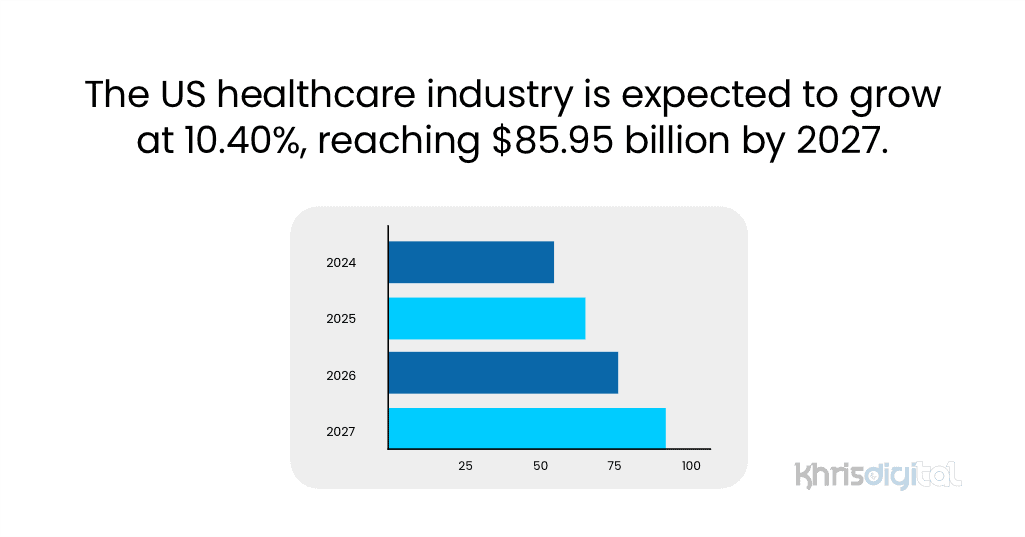
5. The US healthcare industry is expected to grow at 10.40% CAGR, reaching $85.95 billion by 2027.
(Statista)
As this industry evolves, innovative technologies and services are likely to reshape patient experiences.
Increasing competition among healthcare providers will make it essential to adopt practical marketing approaches. Marketing efforts will focus on traditional outreach and leveraging digital platforms for broader reach.
6. U.S. healthcare advertising will grow to $29.2 billion in 2028.
(Adfire Health)

This increase reflects a compound annual growth rate of approximately 4.6%. As more healthcare organizations recognize the importance of effective marketing strategies, investment in advertising becomes essential for staying competitive.
7. Healthcare online ad spend in the U.S. is roughly $17 billion.
(Statista)
You may notice that healthcare organizations are leveraging various channels, including social media, search engines, and display ads, to reach their audiences.
This approach enhances visibility and effectively allows targeted marketing efforts to drive engagement and conversion.
8. The average cost for an organic healthcare lead is $320.
(First Page Sage)
Organic leads typically stem from content marketing, SEO efforts, and social media engagement, highlighting the importance of building a solid online presence.
Investing in organic leads can yield high returns, as these individuals often exhibit stronger intent and engagement. Unlike paid leads, which average around $400, organic leads may also foster long-term relationships, benefiting your practice’s sustainability.
9. The average paid ad cost per lead (CPL) for healthcare businesses is $401.
(Call Rail)
With the competitive nature of healthcare, businesses must budget effectively to maximize their return on investment.
As a marketer, you should assess various platforms and ad types such as PPC campaigns, social media ads, and display ads, to see which yields the best leads at the most efficient cost.
10. The average cost per click (CPC) for healthcare paid search ads is $3.17.
(WebFX)
This figure is notably higher than the average CPC across various industries. A higher CPC reflects competition and shows the importance of effective ad strategies.
To ensure a positive return on investment (ROI), you must target the right audience, craft compelling ad copy, and optimize landing pages.
Investing in understanding your audience can help you mitigate costs while maximizing the impact of your ads in the healthcare space.
11. 89% of healthcare marketers use paid search advertising methods in their healthcare marketing efforts.
(Statista)
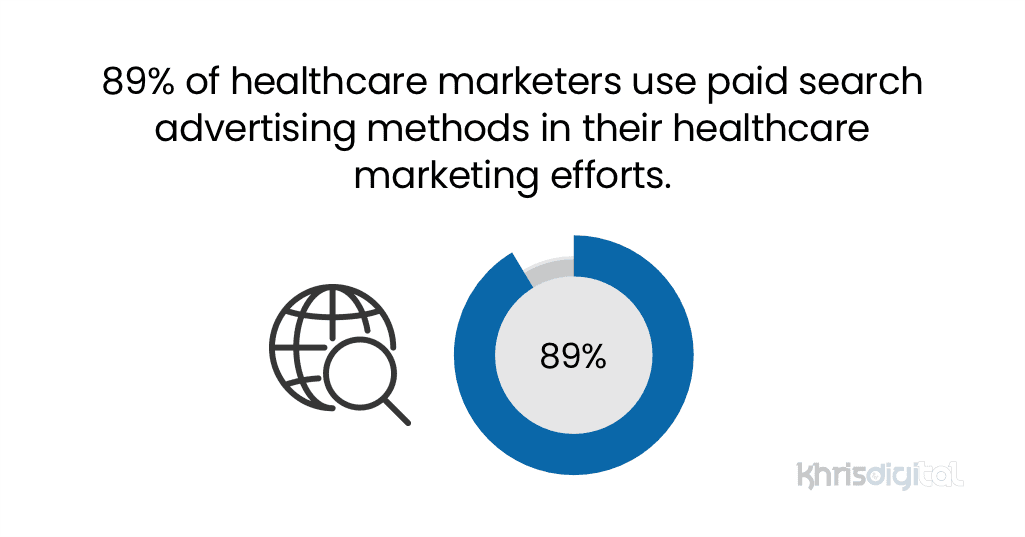
This method effectively draws in potential patients seeking medical services or health information. By placing your ads in search results, you maximize visibility and connect with those in need.
Utilizing paid search allows you to target specific keywords related to your services. This tactic enhances your online presence and improves your chances of conversion.
12. Healthcare has an overall average conversion rate of 3.2%.
(WebFX)

This figure indicates that for every 100 interactions, about 3.2 lead to a desired action, such as scheduling an appointment or signing up for a newsletter.
Comparing this average to top-performing healthcare marketers, who can achieve conversion rates up to 21.1%, highlights the potential for improvement.
13. The average email open rate for the healthcare industry is 21.48%, with an average click-through rate of 2.69%.
(Digitalis)
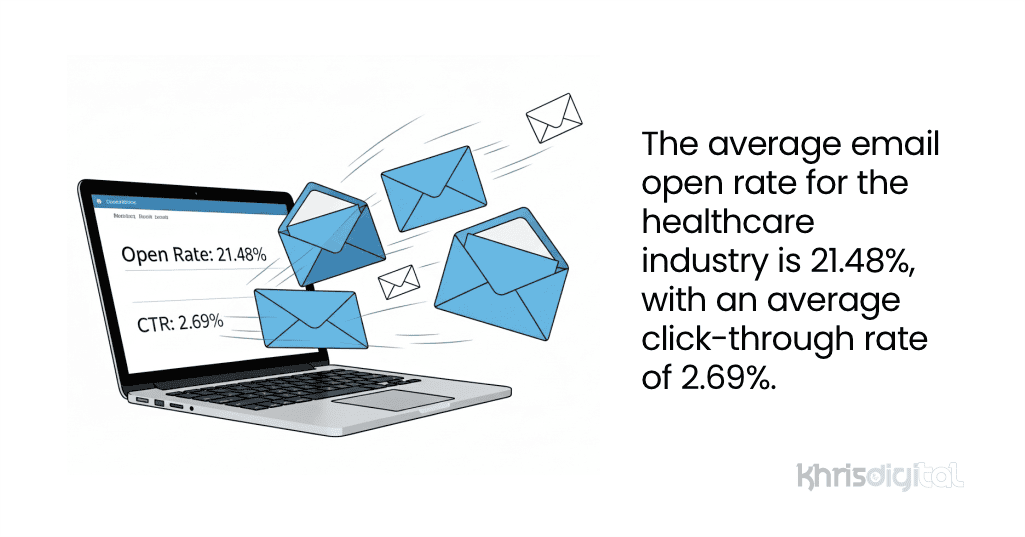
With an average open rate of 21.48%, you can gauge that a significant portion of your audience engages with your emails. This shows the importance of crafting compelling subject lines and relevant content to capture patient interest.
The average click-through rate of 2.69% indicates that while many emails are opened, only a few lead to further action.
14. Despite a meager 6.11% click-through rate, hospitals dedicate 85% of their marketing budget to Google Ads.
(Health Grades)

You may wonder why much of the budget goes to Google Ads despite the low click-through rate.
The answer lies in the platform’s extensive reach and targeting capabilities. Hospitals can strategically position their ads to attract specific demographics, this makes the investment appealing even with modest performance metrics.
15. 84% of patients use both online and offline sources for hospital research.
(Think with Google)
Patients often start their search online, reading reviews, browsing hospital websites, and checking social media, but they also value word-of-mouth recommendations, printed brochures, and in-person visits.
This shows the need for a seamless experience across all touchpoints, ensuring consistency in branding, messaging, and accessibility.
A strong digital presence combined with traditional marketing methods can enhance trust and engagement, ultimately influencing patient decisions.
16. 59% of U.S. adults use the Internet to look for health or medical information, 42% to communicate with a doctor or doctor’s office, and 46% to look up medical test results.
(Medical Xpress)
As you navigate the healthcare landscape, you must recognize that 59% of U.S. adults use the Internet for health or medical information.
This shift in behavior reflects a growing reliance on digital resources to understand symptoms, treatments, and wellness strategies. Patients are becoming more proactive in their healthcare management, often seeking reliable information before and after visits.
Moreover, 42% of adults use online platforms to communicate with their healthcare providers, showcasing a trend toward digital engagement.
Additionally, the fact that 46% of individuals look up medical test results online indicates a demand for transparency and accessibility.
17. Search drives nearly 3x as many hospital site visitors as non-search visitors.
(Think with Google)
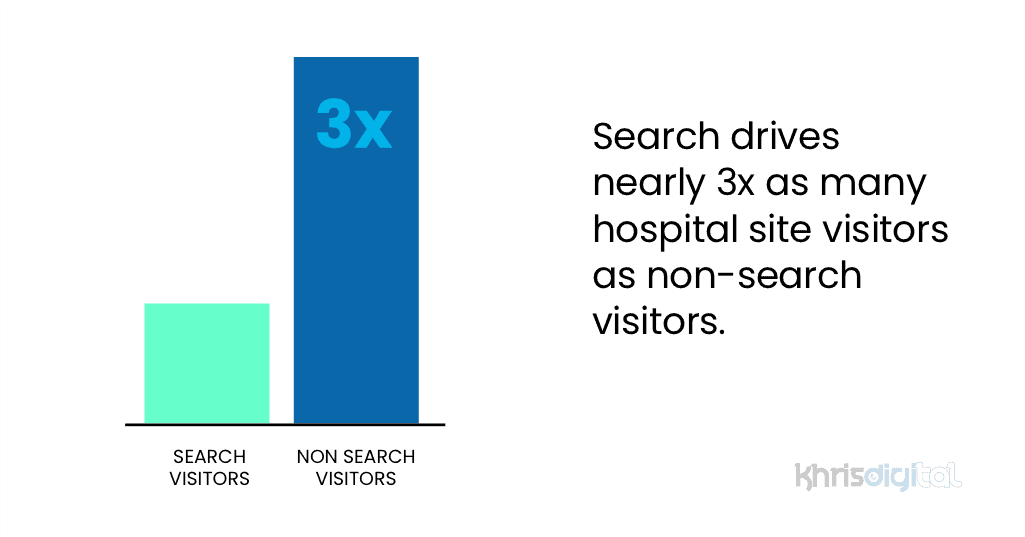
Today, search engines are a primary gateway for patients seeking healthcare information.
Consider optimizing your online presence by focusing on SEO (Search Engine Optimization) tactics.
Engaging patients through informative blogs, articles, and easy navigation can elevate their likelihood of choosing your services over competitors who may not prioritize search-driven marketing.
18. There are 100 billion searches for healthcare on Google alone each year.
(Yext)
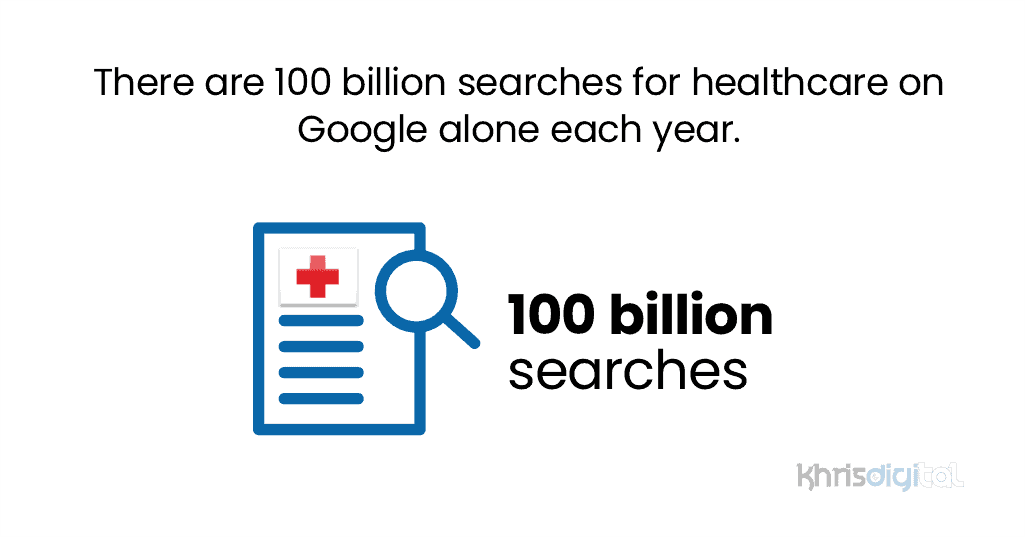
Many searches involve patients seeking specific conditions, symptoms, or nearby healthcare services.
Consider optimizing your website and content for search engines to capitalize on this. Utilizing keywords related to common health issues or local services can significantly improve your visibility and attract potential patients.
19. There are 70,000 health-related searches per minute every day.
(UK Telegraph)
This figure translates to over 100 million daily searches, showcasing constant inquiries from individuals seeking medical advice, information about symptoms, or local healthcare services.
When you understand that 80% of internet users have made a health-related search in the last year, it becomes clear that being visible online can make a difference.
Patients seek trustworthy information, and your presence can help guide them.
20. “Near me” searches for healthcare services have doubled since 2015.
(Think with Google)
The rise in “near me” searches for healthcare services indicates a significant shift in consumer behavior. Patients increasingly want quick access to healthcare providers and value the convenience of finding nearby services.
To attract potential patients, ensure your practice is optimized for local search. Consider using local SEO strategies, maintaining updated online listings, and encouraging patient reviews.
21. 75% of people in the U.S. turn to the internet first in their search for health information.
(Sage Journals)

With just a few clicks, you can find a wealth of information about symptoms, treatments, and providers, which empowers you to make informed decisions about your health.
Moreover, the preference for online information over traditional sources, like doctors or brochures, demonstrates the importance of a strong online presence for healthcare organizations.
22. 75% of patients search online for doctors, dentists, medical care, and other healthcare providers.
(Business Wire)
In today’s digital age, most consumers initiate their healthcare journey online. Patients not only search for providers; they also compare options based on reviews and ratings.
Many individuals rely on user-generated feedback as a vital decision-making tool. Your online reputation and the information available about your practice can significantly impact potential patients’ choices.
23. 65% of consumers turn to Google before consulting their doctor or other medical professionals.
(Charity RX)
With many people utilizing search engines to research symptoms or find healthcare options, you must ensure your services are easily discoverable.
Consider optimizing your website for relevant health-related keywords, engaging with patients on social media, and providing valuable content to establish trust and credibility.
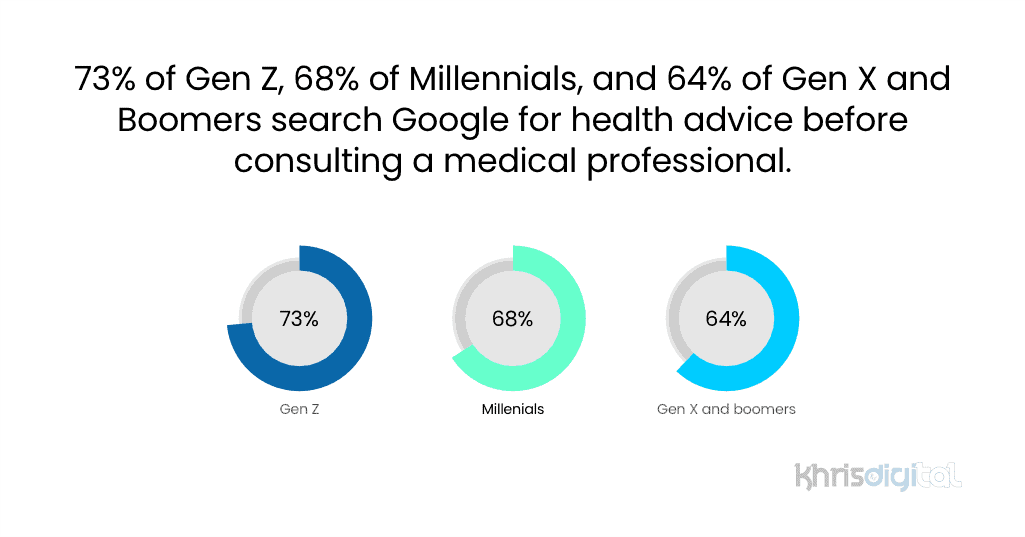
24. 73% of Gen Z consumers explore health advice on Google before consulting a medical professional.
(Charity RX)
For this generation, immediate access to information shapes their understanding and expectations of medical care.
This behavior emphasizes the importance of healthcare marketing strategies that cater to digital engagement. Healthcare organizations must optimize their online presence and provide accurate, accessible information.
25. 68% of Millennials explore health advice on Google before consulting a medical professional.
(Charity RX)
This behavior can significantly impact your healthcare marketing strategy. Engaging this audience requires a strong online presence.
Consider optimizing your content for search engines and ensuring that accurate, reliable information about health concerns is readily available.
26. 64% of Gen X and Boomers explore health advice on Google before consulting a medical professional.
(Charity RX)
These generations value accessible information, and search engines provide immediate answers, often influencing decisions about when or if to see a professional.
You can engage these consumers by providing trustworthy resources like articles, videos, and infographics. Prioritizing search engine optimization (SEO) will ensure your content appears prominently in search results when they seek answers.
27. 50% of people in Europe seek online health information.
(Charity RX)
In Europe, 50% of individuals aged 16-74 actively search for health-related information online. This statistic highlights a significant trend: many seek insights on topics ranging from disease and nutrition to general wellness.
Educational background influences online health information seeking. For example, 72% of users with a high degree of formal education engage in this behavior.
This suggests that when creating content, consider how educational attainment may shape how different groups search for and interpret health information. Incorporating precise, factual details is crucial.
28. Nearly all Americans (90%) use social media for health information.
(Health Grades)
With 90% of individuals engaging with platforms like Facebook, Twitter, and Instagram, these channels have become crucial for disseminating health-related content. This shift may reflect a growing desire for readily accessible and peer-reviewed information.
Recognizing this behavior can enhance your marketing strategies. By utilizing social media effectively, you can engage your audience with informative content.
Create visual posts, share articles, and encourage discussions to foster a community committed to health and wellness. User-generated content can also add credibility to your brand.
29. 75% of patients rely on reviews to find a new doctor or healthcare provider.
(Stanford)
When choosing a healthcare provider, you often want assurance of quality care. Studies show that many patients typically review five or more reviews before deciding who to trust. This trend emphasizes the importance of maintaining a strong online presence.
Your reputation can influence individual choices and healthcare facilities’ overall patient volume. Reliable, positive reviews can help build trust and attract new patients, making online presence management crucial for effective healthcare marketing.
30. 72% of people will only choose a doctor if they have 4-star reviews or higher.
(Globe NewsWire)
What does this mean for your practice? It’s essential to prioritize patient experience and actively encourage satisfied patients to leave reviews. You might find that implementing a system for collecting feedback can significantly enhance your ratings.
Remember, a higher rating builds trust, attracts more patients, and improves your practice’s visibility in search results.
31. Over 70% of consumers trust Google reviews of healthcare providers.
(Globe NewsWire)
Trust plays a crucial role in the decision-making process when selecting a healthcare provider. Positive feedback can significantly influence potential patients. Seeing numerous high ratings can reassure them about the quality of care they might receive.
You should encourage satisfied patients to leave reviews, as these testimonials can be a powerful asset in attracting new clientele and shaping your practice’s image.
32. 68% of word-of-mouth referral patients say online reviews were their primary reason for doctor selection.
(Pew Research)
You might find that recommendations from friends or family carry weight, but the accompanying online reviews serve as a public validation.
In today’s digital age, you likely turn to various platforms to check ratings and testimonials. This behavior is not just typical; it’s become integral in choosing a doctor. Online reviews provide insights that enhance trust and confidence.
33. Consumers researching physical therapists, nursing homes, and optometrists are the most likely to use search engines.
(Invoca)
Studies indicate that people often search and compare providers for these services online. Search engines allow you to access various information, including provider ratings, reviews, and service offerings.
For many, this is the first step in evaluating options. By optimizing your online presence, you can attract more potential clients who depend on these search engines to guide their choices.
34. Patients who booked healthcare appointments ran 3x more searches than those who didn’t.
(Invoca)
Patients’ engagement with healthcare information is critical in today’s digital landscape. Patients who secured appointments conducted three times as many searches as those who did not, highlighting the importance of a strong online presence.
Engaging potential patients through targeted content can help guide their search process. By increasing the visibility and accessibility of relevant information, you attract more searches and increase the likelihood of appointment bookings.
35. Patients expect higher levels of personalization over the phone than on any other channel.
(Invoca)
Patients today value personalized interactions when they seek healthcare services. When communicating over the phone, they expect providers to be attentive and understanding of their needs.
To meet these demands, healthcare organizations should train staff to recognize and respond effectively to patient cues. Implementing strategies like personalized greetings and tailored responses can significantly enhance patient satisfaction.
36. When a healthcare provider does a good job of personalizing customer interactions, 49% of patients feel they care about earning their business, and 47% are more likely to choose them.
(Invoca)
When you engage patients by tailoring interactions to their needs, it creates a sense of trust. 49% of patients report feeling that a provider cares deeply about earning their business when they receive personalized experiences.
Moreover, 47% of patients become more inclined to choose a healthcare provider who demonstrates this level of personalization.
Prioritizing tailored communication can effectively differentiate you in a competitive market. Using insights from patient data allows you to refine your outreach and ensure that your services meet specific patient expectations.
37. 44% of patients researching hospitals on a mobile device scheduled an appointment.
(Think with Google)
This statistic emphasizes the importance of optimizing your online presence for mobile users. As a healthcare provider, ensuring your mobile-friendly website can impact patient engagement.
Patients are increasingly turning to their phones for information. This behavior suggests that your digital marketing strategy should focus on providing relevant information promptly.
Engaging content, quick loading times, and easy navigation can affect whether a patient can book an appointment with your facility.
38. Over 60% of consumers run a search before scheduling an appointment.
(Invoca)
This behavior highlights the importance of a strong online presence for healthcare providers. By optimizing your website for search, you position yourself as a reliable option when patients seek medical care.
Understanding this statistic can inform your marketing strategy. Consider creating relevant content that answers common patient questions. Utilize search engine optimization (SEO) techniques to improve visibility.
39. Almost half of the patients surveyed are willing to go outside their insurance network for a healthcare provider with glowing online reviews.
(Health Grades)
Patients increasingly prioritize quality and trust over insurance limitations. Glowing reviews often reflect positive experiences and high satisfaction, which can sway patients to travel further for exceptional care.
Consequently, healthcare marketers must focus on nurturing and promoting positive online feedback to attract these discerning patients.
40. Potential patients only need 1-6 online reviews to form an opinion about your practice.
(Invoca)
In today’s digital age, online reviews are crucial in shaping potential patients’ perceptions of your practice.
What can you do to improve your online presence? Focus on encouraging satisfied patients to leave feedback. Respond promptly to reviews, showcasing your commitment to patient care. This proactive approach helps build trust and encourages others to share their experiences, amplifying your credibility in a competitive healthcare landscape.
41. 87% of participants were concerned (19%) or strongly concerned (68%) about the spread of medical misinformation.
(GoodRX)
This statistic highlights the critical awareness among the public about the potential dangers of false health information. In a time when facts are often clouded by rumors, understanding this concern is essential for healthcare marketers.
In your marketing strategies, consider addressing this concern directly. You could share accurate, fact-checked information through various platforms. Clarity builds trust with your audience and can position your brand as a reliable source.
42. 70% of people have been exposed to medical or health-related misinformation.
(GoodRX)
In today’s digital landscape, you may not realize just how common medical misinformation has become.
Navigating this environment requires strategic planning. Practical solutions for combating misinformation include:
- Educational campaigns: Clear, factual messaging can empower individuals to discern reliable sources.
- Engagement on social media: Actively participating in discussions can help counteract false narratives and build trust.
By understanding the prevalence of misinformation, you can tailor your marketing strategies to highlight credibility and authority, ensuring your message resonates in an increasingly skeptical environment.
43. 76% of patients called at some point during their healthcare journey.
(Invoca)
Patients often seek clarity and assistance regarding treatment, appointment scheduling, and other inquiries. To capitalize on this opportunity, consider implementing strategies that enhance patient interactions.
For example, custom phone numbers for specific services, such as appointment bookings, can streamline the process. Training staff to handle calls efficiently can also increase patient satisfaction and retention.
44. 45% of healthcare marketers report that phone calls have higher conversion rates with larger order value (AOV) than other forms of engagement.
(Forrester)
Engaging with patients through calls fosters trust, provides clarity, and facilitates personalized care, resulting in increased loyalty and spending.
Leveraging this channel can enhance conversion rates and elevate the overall value of each patient interaction. Investing in optimized call handling and ensuring your team is well-trained can maximize the benefits of this powerful communication tool, ultimately improving your revenue outcomes.
45. 81% of healthcare marketers believe inbound calls and phone conversations are key to their organization’s digital-first strategy.
(Forrester)
Inbound calls and phone conversations are pivotal in your healthcare marketing strategy. Phone conversations can enhance patient engagement and trust. As you develop your digital-first strategy, consider optimizing call experiences.
Incorporating training for staff on effective communication and ensuring prompt responses to inquiries can set your organization apart.
46. 77% of healthcare marketers say insights from inbound calls and call experiences may reveal costly blind spots in our organization.
(Forrester)
These insights can often illuminate operational gaps that may not be apparent through other channels. By analyzing call experiences, you can identify patterns or issues that could impact patient satisfaction and retention.
Inbound calls are a direct communication line with patients, offering real-time feedback about their experiences. This feedback can reveal costly blind spots, such as service misunderstandings or unmet patient needs.
47. 41% of healthcare marketers have provided or expect to deliver enhanced patient experiences due to scaling conversation intelligence across the enterprise.
(Forrester)
Scaling conversation intelligence is becoming a significant focus for healthcare marketers. By utilizing advanced analytics, healthcare organizations can better anticipate preferences and tailor communication effectively.
For instance, call summaries and sentiment analysis can provide insights that help marketers create personalized engagement strategies, improving patient satisfaction. This shift enhances experiences and drives loyalty and retention in a competitive market.
48. 70% of healthcare marketing executives say their organization has a content marketing strategy.
(MarketingProfs)
This indicates a significant recognition of structured content’s role in engaging patients and stakeholders. Successful content marketing can enhance patient trust and improve brand visibility in a competitive landscape.
By solidifying and formalizing their strategies, you can better leverage content to connect with your audience, improve patient outcomes, and enhance brand loyalty.
49. 74% of healthcare marketers in the U.S. use blogs to market their healthcare business.
(Statista)
Blogs allow for a more personalized approach, engaging patients through informative content that can address their specific needs and concerns. Creating a blog can enhance your visibility and reputation in the industry.
Consider these benefits:
- Educate Patients: Use your blog to share health tips, treatment explanations, and updates on medical advancements.
- Boost SEO: Regularly updated content can improve your website’s search engine ranking, drawing more potential patients to your practice.
- Build Trust: Consistent, informative posts can help establish your authority in the field, fostering trust and loyalty among your audience.
Incorporating blogs into your marketing strategy might be the key to reaching and retaining patients effectively.
50. 66% of healthcare marketing executives say their content marketing strategy has become more educational in guiding consumers and patients on COVID-19 prevention and care.
(MarketingProfs)
This shift signifies a critical response to the pandemic, where informing consumers and patients became paramount. By focusing on COVID-19 prevention and care, you’re better equipped to address the public’s urgent need for accurate information.
Implementing educational strategies can enhance trust and engagement with your audience. Consider effectively disseminating essential information using various formats, such as infographics, videos, and blog posts.
51. 45% of healthcare marketing executives say their content marketing strategy has become more focused on growth-oriented content that drives traffic to high-value services.
(MarketingProfs)
The emphasis is now on creating content that leads potential patients directly to high-value services, which can improve both engagement and conversions.
This change in strategy reflects a broader trend within the industry. By prioritizing content that aligns with patient needs and values, you can enhance your institution’s ability to attract and retain patients.
More than ever, targeted content strategies are vital in helping you communicate the unique benefits of high-value services, making them more accessible to those seeking care. This focus drives traffic and positions your organization as a go-to resource in the healthcare sector.
52. 35% of healthcare marketing executives say their content marketing strategy has become more concentrated on brand-centric content highlighting caregivers, policy changes, and other health system/industry news and updates.
(MarketingProfs)
This approach aims to enhance caregivers’ visibility and inform audiences about policy changes and industry updates. Engaging your audience with relevant stories can foster a deeper connection between your brand and the community.
By highlighting caregivers and significant changes in health systems, you create a narrative that resonates with patients and stakeholders. This strategy lets you showcase your brand’s commitment to quality care and transparency.
Content formats like articles, videos, and social media posts can effectively convey your messages while supporting your brand’s mission and values.
53. 50% of healthcare marketers found the most opportunity to improve their overall marketing strategy within content.
(True North)
Many professionals recognize that compelling content can engage patients, establish authority, and enhance service trust.
Engaging content can take various forms, such as blog posts, videos, and social media updates. You have the chance to inform and educate your audience. Use patient testimonials, case studies, and health tips to provide value.
54. 33% of healthcare marketers said they are very successful in their content marketing efforts; another 33% said they have moderate success; and only 10% claimed to be very successful.
(SEMrush)
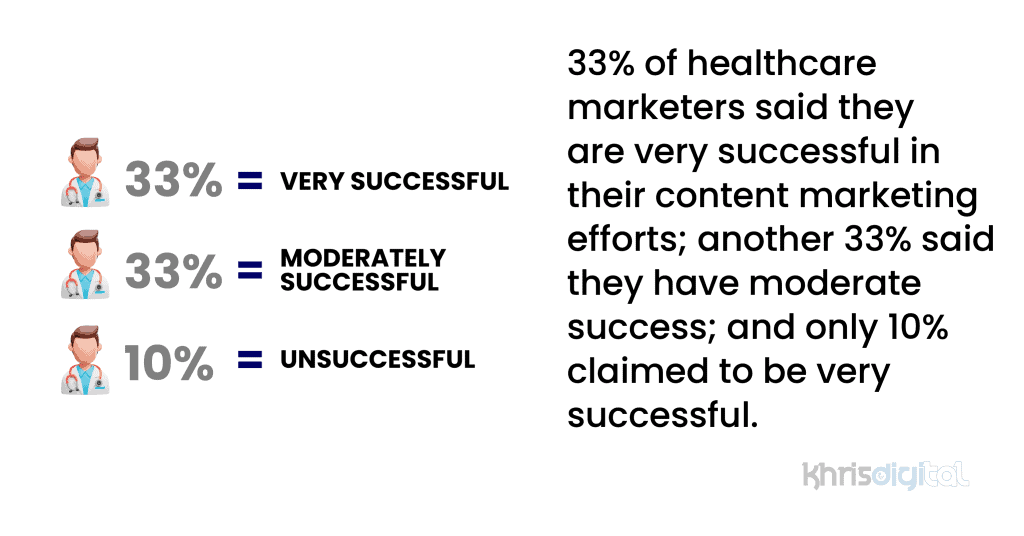
33% of healthcare marketers report feeling very successful in their content marketing efforts, implying that they have managed to reach and engage their target audience effectively.
Conversely, another 33% feel they have only moderate success. This indicates a significant portion of marketers acknowledge challenges in achieving their goals.
Additionally, only 10% of marketers claim they are very successful, pointing to a competitive environment where many strive to enhance their strategies and outcomes.
Understanding where you stand in these statistics can help you identify opportunities for improvement and innovation.
55. Only 28% of healthcare marketers have a documented content marketing strategy.
(Taylor)
This indicates a substantial gap in planning and execution among healthcare professionals. Marketers may miss opportunities to engage with their audience and showcase their services without a defined strategy.
The lack of documentation can lead to inconsistent messaging and wasted resources. If you’re among the 72% without a clear strategy, consider prioritizing the development of one.
56. Since healthcare marketing is complex, many content teams (36%) have one to three specialists on staff.
(SEMrush)
These small yet focused teams can effectively create targeted content and manage campaigns more efficiently. Having a limited number of specialists allows for agility in decision-making and creativity in marketing strategies.
57. Many healthcare teams (48%) are outsourcing at least some of their content development efforts.
(NYT Licensing)
By outsourcing, teams can leverage expertise from specialized agencies, ensuring their messaging is relevant and impactful.
Outsourcing content can also free up internal resources, allowing your team to focus on core activities such as patient care and operational efficiency.
58. 60% of doctors say social media improves the quality of care delivered to patients.
(Merritt Hawkins)
Social media has become an essential tool in healthcare. Through it, physicians can share timely medical information, access peer insights, and foster a more informed patient relationship.
Moreover, patients also benefit from this engagement. Social media facilitates the exchange of experiences and reviews, influencing healthcare choices.
59. 41% of consumers use social media to decide which doctors or hospitals to choose.
(Search Engine Watch)
Social media plays a crucial role in consumer decision-making when navigating healthcare options. These platforms might help you compare reviews, gather insights, and evaluate experiences shared by others.
60. 26% of U.S. hospitals are on social media.
Hospitals can share vital health information and engage with patients in real time by leveraging platforms like Facebook, Twitter, and Instagram.
Connecting with patients through social media can enhance hospitals’ visibility and foster trust. It also allows hospitals to build community relationships and respond to patient inquiries quickly.
As more consumers seek health-related information online, this percentage will likely increase.
61. 98% of healthcare marketers in the U.S. use Facebook for their healthcare marketing efforts.
(Statista)
Leveraging Facebook allows you to share valuable health information, engage with patients, and build community trust. You can foster meaningful interactions and provide real-time updates through features like Facebook Live or groups.
62. 94% of healthcare marketers in the U.S. use YouTube for their healthcare marketing efforts.
(Statista)
By leveraging YouTube, you can convey complex medical topics in a visual format that is often easier for potential patients to understand.
YouTube’s appeal lies in its vast reach and user engagement. As a healthcare marketer, you can create informative videos that explain medical procedures and share patient testimonials and health tips.
63. 92% of healthcare marketers in the U.S. use Instagram for their healthcare marketing efforts.
(Statista)
Engaging visuals, such as infographics and videos, capture attention and communicate important health messages effectively.
The platform’s unique features, like Stories and Reels, provide innovative ways to connect with your audience. With an estimated engagement rate of 1.60% for healthcare-related posts, Instagram allows for direct interaction and community building.
64. 92% of healthcare marketers in the U.S. use boosted Facebook posts for their marketing efforts.
(Statista)
Boosted posts can be particularly effective due to Facebook’s extensive user base. Your content can be tailored to specific demographics, interests, and locations.
This targeted approach maximizes your marketing budget and ensures your message resonates with the right audience. Engaging visuals and informative content in these posts can increase interaction rates, translating to increased patient engagement.
65. 90% of healthcare marketers in the U.S. use X and LinkedIn for their healthcare marketing efforts.
(Statista)
Engaging content tailored for these networks can significantly enhance your practice’s visibility and patient engagement.
Both X and LinkedIn offer distinct advantages. X provides real-time interactions, fostering community discussions and immediate feedback. Conversely, LinkedIn allows you to establish professional networks and share in-depth content, showcasing your expertise.
66. 68% of healthcare marketers in the U.S. use sponsored Instagram posts in their healthcare social media marketing efforts.
(Statista)
Using sponsored posts helps your content reach a larger audience than organic posts alone. With Instagram’s diverse user base, the potential to connect with younger demographics is high.
Engaging visuals combined with strategic messaging can attract patient interest and effectively promote services, making Instagram a vital tool in your marketing arsenal.
67. 57% of healthcare marketers in the U.S. use LinkedIn promoted posts in their healthcare social media marketing efforts.
(Statista)
LinkedIn’s professional environment fosters engagement, enabling marketers to connect meaningfully with their audience. This platform is particularly effective for reaching healthcare professionals and decision-makers.
Using promoted posts can boost visibility and engagement, particularly for specialized content.
68. 47% of healthcare marketers in the U.S. use promoted posts on X in their healthcare social media marketing efforts.
(CharityRX)
Promoted posts are designed to stand out in crowded feeds. They provide an opportunity to highlight specific services, share important health information, or promote community events.
By leveraging this tool, you can create targeted campaigns that resonate with your audience’s needs and interests.
69. 33% of consumers turn to YouTube before consulting their doctor or other medical professionals.
(Statista)
Instead of heading straight to a physician, many prefer to look up videos that provide insights, testimonials, or explanations about their condition.
Consider offering educational videos on health topics relevant to your audience. Addressing common questions or concerns through visual media can establish trust and position your practice as a go-to resource in the digital age.
70. 13% of healthcare marketers in the U.S. use Snapchat ads in their healthcare social media marketing efforts.
(Statista)
Snapchat’s ephemeral nature makes it an appealing platform for engaging potential patients more casually and approachably.
Using Snapchat, healthcare marketers can deliver targeted messages through ads that resonate with a younger audience. Consider the benefits of using visuals and short videos to communicate your value.
71. 62% of healthcare professionals think pharma reps can add value by showcasing relevant information and material.
(Fierce Pharma)
Relevant, evidence-based data tailored to specific needs can improve your decision-making process and patient care.
Pharma reps can elevate their contributions by providing access to:
- Educational materials that keep you informed about the latest treatments
- Clinical studies that support the efficacy of their products
- Patient education resources to aid in treatment discussions
Pharma reps can forge stronger relationships with you and your colleagues by centering their efforts on relevant information.
72. 1 out of 2 surveyed (in the US) noted that medtech content marketing offered at least a 20% return on investment. In comparison, only 36% felt that was true for overall marketing efforts.
(McKinsey)
This demonstrates the effectiveness of targeted, informative content in engaging healthcare professionals and potential patients.
Focusing on specialized content may enhance your marketing ROI compared to broader initiatives. Investing in medtech content could be your key to unlocking higher engagement and returns in a competitive landscape.
73. 81% of consumers are unsatisfied with their healthcare experience.
(Prophet)
Many factors contribute to this dissatisfaction, including long wait times, inadequate communication, and lack of personalized care.
As a healthcare marketer, understanding these sentiments can help you shape strategies prioritizing patient experience. Improving touchpoints, such as appointment scheduling, follow-up procedures, and clear communication, can facilitate a better relationship with patients.
74. 43% of Millennials will likely switch practices in the next few years.
(Solution Reach)
This shows a significant shift in patient loyalty and expectations within this demographic. Millennials value the quality of care, the overall experience, and the convenience healthcare providers offer. To retain these patients, focus on improving the patient experience.
75. 88% of healthcare appointments are scheduled by phone.
(CNBC)
Scheduling appointments by phone remains dominant in the healthcare sector. This preference emphasizes the importance of well-trained staff handling calls efficiently.
Since many patients initiate contact via phone, ensuring a seamless phone experience can lead to higher satisfaction rates. Investing in training for your personnel and optimizing call handling processes can improve patient relationships and appointment conversion rates.
76. 2.4% of healthcare appointments are scheduled online.
(Accenture)
This percentage highlights healthcare providers’ challenges in encouraging patients to utilize online scheduling options. Many patients remain hesitant to share personal information online, which impacts overall adoption rates.
Promoting the benefits of online scheduling, such as convenience and time savings, can help address patient concerns.
77. 93% of healthcare marketers are ready to adopt AI, recognizing its potential to transform strategies and deliver outstanding patient experiences.
(Invoca)
AI can streamline processes, enhance patient engagement, and create personalized experiences that drive satisfaction and loyalty. Utilizing AI tools allows for data analysis that identifies patient needs and preferences, making your marketing efforts more effective.
Integrating AI allows you to optimize campaigns and foresee trends, ensuring you remain competitive.
78. 91% of healthcare marketers are excited about AI, but anxiety lingers — the fear of falling behind is pervasive.
(Invoca)
This enthusiasm stems from the potential to optimize patient engagement, personalize marketing efforts, and streamline workflows. As the industry evolves, embracing AI may lead to significant competitive advantages.
Yet, with great opportunity comes anxiety. Many marketers worry about possibly falling behind in implementing these advanced technologies.
The rapid pace of AI development can feel overwhelming, and the demand for practical applications creates pressure to adapt quickly. Balancing this excitement with concerns is a common challenge.
79. Healthcare digital advertising spend overtook healthcare TV ad spend for the first time in 2021.
(Zenith Media)
This marked a pivotal moment, illustrating how consumer behaviors and preferences have evolved. With patients increasingly turning to online platforms for information, healthcare marketers must adapt to reach their audience effectively.
This transition signifies a change in spending and a fundamental rethinking of communication strategies.
Final Thoughts on Healthcare Marketing Statistics
Healthcare marketing is evolving rapidly, with data-driven strategies shaping how providers connect with patients.
With 77% of patients conducting online research before choosing a healthcare provider, it’s clear that a strong online presence is no longer optional.
Additionally, 41% of consumers say social media influences their choice of a healthcare facility, proving that strategic digital marketing can directly impact patient acquisition.
As competition in the healthcare industry intensifies, leveraging these insights can help healthcare organizations stand out. By embracing SEO, patient reviews, and content marketing, providers can create meaningful connections with their audience and drive long-term success.
Frequently Asked Questions
What are the latest trends in healthcare marketing for 2025?
Personalization will remain a crucial trend as healthcare marketers focus on tailored content to meet individual patient needs. Integrating advanced technologies, like AI and chatbots, will improve patient interactions and streamline service delivery. Additionally, measuring outcomes through data analytics will gain more attention to refine strategies effectively.
What are the statistics for healthcare email marketing?
According to recent data, healthcare emails have an average open rate of about 21%, surpassing other industries. Targeted email campaigns can increase patient engagement and retention by providing valuable health information and reminders.
What are the most effective healthcare social media marketing strategies?
Engaging patients through social media requires consistent content and interaction. Effective strategies include using platforms like Facebook and Instagram to share health tips, patient testimonials, and event announcements. Visual content, such as videos and infographics, generates higher engagement rates.
What examples demonstrate successful healthcare marketing campaigns?
Mayo Clinic’s content marketing, Cleveland Clinic’s “Health Essentials” blog, and CVS Health’s “Healthier Happens Together” campaign showcase successful healthcare marketing. These strategies use expert content, patient stories, and digital engagement to educate, attract audiences, and build trust.
What benchmarks are used to measure the success of healthcare marketing?
Success in healthcare marketing can be measured through various benchmarks. Key performance indicators (KPIs) include patient acquisition rates, campaign website traffic, and social media engagement metrics.
How does healthcare marketing contribute to patient engagement and retention?
Organizations can strengthen patient relationships by delivering relevant content and timely communications. Engaged patients are more likely to follow treatment plans, attend appointments, and refer others to healthcare providers.
Sources:
Check out my other Statistics round-up:
