


How big is affiliate marketing really, and where is it heading?
The global affiliate marketing industry is currently valued at $18.5 billion. By 2031, it’s projected to surge past $31.7 billion. That’s proof that affiliate marketing is no longer a side hustle. It’s a serious business model.
From creators and bloggers to media companies and niche site owners, everyone wants a piece of this expanding pie.
But if you’re trying to understand the current landscape, what’s working, what’s growing, and where the money really is, you need the numbers to back it up.
This post compiles 95 of the latest and most useful affiliate marketing statistics. No fluff. Just the data you need to spot trends, plan smarter, and stay ahead of the curve.
All stats are verified from reputable sources, and you’ll find every source listed at the bottom of the post.
1. The global affiliate marketing industry is valued at $18.5 billion and projected to grow to $31.7 billion by 2031.
(Hostinger)
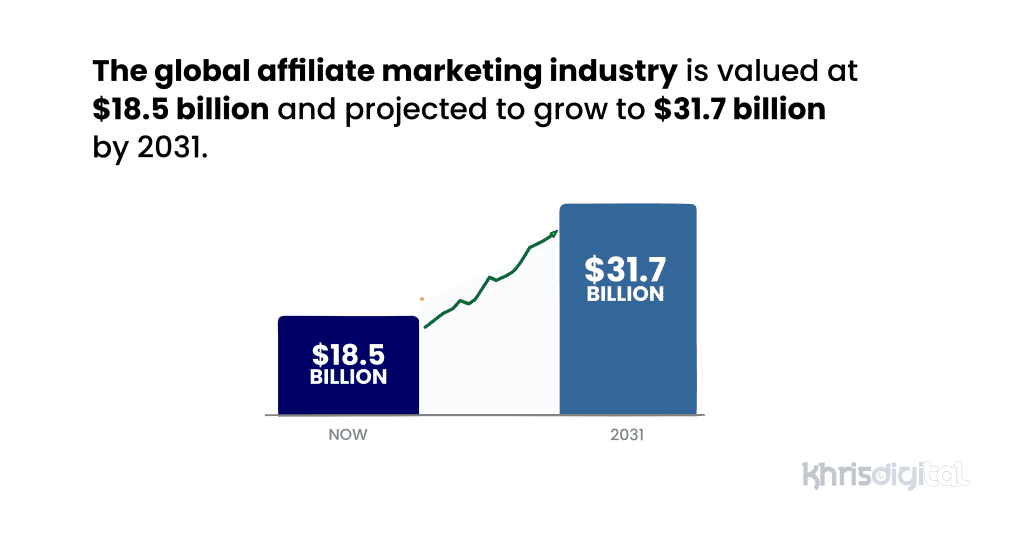
Affiliate marketing is exploding. What started as a low-risk way to monetize content has evolved into a global performance-based revenue machine.
Brands are pouring more money into affiliate programs because the ROI is trackable, scalable, and relatively low-cost compared to traditional advertising.
At the same time, more creators and publishers are tapping into this stream as audiences grow tired of in-your-face ads. This type of growth indicates that affiliate marketing is becoming a permanent pillar in the digital marketing world.
2. Over 80% of brands have affiliate programs in place.
(Affise)

More than 8 in 10 brands now run their own affiliate programs, a clear sign that businesses see value in performance-based partnerships.
Instead of paying upfront for ads that may not convert, brands only pay when results occur, such as clicks, leads, or sales.
This model makes it easier to manage risk and scale campaigns efficiently. Whether you’re a solo creator or a major publisher, this stat proves there’s no shortage of opportunities to partner with companies that already understand the value of affiliate marketing.
3. Fashion dominates affiliate marketing with a 23.27% market share.
(SQ Magazine)
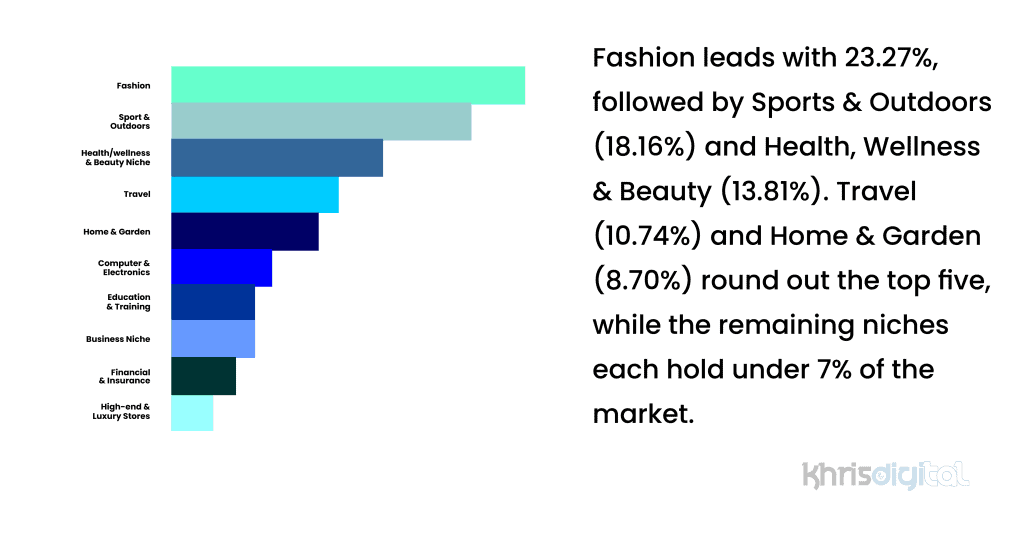
In affiliate marketing, fashion rules the runway, commanding a 23.27% market share. Sports & Outdoors follows with 18.16%, fueled by fitness and lifestyle trends, while Health, Wellness & Beauty holds a strong 13.81%.
Travel stays resilient at 10.74%, proving wanderlust is still profitable, and Home & Garden takes 8.70% as home improvement spending remains steady.
Rounding out the top ten are Computers & Electronics (6.65%), Education & Training (5.37%), Business (5.12%), Finance & Insurance (4.35%), and High-End & Luxury Stores (3.83%).
4. U.S. affiliate marketing spend will soar to $16 billion by 2028 from $12 billion in 2025.
(Hostinger)
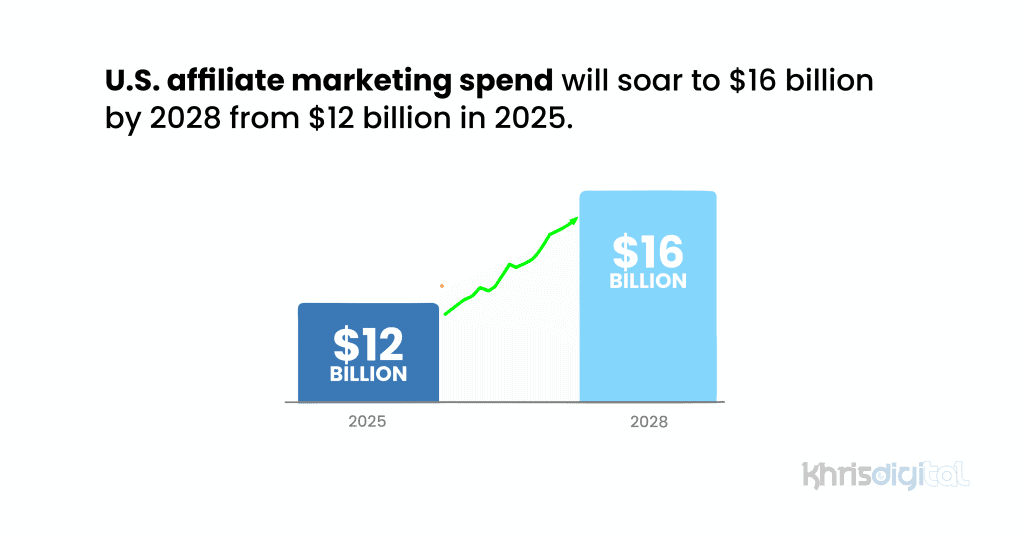
This surge shows how brands are doubling down on measurable, performance-based marketing. As ad costs rise and trust in traditional ads declines, companies are pouring more money into affiliate partnerships that deliver real conversions.
5. The U.S. accounts for 39% of the global affiliate marketing sector, the UK 15%, and Germany 11%.
(Rewardful)
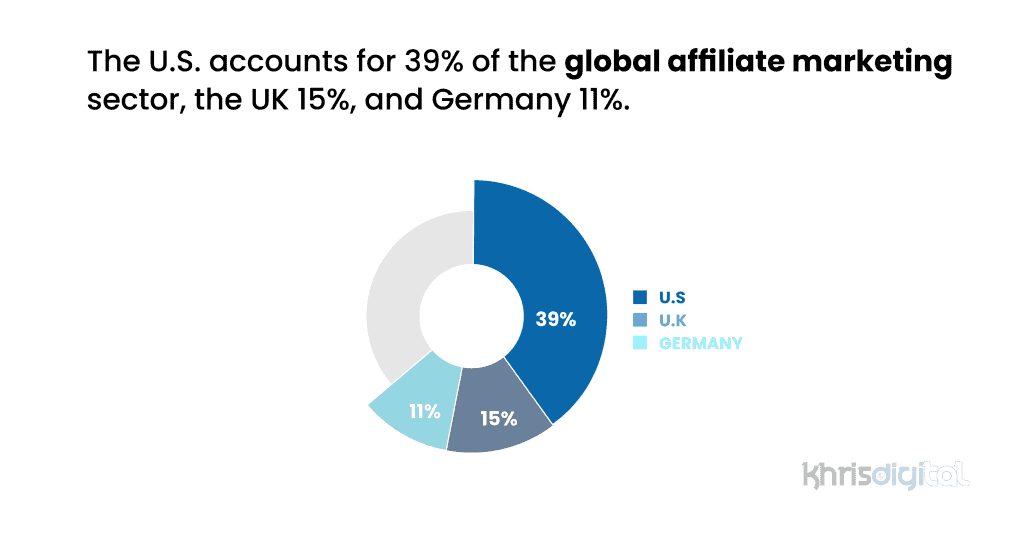
Affiliate marketing may be global, but a massive chunk of the action is still concentrated in a few key markets.
The U.S. leads the pack, driving nearly 40% of all affiliate activity worldwide. That’s where most major networks, brands, and publishers are based, and where budgets tend to be higher.
The UK and Germany follow, showing strong adoption across Europe. These numbers highlight where affiliate infrastructure is most mature and where competition is highest.
6. Affiliate marketing accounts for approximately 16% of U.S. eCommerce sales.
(Trust Pulse)

In the U.S., about 1 in every 6 eCommerce sales comes from affiliate marketing. That puts it right up there with email and paid search as one of the top-performing channels.
It shows how deeply embedded affiliate strategies are in the buyer journey, from blogs and review sites to influencers and coupon codes. For brands, it’s proof that affiliates are closing. And for affiliates, it means there’s real money in driving intent-based traffic at scale.
7. 81% of advertisers and 84% of publishers use affiliate marketing.
(Rakuten Advertising)
Affiliate marketing is one of the few strategies embraced almost equally on both sides of the table.
This near-perfect balance shows how aligned the incentives are. Brands get measurable results, and publishers get paid for their influence and reach. It’s a win-win model that continues to scale because both sides see consistent returns.
8. On average, affiliate marketing brings a 12:1 return on ad spend (ROAS).
(Rakuten Advertising)
Few marketing channels deliver this kind of payoff. The reason? Brands only pay when results happen, whether that’s a sale, lead, or action.
Unlike paid ads that burn through budgets with no guarantees, affiliate spend is tied directly to performance. This makes it especially attractive for small businesses and startups trying to scale efficiently.
9. Affiliate marketing generates $15 for every $1 spent, a 1400% return.
(Authority Hacker)

That kind of return is rare. For brands, that’s a strong signal to invest more in partnerships that drive actual conversions. It’s also a reminder that well-placed affiliate content, such as reviews, tutorials, and deals, can guide buyers at key decision points.
While not every campaign hits this exact number, it shows what’s possible when affiliates are aligned with the right audience and product.
10. 50% of marketers say affiliate marketing is “very effective” for achieving business goals.
(Gen3 Marketing)
Half of marketers rank affiliate marketing as a top performer, putting it ahead of content marketing (46%) and just behind social media advertising (61%).
It means that affiliate campaigns are a core strategy for achieving real business goals, such as sales, leads, and customer acquisition. While social ads still take the top spot, affiliate marketing’s edge comes from its low risk and performance-based nature.
11. 6 in 10 brands say they’re increasing spending on affiliate commissions.
(Martech Record)
Higher commissions mean more incentive for affiliates to prioritize those offers, which in turn drives increased reach, traffic, and conversions.
It also reflects growing confidence in the affiliate model itself, as brands are seeing real returns and are willing to pay more to scale it. For affiliates, that’s good news as the competition for your promotion is heating up, and payouts are rising because of it.
12. Amazon Associates is the most extensive global affiliate program with 46.11% market share. Rakuten holds the second spot with 7.78%, followed by Awin (6.68%), ShareASale (6.46%), and CJ Affiliate (6.24%).
(OptinMonster)

When it comes to affiliate networks, Amazon stands out above the rest. With nearly half of the global market share, Amazon Associates remains the go-to platform for affiliates, especially those new to the industry.
Its broad product range, trusted brand, and easy-to-use tools make it a clear winner.
However, other major players are also carving out space. Rakuten holds the second spot with 7.78%, followed by Awin (6.68%), ShareASale (6.46%), and CJ Affiliate (6.24%).
13. Amazon Associates leads the way in affiliate count, boasting 900,000 affiliates. ShareASale comes in second with 700,000 affiliates, followed by Awin (225,000), Rakuten (150,000), and ClickBank (100,000).
(Statista)
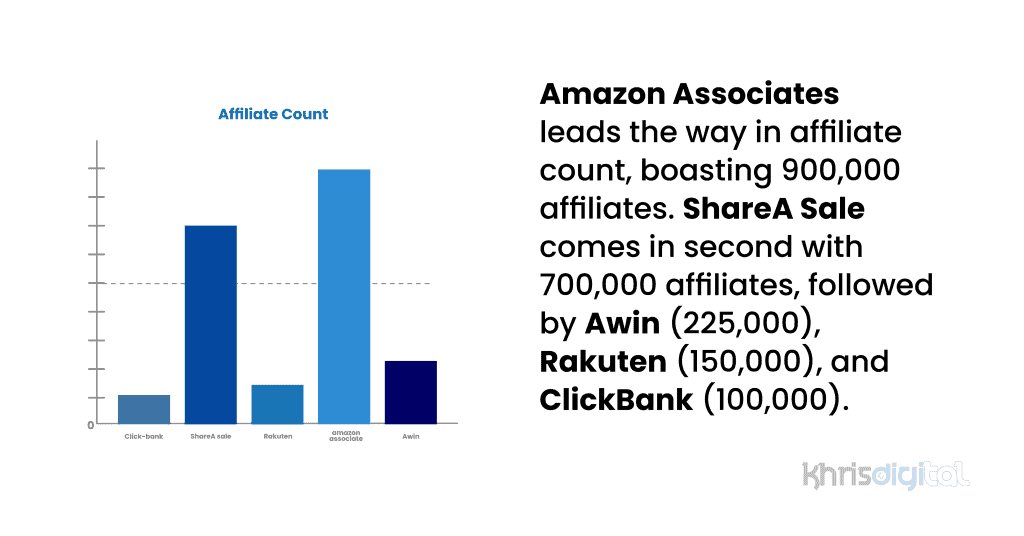
Amazon isn’t just the biggest by market share, it also has the largest army of affiliates. With approximately 900,000 members in its network, Amazon Associates attracts a diverse range of individuals, from beginner bloggers to seasoned professionals.
ShareASale comes in second with 700,000 affiliates, followed by Awin (225,000), Rakuten (150,000), and ClickBank (100,000).
14. 107,179 companies worldwide make up the affiliate networks industry.
(Demand Sage)
These businesses range from massive affiliate networks and SaaS platforms to smaller niche services powering tracking, payouts, and campaign management.
This number indicates the complexity and development of the ecosystem. Whether you’re a brand, publisher, or solo affiliate, there’s an entire infrastructure behind the scenes built to support performance marketing.
15. 94% of publishers use multiple affiliate networks at once.
(Affise)
Most affiliates aren’t putting all their eggs in one basket, and that’s a smart move.
Different networks offer different products, payout terms, tracking tools, and merchant types.
By spreading across multiple platforms, publishers reduce risk, access a broader range of offers, and optimize for higher commissions. It also helps them avoid over-reliance on any single source of income.
16. 40% of affiliates work with three networks.
(Affise)
Working with three networks allows affiliates to test what performs best, diversify income, and stay agile if a program shuts down or changes terms.
It’s a practical balance between reach and control, especially for mid- to pro-level affiliates looking to grow sustainably.
17. 20% of affiliates manage five or more networks
This is usually where serious, full-time marketers play. It’s more work, but it opens up a wider pool of offers, better payout options, and more flexibility.
These affiliates often create comparison content, run niche sites across various verticals, or utilize advanced tracking tools to stay ahead of the competition.
It’s not for everyone, but for those who treat affiliate marketing like a business, casting a wider net often leads to bigger earnings.
18. ClickBank is the most preferred affiliate network, favored by 24.6% of marketers. 21.8% prefer the ShareASale network, 20.5% prefer CJ, 15.7% prefer Impact, and 11.7% prefer Awin.
(Authority Hacker)
When affiliates pick favorites, ClickBank comes out on top, with 24.6% saying it’s their go-to network. Known for its digital products and high commissions, it’s especially popular with info-product marketers.
ShareASale follows closely at 21.8%, valued for its user-friendly dashboard and variety of merchants. CJ comes in at 20.5%, Impact at 15.7%, and Awin at 11.7%.
These preferences indicate that while Amazon may lead in scale, other networks are excelling in features, niche offerings, and flexibility. For affiliates, choosing the right platform often comes down to what best fits their content and audience.
19. The average affiliate website earns an RPM of $149.76.
(Authority Hacker)
RPM (revenue per 1,000 visitors) is one of the most effective ways to measure affiliate site performance, with an average of $149.76 per 1,000 visitors.
That means an affiliate site typically pulls in nearly $150 for every 1,000 visitors. Of course, results vary based on niche, audience intent, and conversion rates, but this average gives a realistic benchmark.
20. The average affiliate marketer earns $8,038 per month.
(Authority Hacker)

Affiliate marketing is a serious income stream. While top earners make far more and beginners may start with less, this average shows the model’s potential when done consistently.
The income reflects the scalability of affiliate marketing: once content is built and traffic flows, commissions can stack month after month. It’s also why more creators and entrepreneurs are investing in this space.
21. Education, travel, and beauty rank as the most lucrative affiliate niches.
(Authority Hacker)
These industries have a mix of high demand, strong consumer spending, and products or services that lend themselves well to affiliate promotion.
Education and e-learning benefit from the boom in online courses and skill-building platforms. Travel thrives on bookings, tours, and gear, while beauty and skincare offer an endless array of product lines with loyal customers.
For affiliates choosing a niche, these categories prove especially rewarding, as they balance consistent traffic with strong commission potential.
22. Affiliate income varies widely by niche, from $555 to over $15,000 per month.
(Outbrain)
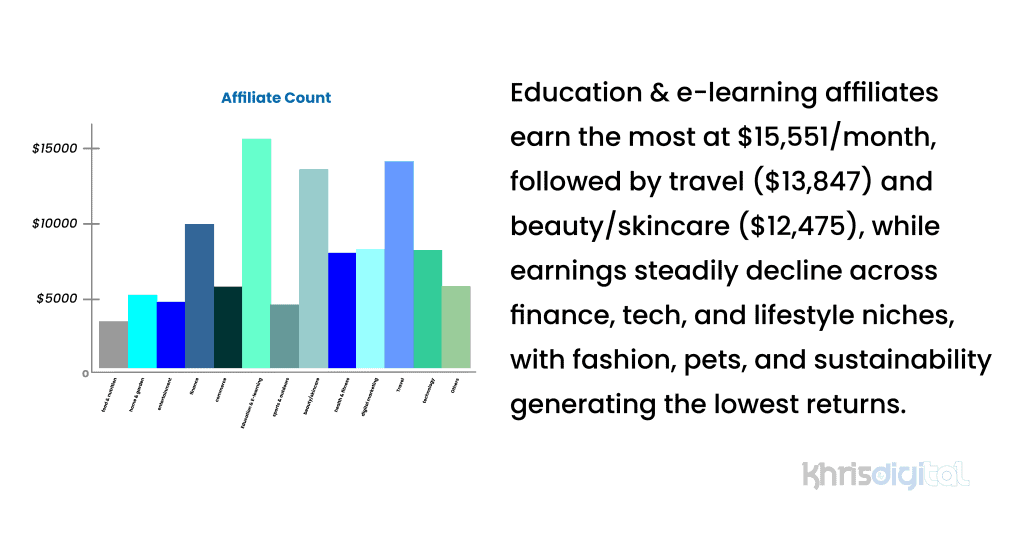
Not all niches pay the same. In fact, monthly income for affiliate marketers swings dramatically depending on the industry.
At the top, education & e-learning affiliates average $15,551 per month, followed by travel ($13,847) and beauty/skincare ($12,475).
Then, finance averaging $9,296 monthly, technology ($7,418), digital marketing ($7,217), health & fitness ($7,194), E-commerce ($5,967), home & garden ($5,095), sports & outdoors ($4,849), entertainment ($4,416), food & nutrition ($3,015).
On the other hand, niches such as fashion ($2,049), personal development ($1,566), parenting & family ($1,145), arts & crafts ($1,041), pets & animals ($920), and sustainability/environment ($555) generate significantly lower returns.
23. 81.2% of affiliate marketers make more than $20,000 annually.
(AffiliateWP)
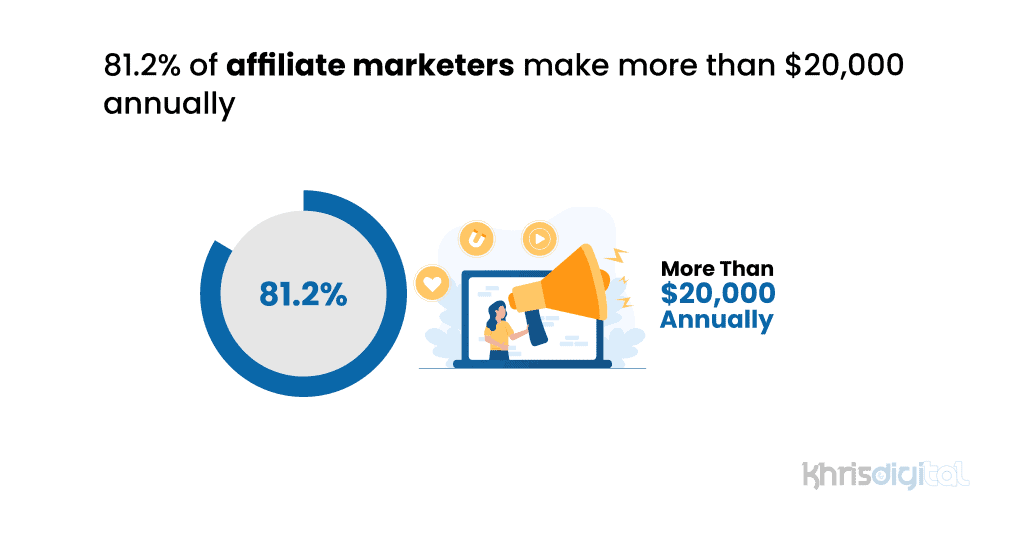
Most affiliates aren’t just making side money, they’re earning real income. While results vary by niche, traffic, and strategy, this stat shows that the majority of affiliates break past the hobby stage into serious revenue territory.
For newcomers, it’s a reminder that consistent effort and smart choices can lead to sustainable earnings, not just small commissions here and there.
24. 15% of affiliate marketers earn between $80,000 and $1 million per year.
(We Can Track)

While many affiliates treat it as side income, a significant share are hitting big numbers.
These are often full-time affiliates who treat their efforts like a business, running multiple sites, investing in paid traffic, and building strong partnerships with brands.
It’s proof that affiliate marketing has a very high ceiling. For those willing to scale, refine their strategies, and diversify their income streams, the potential extends well beyond a comfortable salary into six- and even seven-figure territory.
25. 35% of affiliates earn at least $20,000 per year.
(We Can Track)
That’s a solid benchmark showing that a large segment of participants are generating meaningful income, not just pocket change.
While not everyone reaches six figures, this level of earnings proves the model works for a significant share of marketers who stay consistent. For many, it represents a reliable side income. For others, it’s the foundation they scale into full-time businesses.
26. About 9% of affiliate marketers earn more than $50,000 per year.
(DemandSage)
A smaller but notable slice of affiliates are crossing the mid-five-figure mark.
These affiliates typically have steady traffic, strong niches, and optimized funnels that convert consistently. It highlights the gap between casual participants and those who treat affiliate marketing like a serious business.
27. The average affiliate marketer in the UK earns approximately £35,000 per year.
(DemandSage)
That’s roughly in line with the country’s median salary, showing that affiliates can match, or even exceed, traditional job earnings through performance-based partnerships.
While top earners pull in much more, this figure sets a realistic benchmark for those building an affiliate career in the UK market.
28. High-earning affiliates can make over $150,000 annually.
(Influencer Marketing Hub)
For the top performers, affiliate marketing is highly lucrative. These results don’t come from luck.
They achieve this by scaling content, building multiple revenue streams, investing in paid traffic, and forging strong partnerships with brands. It’s a reminder that while average affiliates earn a comfortable income, the ceiling in this industry is much higher.
29. 66% of affiliates earning $10,000+ per month have taken affiliate marketing courses.
(Authority Hacker)
Success in affiliate marketing isn’t all trial and error. Training gives them a competitive edge, from mastering SEO and funnel building to understanding paid ads and analytics.
While courses don’t guarantee big earnings, they clearly play a role in helping top affiliates shorten the learning curve and scale faster.
30. 31.3% of six-figure affiliates considered quitting at some point.
(AffiliateWP)
Even top earners had moments of doubt. Affiliate marketing isn’t an overnight success story, it takes time to build traffic, test offers, and create content that converts.
This stat is a reminder that persistence is often the difference between those who plateau and those who break into high-income territory. Many of today’s most successful affiliates pushed through the frustration early on, and their results prove it was worth sticking with the process.
31. Affiliates with 3+ years of experience earn 9.45x more than beginners.
(Authority Hacker)
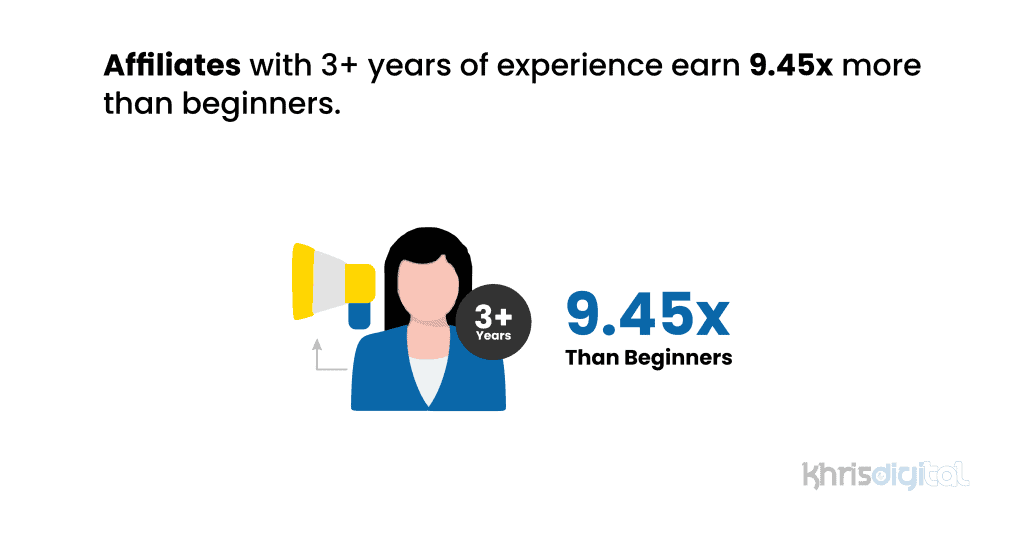
The gap reflects the skills, systems, and traffic channels built over time, from SEO authority and email lists to partnerships with higher-paying networks.
Beginners often face slow growth as they learn the ropes, but this stat proves that consistency compounds. The longer you stick with affiliate marketing, the more leverage you build, and the earnings can scale dramatically as a result.
32. Affiliates with 10+ years of experience earn over $44,000 per month.
(Authority Hacker)
That level of income reflects years of building authority sites, mastering traffic channels, and creating multiple streams of revenue. It also shows how affiliate marketing rewards compounding effort.
Content and audiences built years ago often continue to generate commissions today. For newcomers, this stat is proof that while the early grind can be tough, the long-term payoff for those who stick with it can be life-changing.
33. 40% of marketers see affiliate marketing as a key revenue driver.
(Authority Hacker)
4 in 10 marketers identify affiliate marketing as a primary driver of income, ranking it alongside core channels such as social media ads and email.
This reflects how performance-based partnerships have shifted from experimental to essential. With affiliates helping brands reach new audiences and drive sales without upfront risk, it’s no surprise more marketers are counting it among their top revenue engines.
34. Blogs are the top affiliate marketing channel, used by 28% of brands. Review sites (18.7%) and coupon websites (14.8%) rank second and third.
(WP Beginner)
When it comes to affiliate promotion, blogs lead the way.
About 28% of businesses work with bloggers, making them the most common affiliate channel. Blogs offer evergreen content, SEO reach, and trusted recommendations, which is why they remain a go-to for brands.
Review sites (18.7%) and coupon websites (14.8%) rank second and third, proving that affiliates who help consumers compare or save money also play a big role in conversions.
35. 95% of affiliate marketers never build a profitable online business.
(Ippei)
Affiliate marketing has enormous potential, but the reality is that most people don’t make it work.
Many quit too early, choose low-paying niches, or rely on ineffective strategies, such as spammy tactics that don’t last. The small group that succeeds does so by treating it like a business, focusing on long-term traffic, valuable content, and tested systems.
36. The typical affiliate marketer has 2.8 years of experience.
(Authority Hacker)
Most affiliates are still relatively new to the game. That shows two things: first, the industry continues to attract fresh participants every year.
Second, success often comes earlier than many expect, you don’t need decades to start seeing results. For newcomers, this is encouraging. Most people in the industry are still learning, testing, and building their businesses as well.
37. Affiliates earning $10k+ per month are more likely to network and attend conferences.
(Authority Hacker)
These events provide insider knowledge, early access to new tools, and direct relationships with program managers who can offer better deals or higher commissions.
While content and traffic strategies are essential, this statistic highlights a key factor behind significant earnings: relationships. The top affiliates don’t just build websites, they build networks.
38. 54% of affiliate marketers are male, 43% are female.
(DemandSage)
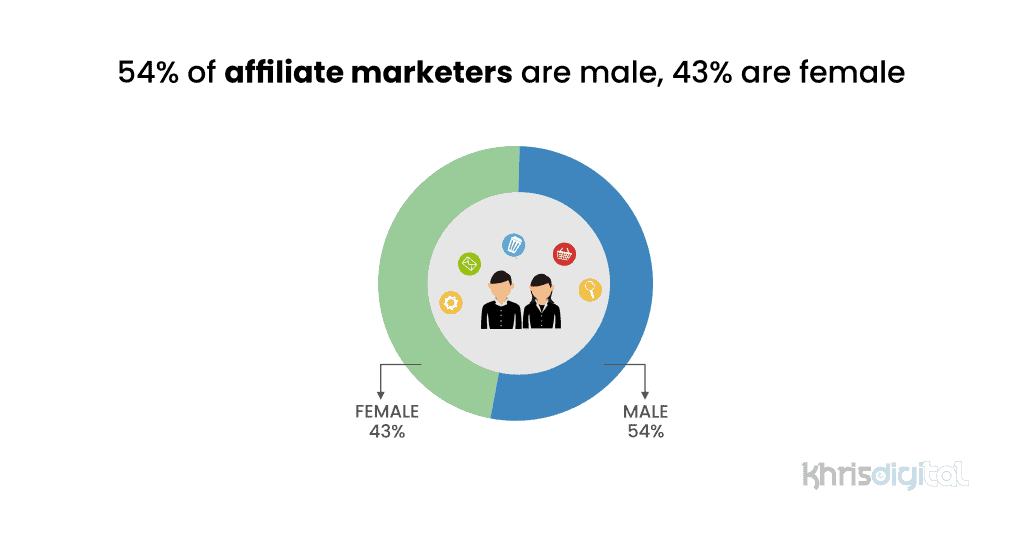
The gap isn’t huge, which shows the industry is accessible to nearly everyone, regardless of gender.
With low barriers to entry and opportunities across countless niches, affiliate marketing continues to draw a diverse crowd of entrepreneurs, creators, and publishers.
39. 45% of affiliates are aged 25–34, and 60% are male.
(Influencer Marketing Hub)
Nearly half of all affiliates (45%) fall within the age range of 25 to 34, making it a popular career path for millennials seeking to build digital income streams.
At the same time, men represent about 60% of the industry, though women continue to make up a significant share. This mix reflects the industry’s appeal to younger, tech-savvy entrepreneurs who value flexibility and digital-first business models.
40. 32% of affiliate marketers are aged 35–44.
(Influencer Marketing Hub)
Almost a third of affiliates fall into the 35–44 age range, showing that the industry isn’t just for younger marketers.
Many in this group have more professional and life experience, which often translates into stronger business strategies and long-term commitment. They’re also likely to have more disposable income to invest in tools, training, and paid traffic.
41. 57% of affiliates are based in the U.S., 10% in Canada, and 2% in India.
(DemandSage)
Affiliate marketing may be global, but the majority of affiliates are concentrated in North America. These numbers reflect the areas where affiliate infrastructure is most established, including networks, merchants, and high-consumer spending markets.
However, they also hint at future growth, as regions such as Asia and Latin America continue to expand their digital economies.
42. 34% of affiliates are single, while 55% are married.
(DemandSage)
Affiliate marketing attracts people in all life stages, but most are already settled. This indicates that the industry appeals not only to younger solo entrepreneurs but also to individuals building stable, long-term careers alongside their family life.
For many, the flexibility of affiliate marketing — being able to work from home, set your own hours, and scale your income over time — makes it an appealing fit regardless of your relationship status.
43. Affiliate marketers work from home 54.28% of the time and from the office 19.21% of the time.
(DemandSage)
Flexibility is one of the most significant benefits of affiliate marketing. This independence is a big reason people are drawn to the industry.
Affiliates can build and manage their businesses from anywhere with an internet connection. It highlights one of the core appeals of affiliate marketing: freedom from the traditional 9–5 setup.
44. 10% of affiliates drive 90% of the revenue.
(DemandSage)
Affiliate marketing follows the classic 80/20 rule, or in this case, a slightly more favorable 90/10 ratio.
These top performers are usually highly experienced, data-driven, and run multiple campaigns or sites at scale.
45. Nearly 50% of affiliates prefer direct payment options.
(DemandSage)
When it comes to getting paid, simplicity wins. Almost half of affiliate marketers prefer direct payment methods, such as bank transfers, over alternatives like PayPal, checks, or prepaid cards.
Direct deposits are faster, easier to track, and eliminate extra fees, making them more appealing for affiliates who rely on consistent payouts.
46. PayPal is used by 19.16% of affiliates, while 69% prefer Bitcoin.
(DemandSage)
Payment preferences in affiliate marketing are shifting fast. About 19.16% of affiliates use PayPal as their main payout option, valued for its speed and global reach.
But surprisingly, a much larger share — 69% — prefer Bitcoin. Crypto payouts are gaining traction because they’re fast, borderless, and often come with lower fees compared to traditional methods.
47. SaaS affiliate programs pay the highest commissions at 20% to 70%.
(Influencer Marketing Hub)
Not all affiliate programs pay the same, and SaaS stands out as the most lucrative category.
The reason is simple, as SaaS products often rely on recurring subscription models, meaning affiliates get rewarded generously for bringing in long-term customers.
48. Cost per action (CPA) is the most popular affiliate payment model.
(LinkedIn)
Among the different payout structures, cost per action (CPA) remains the most widely used in affiliate networks. With CPA, affiliates earn commissions when users take a specific action, such as signing up for a free trial, filling out a form, or completing a purchase.
Brands prefer it because they only pay for measurable results, while affiliates like the flexibility of promoting offers that don’t always require a complete sale.
49. 48.9% of affiliate programs pay a flat rate.
(Influencer Marketing Hub)
Instead of percentages or tiered systems, affiliates earn a fixed commission for every successful referral. This model is straightforward and predictable, which appeals to both advertisers and affiliates.
Brands like it because costs are easy to control, while affiliates know precisely what they’ll earn per conversion.
Flat-rate payouts are particularly common in industries such as lead generation, subscriptions, and certain SaaS products, where the value of each new customer is relatively consistent.
50. 42.4% of affiliate programs pay a percentage of sales
This model directly ties earnings to transaction value, meaning the more expensive the product, the bigger the payout. It’s popular in industries like eCommerce, travel, and luxury goods, where purchase prices can be high.
Affiliates often favor percentage-based commissions because they can scale their earnings with higher-ticket sales, while brands benefit from only paying when actual revenue is generated.
51. Nearly 75% of marketers prefer SaaS platforms over affiliate networks.
(We Can Track)
When choosing how to run programs, most marketers lean toward SaaS solutions. The appeal lies in control and transparency.
SaaS tools give brands direct access to data, customizable tracking, and often lower fees. Networks still provide reach and built-in affiliates, but SaaS platforms are gaining traction among companies that want to manage partnerships in-house.
52. 81.4% of affiliate promotions focus on B2C products and services.
(DemandSage)
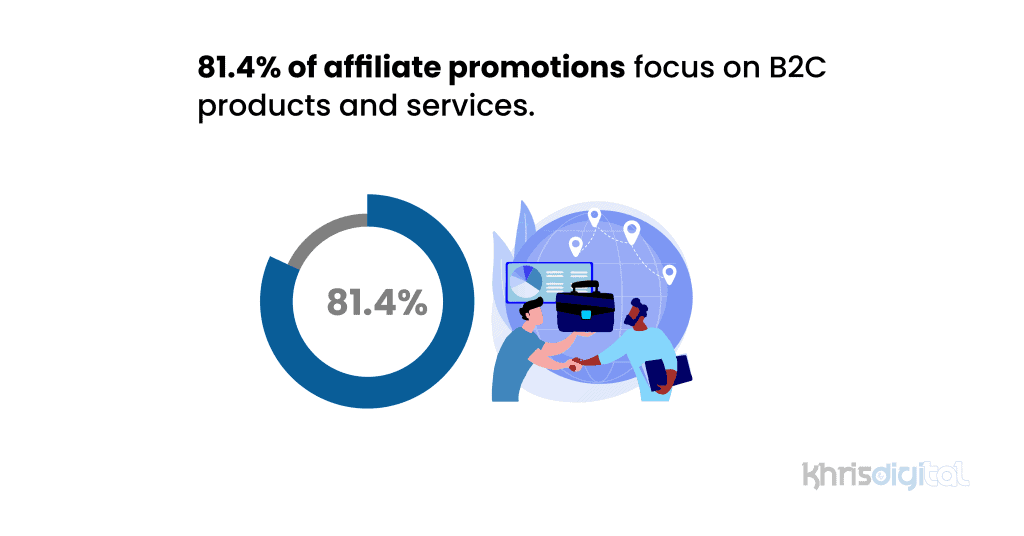
The vast majority of affiliate marketing is consumer-focused. From fashion and beauty to travel, gadgets, and e-learning, consumer niches dominate because they attract larger audiences and faster conversions.
While B2B affiliate programs do exist, they remain a smaller slice of the market.
53. B2C affiliate programs make up 59.32% of all affiliate offers.
(DemandSage)
Most affiliate programs are built around consumer markets. About 59.32% of programs fall into the B2C category, reflecting the dominance of consumer-focused products and services in affiliate marketing.
From online shopping and beauty to travel and fitness, these niches attract huge audiences, making them a natural fit for affiliate partnerships. While B2B programs are valuable in industries like software and finance, they represent a smaller share overall.
54. 58% of brands say affiliate marketing boosts brand awareness.
(Digiday)
Affiliate marketing is also a powerful awareness tool. By working with bloggers, influencers, and publishers, brands tap into audiences they may not reach through ads alone.
The credibility of third-party recommendations also fosters trust more quickly than traditional advertising. For businesses, this stat highlights a key advantage: affiliate marketing drives both measurable conversions and long-term brand recognition.
55. 79.3% of affiliates utilize AI for content creation, with blogging being the top promotional method.
(Authority Hacker)
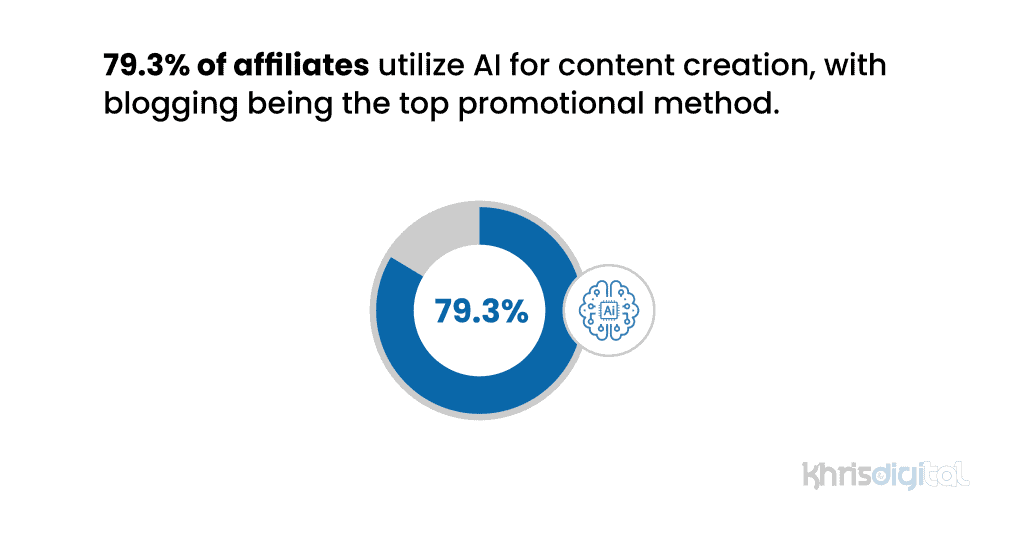
AI has become a significant tool in affiliate marketing. Nearly 80% of affiliates (79.3%) now utilize AI-driven content creation to expedite workflows, generate ideas, and optimize output.
At the same time, blogging remains the leading promotion method, with 79.1% relying on it to share reviews, guides, and comparisons. The combination of AI and blogs reflects how affiliates strike a balance between efficiency and long-term traffic strategies, such as SEO.
56. SEO is the top traffic source for 78.3% of affiliate marketers, followed by organic social media marketing (35.5%) and email marketing (22.8%).
(Phonexa)
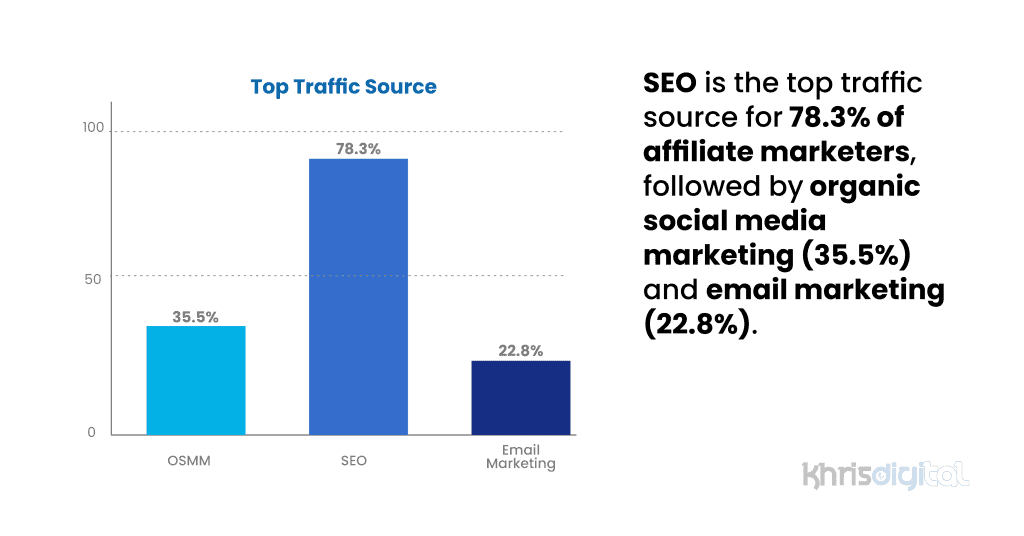
When it comes to driving visitors, SEO dominates. Ranking content in Google delivers steady, long-term traffic without ongoing ad spend, making it the backbone of many affiliate strategies.
Organic social media marketing comes second at 35.5%, while 22.8% use email marketing to convert audiences. These numbers indicate that while social and email are essential, most affiliates still rely on search visibility to generate consistent, high-intent traffic.
57. The affiliate marketing software industry will reach $7.72 billion by 2033.
(Future Market Insights)
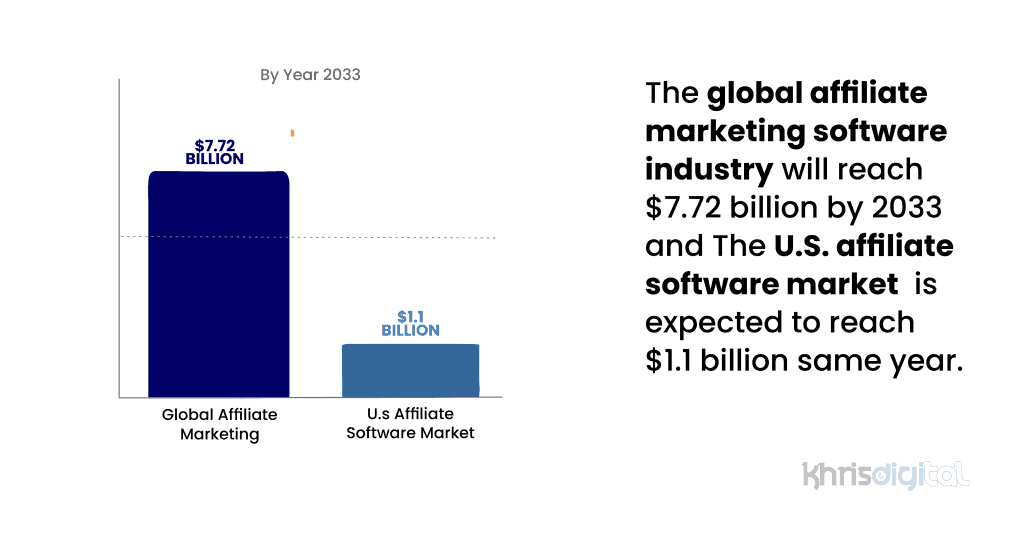
Behind every affiliate program is the software that powers tracking, reporting, and payouts, and this market is booming.
As more brands shift to SaaS-based programs and affiliates seek accurate, transparent tracking, software plays a bigger role in scaling the industry.
From AI-driven analytics to fraud prevention, this growth shows that affiliate marketing isn’t just expanding at the front end with publishers and brands.
58. The U.S. affiliate software market is expected to exceed $1.1 billion by 2033.
(Future Market Insights)
The United States is expected to dominate the affiliate marketing software space over the next decade.
This growth reflects both rising investment in SaaS-based programs and the demand for advanced tools to manage partnerships at scale.
59. Half of all affiliate traffic now comes from mobile devices.
(Future Market Insights)
Affiliate marketing is no longer desktop-first.
For affiliates, this highlights the importance of mobile-optimized websites, fast-loading pages, and campaigns tailored for smaller screens. Brands that ignore mobile traffic risk losing a massive share of conversions.
60. 69.4% of affiliate websites also monetize with ads.
(We Can Track)
Affiliate links aren’t the only revenue stream. Display ads and networks, such as Google AdSense, provide a steady income per impression, which complements the performance-based earnings from affiliate programs.
This dual approach helps affiliates diversify, reduce risk, and maximize the value of every visitor, even if they don’t click an affiliate link.
61. 42.9% of marketers say affiliate marketing outperforms ads for revenue.
(We Can Track)
When comparing monetization models, many marketers find that affiliate marketing consistently outperforms others.
Unlike display ads, which rely on impressions or clicks, affiliate earnings are directly tied to purchases, often resulting in higher payouts per visitor.
62. 44% of brands use first-interaction attribution in affiliate campaigns.
(Authority Hacker)
Attribution models shape how commissions are credited, and many brands favor the “first click.” This means that the affiliate who first introduces a customer to a product receives the commission, even if another channel closes the sale later.
This approach rewards affiliates who excel at driving awareness and discovery. While last-click attribution remains common, this stat shows a growing recognition that the start of the customer journey matters just as much as the finish.
63. Email delivers the highest ROI for affiliates, followed by SEO and content marketing.
(We Can Track)
Among all traffic and promotional methods, email marketing ranks at the top in terms of ROI. Affiliates with strong mailing lists enjoy direct, personal access to audiences who are already engaged, making conversions easier and more consistent.
SEO and content marketing work closely together, providing long-term traffic through search rankings and evergreen blog posts. Together, these strategies form the backbone of sustainable affiliate businesses.
64. 77.1% of affiliates work solo without a team.
(QR Tiger)
This reflects the low barrier to entry, as anyone can start with minimal resources. While some affiliates eventually scale into teams or agencies, most prefer the independence and flexibility of working alone.
It’s a reminder that success in this industry doesn’t require a big staff. Consistency and strategy often matter more than the number of employees.
65. 80% of affiliates use social media for traffic, with Instagram and YouTube leading the way.
(Rakuten Advertising)
Visual content plays a big role here as product demos, tutorials, and lifestyle posts connect directly with audiences and influence buying decisions.
Social platforms also enable affiliates to establish personal brands and communities, making their recommendations appear more authentic.
66. 85.8% of social media affiliates have fewer than 10,000 followers.
(Authority Hacker)
Most affiliates driving traffic through social media aren’t influencers with massive audiences, they’re micro-creators.
This proves that success in affiliate marketing isn’t only about follower count. Smaller creators often see stronger engagement, higher trust, and more targeted audiences, which can lead to better conversions than broad but less engaged followings.
67. Facebook is the most used platform by affiliates at 75.8%.
(WP Beginner)
When it comes to social media platforms, Facebook remains the dominant force in affiliate marketing.
About 75.8% of affiliates use Facebook to drive traffic, followed by Instagram (61.4%), Pinterest (42.2%), YouTube (36.9%), X/Twitter (31.1%), TikTok (29.6%), and LinkedIn (19%). These numbers show that affiliates spread their efforts across multiple platforms, tailoring strategies to different audiences.
68. 58% of U.S. creators earn income from affiliate commissions.
(EMarketer)
Affiliate marketing is now a core revenue stream for content creators. In the U.S., more than half (58%) of creators report receiving affiliate commissions as part of their income, making it the second most common source of income after sponsored content (82%).
This shows how deeply affiliate marketing is integrated into the creator economy.
69. 65% of retailers say affiliate marketing contributes up to 20% of yearly revenue.
(We Can Track)

That’s a significant share, especially given the low-risk nature of performance-based payouts. It shows that affiliates are driving measurable sales, not just clicks or leads.
70. 86% of creators expect affiliate earnings to hold steady or grow.
(We Can Track)
Confidence in affiliate marketing is high among creators. This optimism reflects steady demand from brands, growing consumer trust in affiliate content, and the scalability of performance-based models.
For creators, it signifies that affiliate commissions are a reliable and long-term income stream.
71. More than half of U.S. and Canada marketers leverage affiliate marketing for the mid-funnel (consideration stage, 58%) and upper-funnel awareness (56%) stages. Only 32% of respondents claim to use affiliate marketing for the post-sale stage (retention and loyalty.
(EMarketer)
In the U.S. and Canada, marketers primarily rely on affiliates for early- and mid-stage customer journeys.
This stat shows that while affiliates excel at discovery and conversion, most brands aren’t yet tapping into their potential to strengthen long-term customer relationships.
72. 35% of bloggers worldwide rely on affiliate marketing income.
(WP Beginner)

For bloggers, affiliate marketing is one of the most effective ways to monetize their content. It’s easy to see why as affiliate links integrate naturally into blog posts like reviews, tutorials, and guides, creating ongoing revenue from evergreen content.
73. 90% of affiliates prefer products with recurring commissions or long cookies.
(Ahrefs)
Affiliates want stability and bigger long-term rewards. Recurring payouts, common in SaaS and subscription services, mean one referral can generate income month after month.
Long cookies increase the chance of earning credit when buyers take time to decide. Together, these features make programs more attractive to affiliates, since they maximize earning potential without requiring constant new traffic.
74. 20% of brands rank affiliate marketing as their most successful channel.
(Authority Hacker)
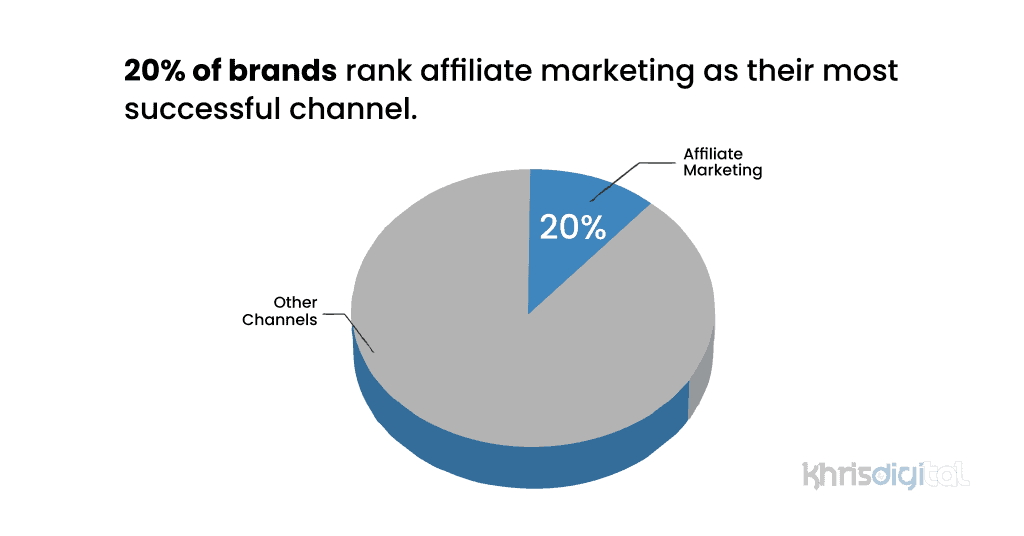
For one in five brands, affiliate marketing outperforms every other channel, surpassing paid ads, social media, and email in their marketing mix.
This reflects the strength of performance-based partnerships as brands only pay for results, affiliates drive high-intent traffic, and both sides benefit.
75. 73% of merchants are satisfied with affiliate revenue.
(WP Beginner)
Most merchants are satisfied with the results they’re achieving through affiliates. Since payments are performance-based, brands see a clear link between their spend and results, resulting in higher satisfaction levels compared to other ad channels.
76. 49% of brands use affiliate ambassadors to boost sales.
(WP Beginner)
About 49% of companies provide this dedicated help to guide affiliates, share best practices, and supply marketing resources.
Having an ambassador or support system in place makes it easier for affiliates to optimize campaigns, stay motivated, and ultimately drive more sales.
77. 79% of marketers use affiliate marketing to engage new customers, while 46% use it for customer retention.
(Wix)
About 79% of marketers say they use affiliates to engage new customers, making acquisition the top priority.
At the same time, 46% also use affiliate marketing for retention, leveraging affiliates to encourage existing customers to return through loyalty programs, discounts, or product recommendations.
78. 45.3% of affiliates struggle most with getting traffic.
(Authority Hacker)
Traffic is the lifeblood of affiliate marketing, but it’s also the hardest part. With competition growing in SEO, rising ad costs, and social platforms constantly shifting algorithms, getting consistent visitors isn’t easy.
This stat shows why so many affiliates focus on building multiple traffic streams, from search and email to social and paid campaigns, to reduce dependence on any single source.
79. 82% of six-figure websites combine display ads with affiliate products.
(Authority Hacker)
High-earning websites rarely rely on just one income stream. This mix allows them to maximize revenue, ads capture value from casual visitors, while affiliate links convert high-intent readers into commissions.
80. Brands attribute anywhere from 1% to 50% of revenue to affiliate marketing.
(MarTech Record)
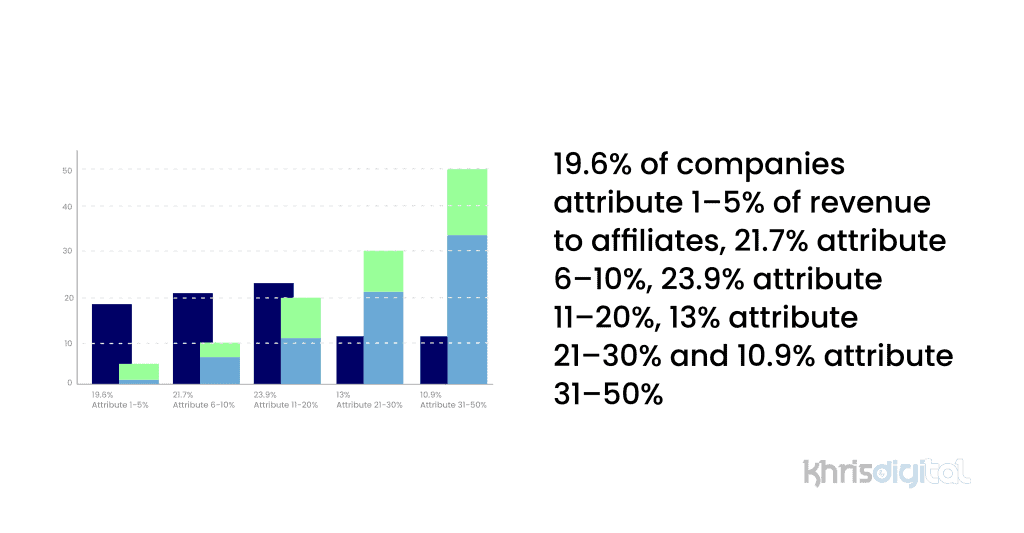
Affiliate marketing contributes differently depending on the brand, but the impact is undeniable.
A survey shows:
- 19.6% of companies attribute 1–5% of revenue to affiliates
- 21.7% attribute 6–10%
- 23.9% attribute 11–20%
- 13% attribute 21–30%
- 10.9% attribute 31–50%
These numbers prove that affiliate marketing can range from a small but steady revenue stream to a major driver of business income. For many companies, it has moved far beyond “extra sales” and has become a core part of their growth strategy.
81. 10.9% of companies don’t track revenue from affiliates.
(MarTech Record)
This gap often stems from poor tracking, unclear attribution models, or reliance on outdated reporting tools.
It highlights one of the ongoing challenges in the industry: while affiliates are driving results, not all businesses have the systems in place to measure them accurately.
82. Half of publishers earn more than 50% of their revenue from affiliate marketing.
(MarTech Record)
For many publishers, affiliate marketing is their primary source of income. A breakdown shows:
- 17% say affiliates contribute 0–5% of revenue
- 8% say 6–10%
- 6% say 11–20%
- 3% say 21–30%
- 13% say 31–50%
- And a massive 50% say more than half of their revenue comes from affiliate marketing
This demonstrates how central affiliate partnerships have become for publishers.
83. 3% of publishers don’t track affiliate revenue.
(MarTech Record)
This typically stems from inadequate tracking tools or unclear attribution models, making it challenging to link affiliate efforts to actual revenue.
Without accurate tracking, publishers can underestimate the value of affiliate partnerships and miss opportunities to scale their business.
84. Major brands earn 5% to 25% of online sales through affiliates.
(Authority Hacker)
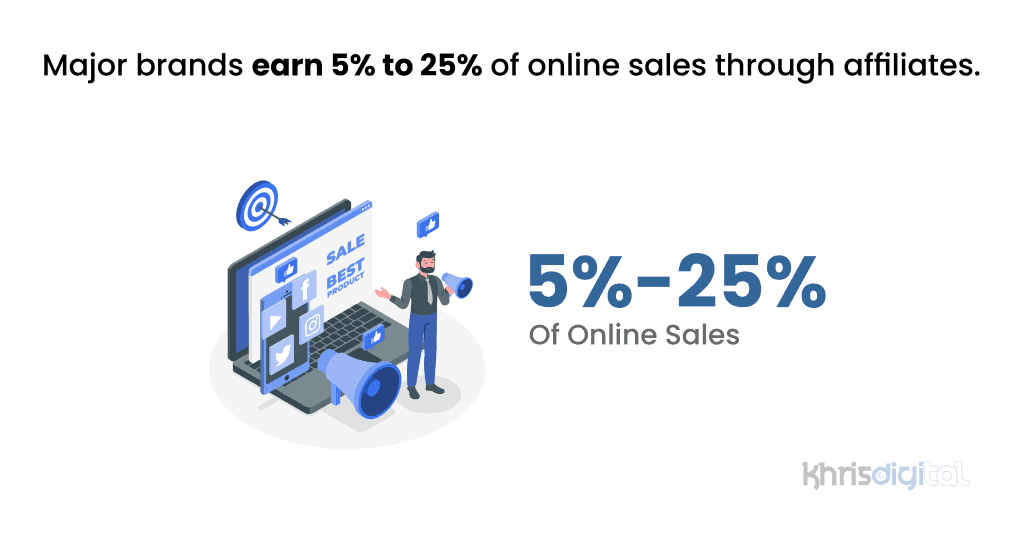
That’s a significant slice of revenue powered by third-party publishers, bloggers, and influencers. It reflects the strength of the performance-based model. Affiliates extend reach, build trust with audiences, and convert buyers that brands might not reach on their own.
85. Affiliate marketing is growing at a rate of 10% year over year.
(Authority Hacker)
Affiliate marketing is accelerating. This consistent rise shows that more brands are investing in affiliate programs and more publishers are turning to affiliates as a sustainable income stream.
Year-over-year growth also signals that affiliate marketing is a long-term shift in how products are promoted and sold online.
86. 75,659 companies use the Amazon Associates program.
(Enlyft)
Amazon Associates remains the most extensive affiliate program in the world, and the numbers prove it.
For affiliates, Amazon’s broad selection makes it easy to find products that match nearly any niche. At the same time, for brands, it provides a straightforward way to tap into millions of potential customers.
87. 64% of Amazon Associates users are small businesses.
(Enlyft)
With low barriers to entry and an extensive product range, Amazon’s affiliate program provides even the smallest companies with an opportunity to compete and earn alongside larger brands.
88. 40% of online marketers view affiliate marketing as a critical skill.
(We Can Track)
Affiliate marketing has become a key component of digital strategy. Approximately 40% of online marketers consider it a critical skill, ranking it alongside essentials such as SEO, paid advertising, and content marketing.
The ability to build partnerships, track performance, and optimize for conversions is increasingly seen as a must-have in the marketing toolkit.
89. Affiliate marketers risk losing $1.5 billion to fraud.
(DemandSage)
Fraud remains one of the biggest threats to the affiliate industry. Marketers are projected to lose around $1.5 billion to fraudulent activity, including fake leads, bot traffic, and unethical tactics like cookie stuffing.
These schemes not only drain revenue but also damage trust between brands and affiliates. This shows the need for stronger fraud detection, better tracking systems, and careful vetting of partnerships.
90. 63% of businesses worry about affiliate fraud.
(WP Beginner)
Fraud is a major concern for brands running affiliate programs. From fake clicks and leads to fraudulent traffic sources, these risks can eat into profits and erode trust in the model.
While fraud protection tools are improving, this stat shows that many companies still view it as a top challenge.
91. 56% of affiliate programs saw revenue surge during COVID-19.
(We Can Track)
The pandemic accelerated online shopping, and affiliates benefited. Affiliates positioned in fast-growing niches, such as home fitness, online learning, and health products, saw especially sharp gains.
92. 45% of brands struggle to recruit quality affiliates.
(Rakuten Advertising)
With thousands of publishers and influencers in the space, the real difficulty lies in identifying those who can deliver genuine, high-intent traffic instead of low-quality clicks.
This stat shows why many brands now invest in affiliate managers, stricter vetting processes, and closer relationships with top performers.
93. 59% of marketers say affiliate management takes more effort than other channels.
(Ahrefs)
Running an affiliate program isn’t a “set it and forget it” strategy. Unlike ads or email, affiliates are individual partners who each need support, communication, and resources to perform well.
From negotiating terms to sharing creative assets and tracking performance, the workload can add up.
94. TikTok Shop gained 100,000 creators in its affiliate program within a year.
(Modern Retail)
TikTok is quickly emerging as a significant player in affiliate marketing. The platform’s mix of viral short-form video and integrated shopping makes it a natural fit for affiliates looking to drive fast conversions.
With Gen Z and younger audiences spending hours on TikTok daily, this growth shows how social commerce is reshaping affiliate marketing and opening massive opportunities for creators.
95. 61% of Australian affiliates use last-click attribution.
(Digital Scholar)
This approach gives full credit for a sale to the last affiliate who engaged the customer before purchase.
While simple and easy to track, it often overlooks the role of affiliates who introduced or nurtured the buyer earlier in the journey.
Final Thoughts: The Numbers Prove Affiliate Marketing’s Power
Affiliate marketing has grown from a niche side hustle into a global industry worth billions, and the numbers speak for themselves.
With nearly every major brand running programs, high ROI compared to other channels, and affiliates earning anywhere from steady side income to seven-figure businesses, the opportunity is bigger than ever.
But the stats also reveal challenges such as fraud concerns, traffic struggles, and the fact that only a small percentage of affiliates generate the majority of revenue.
Still, the outlook is overwhelmingly positive. Affiliate marketing continues to expand at a double-digit growth rate, attracting more creators and reshaping how brands reach customers worldwide.
Sources:
Check out my other Statistics round up:
