


Artificial intelligence isn’t on the sidelines anymore; it’s driving the marketing world at full speed.
Right now, the AI in marketing industry is already worth a staggering $47.32 billion, and it’s not slowing down. Projections show it will surge to $217.33 billion by 2034, growing at an eye-popping 26.7% annually.
And it’s not just about future potential. A complete 88% of marketers are using AI or marketing automation tools in their daily work, reshaping everything from how campaigns are created to how customers are targeted and engaged.
The numbers in this post come from verified, reputable sources, and an exhaustive list of them is provided at the end for full transparency.
What follows is a no-fluff breakdown of the most eye-opening AI in Marketing statistics, showing just how deeply AI is rewriting the marketing playbook.
1. The AI in Marketing Market is worth $47.32 Billion and will hit $217.33 Billion by 2034.
(Precedence Research)
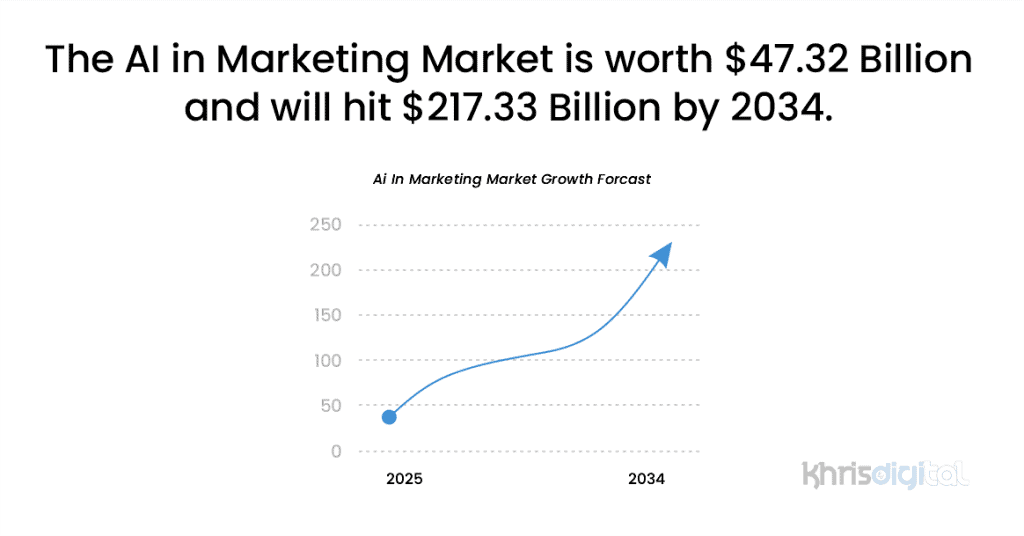
AI is becoming a core part of how marketing works. Right now, the industry built around it is already worth $47.32 billion. And it’s just getting started.
Forecasts show it will grow to $217.33 billion by 2034, climbing fast at a 26.7% annual rate. This massive growth shows that businesses are investing heavily in it.
From campaign planning to customer data analysis, AI tools are now built into everyday marketing work. The numbers make it clear that AI is not a trend. It’s a long-term shift that’s changing how marketing teams operate and compete.
2. Global AI Marketing Revenue will reach over $107.5 billion by 2028.
(Statista)
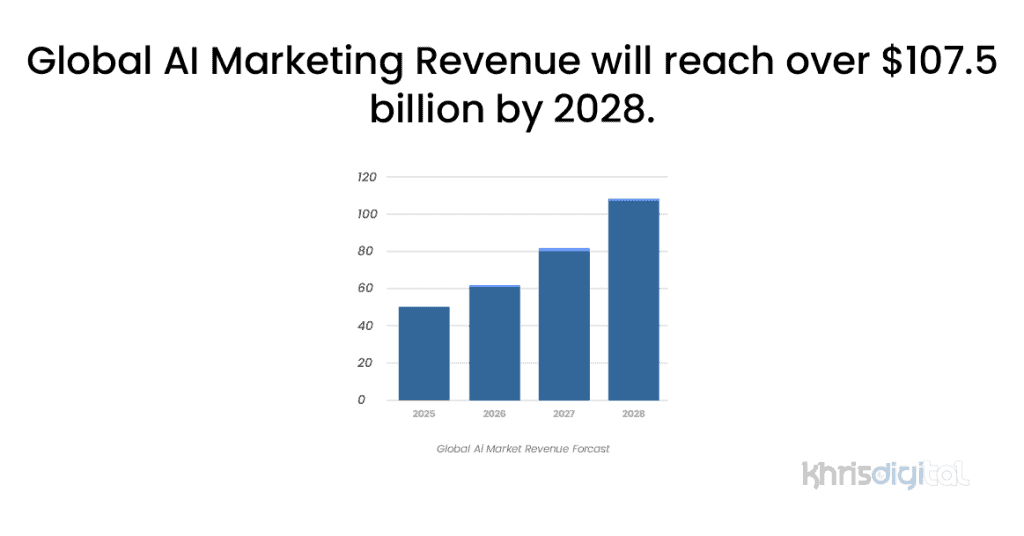
That’s a huge leap from where it stands today and a strong signal that businesses are finding real value in AI-driven tools and platforms.
As companies look for smarter ways to target, automate, and optimize, they’re putting more of their budgets into AI solutions. This steady rise in revenue reflects how quickly AI is moving from optional to essential in the marketing world.
3. 88% of marketers already use AI or marketing automation tools.
(Tidio)
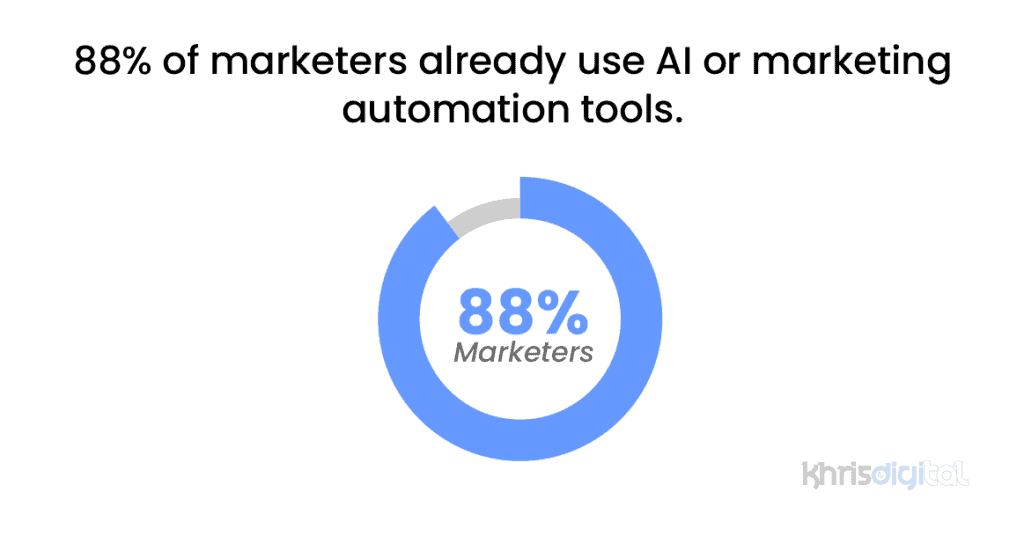
That includes everything from email scheduling to customer segmentation to content generation. This high adoption rate shows how quickly AI has gone from cutting-edge to common practice.
It’s not just big brands, either. Small teams and solo marketers are jumping in too, using AI to save time, improve targeting, and boost performance without needing huge budgets.
4. 94% of organizations use AI to prepare or execute marketing.
(Epsilon)
That includes analyzing data, building strategies, writing copy, or managing campaigns. It’s clear that AI is also helping shape the thinking behind the work.
As the tech becomes easier to access and more accurate, businesses are relying on it to make better decisions, faster. What was once experimental is now routine.
5. AI saves marketers over 5 hours a week on average.
(CoSchedule)
That’s time they no longer spend on repetitive tasks like writing first drafts, analyzing data, or scheduling posts. For a busy team, those hours add up fast. It means more room for strategy, creativity, and testing new ideas.
As workloads grow and expectations rise, AI is giving marketers breathing room and helping them do more without burning out.
6. Marketers using AI are 25% more likely to say their content performs well.
(CoSchedule)
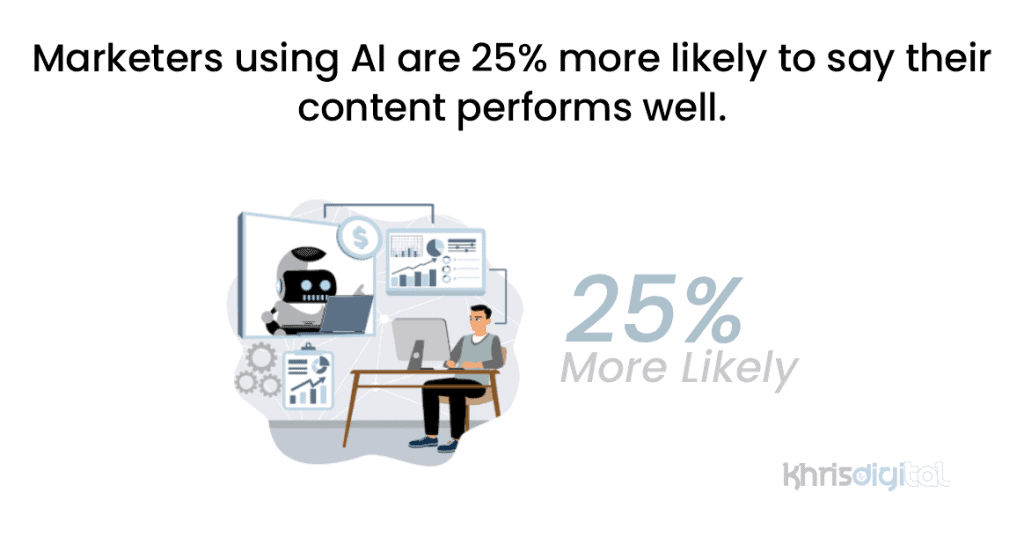
That success shows up in better engagement, higher conversions, and more consistent quality. AI helps identify what topics work, suggest headlines, optimize for SEO, and even tailor content for different audiences.
When those pieces come together, the outcome is stronger content that connects better with the people it’s meant for.
7. 74.6% of marketers say AI gives them a competitive edge.
(CoSchedule)
Nearly three out of four marketers believe AI gives them an advantage over their competition.
AI helps teams spot trends, personalize messaging, and make data-driven decisions in real time. For marketers trying to stand out in crowded markets, AI is quickly becoming one of the most powerful tools in their corner.
8. 75% of companies say AI in marketing will enhance jobs, not replace them.
(Tidio)
There’s a common fear that AI will take over jobs, but most companies don’t see it that way. That means AI is being viewed as a support system, not a replacement.
It handles the repetitive stuff, like crunching numbers or drafting reports, so marketers can focus on strategy, creativity, and building real connections. Instead of replacing people, AI is helping them do their best work more efficiently.
9. 81% of marketers using AI say it boosts brand visibility and revenue.
(Statista)
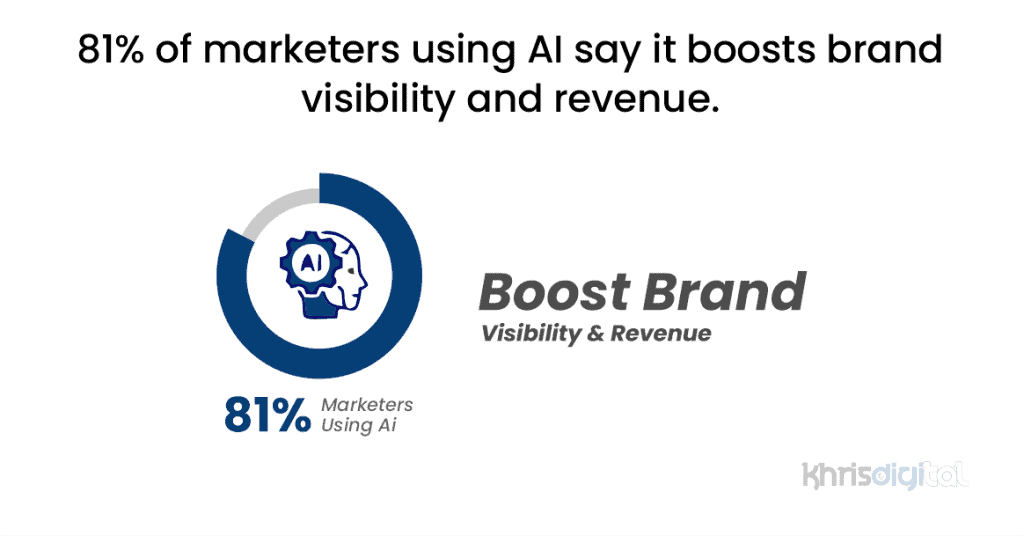
That means more eyes on their content and more conversions from their campaigns. Whether it’s smarter ad targeting, better content recommendations, or personalized customer journeys, AI is helping brands get noticed and get results.
10. 84% of marketers say AI helps them deliver quality content faster.
(CoSchedule)
Speed matters in marketing, especially when content needs to stay fresh and relevant. From generating first drafts to refining headlines and optimizing for SEO, AI tools cut down the time it takes to go from idea to publish.
And faster doesn’t mean sloppier. It means teams can produce more without sacrificing quality. In fast-moving markets, that’s a serious edge.
11. 83.82% of marketers say AI has made them more productive.
(CoSchedule)
That might mean writing content faster, analyzing data quicker, or automating tasks that used to eat up hours.
Instead of juggling everything manually, teams can now focus on the work that actually moves the needle. The result? Less burnout, more output, and better performance across the board.
12. 93% of marketers use AI to speed up content creation.
(Tidio)
Creating content takes time, but AI is helping cut that time down. That includes writing blog posts, emails, social media captions, product descriptions, and more.
Instead of starting from scratch, they’re using AI to build drafts, brainstorm ideas, and polish copy faster than ever. It’s become a go-to tool for teams that need to produce high-quality content at scale, without long delays.
13. 81% of marketers use AI to uncover insights faster.
(Tidio)
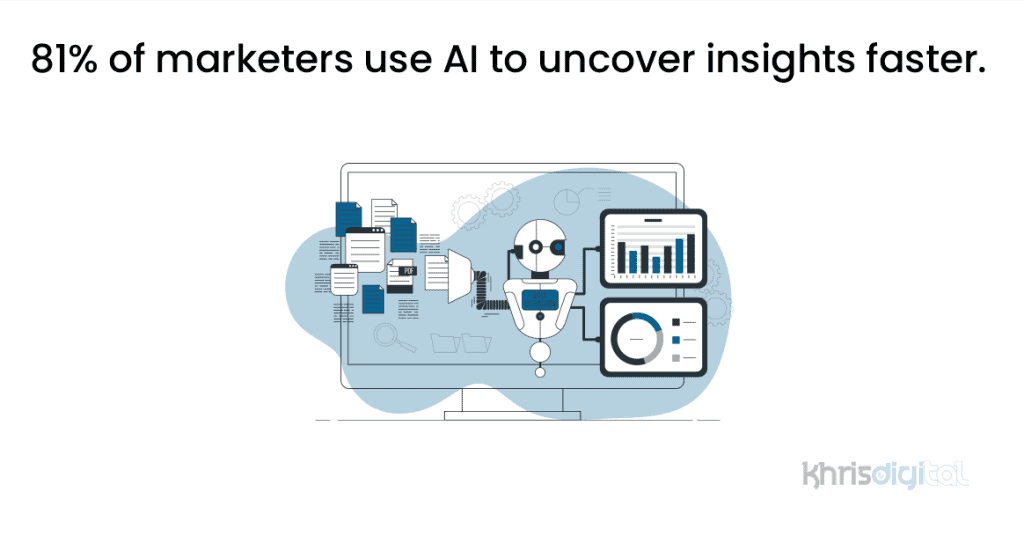
Data is everywhere, but making sense of it can be slow. AI tools can scan large amounts of data in seconds, spot trends, and highlight what matters most.
Instead of spending hours digging through reports, marketers get instant answers that help guide smarter decisions.
14. 90% of marketers use AI to make faster decisions.
(Tidio)
Marketing moves fast, and delays can cost results. Whether it’s choosing which ad to run, what content to promote, or how to adjust a campaign, AI delivers real-time insights that speed things up.
With less guesswork and more clarity, teams can react faster, test ideas sooner, and stay ahead of shifting trends.
15. 75% of US marketers say AI helps cut costs.
(Tidio)
AI isn’t just boosting speed and output; it’s also saving money. That includes reducing manual labor, streamlining processes, and minimizing the need for large teams to handle repetitive tasks.
By automating more of the work, companies can do more with less and redirect resources to higher-impact areas.
16. 74% of US marketers say AI makes their jobs more enjoyable and effective.
(Tidio)
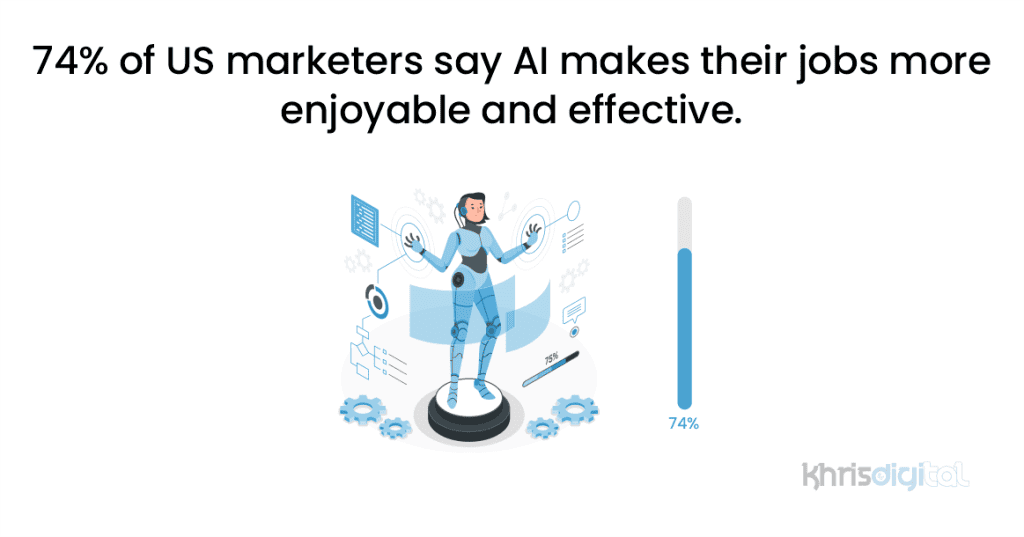
With routine tasks handled, they get to focus on creative thinking, strategy, and the parts of marketing that feel more rewarding. It’s helping teams feel less overwhelmed and more in control, which leads to better outcomes and higher job satisfaction.
17. 85.84% of marketers plan to increase their use of AI in the next 2–3 years.
(CoSchedule)
AI use in marketing is about to grow even more. As tools get smarter and easier to use, marketers are finding more ways to integrate them into their daily work.
From automation to advanced analytics, AI is quickly becoming a standard part of the modern marketing toolkit.
18. 79.05% of marketers say efficiency is the most significant benefit of AI, followed by scaling content output (55.05%) and cost reduction (43.46%).
(CoSchedule)
When asked about the top benefits of AI, 79.05% of marketers pointed to increased efficiency. That’s the main driver behind adoption: getting more done with less effort.
But that’s not the only perk. About 55.05% say AI helps them scale content output, allowing teams to produce more without stretching resources thin. Another 43.46% list cost reduction as a significant gain.
These numbers show that AI is solving real problems that marketing teams face every day.
19. 40.44% of marketers say data privacy is the biggest barrier to AI adoption, followed by 37.98% citing lack of technical expertise, and 33.17% citing cost of implementation.
(CoSchedule)
Even with all its benefits, AI adoption doesn’t come without concerns. For 40.44% of marketers, data privacy is the top barrier to their growth. With customer data at the center of many AI tools, handling it responsibly is a major challenge.
Close behind, 37.98% cite a lack of technical expertise as a hurdle, while 33.17% cite the cost of implementation as another roadblock.
These numbers highlight the balance marketers are trying to strike between tapping into AI’s power and managing the risks that come with it.
20. 78% of CMOs plan to use generative AI to reshape business models.
(Tidio)
This shows that AI adoption is going beyond day-to-day marketing tasks and into core strategy. It’s about rethinking how work gets done, how value is delivered, and how fast companies can adapt to change. The shift is big, and leadership is fully behind it.
21. 41% of companies say responsible AI improves customer experience.
(Tidio)
Responsible AI directly affects how customers feel. When AI is used with care, transparency, and fairness, it builds trust. That trust leads to smoother interactions, better personalization, and fewer missteps. For brands that want long-term loyalty, getting AI right is essential.
22. Younger marketers, especially ages 18–29, are leading AI adoption.
(Tidio)
AI adoption in marketing isn’t evenly distributed across age groups. Younger professionals, especially those between 18 and 29, are more likely to use AI tools both at work and in their personal projects.
This group tends to be more tech-comfortable, quick to experiment, and open to integrating AI into everyday tasks. Their early adoption is helping shape how marketing evolves, pushing teams toward faster, smarter, and more digital-first approaches.
23. 51% of marketers use AI to optimize email and SEO content.
(Survey Monkey)
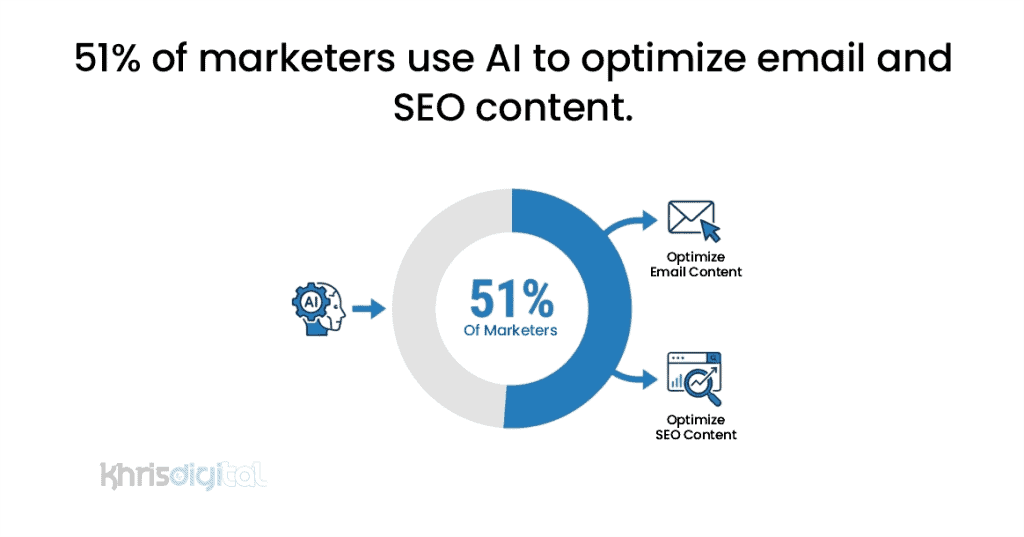
AI is now a go-to tool for sharpening marketing content. From writing subject lines that boost open rates to choosing the right keywords for higher rankings, AI helps fine-tune messaging for better results.
It takes the guesswork out of optimization and gives marketers a faster, data-backed way to improve performance.
24. 50% of marketers use AI to support content creation.
(Survey Monkey)
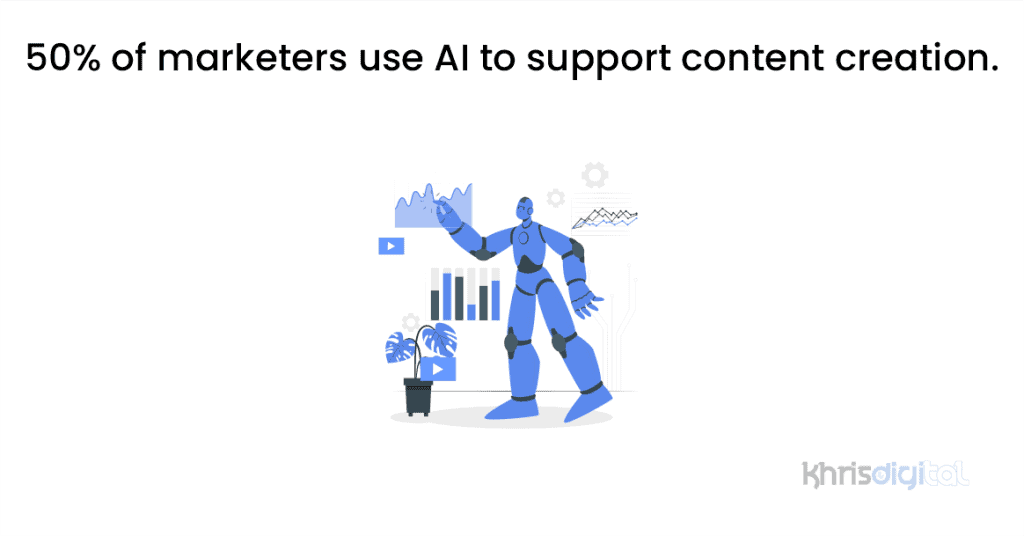
Half of all marketers now use AI to help create content, not to replace their work, but to strengthen it. Whether it’s generating first drafts, suggesting formats, or helping with research, AI acts as a creative partner.
It gives teams a head start, helps them work faster, and frees up time for editing, strategy, and storytelling.
25. 45% of marketers use AI to brainstorm content ideas.
(Survey Monkey)
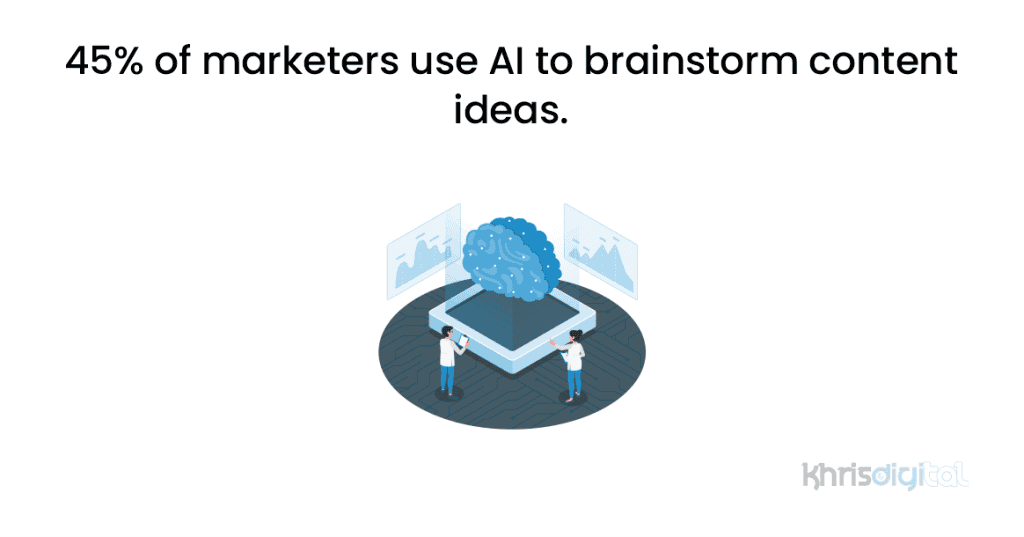
Coming up with fresh content ideas can be one of the hardest parts of the job. That’s why 45% of marketers now turn to AI tools to help spark new concepts.
Whether they’re stuck on blog topics, social post angles, or campaign themes, AI can scan trends, audience data, and past content to suggest ideas that hit the mark.
26. 43% of marketers use AI to automate repetitive tasks.
(Survey Monkey)
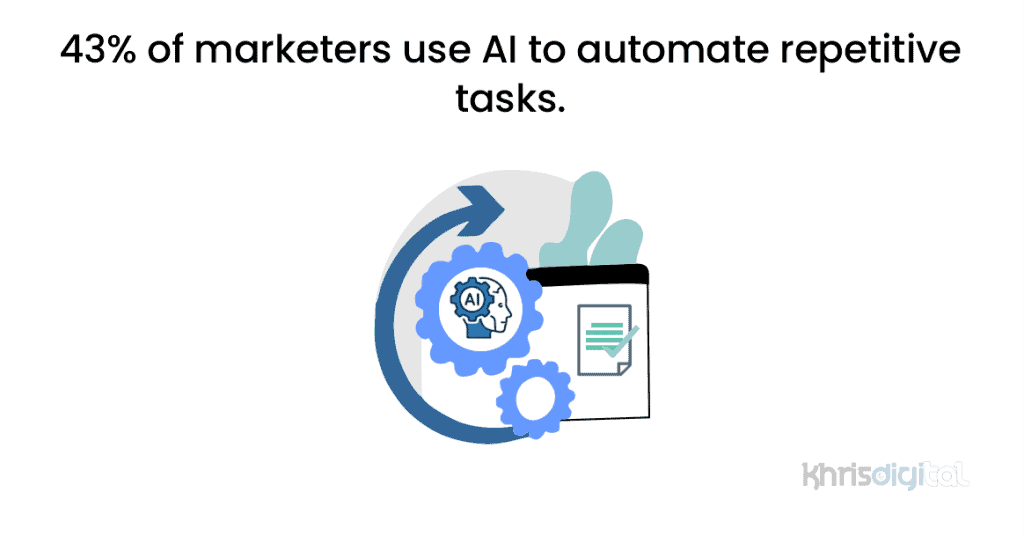
Repetitive tasks eat up time and energy. That includes things like data entry, scheduling, reporting, and tagging.
By letting AI take over the dull, manual work, teams can focus on the creative and strategic parts of marketing that actually move the needle. It’s a practical shift that’s saving hours and boosting productivity across the board.
27. 43% of marketers say AI is essential to their social media strategy.
(Survey Monkey)
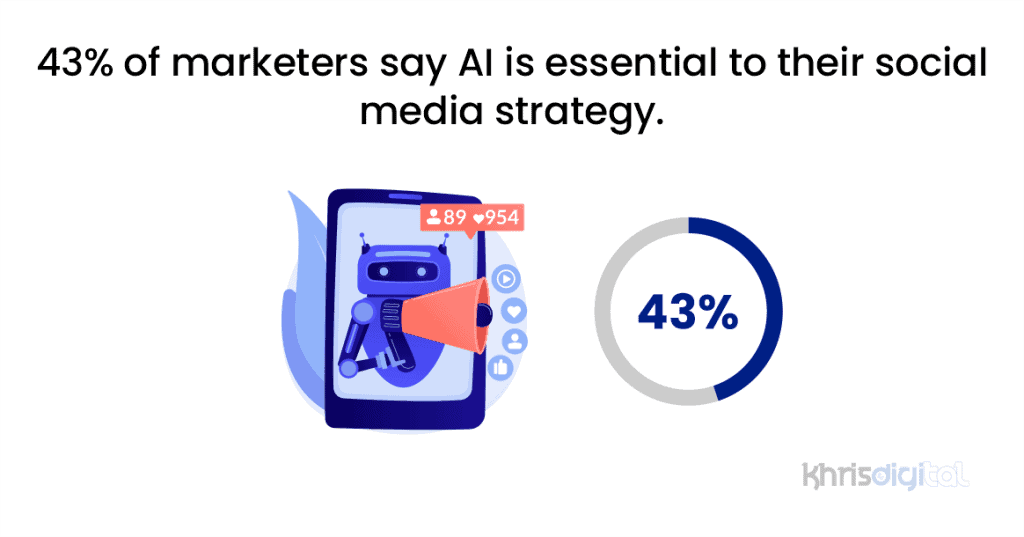
Whether it’s scheduling posts, analyzing performance, writing captions, or identifying trends, AI tools are making the process more efficient and data-driven. Instead of guessing what works, marketers can act on real insights and adjust their approach in real time.
28. 41% of marketers use AI to organize and analyze data for insights.
(Survey Monkey)
AI tools help sort, clean, and analyze large sets of marketing data, turning it into useful insights without hours of manual work.
From spotting patterns to tracking customer behavior, AI helps marketers understand what’s working and where to improve, all with more accuracy and speed.
29. 73% of marketers say AI is key to creating personalized customer experiences.
(SurveyMonkey)
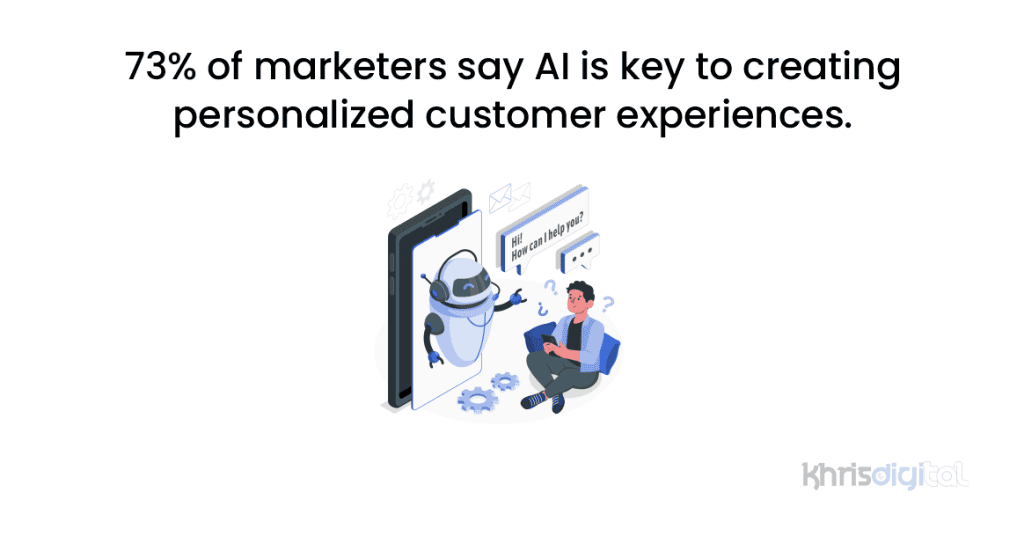
AI helps analyze customer behavior, segment audiences, and tailor messages in real time.
Whether it’s suggesting the right product, sending the perfect follow-up email, or adjusting website content based on user behavior, AI makes personalization feel natural and seamless. It’s turning one-size-fits-all into one-to-one.
30. B2B marketers say AI is most effective for automation, targeting, analytics, and personalization.
(Statista)
These areas help them reach the right people, track performance more accurately, and tailor messaging to individual decision-makers.
For B2B campaigns that often involve longer sales cycles and more complex journeys, AI is making it easier to deliver the right message at the right time, with less manual effort.
31. 69% of marketers feel excited about how AI is changing their jobs.
(Survey Monkey)

AI is changing how marketers feel about their work. With AI handling time-consuming tasks and providing smarter insights, marketers have more space to think creatively and focus on what they enjoy most. The tools are evolving fast, and so is the energy around them.
32. 17% of marketers are concerned about AI’s impact on their jobs.
(Survey Monkey)
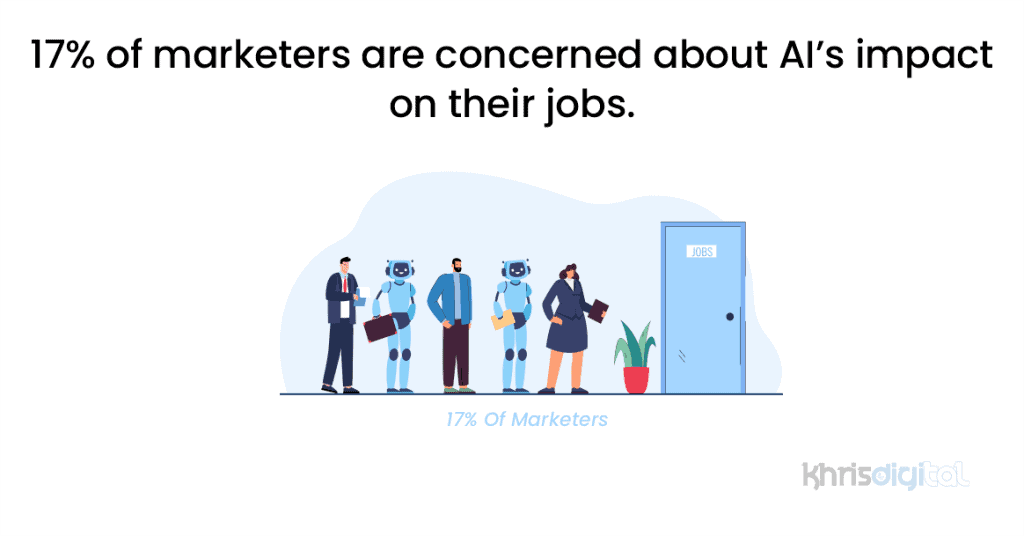
While excitement is growing, not everyone feels at ease. The concern often centers around automation replacing roles or reducing the need for certain skills.
As AI tools get more capable, some fear they might be left behind if they don’t adapt quickly. It’s a reminder that alongside innovation, there’s a need for upskilling, transparency, and thoughtful integration.
33. 55% of marketers say they highly trust AI-generated content and insights.
(CoSchedule)
That trust reflects growing confidence in AI’s ability to deliver accurate, useful, and on-brand results.
Whether it’s recommending strategy tweaks, summarizing data, or drafting content, many marketers now see AI as a reliable partner in the creative and decision-making process. As the tools continue to improve, that trust is likely to deepen.
34. Nearly 60% of marketers worry AI could replace their roles.
(Influencer Marketing Hub)
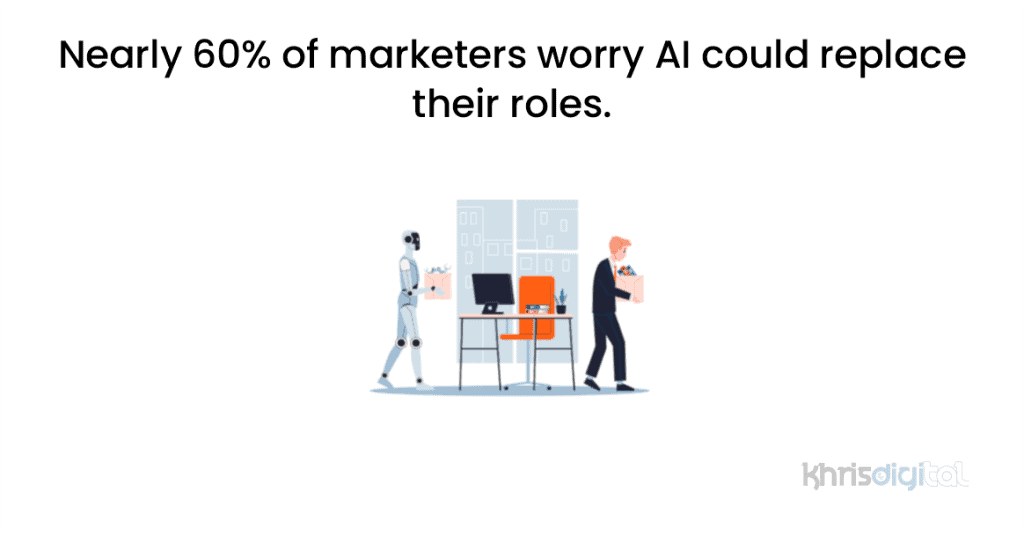
Even as AI becomes a helpful tool, the fear of replacement remains real. The worry stems from how quickly AI is advancing and how easily it handles tasks like writing, analysis, and even strategy suggestions.
For many, it’s a push to stay sharp, upskill, and find new ways to bring human creativity and judgment into the mix, the parts AI can’t truly replicate.
35. 72% of agencies use AI to support human work, while 25% use it to replace roles.
(NinjaCat)
Most agencies are leaning into AI as a support system, not a substitute. About 72% use it to enhance the work humans do by helping teams move faster, make smarter decisions, and improve results.
But there’s also a shift happening; 25% of agencies report using AI to replace certain roles or functions. It’s a split that reflects two paths, one focused on collaboration with AI, the other on full automation where possible.
36. 60% of marketers are concerned AI content could harm brands through biases, plagiarism, and value misalignment.
(Synthesia)
AI poses risks if not used carefully. When AI writes or recommends without proper checks, it can miss the tone, message, or context that humans naturally catch. For marketers, that means AI needs strong guardrails and a human touch to maintain brand trust.
37. 56% of marketers say their company is actively implementing AI.
(SurveyMonkey)
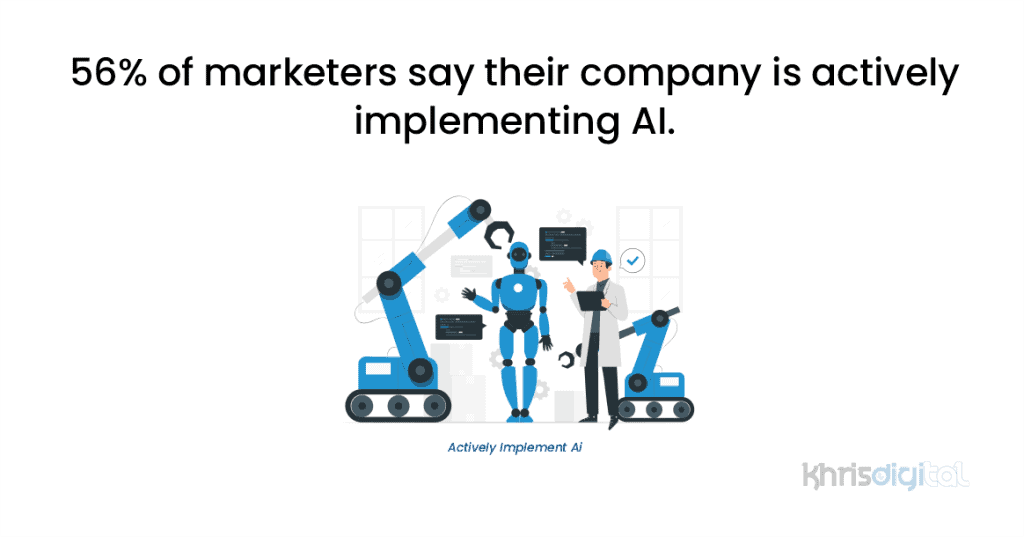
This means adopting tools, training teams, and integrating AI into everyday workflows. It’s a sign that AI is moving from pilot projects to full integration, with leadership backing and real investment.
For marketers, that support makes it easier to explore new tools and stay ahead of the curve.
38. 44% of marketers say their companies are waiting for AI to mature.
(SurveyMonkey)
Not every company is rushing into AI. The hesitation often comes from concerns around accuracy, risk, or integration challenges.
While early adopters are diving in, this group is watching closely, waiting for the tech to settle, best practices to emerge, and tools to become more reliable before making big moves.
39. 32% of marketing organizations have fully implemented AI.
(Salesforce)
AI is already fully in place for nearly one-third of marketing teams. That includes everything from content creation and campaign optimization to analytics and customer personalization.
40. 38% of marketers say they’ve fully integrated AI into their work.
(Epsilon)
While company-wide adoption varies, 38% of individual marketers say they’ve fully woven AI into their daily tasks.
That means they rely on it. From writing content to analyzing performance, AI is now a regular part of how they plan, execute, and measure their marketing efforts.
41. 43% of marketing organizations are still experimenting with AI.
(Salesforce)
That means testing tools, running pilot projects, and figuring out where AI fits best in their processes. For these teams, it’s a phase of learning and exploration, aimed at understanding what works, what doesn’t, and how to use AI without disrupting what already performs well.
42. 96% of marketers have fully or partially integrated AI into their strategies.
(Epsilon)
AI has officially gone mainstream in marketing. Whether it’s just one tool or an entire workflow powered by AI, nearly everyone is using it in some way.
It shows that AI is something to work with, and almost every team is finding ways to incorporate it into their approach.
43. 85.8% of marketers plan to increase their use of AI in the next 36 months.
(CoSchedule)
The momentum behind AI in marketing isn’t slowing down. This growth reflects not just curiosity, but real confidence in what AI can do.
As tools get better and results keep improving, more marketers are preparing to make AI a bigger, more permanent part of their strategies.
44. 85% of marketers use AI tools for writing and content creation.
(CoSchedule)
Content is one of the top areas where AI is making a daily impact. These tools help generate blog posts, product descriptions, email copy, and more, often in a fraction of the time.
Instead of replacing human creativity, they speed up the process and handle the heavy lifting so marketers can focus on refining and shaping the message.
45. 63% of marketing teams are using generative AI.
(Jasper)
Generative AI has become a regular tool in the marketer’s toolkit. About 63% of marketing teams are actively using it to create everything from written content to images, video scripts, and more.
These tools help teams brainstorm, produce drafts, and speed up creative workflows.
46. 78% of marketers using generative AI say it’s making a positive impact.
(Jasper)
For those already using generative AI, it’s working. Whether it’s helping them create faster, think more creatively, or reduce burnout, generative AI is proving to be more than a passing trend.
It’s becoming a reliable way to boost output and improve the quality of ideas and execution across the board.
47. 78% of marketing teams adopted generative AI in 2024.
(Jasper)
This sudden surge shows how quickly the tools became both accessible and necessary. As teams looked for ways to move faster and do more with less, generative AI offered a clear solution. What was once experimental is now standard practice in just a few years.
48. 71% of marketers use generative AI at least once a week.
(American Marketing Association)
For most marketers, generative AI is a tool they use regularly. That kind of frequency shows how deeply it’s been integrated into daily work, from drafting content and ideas to tweaking messaging and building creative assets.
49. Nearly 20% of marketers use generative AI every day.
(American Marketing Association)
For a growing number of marketers, generative AI has become a daily habit. This level of usage shows just how embedded the technology has become, not just for convenience, but as a key part of staying productive and creative under pressure.
50. 20% of go-to-market pros use AI daily, 29% use it weekly.
(Zoom Info)
AI isn’t just for content teams; it’s a daily tool for go-to-market professionals too. These teams use AI to support launches, refine messaging, analyze customer behavior, and stay ahead of shifting market trends.
The frequency shows how important AI has become not just for creating materials, but for shaping and executing full-scale marketing strategies.
51. 65% of businesses have improved SEO results with AI tools.
(WordStream)
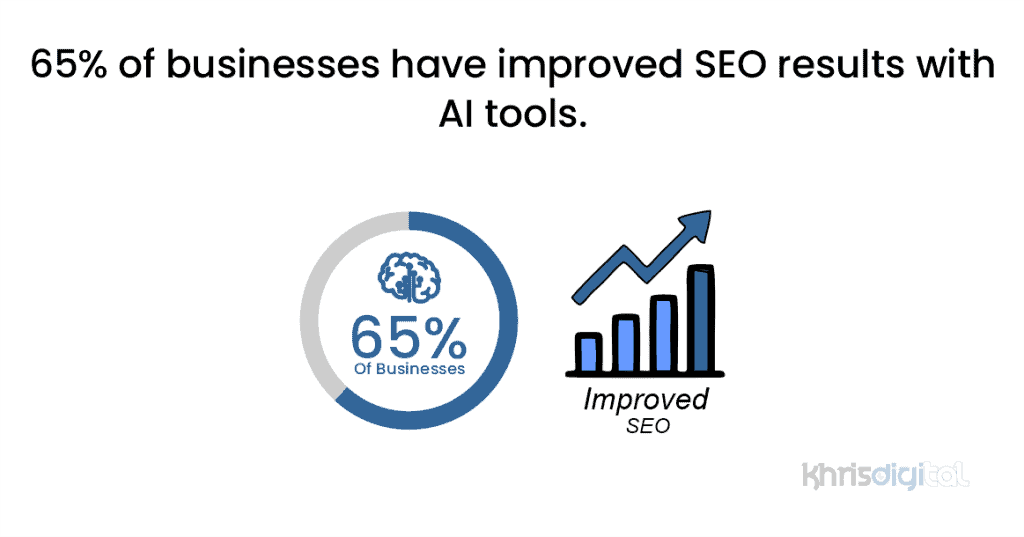
AI is proving to be a game-changer for SEO. From keyword research and content planning to on-page improvements and performance tracking, AI tools help teams move faster and smarter.
Instead of guessing what might rank, marketers are now using AI to target what actually works, and the results are showing up in search visibility and traffic growth.
52. 67% of businesses say AI improves content quality.
(Tidio)
AI is helping teams create better content. These tools assist with tone, structure, clarity, and even idea generation, helping writers stay sharp and consistent.
Instead of replacing human voices, AI acts like an intelligent editor, guiding marketers toward stronger, clearer, and more engaging messaging.
53. 68% of businesses report higher content marketing ROI with AI.
(Synthesia)
With better targeting, faster production, and improved quality, content performs more effectively and reaches the right audiences. AI helps teams do more with less, which means better results without ballooning budgets.
54. 93% of marketers review AI-generated content before publishing.
(Tidio)
They’re checking for tone, accuracy, brand alignment, and any subtle issues AI might miss. This shows that while AI speeds up creation, it doesn’t replace the need for human judgment. Marketers still want control over the final message, and rightly so.
55. 31% of marketers worry about the accuracy and quality of AI tools.
(SurveyMonkey)
While AI adoption is growing fast, not everyone is fully confident in the output. Whether it’s factual errors, off-brand tone, or shallow content, these issues can create extra work and hurt trust.
It’s a reminder that AI is powerful but not perfect, and that human oversight is still essential in most workflows.
56. 50% of marketers using AI expect higher performance expectations.
(SurveyMonkey)
AI may boost efficiency, but it also raises the bar. With faster turnaround times and smarter insights at their fingertips, there’s growing demand to produce more, and to do it well.
As AI becomes standard, teams are being held to higher standards, not just for speed, but for creativity, strategy, and measurable results.
57. 49% of marketers expect changes to their current AI tools.
(SurveyMonkey)
With the space evolving quickly, teams know that today’s tools might not be tomorrow’s go-to.
Whether it’s switching platforms, upgrading features, or adapting to new capabilities, marketers are bracing for ongoing shifts. Staying flexible and keeping up with updates has become part of the job.
58. 48% of marketers expect AI to shift their strategy or direction soon.
(SurveyMonkey)
As tools uncover new insights, automate complex tasks, and reshape customer behavior, marketers are rethinking how they plan, execute, and prioritize.
59. 39% of marketers avoid generative AI because they’re unsure how to use it safely.
(Salesforce)
For many marketers, the hesitation around generative AI is about not knowing how to use it responsibly. Concerns around data privacy, brand reputation, and proper usage are holding them back.
This shows that as AI adoption grows, education and clear guidelines are just as important as the tools themselves.
60. 43% of marketers haven’t fully embraced AI due to a lack of clear value.
(Salesforce)
These users are testing tools but struggling to connect them to real results. Whether it’s unclear ROI, poor integration, or limited functionality, the disconnect is slowing down full adoption.
It shows that for AI to stick, it has to solve real problems, not just sound impressive.
61. 70% of marketers say their employer doesn’t offer AI training.
(Salesforce)
Despite the growing push to use AI, most marketers are being left to figure it out on their own.
This lack of support creates a learning curve that slows down adoption and increases the risk of misuse. For AI to truly become part of everyday marketing, companies need to invest in building their team’s skills, not just buying the tools.
62. 54% of marketers say generative AI training is important for their role.
(Salesforce)
Generative AI tools are powerful, but without proper training, their full potential is hard to reach.
From understanding prompts to applying AI outputs effectively, training helps marketers feel more confident and achieve better results. It’s about knowing how to use AI well.
63. 71.7% of non-adopters say lack of understanding is the main barrier, and 67% say lack of education and training is the top barrier.
(MarTech)
Among marketers who haven’t yet adopted AI, the biggest roadblocks are knowledge-based. About 71.7% say their main barrier is simply not understanding how AI works, while 67% point to a lack of education and training.
These numbers show that hesitation often stems from uncertainty. Without clear guidance and support, even the best tools can go unused.
64. Only 23% of marketers say their team receives AI training.
(MarTech)
That leaves a large majority figuring it out on their own or missing out entirely. As AI becomes more central to marketing success, training is essential. Without it, teams risk falling behind or misusing tools they don’t fully understand.
65. 75% of companies investing in AI are shifting talent into strategic roles.
(Gartner)
As AI takes on more of the repetitive work, companies are rethinking how they use their people.
Instead of handling day-to-day tasks, marketers are being freed up to focus on big-picture thinking, creative direction, and long-term planning. It’s a clear sign that AI is about repositioning them where they add the most value.
66. 70% of marketers expect AI to take on a bigger role in their work.
(SurveyMonkey)
Whether it’s content creation, strategy, personalization, or performance tracking, AI is steadily becoming more central to how work gets done. The tools are evolving rapidly, and marketers are gearing up to keep pace.
67. The most common uses of gen AI by marketers are Basic content creation (76%), writing copy (76%), inspiring their creative thinking (71%), analyzing market data (63%), and generating image assets (62%).
(Salesforce)
Generative AI is supporting nearly every part of the creative process. The most common uses among marketers are basic content creation and writing copy, both at 76%.
About 71% use it to spark creative ideas, 63% to analyze market data, and 62% to generate image assets.
68. 48% of marketers say increasing AI adoption is a top priority.
(SurveyMonkey)
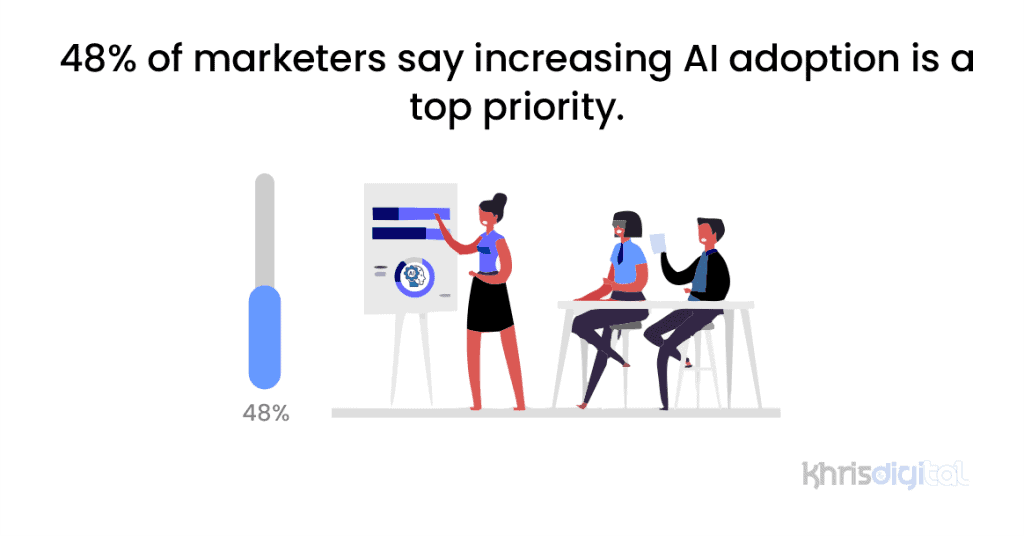
For nearly half of marketers, adopting more AI is a key goal. Whether it’s to boost efficiency, scale content, or gain deeper insights, they see AI as central to future growth.
This shows a shift from experimentation to full commitment, with clear plans to expand its role across the board.
69. 85% of B2B marketers use generative AI, 76% are satisfied or very satisfied with the results.
(Pipeline360)
B2B marketers are fully on board with generative AI. From crafting targeted content to speeding up campaign development, gen AI is proving useful in B2B’s often complex, multi-step marketing workflows.
The satisfaction numbers show that AI is driving real value in serious, high-stakes environments.
70. 99% of marketers are using AI in some form.
(AI Marketing Institute)
AI has gone beyond team tools, and it’s now part of individual workflows. Whether it’s generating ideas, automating small tasks, or speeding up daily work, nearly everyone in marketing is tapping into AI’s capabilities.
71. 69.1% of marketers have integrated AI into their operations.
(Influencer Marketing Hub)
That means it’s being used across campaign planning, execution, analysis, and optimization. As AI shifts from optional to operational, it’s becoming a core piece of how modern marketing actually runs.
72. 36% of marketers now use AI in daily workflows, up from 29% in 2023.
(AI Marketing Institute)
This steady increase shows how quickly AI is moving from occasional use to an essential part of the routine. As tools get more intuitive and valuable, more teams are weaving them into their day-to-day tasks without skipping a beat.
73. 15% of marketers say they “couldn’t live without AI,” up from 6% in 2023.
(AI Marketing Institute)
That shift highlights how deeply embedded these tools have become in everyday marketing. From speeding up tasks to unlocking insights, AI is turning into something marketers depend on to keep up and stay competitive.
74. 24% of marketers say AI for customer service is the most helpful.
(Synthesia)
Whether it’s chatbots handling inquiries or automated systems managing support tickets, AI is helping brands respond faster and more efficiently. It’s reducing wait times, freeing up human agents, and improving overall customer satisfaction while cutting operational costs.
75. 90% of businesses are worried about AI and LLMs disrupting SEO.
(Smarty Marketing)
AI and large language models are reshaping how people search, and 90% of businesses are feeling the pressure. There’s growing concern that traditional SEO strategies may become less relevant as AI-driven answers replace search engine results.
Brands are rethinking how to stay visible when users might never click through to a website. The future of SEO is shifting fast, and marketers know they need to adapt or risk falling behind.
76. 61.2% of businesses plan to boost their “SEO for AI” budgets.
(Smarty Marketing)
That means optimizing not just for search engines, but for how AI tools surface and summarize content.
From structuring data better to refining how information is presented, companies are adjusting their strategies and their budgets to stay visible in an AI-driven search world.
77. 83.7% of businesses are investing in AI visibility and AI search optimization.
(Smarty Marketing)
This includes optimizing content specifically for AI-powered search tools and language models.
It’s a step beyond traditional SEO, focused on ensuring content is discoverable, clear, and useful when surfaced by AI systems. As user behavior shifts, brands are prioritizing visibility where attention is headed next.
78. 85.7% of businesses are investing or planning to invest in AI and LLM optimization.
(Smarty Marketing)
This includes creating content that AI tools can easily understand, summarize, and present accurately. As AI continues to influence how customers search and make decisions, brands are adjusting to ensure they remain part of that journey.
79. 92% of businesses plan to invest in generative AI within the next three years.
(McKinsey)
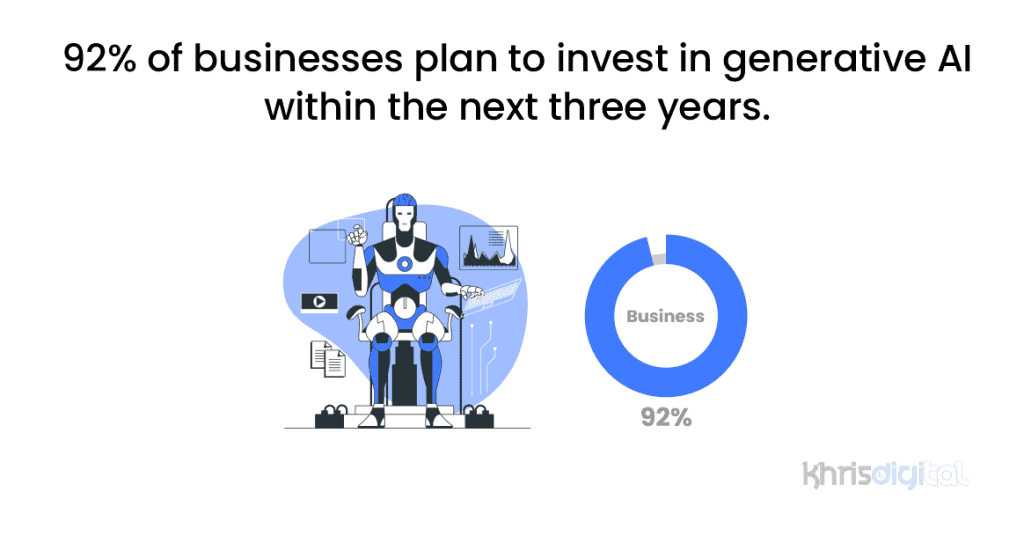
Whether it’s for content, customer service, product development, or marketing, the use cases keep expanding. This level of intent shows that companies are building AI into their long-term plans.
80. Only 1% of businesses using generative AI say their investment is fully mature.
(McKinsey)
That means the vast majority are still exploring, testing, and learning how to use the tools effectively. It’s a reminder that while AI adoption is high, mastering it takes time, and most companies are still climbing the curve.
81. 87% of marketers say they’re likely to trust AI-generated content and insights.
(CoSchedule)
As these systems become more accurate, useful, and aligned with brand standards, trust continues to grow. While human review still plays a role, many marketers are now comfortable relying on AI to guide decisions and shape content.
82. Among Gen Zs, 66% were interested in AI that would help them through a product or website, 63% liked the idea of personalized deals, and 56% wanted tailored product recommendations.
(SurveyMonkey)
Gen Z is open to AI, especially when it makes shopping easier and more personal. This generation expects smart, seamless experiences and is more likely to engage with brands that use AI to deliver them.
For marketers targeting Gen Z, AI-powered personalization is expected.
83. Only 18% of people feel very confident they can spot a chatbot.
(SurveyMonkey)
As AI becomes more human-like, it’s getting harder to tell who, or what, you’re talking to. This low confidence shows how advanced conversational AI has become, blurring the line between machine and human.
For brands, it’s a reminder that transparency matters, especially when building trust with customers.
84. 90% of people still prefer human customer service over chatbots.
(SurveyMonkey)
Even with the rise of AI, most people still want to talk to a real person. While chatbots can handle quick questions and basic support, many users feel more comfortable and understood when a real person is involved, especially for complex or emotional issues.
85. 41% of people under 34 have negative feelings about the idea of companies using AI in CX vs 72% of people over 65.
(SurveyMonkey)
When it comes to AI in customer experience, age matters. Younger generations are more used to AI-driven tools and are generally more comfortable with automation. Older consumers, on the other hand, are more skeptical and often prefer human interaction.
86. Only 30% of U.S. adults can correctly identify common uses of AI.
(Pew Research Center)
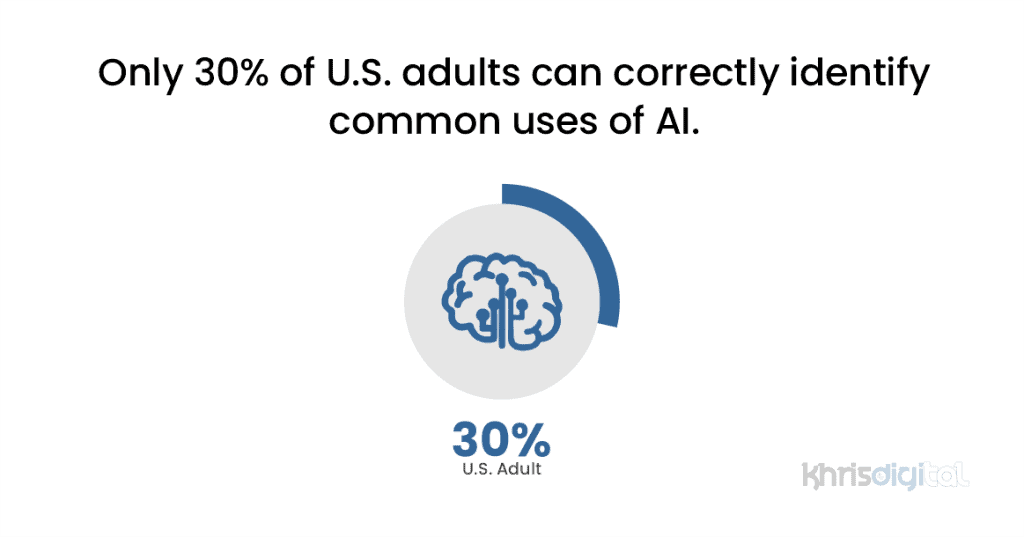
Despite AI being everywhere, awareness of how it actually works remains low. That means most people aren’t fully aware that AI powers things like recommendations, voice assistants, spam filters, and more.
This gap in understanding can fuel confusion, fear, or mistrust, and it shows the importance of educating users as AI becomes a bigger part of daily life.
87. 27% of adults trust AI’s search results, while 31% don’t trust AI’s results.
(eMarketer)
Trust in AI-powered search isn’t solid yet. This split shows that while AI is fast and convenient, many users still want confirmation that what they’re seeing is trustworthy, especially when it comes to important or personal information.
88. Men are more likely than women to trust generative AI over traditional search (44% versus 37%).
(Attest)
When it comes to trusting AI-generated results, there’s a noticeable gender gap. About 44% of men say they trust generative AI results more than regular search engine results, compared to just 37% of women.
This difference could reflect varying levels of tech familiarity or comfort with AI tools.
89. 52% of consumers are open to AI helping them with products or websites.
(SurveyMonkey)
More than half of consumers say they’re open to having AI assist them while using a product, website, or feature. That might include chat support, personalized recommendations, or interactive walkthroughs.
While some skepticism remains, this level of openness signals that people are becoming more comfortable with AI as long as it adds value, saves time, or improves their experience.
90. 50% of U.S. adults are interested in how AI can be used in social media.
(eMarketer)
From content suggestions and post scheduling to trend tracking and audience targeting, AI already plays a big role behind the scenes. This interest suggests a growing awareness and curiosity.
People want to understand how the platforms they use daily are being shaped and influenced by AI-driven tools.
91. 66% of U.S. adults are concerned about AI and privacy on social media.
(eMarketer)
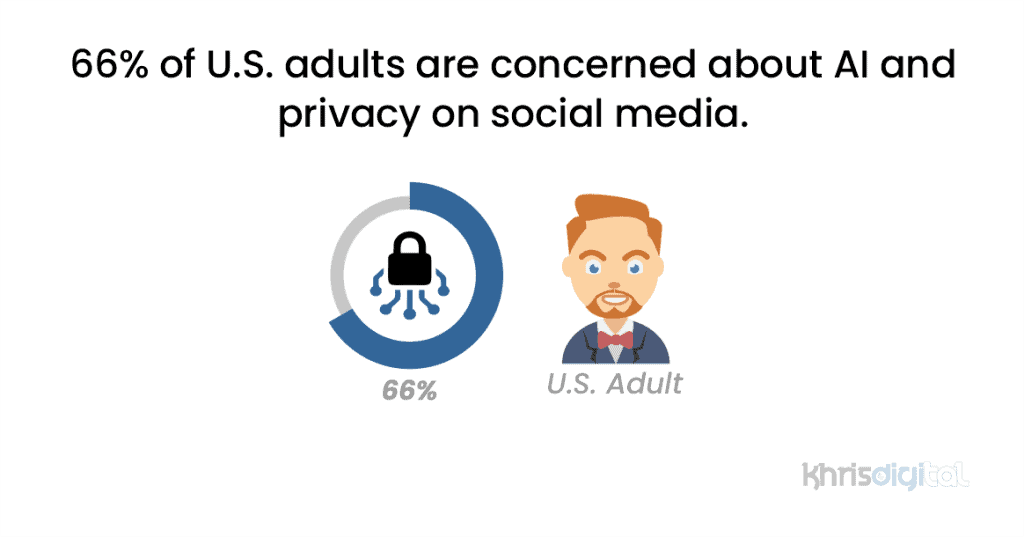
As AI becomes more involved in social media, privacy worries are growing. Whether it’s targeted ads, content recommendations, or algorithmic tracking, people want more transparency and control.
These concerns show that while AI offers new possibilities, trust and the ethical use of data are equally important.
92. Only 23% of Americans trust how AI is used on social media.
(Winsome Marketing)
With so much AI-driven personalization, moderation, and data tracking happening behind the scenes, many users feel uneasy. Concerns about misinformation, manipulation, and lack of transparency are driving skepticism.
93. 59% of Americans worry they can’t understand how AI algorithms work.
(Ipsos)
This fear is about feeling left out of decisions that affect what they see, buy, and experience online. The more opaque AI becomes, the harder it is for users to trust it. Clearer communication and transparency could help close that gap.
94. AI recommendations have led to a 7% increase in the total time spent on Facebook and 6% on Instagram.
(Facebook)
AI-driven content suggestions are keeping users hooked. On Facebook, AI recommendations have led to a 7% increase in total time spent on the platform, while Instagram saw a 6% rise.
These subtle but significant jumps show how effective AI can be at personalizing feeds and serving up content that keeps people scrolling.
95. Pinterest’s AI-powered “shop the look” feature boosted conversions by 9%.
Pinterest’s move into AI-powered shopping is already showing results. The platform’s new “shop the look” feature uses AI to recommend products based on visual content, and in early testing, it led to a 9% increase in site conversions.
By making product discovery more intuitive and personalized, AI is helping turn browsing into buying. It’s a clear example of how AI can enhance user experience and drive measurable business outcomes.
96. Only 3.98% of companies are unwilling to implement AI.
(CoSchedule)
At this point, refusing AI is the exception, not the norm. Just 3.98% of companies say they’re unwilling to implement AI in any part of their business. That means over 96% are either already using it or open to exploring how it can help.
97. 82% of desktop and 76% of mobile AI Overviews occurred for keywords with less than 1,000 monthly searches.
(Semrush)
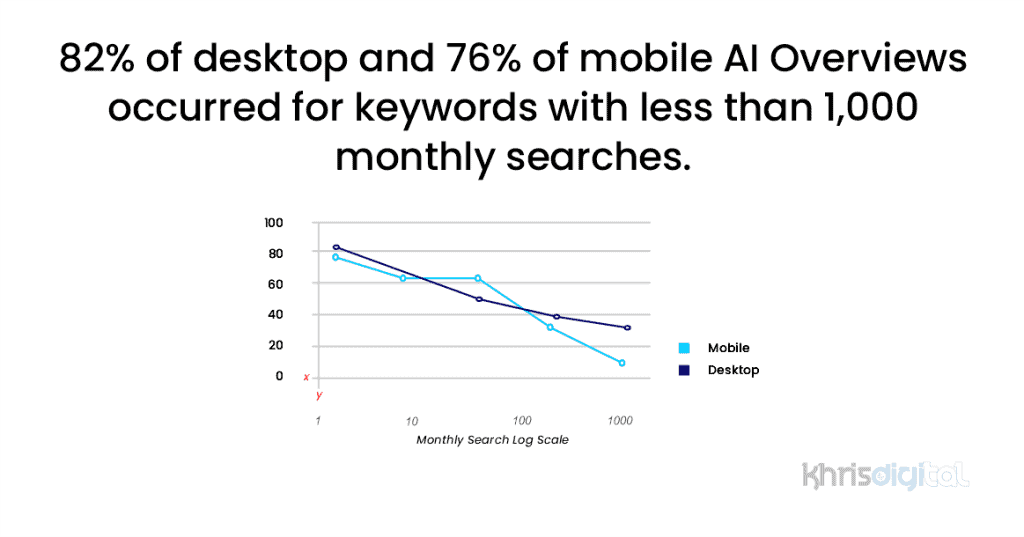
These low-volume terms are often overlooked in traditional SEO strategies, but AI is giving them new visibility. For marketers, this shift highlights the importance of targeting long-tail keywords and creating content that answers specific, less competitive queries.
98. 52% of the sources referenced in AI overviews happen to rank within the top 10 SERPs, with an average rank of position 5.
(Surfer SEO)
This shows that high-quality, well-optimized content is still winning in the age of AI. If a page ranks well in traditional SERPs, it has a good chance of being included in AI-generated summaries as well.
99. 90% of AI overviews only cite 8 sources or fewer, and less than 1% have 0 sources.
(Surfer SEO)
AI-generated summaries may seem all-knowing, but they’re built on a limited pool of content. This reveals just how selective AI is when pulling information, and why strong, credible content is more likely to be surfaced.
100. In 69% of cases, the top 10 organic SERP pages get more traffic than those cited in AI overviews.
(Surfer SEO)
Even as AI overviews gain traction, traditional search results still drive more clicks. This shows that while AI can influence visibility, it hasn’t fully replaced the power of strong organic rankings.
For now, SEO remains a critical driver of traffic, and AI is more of a complement than a replacement.
101. AI Overviews average 157 words (984 characters) per response.
(Surfer SEO)
AI-generated answers are built for quick takeaways. On average, an AI Overview (AIO) contains about 157 words, or 984 characters.
That’s just enough to summarize key information without overwhelming the user. For content creators, this means being clear, concise, and structured so your content can be easily pulled into these summaries and still deliver value fast.
102. Nearly 99% of AI Overviews are under 328 words.
(Surfer SEO)
AI-generated summaries are built for speed and simplicity. That brevity is by design as users want fast answers, not deep dives.
For marketers and content creators, this shows the need to structure content clearly and prioritize key points early if you want AI to pull and present it effectively.
103. AI Overviews include the exact search query just 5.4% of the time.
(Surfer SEO)
Unlike traditional search engines that often focus on exact keyword matches, AI Overviews lean heavily on natural language. Only 5.4% of AIOs actually repeat the user’s query word-for-word.
Instead, AI rephrases or interprets the intent behind the question. For marketers, this means content should be written for clarity and relevance, not just stuffed with exact-match keywords. AI rewards meaning over repetition.
104. Subjects of queries that AIOs show the most for include relationships (46.14%), food/ Beverage (33.46%), and business (23.40%).
(SE Ranking)
Some topics trigger AI-generated summaries more than others. The most common include relationships (46.14%), food and beverage (33.46%), and business (23.40%).
These are areas where users are often looking for quick advice, practical tips, or simplified answers. For marketers in these spaces, optimizing content for AI visibility could mean more exposure with less competition.
105. Only 5% of SERPs with AI Overviews also include Google Ads.
(Semrush)
This low overlap suggests that AI summaries are often prioritized in more organic, informational searches. For marketers, it highlights a new type of competition for visibility: not just ranking above the fold, but being selected for the summary box.
106. Queries starting with “how,” “what,” and “is” appeared most often in AIOs.
(Semrush)
When it comes to AI Overviews, question-based searches lead the way. Queries that begin with “how,” “what,” and “is” are the most likely to generate an AIO. These formats match the kind of direct, answer-seeking intent that AI is built to handle.
For content creators, focusing on clear, informative responses to these types of questions can boost the chance of being featured in AI-generated results.
107. 79% of companies are adopting AI agents, and most say they deliver value.
(Digital Marketing Institute)
AI agents are gaining serious traction. Whether it’s automating customer support, streamlining internal tasks, or handling complex queries, AI agents are moving from experimental to essential.
108. 88% of executives plan to increase AI spending due to agentic AI.
(PwC)
Executives aren’t just interested in AI; they’re ready to invest heavily in it. These more autonomous tools go beyond simple automation and can make decisions, take action, and adapt independently.
It’s a sign that businesses see AI not just as a support tool, but as a strategic capability worth betting big on.
109. 35% of companies are using AI agents widely, and 17% have integrated them across nearly all functions.
(PwC)
These organizations aren’t dabbling; they’re embedding AI into the fabric of how they work. From marketing and sales to customer service and internal ops, agentic AI is becoming a key part of everyday business execution.
Final Thoughts on AI in Marketing Statistics
AI is here, it’s growing, and it’s reshaping marketing faster than most expected. These stats show that it’s no longer a question of whether marketers should adopt AI, but how fast they can adapt.
From small wins like time-saving tools to big shifts in strategy, the numbers show that AI is becoming the backbone of modern marketing.
But with all this progress comes responsibility to stay informed, use AI ethically, and keep the human side of marketing alive. The brands that win won’t just be the fastest to adopt, but the smartest in how they use AI to serve, connect, and create real value.
Sources & References:
Check out my other Statistics round up:
