


A marketing team can have endless dashboards and still feel like they’re throwing darts in the dark. The numbers are there, but they don’t always get used, or they get ignored when things get busy.
Even 87% of marketers say data is their company’s most under-utilized asset. It’s not a tech problem. It’s a “we’re leaving money on the table” problem.
And the money part is very real, because data represents about 20% of all US marketing spend. When that much budget sits behind data, guessing gets expensive fast.
In this article on data-driven marketing statistics, I break down the latest trends to help you turn raw numbers into real marketing wins. These stats are from verified, reliable sources, and a complete list of sources is at the bottom of the article.
1. 87% of marketers say data is their company’s most under-utilized asset.
(Invesp)
This points to a common gap between collecting data and using it. Many teams track clicks, leads, and sales, yet decisions still lean on habit, loud opinions, or last month’s playbook. The result is wasted budget and slower learning.
When data stays trapped in spreadsheets or scattered tools, campaigns repeat the same mistakes because nobody sees the full picture.
Teams that close this gap usually do a few things well. They pick a small set of metrics that align with the business goal, clean up tracking, and review performance regularly. They also tie insights to clear actions, like changing targeting, offers, or landing pages.
2. Data represents about 20% of all US marketing spend.
(CMO by Adobe)
That share shows data is no longer a side tool for reporting. It is a budget line with real weight, sitting next to media, creative, and technology.
When a fifth of spending is tied to data, small mistakes get expensive. Bad tracking, messy customer records, or unclear ownership can quietly drain performance across every channel. Teams that treat data like an investment tend to build simple systems that pay back fast.
3. 75% of companies see increased engagement when they use data-driven marketing.
(Attomdata)
Data helps teams spot patterns, like which messages drive clicks, which offers get saved, and which channels attract the most qualified people. With that clarity, brands stop blasting one generic idea and start shaping content around real behavior.
Engagement rises because the message feels timely and relevant, not random. It also reduces wasted effort, since teams can double down on what works rather than guessing.
Companies that get the biggest lift usually keep the loop tight. They test small changes, measure quickly, and adjust creative and targeting based on results. The work becomes less dramatic and more consistent, which is exactly what engagement rewards.
4. Accuracy and speed are the most oft-cited benefits of data-driven marketing.
(CMO by Adobe)
When teams can trust what they see, they stop arguing about whose opinion wins and start moving based on evidence. Accuracy means fewer wrong turns, like pushing the same message to everyone or spending hard on a channel that looks busy but does not convert.
Speed shows up when reporting is clean, and access is shared. The team can spot a drop in performance early, fix it, and keep the campaign alive, rather than watching it bleed for weeks.
5. 80% of marketers agree that data quality is essential for successful marketing.
(Marketing Evolution)
When data is wrong, everything built on top of it becomes a mess. Targeting reaches the wrong people, personalization feels creepy or off, and reports tell a story that never happened.
Teams then make confident decisions based on shaky numbers, and the budget pays the price. Clean data fixes more than dashboards. It improves audience segmentation, attribution, and alignment between sales and marketing on what is working.
6. Companies that adopt data-driven marketing strategies have a 10% increase in customer retention.
(HG Insights)
Retention improves when a brand stops treating customers like a crowd and starts treating them as real journeys.
Data-driven teams can see when a customer is slipping away, what they bought before, which support issues occurred, and which offer actually brings them back. That leads to smarter follow-ups, better onboarding, and fewer irrelevant messages that make people tune out.
7. Data-driven marketing reduces customer acquisition costs by 50%.
(McKinsey)
Data helps teams stop paying for the wrong audience, the wrong message, and the wrong channel. When targeting is built on real behavior and conversion patterns, spend goes toward people who are more likely to buy, not just people who look similar on paper.
It also speeds up learning. Teams can spot which creatives drive qualified leads, which keywords attract bargain hunters, and which campaigns die after the first click. That clarity trims waste across media, landing pages, and follow-up.
8. Data-driven marketing has led to a 20% increase in customer satisfaction for leading companies.
(McKinsey)
Data helps leading companies understand what customers actually expect, where they get stuck, and what messaging sets the right tone. That leads to fewer mismatched offers and fewer surprises after purchase. It also improves timing.
A customer who just signed up needs guidance, not a discount. A customer who has not returned in weeks needs a reminder, not noise. With solid data, teams can shape emails, ads, and in-app messages around real behavior and feedback.
9. Data-driven marketing can increase brand awareness by 50%.
(Persuasion Nation)
Brand awareness grows when people see the same clear message in the right places, often enough to remember it. Data helps teams figure out which channels actually put the brand in front of the right audience, and which ones just create noise.
It also improves creative choices. When marketers know which headlines get attention, which visuals stop the scroll, and which formats drive shares, awareness builds faster.
Consistency gets easier, too. Data can reveal which themes resonate across platforms, so the brand stops sounding like five different companies. The strongest results usually come from steady repetition backed by measurement, not one viral moment.
10. 91% of marketers believe data-driven marketing is crucial for success.
(WinSavvy)
Marketing is no longer judged solely by effort or creativity. It is judged by what performs and what proves value. When most marketers call data-driven work crucial, they are reacting to tighter budgets, higher ad costs, and customers who switch brands fast.
Data gives teams a way to choose priorities with confidence, spot failures early, and scale what works without guessing. It also helps marketing earn trust inside the company because results become easier to explain.
11. 64% of marketing executives “strongly agree” that data-driven marketing is crucial in the economy.
(Forbes)
When the economy gets shaky, the first thing questioned is spending that cannot be tied to outcomes. Data gives executives a way to protect what works and cut what does not, without gutting growth.
It also changes internal conversations. Instead of debating preferences, teams can point to performance by audience, channel, and message. That makes planning calmer and budget requests easier to defend.
Companies that treat data as a core business tool tend to respond more quickly to shifts in demand, pricing sensitivity, and competitor moves.
12. 78% of companies have increased their data-driven marketing budgets.
(WinSavvy)
More budget flowing into data work usually means more spend on analytics, customer platforms, measurement, and better audience targeting. It also suggests leaders are trying to buy certainty in a noisy market.
If performance is harder to predict, teams want stronger signals to guide where to allocate money.
But bigger budgets do not guarantee better results. The companies that benefit most tend to invest in basics first. Clean tracking, clear definitions for key metrics, and shared access across teams.
They also fund the people side, like analysts and marketing ops, so the tools do not sit unused. Budget growth here is a vote of confidence in smarter decision-making.
13. 40% of brands plan to increase their data-driven marketing budgets.
(Invesp)

Rising ad costs and tougher competition make guessing feel reckless, so teams are investing in better measurement, audience insights, and smarter personalization.
Still, the plan only pays off if the investment leads to action. Brands that win here often set a simple goal for their spend, such as improving conversion rates or reducing waste in paid media.
They also tie tools to workflows so insights show up when decisions are made, not after the campaign ends.
14. Businesses that use data-driven strategies drive five to eight times as much ROI as businesses that don’t.
(Invoca)
Data-driven teams learn faster, waste less, and scale what works with confidence. They can see which audiences convert, which messages pull their weight, and which channels drive real revenue rather than empty clicks.
Over time, those choices stack up. Budgets get tighter, targeting gets sharper, and creative gets built around proven hooks.
The biggest ROI jumps often show up when data is connected across the funnel. Marketing knows what turns into sales, sales knows what marketing is sending, and both stop optimizing for the wrong goal.
15. Companies that adopt data-driven marketing are six times more likely to be profitable year-over-year than companies that don’t.
(Forbes)
When teams can see patterns in demand and conversion, they can plan budgets and inventory with fewer surprises. Year-over-year profit growth is rarely a single big leap. It is usually hundreds of small wins that stick. Data makes those wins easier to find and repeat.
16. Companies using data-driven marketing experience a 20% uplift in sales.
(McKinsey)
Sales lift happens when marketing stops guessing and starts matching offers to real intent. Data reveals which audiences are ready to buy, which objections arise, and which messages move people from interest to action.
Teams improve targeting, landing pages, and follow-up sequences based on what converts, then keep refining.
17. Two out of three marketers state that data-based decisions are more effective than gut instincts.
A team can love an idea, but performance might say the audience does not care. Data also helps marketers move from broad opinions to specific fixes, such as adjusting a headline, shifting budget to a higher-converting channel, or tightening an audience segment.
Still, the best teams do not discard instincts. They use instincts to generate ideas, then let data decide which ones deserve more money and attention. That balance keeps marketing creative, but not careless.
18. 62% of marketers say data-driven marketing is their biggest priority.
(WinSavvy)
Marketing has too many options and not enough certainty. Data becomes the filter that helps teams choose what to do next, what to stop doing, and where to put the budget without guessing.
This priority usually shows up in practical changes. Better tracking, clearer attribution, and stronger customer segmentation. Teams also push for cleaner reporting so performance discussions move faster.
19. 74% of marketers attribute their growth to data-driven strategies.
(WinSavvy)
Data helps uncover what actually drives conversions, which channels bring high-quality customers, and where people drop off before buying. That turns growth into a repeatable process, not a lucky streak.
This also points to better allocation. Teams can move away from underperforming campaigns and toward the few activities that reliably produce results. Over time, those choices snowball.
20. 88% of marketers use third-party data to enhance their understanding of each customer.
(Invesp)
Third-party data can add context like interests, demographics, and intent signals, helping teams sharpen targeting and personalize messages. It also supports better segmentation when a brand has a limited history with a new customer.
But relying on outside data comes with tradeoffs. Quality varies, and privacy rules have tightened, so teams need strong governance. The smartest marketers treat third-party data as support, not the foundation.
They combine it with first-party behavior, such as site activity, purchases, and email engagement, and then validate performance through testing.
21. 82% of marketers plan to increase their use of first-party data.
(Invoca)
First-party data comes directly from a brand’s own channels, so it is usually more accurate and easier to connect to real outcomes, such as revenue and retention. It also holds up better as privacy rules tighten and third-party tracking becomes less dependable.
Increasing use often means improving how data is collected and organized. Better sign-up flows, clearer consent, stronger tagging, and cleaner customer records. It also pushes brands to earn data, not just capture it.
Customers share information when they get something back, like faster support, better recommendations, or offers that fit their needs.
22. Approximately 47 percent of marketing decision-makers surveyed worldwide included email marketing in areas where data-driven marketing was the most useful.
(Hostinger)
Email rewards precision because every send creates clear signals. Opens, clicks, replies, and conversions show what people care about and what they ignore.
With solid data, teams can segment by behavior, purchase history, and lifecycle stage, then send messages that fit the moment. That improves relevance and reduces unsubscribes. It also makes testing simple.
23. Customer experience and paid advertising followed, mentioned by 46 and 41 percent of respondents, respectively.
(Hostinger)
For customer experience, data highlights friction points like where users abandon onboarding, what drives complaints, and which features keep people coming back. That turns improvements into targeted fixes instead of broad guesses.
For paid advertising, data tightens targeting and creative choices. It shows which audiences convert, which placements waste budget, and how performance changes by device, region, or time.
24. Around 63 percent of marketing professionals rated their data-driven strategies somewhat successful. Approximately 32 percent said they were very successful, while five percent deemed them ineffective.
(Statista)
“Somewhat successful” often means data is being used, but not consistently. Reporting exists, yet decisions still get made too late, or insights do not translate into action.
The jump to “very successful” usually happens when teams fix a few core issues. They define a small set of goals, standardize tracking, and align marketing with sales and product data. They also build routines for testing and learning, so improvements compound.
The small group calling it ineffective is a warning sign. Bad data, siloed tools, and unclear ownership can make “data-driven” feel like busywork. When that happens, trust collapses and adoption follows.
25. Almost half of marketers use artificial intelligence (AI) moderately or extensively in their data-driven efforts. Only one-quarter reported not utilizing AI.
(Statista)
This shows AI has moved from experiment to routine for many teams. Marketers lean on it to speed up analysis, spot patterns humans miss, and turn messy data into usable segments.
It can also help predict which leads are likely to convert, which customers might churn, and what content to send next. That frees time for strategy and creative work that still needs human judgment.
The smaller group that isn’t using AI often faces practical barriers. Data is scattered, teams lack skills, or leaders do not trust automated outputs. The difference between useful and useless AI usually comes down to inputs.
26. 45% of marketing decision-makers worldwide said targeting segmented audiences was one of the challenges of executing a data-driven strategy.
(Marketing Profs)
Segmenting sounds simple until a team tries to activate it. Audiences can be sliced in dozens of ways, but most brands struggle to decide which segments matter, how to keep them up to date, and how to message each group without losing consistency.
27. Real-time decision-making and finding and maintaining quality data rounded up the top three, mentioned by 38 and 32 percent of respondents, respectively
(Marketing Profs)
These two challenges feed each other. Real-time decisions sound powerful, but they fall apart when data is delayed, incomplete, or unreliable. Teams can only react quickly if they trust the signals they’re receiving.
When quality is shaky, marketers hesitate, double-check, and move too late. That turns real-time into a buzzword instead of a capability. Finding quality data is hard because sources are scattered across ads, web analytics, CRM, and support tools.
Maintaining it is harder because tracking breaks, naming conventions drift, and customer records get duplicated.
28. 57% of marketers report that data analytics is their most important tool for campaign planning.
Analytics helps marketers choose what to say, who to say it to, and where to spend before the campaign even launches. It shows which channels bring qualified traffic, which messages convert, and where customers drop off.
That reduces wasted launches built on assumptions. Analytics also makes planning easier to defend. When a team can point to past performance, budget decisions feel less political and more practical.
29. 52% of organizations are investing in advanced analytics to support data-driven marketing.
(WinSavvy)
Advanced analytics usually means stronger forecasting, deeper customer segmentation, and clearer links between marketing activity and revenue.
It can reveal patterns that simple dashboards miss, such as which channel combinations drive the best customers or how long it really takes a lead to become a buyer.
30. 60% of marketers say they plan to increase their use of data analytics tools.
As channels multiply and tracking gets harder, analytics tools become the way to regain clarity. Marketers want better answers on which touchpoints drive results, where drop-offs occur, and which audiences warrant more budget.
31. 49% of marketers feel “significant pressure” to increase data’s role in their current strategy.
(Invesp)
This pressure usually comes from two directions. Leaders want clearer proof of impact, and customers expect more relevance. When results are questioned, data becomes the language marketers are expected to speak.
It shows what worked, what did not, and what should happen next. Without it, strategy can feel like storytelling without receipts. The pressure can be healthy when it pushes teams to improve measurement and decision-making.
32. 54% of companies say their most significant challenge to data-driven marketing success is the lack of data quality and completeness.
(Adobe Experience Cloud)
This problem shows up long before a campaign goes live. When records are missing, duplicated, or outdated, targeting gets sloppy and reporting becomes a guessing game.
Teams can think a channel is performing when the tracking is broken, or blame creative when the audience data is wrong. Incomplete data also makes personalization fall flat, since messages are based on only half a profile.
33. 57 percent of marketers are incorrectly interpreting data and likely getting incorrect results.
(Wharton)
This is the quiet problem that makes “data-driven” feel unreliable. The data might be accurate, but the conclusion can still be wrong.
Marketers often misread correlation for causation, focus on the wrong time window, or judge performance using vanity metrics that do not align with the business goal.
Even small mistakes, such as mixing attribution models or comparing campaigns with different objectives, can lead teams to make poor decisions.
34. 47% of new data records have at least one critical error. Only 3% of executives found that their department’s data quality fell within the acceptable range.
(Harvard Business Review)
A single bad field can place a customer in the wrong audience, trigger the wrong message, or break a conversion path. Over time, those errors multiply across tools and teams, making it harder to trust any insight.
The second number shows the leadership view. Most executives do not believe their data meets a safe standard, which makes it difficult to back big decisions with confidence.
35. 77% of respondents believe they’ve had a somewhat or significant increase in access to valuable data over the past year.
(Invesp)
Valuable data becomes useful when it is easy to find, trusted, and connected to outcomes like revenue, retention, or pipeline.
This increase also hints at better tracking and more digital touchpoints. Brands collect signals from websites, apps, email, and ads, creating richer customer views. The teams that benefit most usually simplify after they expand.
36. Only 49% of respondents reported being somewhat or very effective at using data-informed insights to guide future strategies.
(Invesp)
Many teams can pull reports, but turning those insights into the next plan is harder. Data may arrive late, live in too many tools, or feel too messy to trust. Strategy then gets built on habits, loud opinions, or last quarter’s assumptions.
Another issue is ownership. If nobody is responsible for translating insights into decisions, insights stay trapped in slides.
37. Marketing leaders are 1.3X as likely as mainstream marketers to say being data-driven is a CEO priority.
(Think With Google)
Marketing leaders sit closer to budget decisions and board-level pressure, so they hear the demand for proof more directly. They also feel the risk of wasting spend when performance is unclear.
Mainstream marketers may focus on execution and day-to-day outputs, where data can feel like extra work instead of a mandate. The difference matters because strategy only changes when leadership pushes it through.
38. 87% of data-driven marketing leaders say their organizations successfully anticipate customer needs.
(Invoca)
Anticipating needs comes from pattern recognition at scale. Data-driven leaders can spot what customers do before they buy, what triggers repeat purchases, and what signals frustration or churn.
That lets teams act earlier with helpful messages, better recommendations, and smoother experiences.
39. 67% of marketers say they use more data to inform their marketing strategies than last year.
(WinSavvy)
As channels fragment and tracking changes, marketers need more signals to understand what is driving results. Using more data often means pulling in customer behavior, campaign performance, and sales outcomes to guide where to focus.
40. 70% of marketers say data-driven insights are their top factor in decision-making.
(WinSavvy)
When insights lead, marketers can choose priorities with clearer confidence. Budget goes to channels that produce results, creative is shaped by what audiences respond to, and timing is refined through real performance patterns.
This also reduces internal friction. Teams spend less time debating opinions and more time improving outcomes.
41. Leading marketers are 72% more likely than the mainstream to invest in quality and/or volume improvements of the first-party data they capture.
(Think with Google)
Better quality means fewer duplicates, fewer missing fields, and cleaner links between actions and outcomes. More volume usually comes from earning more signals through better sign-ups, loyalty programs, and value exchanges that customers actually want.
When first-party data improves, targeting gets sharper, personalization becomes more relevant, and measurement gets more reliable. That turns marketing into a feedback loop that keeps improving.
42. Predictive analytics in marketing can lead to a 20% increase in conversion rates.
(Data Sleek)
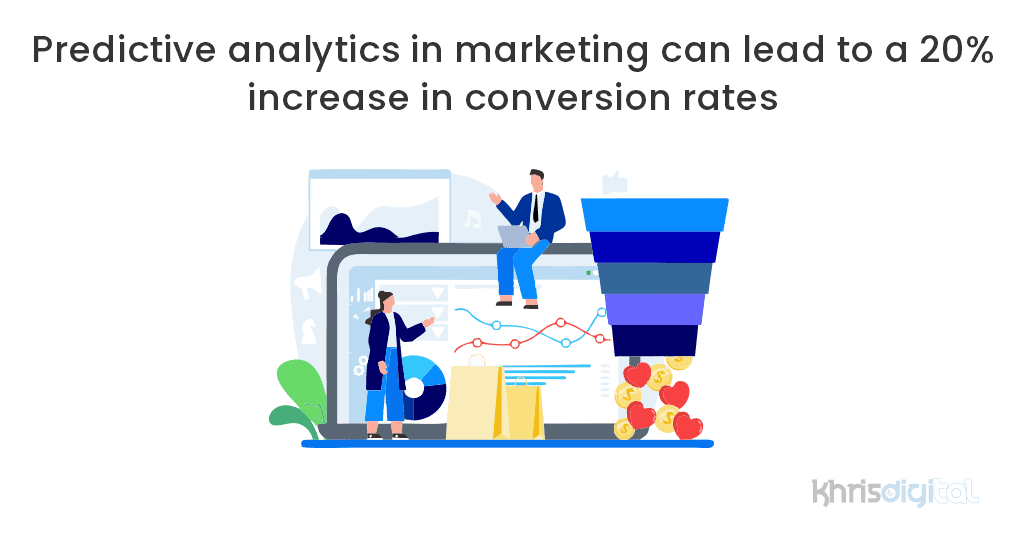
Predictive analytics helps marketers act before customers make a choice. Instead of treating everyone the same, the team can rank leads by likelihood to buy, spot shoppers near checkout, and identify customers who need a nudge.
That changes how the budget gets spent. More money goes to high-intent audiences, while low-intent traffic gets cheaper education-focused content. Conversion rates rise because the next message fits the moment and the person.
43. Data-driven personalized email campaigns deliver 6 times higher transaction rates, 29% higher open rates, and 41% higher click-through rates.
(Salesforce)
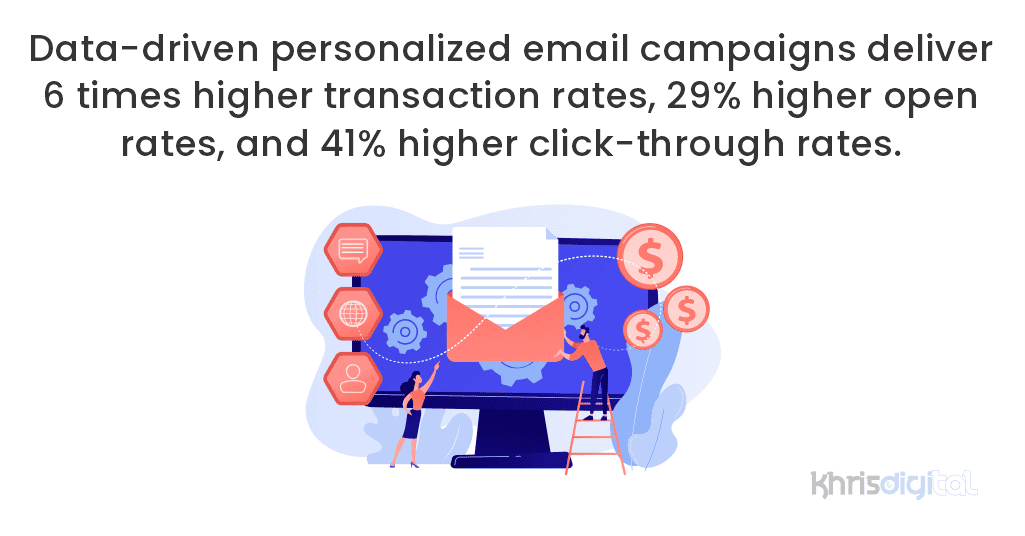
When a campaign reflects browsing history, past purchases, location, or lifecycle stage, readers pay attention rather than scroll past.
Higher opens usually come from subject lines that match real interests, while higher clicks follow when the offer and the landing page feel like a clean continuation of the same idea.
Higher transactions occur when timing and relevance align, like a replenishment reminder or a cart follow-up that actually fits the customer.
44. Real-time data use in marketing has increased by 40% in the past year.
Teams are watching performance signals as they happen and adjusting bids, audiences, creatives, and offers before the budget gets burned.
Real-time data also supports better customer experiences by enabling messages to respond to behaviors such as browsing, cart activity, and app actions. The upside is quicker learning and less wasted spend. The downside is chaos when teams chase every tiny fluctuation and lose the bigger goal.
45. 45% of marketers report better campaign performance through data segmentation.
(Porch Group Media)
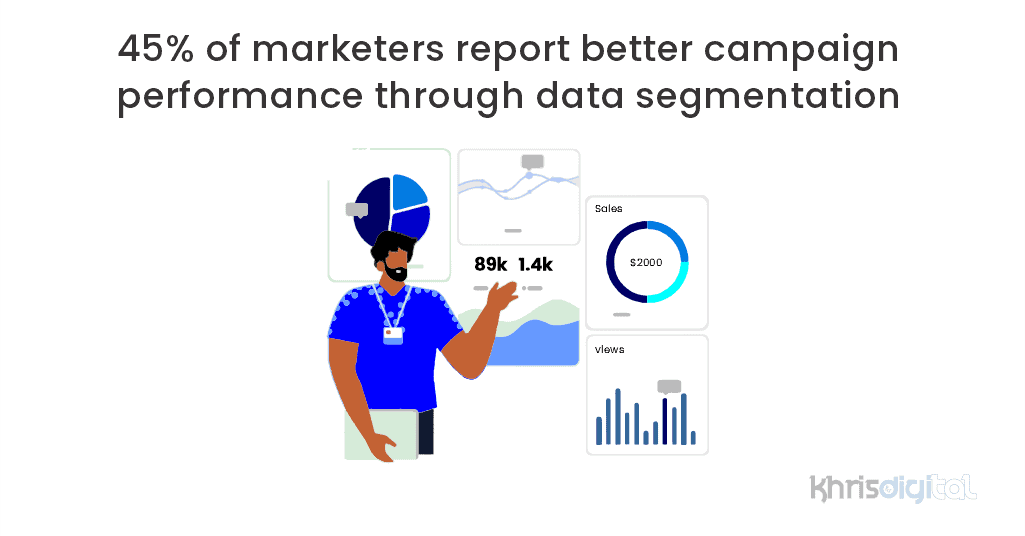
Different people buy for different reasons, at different times, and with different objections. Segmentation lets a team match the message to the audience, boosting relevance and reducing wasted impressions.
46. 55% of marketers use data to enhance their customer targeting.
(E-Consultancy)
Targeting improves when data replaces assumptions. Instead of aiming for broad demographics, teams can focus on behaviors that signal intent, such as repeated product views, time spent on key pages, or prior purchases.
That makes ad spend work harder, because messages reach people closer to a decision. It also helps avoid fatigue. Customers stop seeing irrelevant ads that make a brand feel pushy or out of touch.
47. 80% of customers are more likely to purchase a product or service from a brand that provides personalized experiences.
(Epsilon)

Personalization works because it reduces effort. Customers do not want to hunt through irrelevant options or decode generic messages. When a brand surfaces the right product, offer, or reminder, buying feels easier and safer.
Trust also plays a role. A personalized experience can signal that the brand is paying attention, making the customer feel known rather than treated like a number.
48. Marketers who exceeded their revenue goals used personalization techniques 83% of the time.
(Invesp)
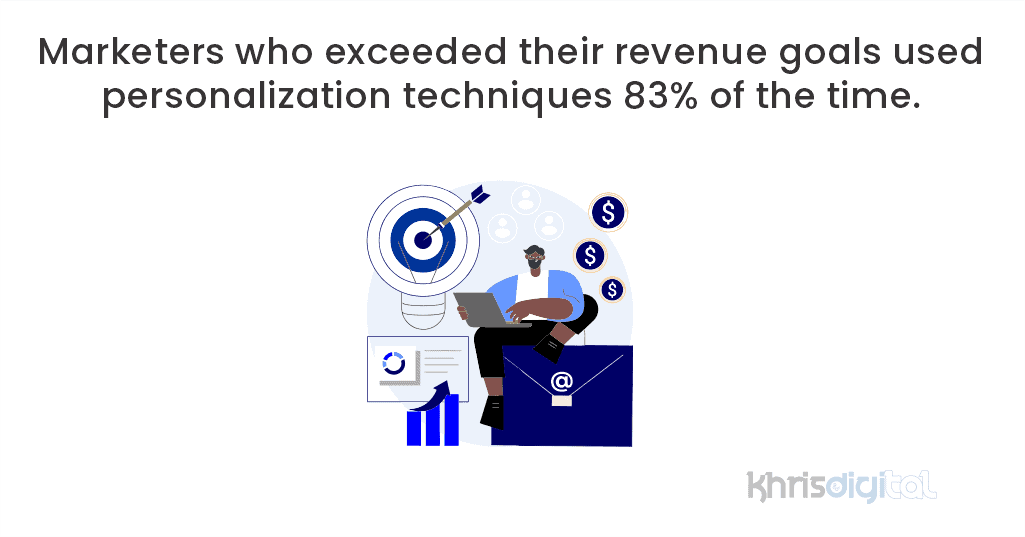
Personalization helps reduce wasted impressions and increases the chance that a customer sees something relevant enough to act on. It also supports smarter timing.
A new subscriber needs guidance, a repeat buyer might need a refill reminder, and a high-intent visitor might respond to a clear offer. Those differences matter.
49. 69% of businesses use data to shape their marketing strategies.
(WinSavvy)
Businesses are using performance signals to choose channels, set budgets, and decide which audiences matter most. Data also helps the strategy stay grounded in reality. It reveals where customers come from, what content moves them, and what offers actually convert.
50. 50% of companies have hired data scientists to support their marketing efforts.
Data scientists help teams move beyond basic reporting into deeper work such as predictive modeling, customer segmentation, and smarter measurement. They can also clean messy data sources and connect systems that do not naturally talk to each other.
That matters because marketing data often lives across ad platforms, analytics tools, CRM systems, and product databases. Hiring data scientists also signals that many companies believe marketing performance depends on analysis, not just creativity.
51. Data-driven content strategies can increase engagement by up to 88%.
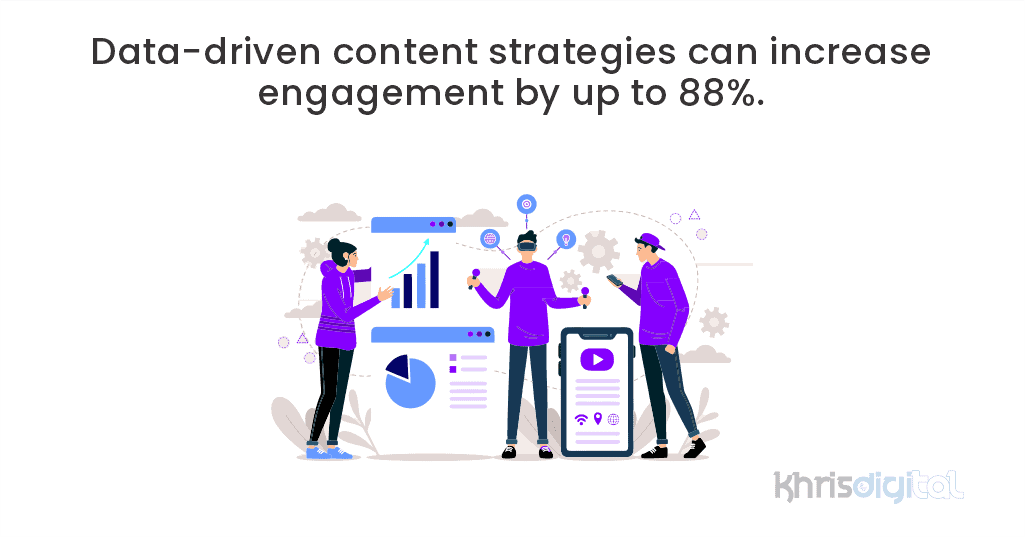
Engagement rises when content matches what people already care about. Data helps teams see which topics draw attention, which formats keep readers scrolling, and which questions come up again and again in search or support tickets.
52. About 3 out of every 4 marketing leaders surveyed (76%) base decisions on data analytics.
(Gartner)
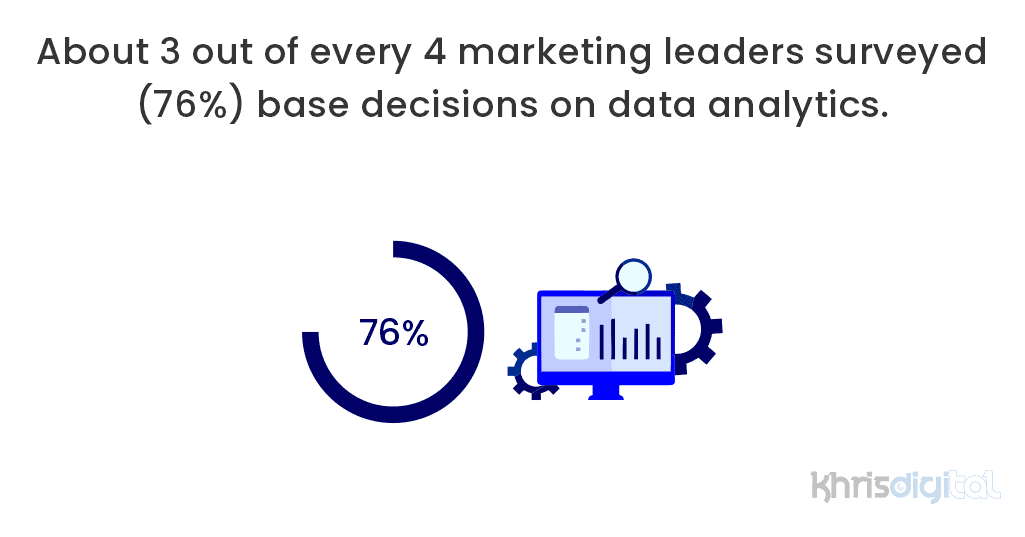
Marketing leaders are expected to justify spend, forecast outcomes, and explain what is driving growth. Data analytics makes those decisions more defensible by connecting activity to results.
It also helps leaders prioritize. When teams have too many ideas and too little time, analytics can reveal which audiences, channels, and messages are worth attention.
53. When surveyed, 32% of marketers identified marketing analytics and competitive insights as the most important factors in supporting their marketing strategies over the last 18 months.
(Gartner)
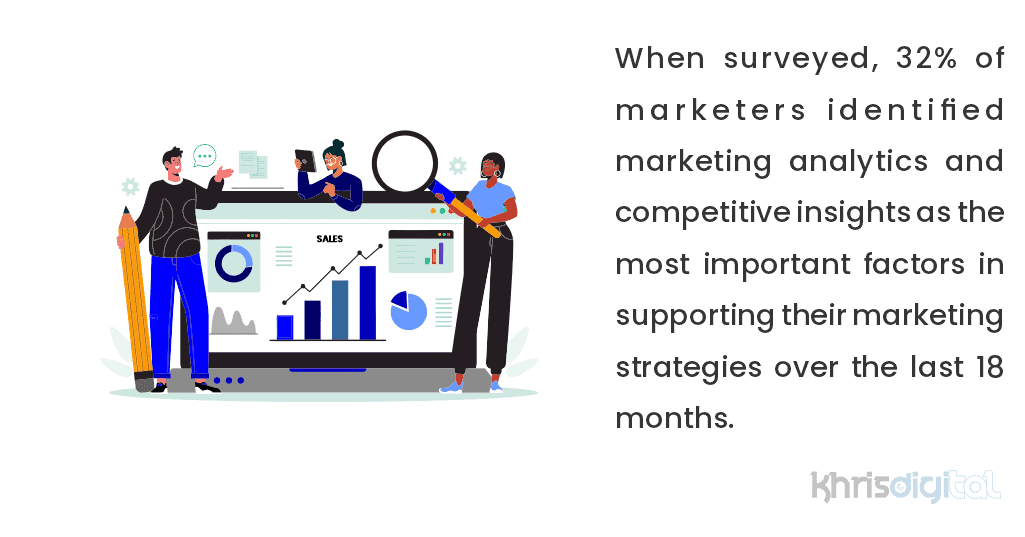
Analytics reveals what is working inside their own campaigns. Competitive insights show what is changing outside their walls. Together, they help teams avoid blind spots.
A brand can see a drop in conversion, then check whether competitors shifted pricing, messaging, or channel focus. That connection helps explain what is happening and what to do next.
54. Marketing analytics is the top investment for marketers, accounting for 16% of their annual budgets.
(Gartner)
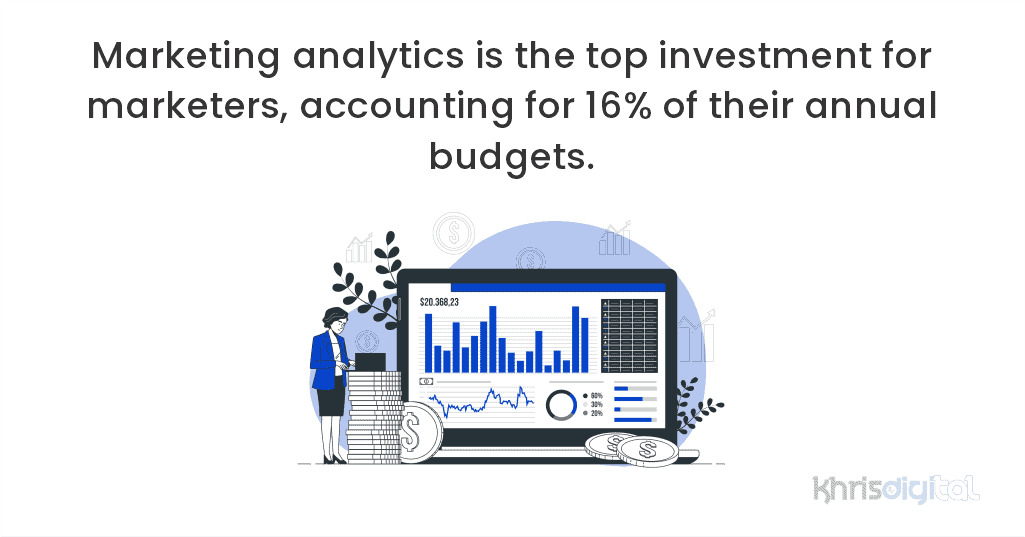
Analytics sits behind smarter targeting, cleaner reporting, and faster decisions when performance shifts. It also helps teams prove value to leadership, especially when budgets are under pressure, and every channel has to earn its place.
Companies that invest heavily usually want answers that basic dashboards cannot provide, like which touchpoints actually drive revenue, where customers drop off, and which audiences are worth paying more to reach.
55. Although many organizations are realizing the value of marketing analytics, 37% of marketers say that proving their value is one of their top three biggest challenges.
(Gartner)
Many teams can report clicks, impressions, and leads, but leadership cares about revenue, retention, and growth. When the metrics do not connect, marketing looks like a cost, even when it is working.
Another issue is messy attribution. Customers touch multiple channels before buying, so credit gets disputed, and results feel fuzzy. Data silos make it worse because sales, product, and marketing numbers do not always match.
56. 68 percent say improving the measurability of ROI is a top priority when it comes to data-driven strategies.
(Porch Group Media)
ROI measurement is the bridge between marketing activity and business outcomes, and without it, budget decisions become political. Improving measurability usually means better tracking, cleaner attribution, and tighter alignment with finance and sales.
It also means choosing the right yardstick. Some campaigns aim for pipeline, some for retention, some for awareness that later turns into demand.
57. 9% of marketers rate their company’s understanding of data-driven attribution as excellent. 29% rank their understanding as good. 27% are neutral. 12% rate it as very poor. 22% rate it below average.
(eMarketer)
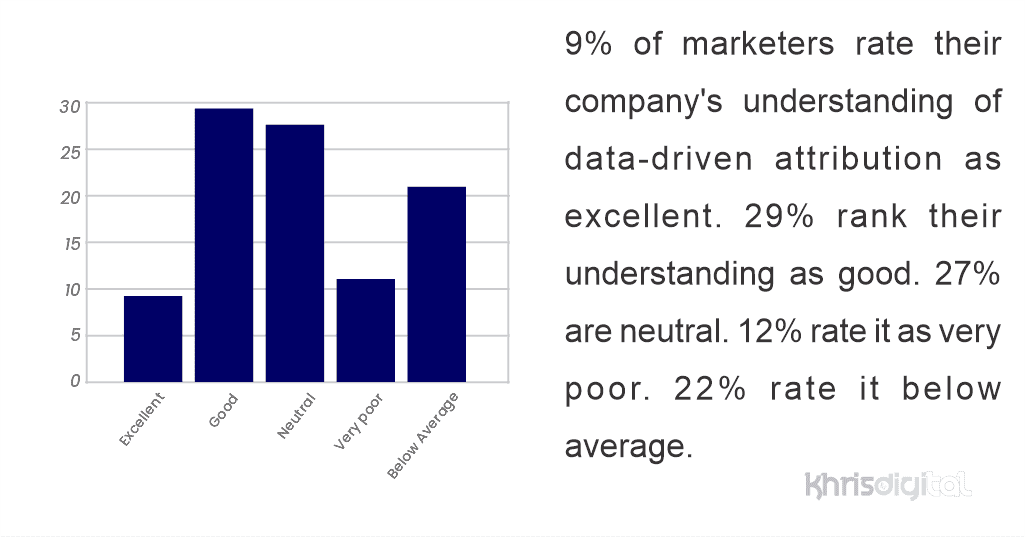
This breakdown shows how confusing attribution still is for most teams. Only a small group feels truly confident, while a large share is uncertain or negative. That matters because attribution shapes where the budget goes.
If a team does not understand how credit is assigned, they can cut channels that are quietly helping conversions or overfund channels that only look good on the surface.
58. 44 percent of marketing professionals plan to implement multi-touch attribution in the next year.
(eMarketer)
When teams can see which early touchpoints drive demand and which late touchpoints close deals, they can shift spend with greater confidence. Multi-touch attribution works best when it leads to action, not endless debates.
59. 66% of marketers agree on the importance of data analytics, and 63% agree that data literacy is important. However, about half of the survey respondents have teams with skill sets that are at par or below expectations, leaving room for improvement.
(Gartner)
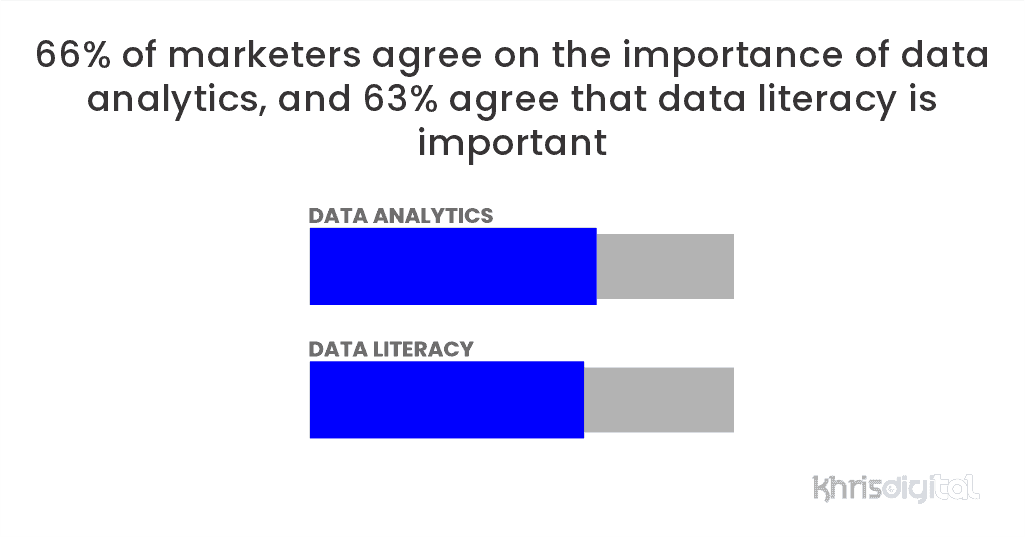
Many marketers know analytics and data literacy matter, but the day-to-day skills are not always there. That gap can slow everything down. Reports get misread, tests get designed poorly, and teams hesitate to act because they do not trust their own interpretation.
Improving data literacy is about ensuring everyone understands core concepts such as conversion rates, attribution limits, sample size, and what a metric actually means. Teams that close the gap usually build simple training into their workflow.
60. These positions are also difficult to fill, with over one-third of marketers (37 percent) citing data analysis as one of the hardest positions to recruit.
(Gartner)
Marketing teams want people who can pull data, interpret it correctly, and turn it into actions that improve performance. That blend is rare because it sits between technical skill and business judgment.
Companies also compete with finance, product, and engineering teams for the same talent, which raises hiring pressure and salaries. When data analysis roles are hard to fill, marketing teams often feel it in slow decision-making cycles.
Reporting takes longer, experiments take longer to evaluate, and budget shifts happen late. Many organizations respond by upskilling existing staff and simplifying their analytics stack so more people can self-serve insights.
61. In almost half of organizations (45 percent), data scientists are performing more basic tasks (including data visualization) than data analysis.
(Gartner)
This suggests a mismatch between expensive talent and everyday needs. When data scientists spend time on basic dashboards and charts, it usually means the organization lacks analysts, reporting tools, or clean data pipelines.
The work still needs to be done, so the most skilled people end up filling gaps. The cost is opportunity. Advanced analysis, modeling, and experimentation get delayed, even though that is where data science can create the biggest lift.
62. Over half of marketers do not trust their modeling techniques, showing there is a disconnect between where analytics teams are today and where they are trying to get to.
(Gartner)
Lack of trust usually means the model feels like a black box. Marketers see an output, but they do not understand what went in, what assumptions were made, or how reliable the result is.
When that happens, teams fall back to what feels safer, like last click reports or gut calls, even if they know those are flawed. Trust also breaks when different models tell different stories, or when results do not match what teams observe in the market.
63. Additionally, over half (57 percent) of marketers worldwide feel overwhelmed by the incoming data.
(Forrester)
Data overload happens when volume grows faster than the team’s ability to filter and act. Marketers get buried in dashboards, alerts, and reports that compete for attention. The result is decision paralysis.
When everything looks important, nothing gets prioritized, and teams either ignore the data or chase random spikes. The fix is usually not more tools. It is a clearer focus.
Strong teams choose a small set of metrics tied to outcomes, then build views that answer specific questions like what to improve this week and where the budget should move. They also reduce noise by setting alert thresholds and cutting reports nobody uses.
64. 48% of marketers use customer journey data to create more personalized customer experiences.
With that view, personalization goes beyond using a first name in an email. A brand can send the right message based on stage, like education for new visitors, proof for hesitant shoppers, and support prompts for customers who just bought.
65. Today’s consumer journey can have between 20 and 500 touchpoints, depending on the complexity of the purchase.
(Invoca)
This range explains why marketing attribution gets messy fast. A buyer might see a social post, read reviews, compare prices, click a retargeting ad, open emails, ask a friend, and still wait days before acting.
Each touchpoint nudges interest, but only a few feel obvious in reports. That is why brands that only track the last step often misunderstand what actually drives sales.
66. More than one in three marketing leaders cite conversion rates as a top KPI that they prioritize tracking.
(HubSpot)
Conversion rate stays high on the list because it forces clarity. Traffic can look impressive while sales stay flat, but the conversion rate exposes whether the message, offer, and experience are doing their job.
Marketing leaders track it because it connects creative and spend to a real outcome. It also sends a quick signal when something breaks, such as a landing page issue, weak targeting, or a confusing checkout.
Final Thoughts on Data-Driven Marketing Statistics
Data-driven marketing is reshaping how businesses approach their strategies. By utilizing insights derived from data, you can make informed decisions that enhance your marketing efforts.
Statistics reveal that 87% of marketers regard data as an under-utilized asset. This indicates a significant opportunity for those willing to invest in data-driven approaches.
While data drives marketing, balancing data use with creativity is essential. Over-reliance on data can hinder innovation and slow decision-making processes.
Considering these points, you can leverage data effectively while maintaining the flexibility to adapt and innovate your marketing strategies. Embrace the power of data, and you will likely see an impact on your success.
Sources:
Check out my other Statistics round up:
