


QR codes are becoming a permanent fixture in how people shop, scan, and share information. What started as a clever tool in marketing campaigns and restaurant menus has evolved into a multi-billion-dollar industry.
The global QR code market is projected to hit USD 3.5 billion by 2033, growing steadily at a CAGR of 8.7%.
From mobile payments to product authentication, the use cases keep multiplying, and so do the numbers behind them. But with growth comes new risks. Nearly 2% of scanned QR codes are now malicious, making security a growing concern.
Whether you’re a marketer, business owner, or just curious about the rise of this technology, these QR code statistics will show you exactly why QR codes are the future.
These statistics come from verified and reputable sources. You’ll find a complete list of them at the bottom of the article.
Let’s dive in!
1. QR code scans have reached 41.77 million, a 433% increase over the past four years.
(QR Tiger)
Four years ago, QR codes were still fighting for relevance outside of niche tech circles and scattered marketing campaigns. Now, they’re mainstream.
A surge this steep reflects changes in consumer habits, pandemic-driven digital adoption, and business needs for contactless engagement. Retailers, restaurants, event organizers, and even healthcare providers have integrated QR codes into their customer journeys.
Payment platforms in Asia normalized QR codes early, but the US and Europe have since caught up, using them for everything from digital menus to mobile checkouts.
With smartphone penetration nearing 90% globally, the ease of scan-and-go interactions is shaping expectations across industries. The upward trend points to more adoption, not less, in the years ahead.
2. The global QR code market size is projected to reach USD 3.5 billion by 2033, registering an impressive CAGR of 8.7% during the forecast period.
(Future Market Insights)
It’s not just marketing teams using QR codes anymore. They’re now vital tools in logistics, product authentication, payments, healthcare, education, and even cryptocurrency transactions.
As digital transformation accelerates globally, companies are baking QR functionality into everything from packaging to print media. Brands see them as low-cost, high-engagement tools, especially when paired with real-time analytics.
The growth also mirrors rising adoption in emerging markets, where QR codes offer a bridge to digital services without needing expensive hardware. In countries like India and Brazil, QR-based payments are fueling entire micro-economies.
3. The U.S. QR code market size is expected to reach USD 568.8 million by 2033, exhibiting a CAGR of 5.4%.
(Future Market Insights)
The American market has taken a slower but steady path with QR code adoption. While Asia led the charge years ago, the U.S. saw a major tipping point during the pandemic, when contactless experiences became a necessity.
That shift opened the door for QR codes across industries, from restaurants swapping out physical menus to real estate agents adding scannable property tours.
Large retailers now use QR codes as part of their omnichannel strategies, linking in-store shoppers to online content or exclusive deals. Healthcare systems use them for patient forms and vaccination records.
4. The global QR Code payment market is expected to grow 20% from 2025 to 2033, reaching USD 61.73 billion in 2033.
(Research and Markets)
In countries like China, mobile wallets powered by QR codes have already replaced cash in daily life. Now, that same model is expanding globally, especially in regions where banking infrastructure is limited but smartphone access is high.
QR-based payments are easier and cheaper to implement than traditional POS systems, which makes them attractive to small businesses and street vendors.
Digital wallets like PayPal, Apple Pay, and Google Pay continue to push QR code features, while fintech startups in Africa, Southeast Asia, and Latin America are doing the same.
5. Around 44.6% of global internet users (ages 16–64) scan at least one QR code monthly.
(QR Code Chimp)
This kind of regular usage shows that QR codes aren’t confined to tech-savvy niches or temporary trends. Marketers, app developers, and service providers can treat QR scans as reliable touchpoints, not just experimental features.
This also highlights the versatility of QR codes. Their universal readability across devices keeps the barrier to entry low. In places with limited connectivity or infrastructure, a single monthly scan can represent meaningful access to services.
6. 59% of consumers scan QR Codes daily.
(Uniqode)
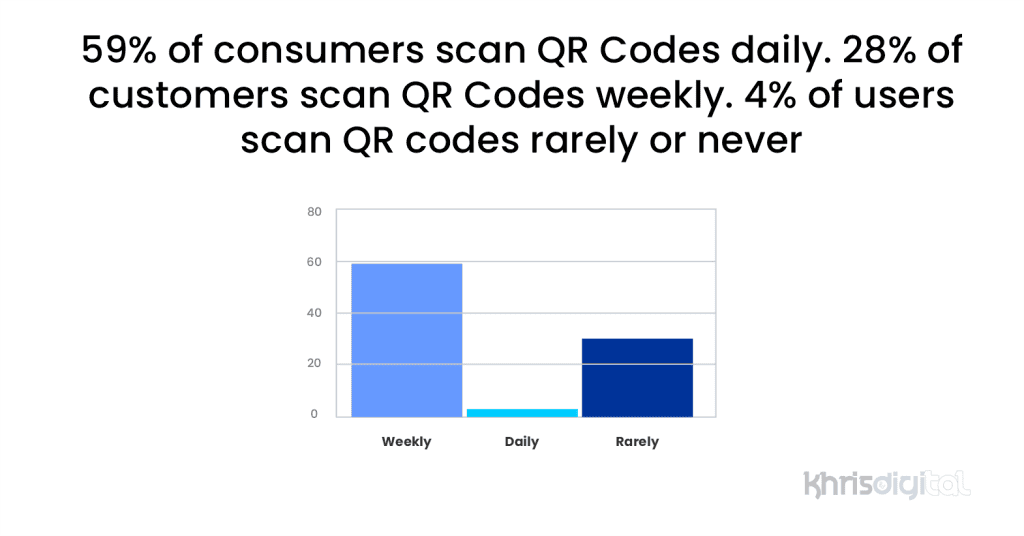
Daily scanning at this level shows how deeply QR codes have become embedded in routine behavior. They’re no longer tied to novelty or limited to specific industries.
From scanning product labels in-store to accessing loyalty rewards, consumers now expect QR interactions as part of everyday life. This habit-forming use is driven by convenience, speed, and growing trust in QR-enabled actions.
Brands and retailers are capitalizing on that behavior, creating more seamless paths from scan to sale. It’s also a sign that businesses without QR code strategies risk falling behind.
7. 28% of customers scan weekly.
(G2 Learning Hub)
Weekly engagement reflects a growing dependence on QR codes for practical, recurring tasks. Customers are scanning codes to check prices, redeem offers, pay bills, enter events, and more.
For businesses, that means there’s a consistent window to engage users frictionlessly. The more QR codes become part of weekly routines, the more valuable they are as conversion tools.
As more brands tie QR experiences to personalized content, loyalty programs, or fast checkouts, customers return to them by default. People now expect to see a QR code, and when it’s not there, the experience can feel incomplete.
8. 4% of users scan QR codes rarely or never.
(G2 Learning Hub)
This small minority highlights how widely accepted QR codes have become. That low number also suggests the barriers that once held QR codes back, as clunky apps or user hesitation have mostly disappeared.
Native scanning features in smartphones and widespread use in public places have made QR interactions feel effortless. The fact that nearly everyone else scans regularly makes this 4% more of an outlier than a trend.
9. This year, Dynamic QR Codes created by users garnered 7,181,345 scans.
(QR Tiger)
That level of engagement speaks to the real power behind dynamic QR codes. Unlike static versions, these can be edited, tracked, and optimized, which makes them incredibly valuable for marketing, product management, and data-driven decision-making.
Users can change the destination without printing a new code, giving businesses flexibility and control over live campaigns. People are using them for everything from portfolios and event invites to product demos and personalized promotions.
10. Dynamic QR Codes are projected to expand at a 19.2% compound annual growth rate (CAGR) through 2030.
(Mordor Intelligence)
This kind of rapid growth shows how essential dynamic QR codes are becoming across industries. Their flexibility makes them ideal for evolving campaigns, real-time tracking, and personalized experiences.
Marketers can test offers, update URLs, or adjust content without reprinting materials. The high CAGR also reflects growing demand from sectors such as retail, logistics, education, and healthcare for smarter ways to connect physical and digital touchpoints.
11. There is a 47% increase in QR code generation year-on-year across all countries.
(Yahoo Finance)
From small businesses to multinational brands, more people are creating QR codes to bridge the gap between offline and online. Events, packaging, education, and payments all rely on QR tech to drive interaction.
What’s pushing this growth further is the increased availability of free, user-friendly QR code generators, along with mobile apps and CRMs that integrate QR functionality directly.
12. QR code scans surged by 57% in 50 countries.
(QR Tiger)
This kind of adoption proves that QR codes work across different tech ecosystems, consumer behaviors, and infrastructure levels.
Businesses in both developing and developed markets are finding them useful because they’re easy to deploy and universally accessible via smartphones.
This 57% jump also reflects post-pandemic digital habits sticking around. Even as physical spaces reopened, the convenience and speed of QR scans kept people using them.
13. 8 QR codes are generated per minute.
(QR Tiger)
Every minute, someone is launching a campaign, updating a menu, promoting a product, or creating a personalized link powered by a QR code.
The ability to instantly generate a scannable, trackable code that connects physical and digital spaces has made it an essential tool. This pace also reflects how low the barrier to entry has become. With free tools and mobile-friendly platforms, creating a QR code takes seconds.
14. Over 90% of marketers say they use QR Codes.
(Bitly)
Whether it’s for product packaging, direct mail, in-store signage, or event promotions, marketers are turning to QR codes because they’re fast, trackable, and mobile-friendly.
The ability to analyze scans in real time also gives teams actionable insights, making campaigns smarter and more responsive. With customer behavior shifting toward mobile-first interactions, QR codes are now expected.
15. 94% of marketers had increased their usage of QR Codes in the past 12 months.
(Bitly)

With tracking, personalization, and ease of integration across channels, QR codes offer clear metrics and measurable value. The increase also shows how marketing strategies are shifting toward mobile-first, interactive formats that meet consumers where they are.
Whether it’s linking print ads to landing pages or turning packaging into a sales funnel, the use cases are expanding fast. The fact that nearly every marketer boosted usage over the course of a single year speaks to the versatility and scalability of QR codes.
16. Over two-thirds of consumers have used QR Codes at least once in the last year.
(Team Lewis)
People scan them for everything from accessing menus to checking package authenticity. The stat also shows the wide spread of use cases across different industries and touchpoints.
Whether it’s retail, travel, healthcare, or education, QR codes are showing up in ways that feel natural and convenient. Familiarity reduces hesitation. And once consumers use a QR code successfully, they’re far more likely to do it again.
17. Half of Gen Z and Millennials say they scan QR Codes at least once a week.
(Team Lewis)
This kind of weekly interaction shows just how native QR codes have become to younger digital consumers. Gen Z and Millennials are mobile-first, quick to adopt tech that saves time, and expect seamless transitions between physical and digital spaces.
For them, scanning a QR code is muscle memory. They use it to pay for coffee, check into events, follow brands on social, and access exclusive content.
18. 88% of marketers believe consumer sentiment toward QR Codes has grown more positive in the past 12 months, including 40% who said it has grown significantly more positive.
(Bitly)
Consumers no longer see them as clunky or outdated. Instead, they associate QR codes with speed, convenience, and relevance. The pandemic pushed people to use them, but what kept them around was how practical they turned out to be.
When scanning a code unlocks exclusive content, discounts, or a smoother checkout, the experience feels rewarding.
19. 39% of marketers say that exclusive content or information proves most effective in encouraging consumers to scan QR Codes.
(Bitly)
Exclusive content taps into curiosity and the desire to get something others might not. Whether it’s early access to a product, a limited-time offer, behind-the-scenes videos, or personalized recommendations, exclusivity creates urgency.
Marketers know this tactic works because it turns a passive code into an active reward system. It shifts the interaction from utility to experience. That’s why QR codes paired with gated content, special deals, or insider info tend to outperform generic “learn more” links.
20. 33% of marketers say that discounts or promotional offers are most effective.
(Bitly)
When a QR code leads directly to savings, there’s instant motivation to scan. It removes friction from the buying process and adds a layer of reward. Marketers lean into this because it delivers quick wins.
Whether it’s a limited-time coupon, a flash sale, or a special offer tied to an event, discounts drive action. QR codes make it even easier by placing the deal just a scan away, no forms or searching required.
21. Consumers most often scan QR Codes to access information like restaurant menus (48%) or product information (43%). They also scan to access resources such as mobile apps (47%), Wi-Fi (32%), and event tickets (31%).
(Team Lewis)
Scanning a menu, checking product details, or joining a Wi-Fi network now takes seconds. Restaurant menus were one of the biggest drivers during the pandemic, and they’ve stuck around because they’re easy to update and require no physical contact.
Product information adds value at the point of purchase, helping customers make faster decisions. Accessing apps or tickets with a scan reduces steps and boosts convenience.
22. 79% of consumers say they are more likely to purchase products with a scannable barcode or QR Code (via smartphone) that provides the additional product information that they would want to see.
(GS1 US)
When customers can scan and instantly view details such as ingredients, sourcing, sustainability, or usage instructions, they feel more in control of their decisions.
QR codes on packaging offer a direct line to rich content without cluttering the label. It’s especially powerful for products that are health-related, environmentally conscious, or tech-based, where buyers want to know exactly what they’re getting.
23. 64% of shoppers have scanned a QR Code on a product while shopping in stores.
(World Sync Consumer Product Content Benchmark)
Scanning a code turns a physical item into an interactive experience, giving customers instant access to reviews, tutorials, origin details, or even price comparisons. It blends the benefits of online shopping with the immediacy of in-person retail.
For stores, this is a powerful way to enhance product value without relying on staff or shelf space. It also opens doors to upsells, digital coupons, or personalized offers triggered by the scan.
24. 42% of all shoppers have said QR Codes have significantly improved their in-person shopping experience.
(World Sync Consumer Product Content Benchmark)
That’s a strong endorsement of how much value QR codes add on the spot. When shoppers feel their experience is significantly better because of a quick scan, it says a lot about how expectations have shifted.
They want instant answers, product details, reviews, or discounts, and QR codes deliver all of that without waiting for assistance or digging through a website.
25. 61% of shoppers have scanned a QR Code on a product after purchase.
(World Sync Consumer Product Content Benchmark)
Shoppers are scanning after buying to access setup guides, warranty registration, how-to videos, or loyalty rewards.
It extends the brand experience and adds utility beyond the shelf. Post-purchase engagement is a critical moment where satisfaction is either reinforced or eroded.
A QR code that leads to useful, timely content can reduce returns, increase repeat purchases, and even turn customers into advocates. It also opens the door for brands to collect feedback, offer support, or upsell related products.
26. 36% of TV audiences scan shoppable ad QR codes.
(QR Tiger)
Shoppable QR codes cut out the middle steps. No more Googling, no need to remember a URL. Just scan and buy. It’s seamless, especially when paired with limited-time offers or exclusive drops.
27. 57% of consumers scan QR codes on food packaging.
(QR Tiger)
Food packaging has become one of the most valuable surfaces for QR codes, and this stat proves it. More than half of consumers are scanning to check ingredients, nutritional info, sourcing, or even recipe ideas.
With growing interest in health, transparency, and sustainability, people want to know what they’re putting in their bodies. QR codes offer a cleaner, faster alternative to cluttered labels or confusing fine print.
28. 60% of shoppers scan QR codes for product information before purchase.
(Nielsen IQ)
Before committing to a purchase, people want clarity on quality, features, origin, or usage. A QR code that answers those questions builds confidence and helps reduce hesitation. It replaces uncertainty with insight, all through a quick scan.
29. There is an 88-percent increase in QR code creation year-over-year in the Consumer Packaged Goods industry.
(QR Tiger)
An 88% spike means companies are using QR codes for more than just sharing product info. They’re building loyalty programs, driving app downloads, collecting feedback, and offering personalized content straight from the packaging.
With limited space on labels, QR codes unlock a digital layer that allows brands to educate, inspire, or connect directly with shoppers. This also gives them flexibility. If messaging needs to change, a dynamic code can update content without reprinting packaging.
30. 75% of consumers have scanned QR codes on FMCG (Fast-Moving Consumer Goods) products.
(QR Tiger)
This level of interaction shows how QR codes have become a regular part of the FMCG shopping experience. Whether it’s a snack, household item, or personal care product, consumers are actively engaging with packaging beyond just reading labels.
A quick scan gives access to instructions, origin details, offers, or even brand stories in the moment when purchase intent is highest.
31. 70% of consumers believe that QR codes make life easier.
(ElectroIQ)
From paying bills to pulling up digital menus or tracking deliveries, the simplicity is the appeal. Consumers don’t need instructions, apps, or logins. They just scan and go. That sense of ease builds trust, and trust drives repeated use.
32. 39% scan QR codes out of curiosity, 36% scan QR codes to redeem a coupon or incentive, 30% of people want to learn more about the product, and 28% want to understand how to use the product.
(Blue Bite)
Curiosity is the gateway, and people want to see what’s behind the code. That initial scan often leads to deeper engagement, especially when there’s something useful waiting. Offers and incentives attract deal-seekers seeking instant value.
Product details appeal to more thoughtful buyers who want to understand what they’re getting before they commit. And clear instructions post-purchase help ensure the product is used correctly and confidently.
Together, these reasons show that QR codes support the entire lifecycle from interest to loyalty. The key takeaway here is that the “why” behind a scan varies. The best-performing codes anticipate those needs and deliver accordingly.
33. 68% of consumers scan product packaging to check ingredients, verify authenticity, or unlock exclusive deals.
(G2 Learning Hub)
Shoppers want more than just what’s printed on the label. They’re scanning to make smarter decisions, ensure safety, and grab added value.
Ingredient transparency is especially important for health-conscious buyers, those with allergy concerns, or those following specific diets.
Authenticity checks are critical for high-value items or in markets plagued by counterfeits. And exclusive deals turn a passive product into an interactive experience that rewards the customer.
34. 62% of consumers use QR codes in mobile payment apps, making contactless transactions the new normal.
(G2 Learning Hub)
Mobile wallets and banking apps have made QR payments seamless, especially in stores, restaurants, transit systems, and peer-to-peer transfers. In countries like India and China, QR payments dominate. But even in the U.S. and Europe, adoption is rising fast.
35. 61% of consumers engage with QR-powered loyalty programs, turning every scan into a chance to earn rewards.
(G2 Learning Hub)
Instead of remembering account numbers or downloading separate apps, consumers can scan once and earn points, unlock perks, or track progress from their phones. It simplifies the experience while making it more interactive.
For brands, it’s a low-cost way to increase retention and keep customers engaged long after the initial purchase. Every scan becomes a micro-interaction that builds loyalty over time. It also gives businesses access to valuable first-party data without friction.
36. 59% of people rely on QR codes for security and authentication, from logging into accounts to verifying official documents.
(G2 Learning Hub)
QR codes are quickly becoming a trusted tool for digital identity. Logging in with a quick scan skips passwords, reduces friction, and adds an extra layer of security especially when paired with two-factor authentication.
People use QR codes to verify boarding passes, medical records, vaccination certificates, and government IDs. The scan confirms legitimacy in seconds, making it ideal for high-trust environments like banking, travel, and healthcare.
37. 54% of consumers scan advertisements, bridging the gap between print, digital, and interactive experiences.
(G2 Learning Hub)
QR codes turn billboards, posters, magazines, and even packaging into gateways for real-time engagement. Scanning an ad can lead to video demos, product pages, AR try-ons, or exclusive discounts with a single tap.
Consumers like it because it puts them in control. Instead of being told what to do, they choose to interact. For advertisers, it means better tracking, higher engagement, and a smoother path from impression to action.
38. 57% of people use QR codes for informational purposes, accessing manuals, event details, or educational content in seconds.
(G2 Learning Hub)
Instead of flipping through printed manuals or navigating cluttered websites, people scan and get exactly what they need, fast. It’s a smart way to declutter physical spaces while still delivering rich content.
Event organizers use QR codes for schedules, venue maps, and speaker bios. Educators link to study guides, videos, and sign-up forms. Brands attach QR codes to products so users can watch setup tutorials or safety instructions.
39. 52% of consumers scan QR codes on restaurant menus, making ordering, payments, and customization faster and more seamless.
(G2 Learning Hub)
Scanning a menu lets customers browse without waiting, order at their own pace, and even pay without flagging down a server. It reduces errors, speeds up table turnover, and gives diners more control.
Restaurants benefit too; they can update prices or dishes in real time, track popular items, and link menus to upsells or promotions.
40. QR codes with logos and call-to-action get 80% more scans.
(Scanova)
A plain black-and-white QR code might work, but one with a brand logo and a clear message like “Scan to Save” or “Unlock Offer” grabs more attention, and more scans.
A logo signals legitimacy. A call-to-action creates urgency or curiosity. Together, they turn a static code into a clickable visual cue.
41. 91% of iOS devices and 86% of Android users have built-in QR scanners.
(QR Tiger)
This kind of coverage removes one of the last barriers to QR code adoption.
Users no longer need to download third-party apps or jump through hoops; their camera does the job out of the box. With native scanning built into most smartphones, QR codes are now truly accessible.
42. 95% of consumers know how to scan a QR code.
(TVREV)
Nearly everyone knows what to do when they see a code, which makes it a reliable tool for communication, engagement, and conversion. There’s no need for instructions, no learning curve, and no confusion.
That familiarity gives brands confidence to use QR codes everywhere — on packaging, ads, receipts, menus, and signage — knowing the majority of their audience won’t hesitate.
43. URL QR code is the most in-demand QR code solution globally, with a 54.33 percent share of the pie. File QR codes (20.61%) and vCard QR codes (15.13%) come second and third, respectively.
(QR Tiger)
URL QR codes are simple, flexible, and effective. Whether it’s a product page, a promo landing site, a video, or a blog post, a clean link delivers instant value. That’s why over half of all QR codes created fall into this category.
File QR codes come next, offering downloadable PDFs, menus, instructions, or brochures that are perfect for offline content that still needs to be shared digitally. vCard QR codes round out the top three, turning business cards into contactless, tappable introductions.
44. QR code users earn between $30,000 and $80,000 annually.
(Scantrust)
This income range covers a broad slice of working consumers from entry-level professionals to mid-career earners, and it highlights just how mainstream QR code use has become.
It’s not limited to high-tech early adopters or niche groups. Instead, QR codes are used daily by people across industries and lifestyles, from shopping and payments to loyalty programs and event access.
45. Nearly 80% of businesses use dynamic QR codes for tracking and content updates.
Dynamic QR codes give businesses flexibility. They can change the destination without changing the code, update campaigns in real time, and track every scan with detailed analytics.
It also reduces waste and boosts ROI, since the same code can be reused across multiple campaigns. Dynamic QR codes provide insights into customer behavior, location data, and engagement trends, all while improving the user experience.
46. 43% of businesses use QR Codes for logistics tracking, and 39% for improving inventory management.
(Uniqode)
QR codes are doing serious work behind the scenes in keeping operations smooth and efficient. In logistics, they’re being used to track shipments in real time, monitor movement through supply chains, and reduce errors from manual data entry.
With a quick scan, teams can verify items, update status, and spot delays instantly. On the inventory side, QR codes simplify stock checks, automate reordering, and give accurate insights into what’s moving and what’s not.
47. 75% of restaurants globally have used QR codes for digital menus, driving 40% customer engagement.
(G2 Learning Hub)

Digital menus powered by QR codes create real opportunities for engagement. Diners can explore menus, view photos, check allergen info, and even place orders from their phones. It’s faster, cleaner, and easier to update.
For restaurants, this opens doors to upselling, collecting feedback, and personalizing the dining experience. It also reduces printing costs and streamlines operations.
48. 92% of businesses plan to integrate AR with QR codes in the next 18 months.
(G2 Learning Hub)

Augmented reality brings static content to life, and QR codes are the fastest, simplest way to trigger that experience. Whether it’s trying on virtual makeup, visualizing furniture in your home, or exploring 3D product demos, AR turns engagement into interaction.
49. 57% of companies are increasing their investment in QR codes.
(G2 Learning Hub)
This trend confirms that QR codes aren’t a temporary fix but a long-term strategy. When over half of companies are investing more in QR tech, it means they’re seeing real value and returns.
Whether it’s for marketing, logistics, payments, or customer engagement, QR codes offer versatility with minimal cost. They also deliver measurable results, which makes them easy to justify in any budget.
50. The US leads in QR code usage worldwide, with 2,880,960 scans. India ranks second with 1,101,723 scans.
(QR Tiger)
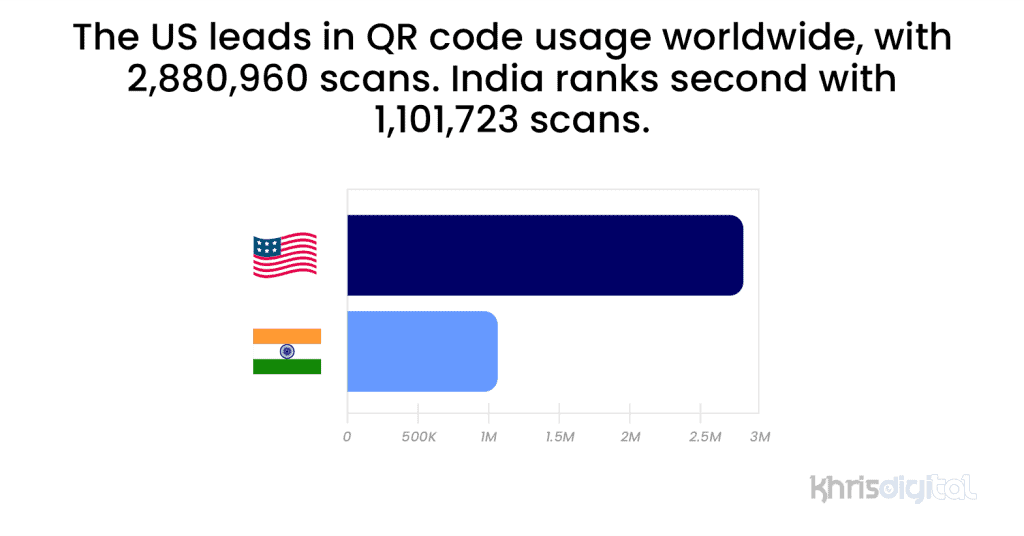
The U.S. leads with staggering volume, driven by widespread use in retail, restaurants, mobile payments, advertising, and healthcare. Consumers are fluent in scanning, and businesses are meeting them with QR codes across touchpoints.
India’s second-place spot is no surprise either. With the explosive rise of UPI-based payments and smartphone penetration, QR codes are now part of daily transactions for millions of people.
51. The United States leads the pack of global scans with 42.2%, followed by India (16.1%), France (6.4%), the UK (3.6%), and Canada (3.6%).
(Profile Tree)
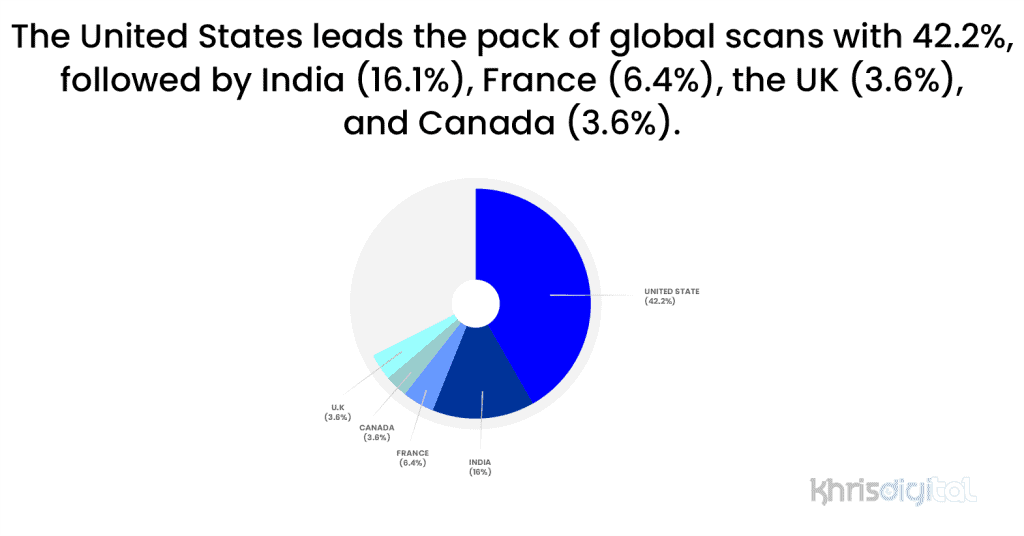
The U.S. holds a commanding lead, reflecting widespread adoption across industries, from mobile payments to marketing, logistics, and beyond.
India follows closely, thanks to the massive rollout of QR-enabled payment systems and mobile-first services across urban and rural regions. France, the UK, and Canada round out the top five, showing strong adoption in more digitally mature economies.
52. Eighty-nine million smartphone users have used and scanned QR codes in the United States alone.
(WPShout)
Whether it’s for ordering food, accessing event tickets, making payments, or interacting with ads, Americans are scanning as part of everyday life. For businesses, this number represents a massive pool of reachable, mobile-ready users.
53. Fifty-seven percent of QR code users are female, and the remaining 43 percent are male.
(ElectroIQ)
Women are leading slightly, which could reflect greater interaction with QR codes in shopping, health, wellness, and lifestyle spaces, where QR tech is often embedded in packaging, promotions, or product info.
From recipe and product searches to loyalty rewards and mobile coupons, these use cases align with how many female consumers engage with brands daily.
The 43% male user base still represents strong adoption, especially in sectors like tech, events, and finance.
54. Marketing and advertising obtained a 323% growth in QR code usage.
(G2 Learning Hub)
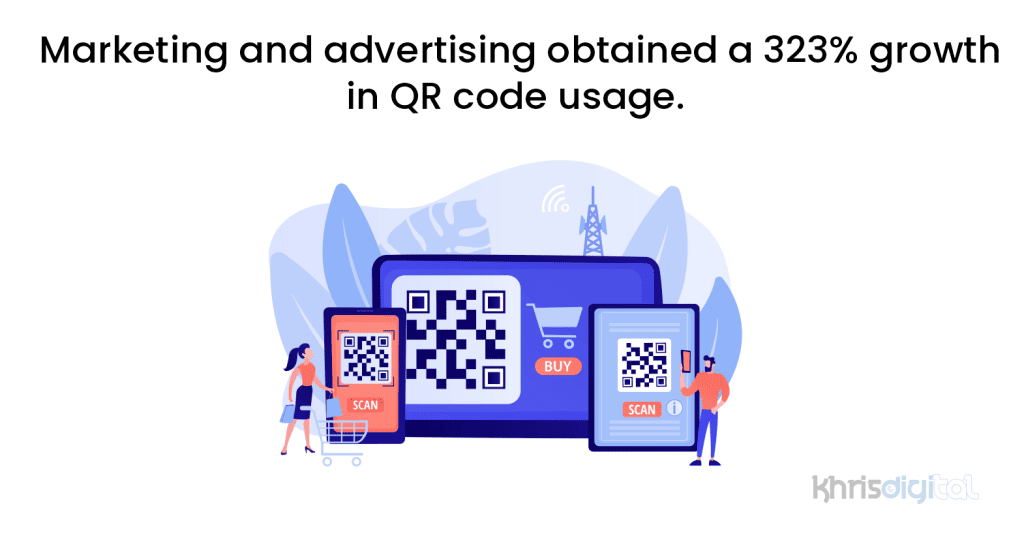
Marketers are using QR Codes to connect offline and online experiences, track engagement, personalize offers, and shorten the path to conversion.
Whether it’s a magazine ad, billboard, product label, or TV spot, QR codes let brands turn static media into interactive experiences.
55. By QR Code application, Marketing and Advertising applications are positioned to grow at a 19.5% CAGR through 2030.
(Mordor Intelligence)
A 19.5% CAGR means marketers are continuing to build on what’s working. QR codes turn print into clickable content, bring interactivity to packaging, and make ads more measurable than ever.
With dynamic capabilities and personalization, brands can adapt campaigns in real time based on who scans and where they are. The projected growth shows rising investment in omnichannel strategies, where QR codes help bridge in-person and digital interactions.
56. Email is the most common channel where marketers incorporate QR Codes (47%), with product packaging close behind (46%).
(Bitly)
In email, QR codes offer a smooth way to bridge mobile and real-world experiences. Think event check-ins, exclusive offers, or quick access to mobile apps. It’s convenient and trackable, especially when paired with personalized messaging.
On the other hand, packaging taps into the moment of purchase and product use. Scanning from a box or label delivers added value with how-to guides, loyalty rewards, or traceability info right when the customer is most engaged.
57. 43% of marketers use QR Codes for events, 40% use them for print ads, and 40% for in-store displays.
(Bitly)
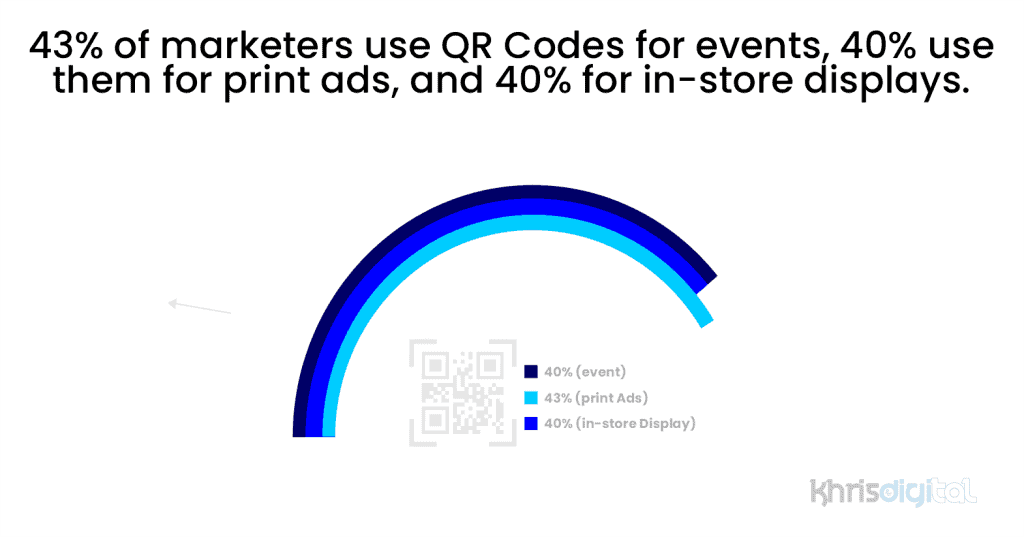
These numbers show how QR codes are being used where real-world interaction meets digital opportunity. At events, they’re powering check-ins, agendas, speaker bios, and lead capture without paper or friction.
In print ads, QR codes turn a static page into a clickable call to action, leading to instant conversions, video content, or personalized offers. In stores, they offer a way to provide shoppers with product info, reviews, tutorials, and on-the-spot promotions.
58. The top 3 types of content that marketing QR Codes link to are promotional offers or coupons (51%), event information or registration (49%), and product details or specifications (45%).
(Bitly)
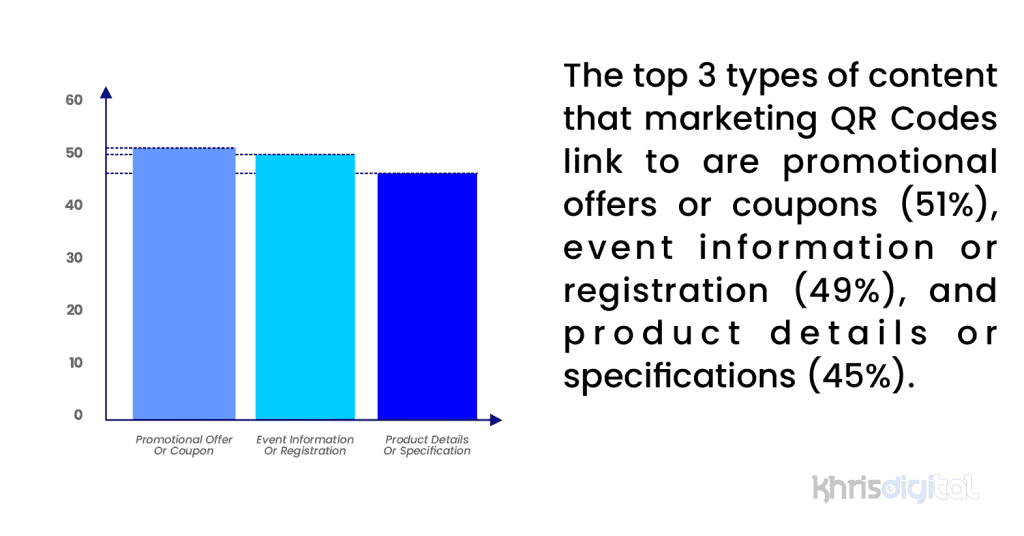
Promotional offers top the list because everyone loves a deal. A quick scan leading to savings is an easy win, and marketers know it gets results.
Event info and registration come next, streamlining everything from RSVPs to check-in by replacing clunky forms and outdated links.
Product details take the third spot, showing that shoppers want more than what’s on the label, especially when making fast decisions in-store or online.
59. At least a quarter of marketers also link to video demos or tutorials (37%), loyalty programs (33%), surveys or feedback forms (26%), or social media pages (26%).
(Bitly)
These secondary use cases show how QR codes support deeper, ongoing engagement. Video demos and tutorials help customers understand how to use a product, reduce returns, and build confidence post-purchase.
Loyalty programs reward repeat behavior and turn one-time buyers into long-term customers, and a scan makes it easy to join on the spot. Surveys and feedback forms invite quick input at the perfect time, while the experience is still fresh.
Social media links let users follow, share, or interact with a brand instantly, extending the relationship beyond the point of sale.
60. The most common business value marketers receive from using QR Codes is an enhanced customer experience (27%). 21% say that lead capture or customer acquisition is the primary business value they receive, 17% cite valuable customer insights and data, 17% report improved business awareness and engagement, and 16% point to direct revenue generation.
(Bitly)
Improving customer experience ranks highest because QR codes reduce friction. They make information, offers, and actions easily accessible in moments that matter. But they’re also pulling serious weight on the backend.
Lead capture and acquisition come in strong, showing that QR codes drive growth. Data insights help teams understand behavior and preferences, while greater awareness and engagement lead to stronger brand recall.
And even revenue, often the hardest metric to tie directly to tools like this, is seeing a boost.
61. 69% of marketers update or redirect dynamic QR Codes at least monthly.
(Bitly)
Marketers regularly tweak campaigns, swap destinations, or refresh content based on performance, seasonality, or promotions. This kind of agility is a huge advantage, especially when tied to print materials or packaging that can’t be changed physically.
62. 14% of marketers update their QR Codes rarely or never.
(Bitly)
Static QR codes still have their place, but when marketers choose not to update dynamic ones, they’re leaving value on the table. A code that leads to outdated content, expired offers, or irrelevant pages can frustrate users and erode trust.
63. Marketers say that the most valuable QR Code performance metric is unique users (54%). Close behind, they see the most valuable metrics as conversion rate post-scan (52%), total scans (50%), and scan time or date patterns (50%).
(Bitly)
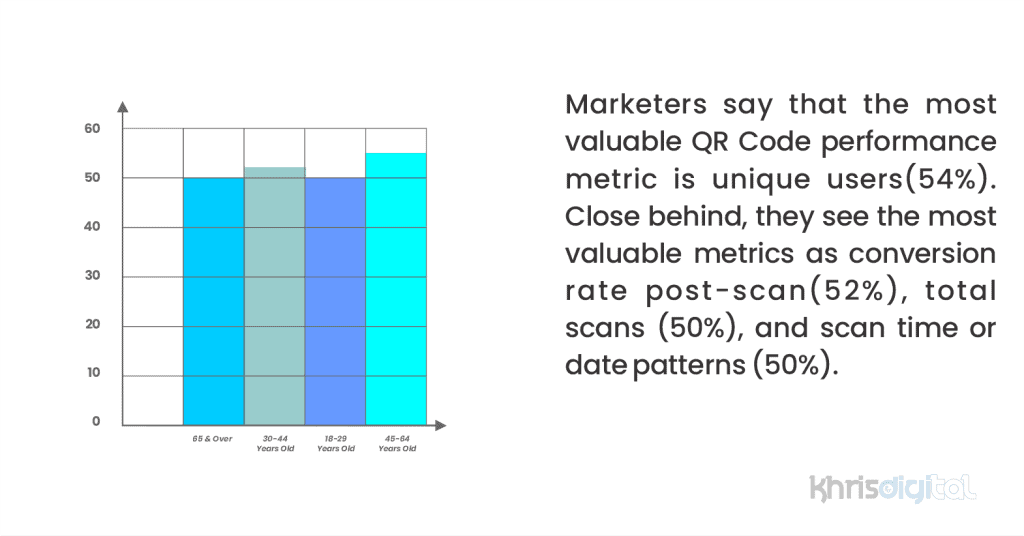
Unique users help marketers understand reach and audience size, giving clarity on how many individuals are actually engaging.
But it’s what happens after the scan that matters most. Conversion rate tracks how effective the landing experience is, whether it’s a purchase, sign-up, or app download.
Total scans show volume and interest, while timing patterns help teams fine-tune campaigns to hit during high-traffic windows. Together, these metrics paint a clear picture of impact, not just clicks.
64. QR-initiated journeys see a 37% average click-through rate (CTR).
(Uniqode)
That kind of CTR is massive compared to most digital channels. Email, paid ads, and social media often struggle to break double digits, but QR codes consistently drive high engagement because they catch people in the moment.
The user is already holding their phone, already curious, and just one scan away from acting. That intent-driven behavior makes QR journeys uniquely powerful.
65. 95% of businesses confirm QR Codes help collect valuable first-party data.
(Uniqode)
In a world where third-party cookies are disappearing and privacy rules are tightening, first-party data has become gold. QR codes offer a direct, user-initiated way to gather it.
Every scan can reveal when, where, and how someone engaged, and when paired with forms, downloads, or purchases, that data becomes even richer. Businesses can track behavior, preferences, and trends without relying on third-party platforms.
And because the user initiates the scan, the data feels less intrusive and more intentional.
66. Businesses that use accelerated mobile pages (AMP) for QR-linked content see a 30–50% improvement in engagement.
(G2 Learning Hub)
AMP strips down unnecessary loading delays and delivers fast, clean, mobile-first pages that keep users engaged. When content loads without friction, bounce rates drop and interactions go up.
67. QR-linked landing pages with personalized content drive 2x higher conversions than generic homepages.
(G2 Learning Hub)
Personalization turns a simple scan into a meaningful interaction. When a QR code leads to a page tailored to the user’s context, like a localized offer, product suggestion, or time-sensitive message, the chance of conversion doubles.
68. 58% of businesses report revenue growth after integrating QR codes into their customer touchpoints.
(G2 Learning Hub)
By placing QR codes at key moments in the customer journey, businesses are making it easier for people to act, buy, sign up, or learn more. The result is more conversions, higher average order values, and faster paths to purchase.
69. 63% of retailers use QR codes on packaging to drive direct sales and engagement.
(G2 Learning Hub)
A quick scan can lead to exclusive offers, product tutorials, reviews, or even instant purchases.
It turns a box or label into a sales assistant, helping customers make faster, more informed decisions. It also extends the experience post-purchase, linking to loyalty programs, how-to videos, or product registration.
70. Understanding the customer journey post-scan is the top challenge marketers face in demonstrating the ROI of QR Codes (87%).
(Bitly)
Without a clear view of the post-scan journey, it’s hard to tie QR code engagement to actual business outcomes, such as sales, sign-ups, or loyalty.
The scan is just the start. To prove ROI, marketers need tools that track how users move through the funnel after that moment. Are they clicking? Buying? Bouncing? Without those insights, QR codes can feel like a black box.
71. More than half of US businesses use QR codes for marketing.
(QR Tiger)
Whether it’s driving traffic to landing pages, offering exclusive deals, or capturing leads, QR codes are now standard in the marketer’s toolkit. Their low cost and high versatility make them accessible for businesses of all sizes, from local shops to national brands.
72. 82% of US consumers say QR codes will become a permanent part of using their phones.
(Code Broker)
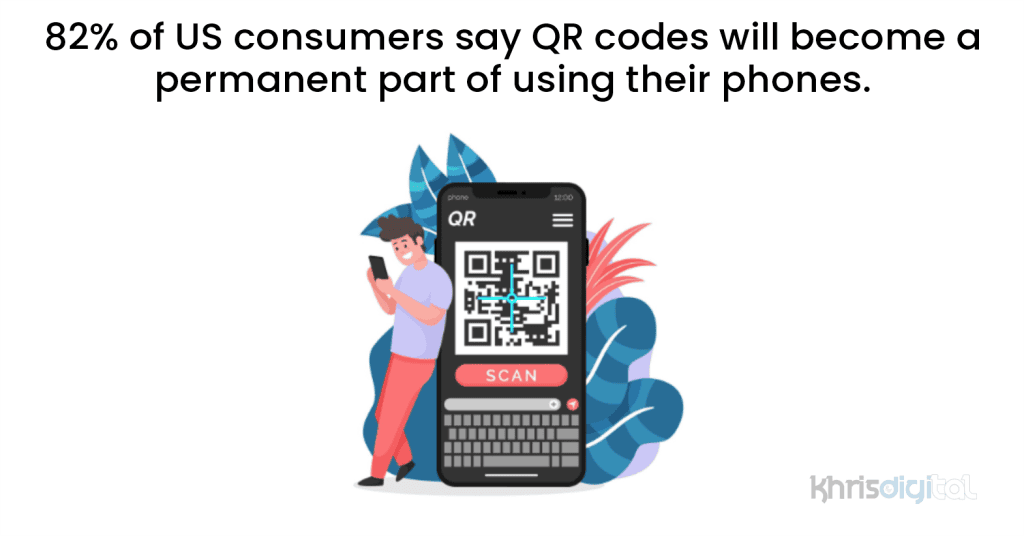
QR codes offer speed, simplicity, and control, things users value in mobile experiences. From accessing menus and deals to verifying products and logging in, QR interactions feel natural and useful.
As apps and services continue to build QR functionality into their core features, this behavior will only grow. The future of mobile is scan.
73. Seventy-five percent of US adults will use QR codes in the future.
(YouGov)
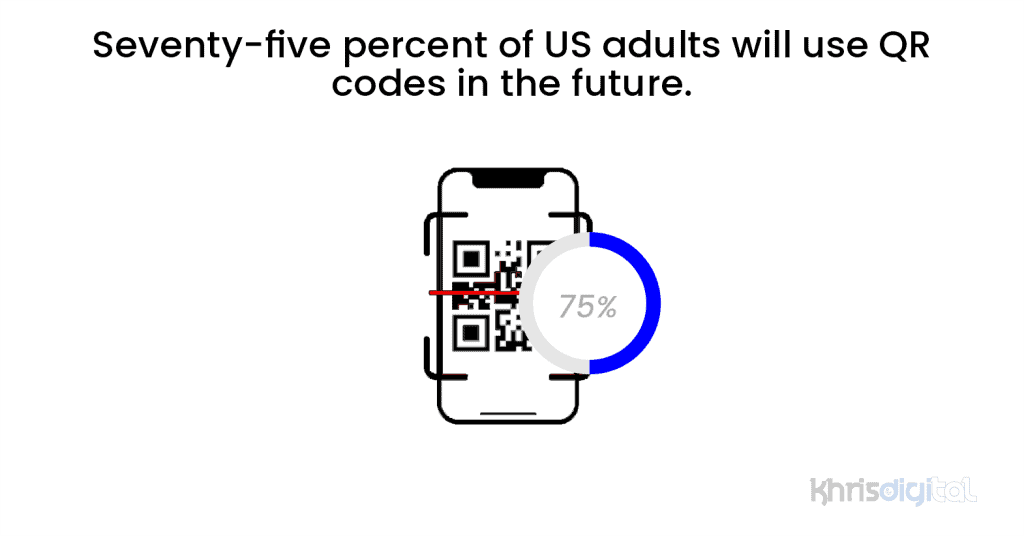
This projection reinforces that QR codes are gearing up for even wider adoption. With three out of four adults expected to use them, brands, retailers, and service providers can confidently invest in QR-driven experiences.
74. Sixty-four percent of consumers older than 45 are willing to use QR codes in the future, as they are less confident that QR codes will remain relevant in the coming years.
(YouGov)
A solid majority of older consumers are open to using QR codes, which shows that the technology has crossed generational lines. But their uncertainty about long-term relevance signals a trust gap.
Unlike younger users who see QR codes as second nature, older consumers may view them as a convenience that could be replaced by newer tech.
75. 59% of US respondents believe QR codes will be permanent.
(QR Tiger)
This belief marks a major shift from viewing QR codes as a short-term trend to recognizing them as a lasting part of everyday tech. That kind of confidence reflects not just familiarity, but also usefulness.
QR codes have proven they solve real problems with speed and simplicity. The pandemic may have accelerated adoption, but their continued relevance comes from consistent, valuable experiences.
76. Forty-eight percent of Americans use and scan QR codes several times a month. 31% use them once a month, and 22% use them several times a week.
(Scantrust)
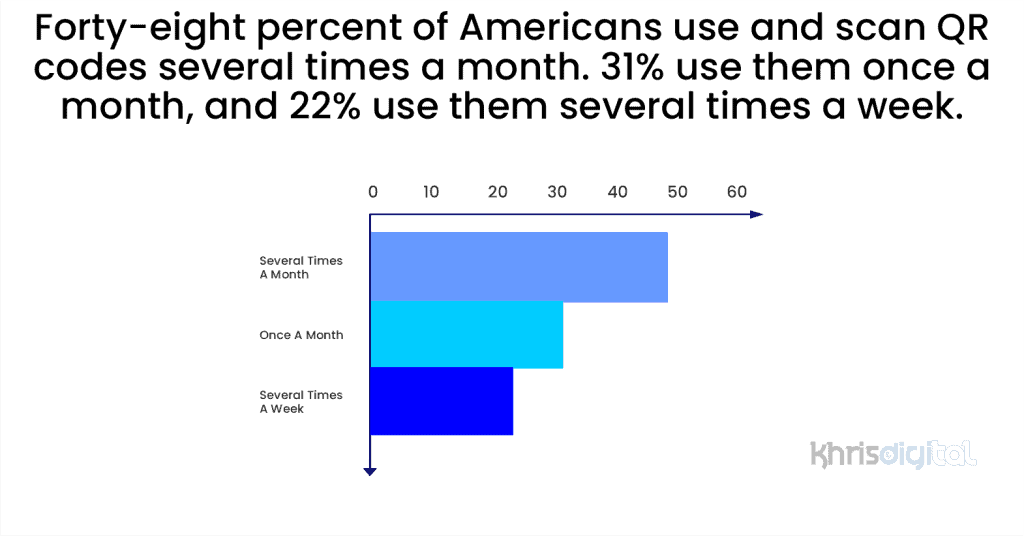
These numbers show how embedded QR codes have become in day-to-day routines. People are scanning to pay, access content, get deals, or interact with brands across physical and digital spaces.
77. Eighty percent of US users think QR codes are safe.
(QR Tiger)
This level of trust is critical. For any technology to succeed at scale, people have to feel secure using it, and QR codes have cleared that hurdle for most U.S. users.
Whether it’s scanning to pay, logging in, or accessing personal information, users believe the experience is reliable and risk-free.
78. 45% of US shoppers scan QR codes.
(QR Tiger)
Whether they’re checking product details, comparing prices, redeeming discounts, or unlocking personalized offers, shoppers are using QR codes to make smarter decisions. It’s fast, convenient, and puts control in their hands.
79. 41% of US consumers are willing to use QR codes for contactless purchases.
(QR Tiger)
With a quick scan, customers can complete transactions through their mobile wallets or banking apps, reducing the need for cards or cash. This method gained traction during the pandemic, and demand hasn’t slowed.
Contactless payments now feel cleaner, quicker, and more convenient, and QR codes make that process accessible to anyone with a smartphone.
80. During the COVID-19 Pandemic, there was a 750% increase in downloads prompted by QR codes.
(QR Tiger)
QR codes became a bridge to app downloads, contactless menus, health info, and digital services when physical interaction was off-limits.
That 750% spike shows how quickly users adapted and how effective QR codes were in delivering what people needed, right when they needed it.
For businesses, it was proof that QR-driven downloads work especially when scanning replaces the friction of typing a URL or searching in an app store.
81. 18.8% of American consumers believe QR code usage has increased since the pandemic.
(QR Tiger)
While this number might seem modest, it reflects clear consumer awareness of how QR codes became more visible and widely used after COVID-19 reshaped daily habits. Menus, check-ins, payments, and health forms all went digital, fast.
More businesses adopted them, and more consumers got comfortable scanning. This perception shift matters.
82. 56% of US adults support QR menus, replacing paper-based ones.
(AdWeek)
A quick scan gives instant access to updated menus, dietary details, and specials without waiting for a server or flipping through sticky pages. Restaurants benefit too. They can adjust pricing, add seasonal items, or highlight promos without reprinting.
83. 51% of US respondents said they would likely use hotel QR codes.
(AdWeek)
Whether it’s checking in, accessing room service, exploring local recommendations, or unlocking digital keycards, guests are open to using their phones to interact with hotel services. It’s fast, touch-free, and gives travelers control over their stay.
For hotels, QR codes reduce staff pressure, improve service efficiency, and create more personalized guest experiences without requiring an app.
84. 49% of US respondents said they would likely use QR codes at movie theaters.
(AdWeek)
Whether it’s scanning for digital tickets, pre-ordering snacks, joining loyalty programs, or viewing trailers and special offers, QR codes make everything faster and more interactive.
For theaters, it’s a way to reduce lines, cut down on printed materials, and personalize the experience with minimal effort.
85. Nearly 83% of general retailers in the U.S. and U.K. felt the need to offer QR code and barcode scanner apps to prevent their customers from switching to other merchants.
(Statista)
Retailers are realizing that QR codes and barcode scanners are competitive essentials. Shoppers want instant access to product info, prices, reviews, and deals. If one retailer makes that easy and another doesn’t, the choice is simple.
Offering a dedicated scanning app or built-in QR functionality keeps shoppers engaged and informed, reducing friction and adding value on the spot.
86. 48% of US respondents said they will likely use QR codes at medical offices.
(AdWeek)
Whether it’s checking in, accessing medical forms, reviewing test results, or receiving appointment reminders, QR codes reduce paperwork and wait times while giving patients more control.
In a setting where time, privacy, and accuracy matter, QR codes offer a clean, contactless way to move things along.
87. 47% of US respondents said they would likely use museum QR codes.
(AdWeek)
A simple scan can unlock audio guides, behind-the-scenes videos, artist bios, or virtual tours, all without needing a headset or additional staff.
It also allows museums to offer content in multiple languages, keep exhibits up to date, and add layers of engagement without cluttering the space. Visitors get more context, more connection, and more freedom to explore at their own pace.
88. 45% of US respondents said they will likely use QR codes at concert venues.
(AdWeek)
At live events where the energy is high and attention is short, QR codes offer a fast way to deliver value without disrupting the vibe. Fans don’t want to fumble through apps or dig for links. They want instant access, and that’s exactly what a well-placed QR code provides.
89. 40% of global QR code scans are attributed to marketing campaigns.
(Profile Tree)
Marketers are using QR codes to connect offline moments to online actions, whether it’s driving traffic to landing pages, unlocking discounts, launching video content, or capturing leads.
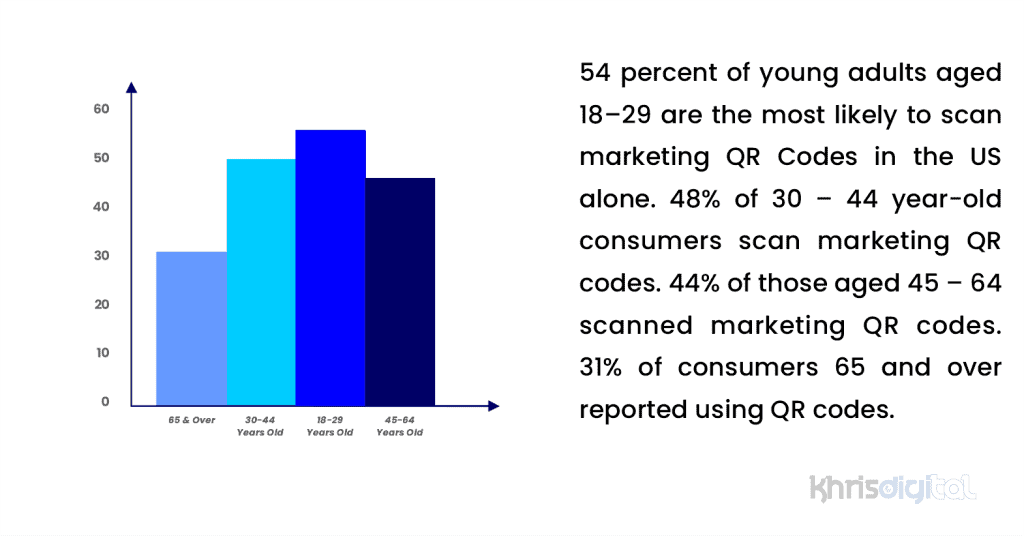
90. 54 percent of young adults aged 18–29 are the most likely to scan marketing QR Codes in the US alone.
(YouGov)
This age group grew up with smartphones and expects instant access to information, offers, and experiences.
Scanning a QR code feels like second nature. Whether it’s a poster, product, or social ad, young adults are more likely to engage if there’s a quick, scannable path forward.
91. 48% of 30 – 44 year-old consumers scan marketing QR codes.
(QR Tiger)
This group is busy, tech-savvy, and values efficiency, which makes QR codes a natural fit. Whether it’s redeeming an offer, watching a product demo, or getting more details on the go, they’re scanning to make decisions faster.
They’re also more likely to have purchasing power, making their engagement even more valuable for marketers.
92. 44% of those aged 45 – 64 scanned marketing QR codes.
(QR Tiger)
This age group often looks for value, clarity, and ease when interacting with brands, and QR codes deliver all three.
Whether it’s scanning for product info, checking for discounts, or getting direct access to support, these users appreciate tools that save time and cut hassle. They may not scan as frequently as younger users, but when the content is relevant and the value is clear, they absolutely respond.
93. 31% of consumers 65 and over reported using QR codes.
(QR Tiger)
This may be the lowest among age groups, but it’s still meaningful. Many in this group use QR codes for practical reasons, such as checking menus, accessing medical information, or making payments without typing or navigating complex apps.
94. 19% of healthcare providers are using QR codes to simplify patient check-ins, track prescriptions, and improve medical record access.
(ME-QR)
By scanning a code, patients can check in faster, refill prescriptions, or securely view their medical records on their phones.
This improves efficiency for providers and gives patients more control over their experience. It also reduces wait times, minimizes errors, and supports contactless processes, which are now widely expected.
95. 18% of manufacturers rely on QR codes to optimize inventory, track shipments, and enhance supply chain transparency.
(G2 Learning Hub)
QR codes are quietly becoming essential behind the scenes in manufacturing. Scanning a code can instantly reveal product status, location, or shelf life, helping teams manage stock more accurately and reduce delays.
In an industry where efficiency and traceability are everything, QR codes provide real-time visibility without the need for expensive hardware. They’re key in building transparency by helping brands prove sourcing, sustainability, and compliance.
96. 10% of financial services firms are using QR codes to power secure payments, fraud prevention, and seamless mobile banking.
(G2 Learning Hub)
QR codes offer a simple yet powerful way to make transactions safer and more user-friendly. They eliminate the need to enter account details or card numbers, reducing the risk of errors or fraud.
For mobile banking, they create smoother logins, easier bill payments, and quick transfers with a scan. They’re also useful for two-factor authentication, adding an extra layer of protection without creating friction for the user.
97. 25% of retailers have made QR codes a core part of their customer experience, turning packaging, shelves, and ads into instant shopping touchpoints.
(G2 Learning Hub)
Packaging leads directly to product details or reorder options. Shelves offer real-time inventory, reviews, or personalized offers.
Ads become gateways to instant purchases. This approach meets customers where they already are, with their phones in hand, and reduces steps between interest and action.
98. 10% of F&B brands have replaced menus, ordering systems, and loyalty programs with QR-driven experiences.
(G2 Learning Hub)
This stat shows how the food and beverage industry is shifting toward fully digital, self-serve models, and QR codes are leading the charge. With just a scan, customers can view menus, place orders, and earn rewards without waiting or touching anything extra.
For F&B brands, this reduces labor strain, cuts printing costs, and speeds up service. It also allows for real-time menu updates and personalized offers based on user behavior. Loyalty programs become frictionless, with just a scan at the point of purchase.
99. 7% of the hospitality industry is embracing QR codes for mobile check-ins, digital room keys, and guest service requests.
(G2 Learning Hub)
QR codes are helping hotels and resorts streamline check-ins, eliminate front desk bottlenecks, and let guests access their rooms with a quick scan.
They also enable guests to request services, order room service, or explore amenities right from their phones. For the hospitality industry, this shift means smoother operations and more personalized, low-touch service.
100. 5% of marketing agencies are embedding QR codes into campaigns to track engagement and bridge online-to-offline experiences.
(G2 Learning Hub)
Whether it’s on print ads, packaging, or event materials, a scan can tell the story of what worked, where, and when. It provides campaign data previously unavailable from offline channels. More importantly, it creates a seamless journey.
101. 3% of pharmaceutical companies use QR codes to verify prescriptions, fight counterfeiting, and educate patients about medications.
(G2 Learning Hub)
With counterfeiting on the rise and patient safety at stake, QR codes offer a simple yet powerful solution. A scan can instantly confirm a drug’s authenticity, provide detailed dosage instructions, list side effects, or link to multilingual educational resources.
102. 3% of consumer packaged goods brands are transforming product labels into digital storytelling hubs with QR codes.
(G2 Learning Hub)
This small but strategic group is rethinking what a product label can do. By adding QR codes, they’re turning ordinary packaging into interactive experiences that go far beyond ingredients or instructions.
A scan can unlock the brand’s origin story, show how the product was made, highlight sustainability efforts, or offer tips and recipes. This kind of storytelling builds trust, emotional connection, and deeper brand loyalty.
103. 50% of businesses struggle with technical obstacles before successfully implementing QR codes.
(G2 Learning Hub)
Common challenges include integrating QR codes with backend systems, setting up dynamic content, ensuring mobile optimization, and ensuring a seamless post-scan experience.
Security concerns and a lack of in-house know-how also play a role. But the key here is that these are early hurdles, not dealbreakers. Once resolved, QR codes deliver huge upside in engagement, tracking, and customer convenience.
104. 39% of businesses hesitate to implement QR codes due to security concerns, questioning data safety and fraud risks.
(G2 Learning Hub)
QR codes, while convenient, can be misused if not managed properly. Fake codes, malicious redirects, and unencrypted data are real risks when businesses don’t use secure platforms or best practices. But these concerns are solvable.
By using trusted QR code generators, HTTPS links, and dynamic code management, businesses can protect both themselves and their users. Educating teams and customers on safe scanning behavior also goes a long way.
105. 27% of businesses hesitate to implement QR codes because they hit budget roadblocks, unsure if the investment is worth it.
(G2 Learning Hub)
This stat highlights a common misconception that QR codes are costly or hard to justify. In reality, they’re one of the most affordable, high-impact tools available. But the hesitation often comes from not fully understanding the return.
Without a clear strategy or measurable goals, it’s easy to see QR codes as just another expense. But when used right for lead capture, direct sales, customer support, or campaign tracking, the ROI often far exceeds the initial cost.
106. 24% of businesses hesitate to implement QR codes because they face resistance from leadership, making it hard to get buy-in.
(G2 Learning Hub)
Internal pushback is one of the quietest, yet most common blockers to innovation. Even with a solid use case, QR code adoption can stall when leadership doesn’t see the value or fears it’s just a passing trend.
This resistance often comes from unfamiliarity or a lack of visible results. Getting buy-in means showing cost savings, increased conversions, or improved tracking. It also means framing QR codes as a low-risk, high-reward tool that supports bigger business goals.
107. 15% of businesses hesitate to implement QR codes because they fail to see a strong enough value proposition to justify adoption.
(G2 Learning Hub)
When a business doesn’t connect QR codes to a specific goal like boosting engagement, reducing friction, or improving tracking, the value gets lost. They see a black-and-white square, not a measurable opportunity.
But QR codes are only as strong as the experience they unlock. When they lead to personalized offers, easy check-ins, or real-time insights, they become tools that directly impact performance.
108. 38% of businesses hesitate to implement QR codes because they don’t fully understand the technology, slowing adoption.
(G2 Learning Hub)
QR codes look simple, but without understanding how to create, manage, track them, or how they integrate with existing systems, adoption slows. Some businesses assume they’re just static links.
Others worry about the complexity; they don’t have the time or expertise to manage. But the truth is, QR code tech is more accessible than ever. With drag-and-drop generators, dynamic code platforms, and built-in analytics, the tools are straightforward to use.
109. 25% of businesses hesitate to implement QR codes because they worry their target audience won’t engage with them.
(G2 Learning Hub)
This hesitation often stems from outdated assumptions that QR codes are too new for older audiences or too basic for younger ones. But data shows otherwise. Consumers across age groups are seeking deals, information, payment options, and convenience.
110. Executives face 42 times as many QR code phishing attacks as average employees.
(Abnormal AI)
Cybercriminals know that executives have access to sensitive information, and QR codes can serve as a backdoor to that data. Fake codes embedded in signs, on desks, or in emails can redirect to credential-harvesting sites or install malware with a single scan.
Unlike email links, QR threats often bypass traditional phishing filters, making them harder to detect. That’s why executive teams need more than awareness and specific training on QR hygiene and security best practices.
111. 89.3% of QR code attacks aim to steal credentials.
(Abnormal AI)
It’s a quiet but powerful form of phishing. One scan leads to a site that looks legitimate but captures sensitive info the moment it’s entered.
Because QR codes reveal their destination only after scanning, they can be especially deceptive. This is why businesses and individuals alike need to approach unknown codes with caution.
112. 70% of marketers believe that security concerns are the biggest challenge QR code marketing will face in the coming years, while 60% point to evolving privacy regulations. Other potential challenges include consumer QR code fatigue (68%) and technological complexities (59%).
(Bitly)

This breakdown shows that while QR codes are thriving now, marketers aren’t ignoring what’s ahead. Security tops the list, and rightfully so. As adoption grows, so does the risk of bad actors using QR codes for phishing or fraud.
Then there’s privacy. With regulations tightening around data collection, marketers need to be transparent about what’s gathered post-scan and how it’s used.
Fatigue is another concern. If every product, poster, and receipt has a QR code, consumers may start tuning them out unless there’s clear value.
And finally, tech complexity, because integrating QR campaigns with CRM systems, tracking tools, and personalization platforms isn’t always plug-and-play.
113. 55% of marketers think the largest barrier consumers face to using QR codes is a lack of understanding of how to use them. Marketers also believe that QR code overload (47%), security concerns (36%), and poor placement (21%) are among the top consumer barriers.
(Bitly)
Some users aren’t sure where the code will take them, how to use their phone to scan, or whether it’s safe to do so. QR overload is another issue, when codes are everywhere but lead nowhere valuable, people stop paying attention.
Add in rising awareness of scams and phishing risks, and hesitation becomes natural. Poor placement doesn’t help either. Codes that are too small, tucked away, or printed on hard-to-scan surfaces create friction instead of flow.
114. Phishing via look-alike QR codes, known as “quishing”, now accounts for 20% of online scams.
(Mordor Intelligence)
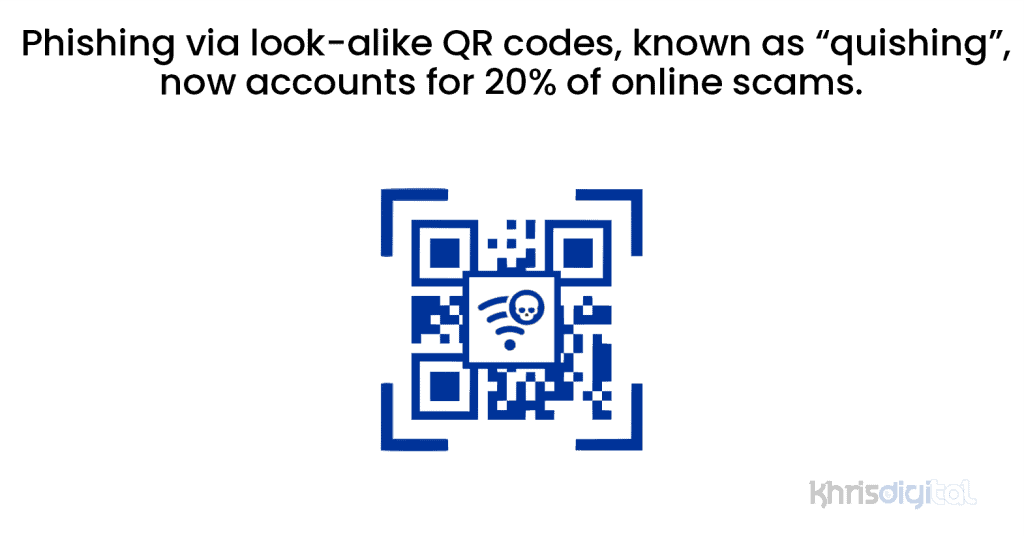
“Quishing” has quickly become one of the most dangerous threats in the growing landscape of digital scams.
These attacks work by disguising malicious QR codes as legitimate ones, often placed on posters, packaging, or even emails, and tricking users into scanning them.
Once scanned, they lead to fake login pages or malware downloads designed to steal sensitive information. What makes quishing especially effective is its subtlety. Unlike obvious spam links, QR codes give no visual clues about their destination.
115. 49% of marketers say that adding a business logo to their QR code design is the most valuable aspect of QR code customization.
(Bitly)
Branding matters, even at the pixel level. It tells users that the code is safe, intentional, and connected to a brand they know. It also helps the code stand out visually, especially in cluttered environments like packaging or print ads.
116. 86% of marketers plan to increase their usage of QR codes in the next 12 months.
(Bitly)
This stat shows just how confident marketers are in the staying power of QR codes. Marketers see them as versatile, trackable, and easy to integrate across channels, from print to packaging to digital.
The planned increase reflects growing trust in their ROI and a response to rising consumer engagement.
117. 86% of marketers say that QR code integration is critical or very important.
(Bitly)
Whether it’s tracking user behavior, delivering personalized content, or enabling fast mobile interactions, QR codes provide marketers with flexibility and measurable impact.
Their importance also stems from how they fit into broader customer journeys, especially in omnichannel campaigns.
118. 84% of marketers say they plan to integrate AI and machine learning with QR codes. 61% plan to integrate virtual reality with QR codes, while 57% plan to integrate augmented reality.
(Bitly)
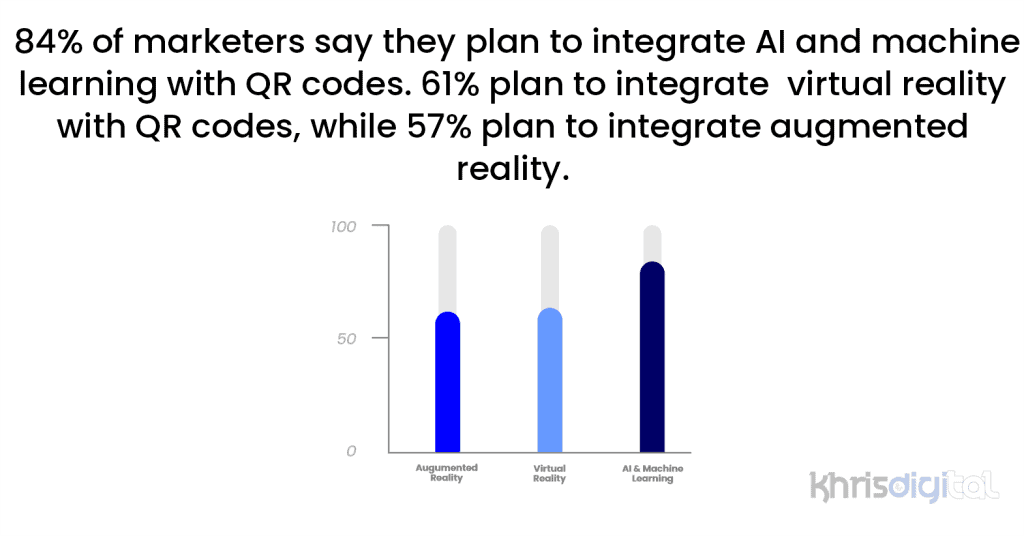
AI and machine learning can personalize what users see after a scan, adapting content based on behavior, location, or time of day. Meanwhile, QR codes paired with VR and AR unlock rich, interactive layers, such as virtual try-ons, 3D product demos, and gamified brand experiences.
119. Over 90% of business leaders anticipate increased QR adoption across industries, with key innovations shaping the next 18 months of QR technology.
(Bitly)
Business leaders across sectors see rising adoption as inevitable, driven by consumer demand, mobile habits, and rapid innovation.
The next wave of QR tech will likely include smarter tracking, deeper personalization, and seamless integrations with AI, AR, and analytics platforms.
120. 92% of businesses believe AR-powered QR codes will see widespread adoption.
(G2 Learning Hub)
The fusion of QR codes and augmented reality is where simple scans turn into full-blown experiences, and most businesses see it coming fast. These codes let users unlock 3D demos, product previews, immersive tutorials, and more with a quick scan.
121. 89% of businesses expect QR codes to play a crucial role in sustainability initiatives.
(G2 Learning Hub)
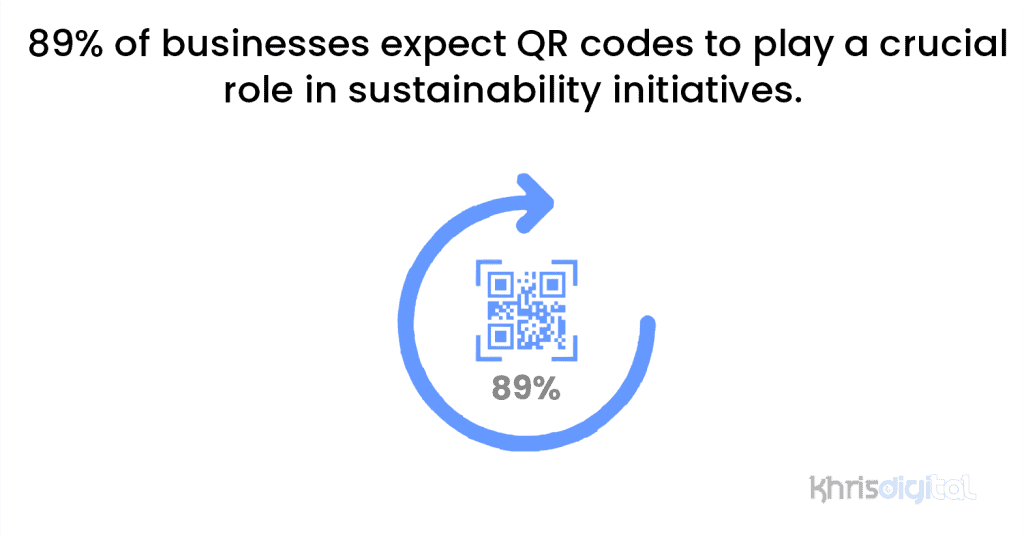
From reducing printed materials like menus, manuals, and packaging inserts to supporting traceability in eco-friendly supply chains, QR codes offer a simple way to go green without sacrificing communication.
Businesses can use them to share sourcing information, recycling instructions, or sustainability commitments, helping consumers make informed choices.
122. 39% of consumers now expect personalized experiences when scanning QR codes.
(G2 Learning Hub)
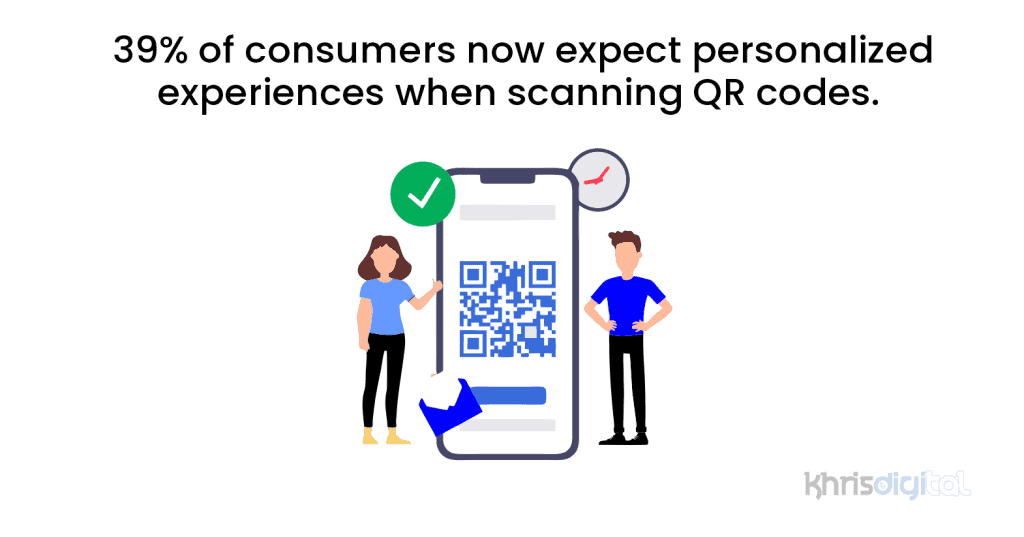
Whether it’s personalized offers, dynamic content, or tailored product recommendations, people now associate QR codes with speed and relevance. Tools like dynamic QR codes and integrated CRM systems make personalization easier than ever.
123. 36.40% of mobile phone users in Europe scan at least one QR code in a week.
(LXA Hub)
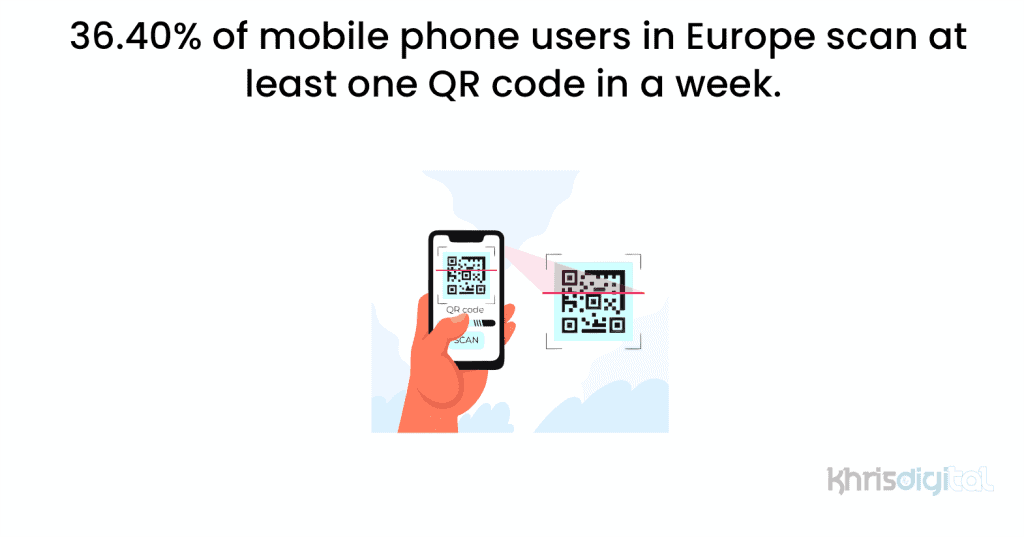
It shows strong user comfort and a growing expectation that information should be accessible instantly. For brands and businesses operating in Europe, this level of engagement is a clear signal to prioritize QR integration.
124. Europe is the second-largest market for QR codes, with Germany, France, and the U.K. being the top countries in the region using the technology.
(QR Code Chimp)
Europe’s rapid adoption of QR codes has pushed it into second place globally, and its leading countries, like Germany, France, and the U.K., are setting the pace.
In these markets, QR codes are used across retail, events, dining, and public services, with consumers actively engaging through mobile.
Cultural shifts toward contactless experiences, along with strong mobile penetration, have made QR codes a natural fit. These countries are also investing in smart packaging, digital transit systems, and mobile-driven loyalty programs, all powered by QR tech.
125. The German QR code market is projected to grow to USD 124 million by 2033, at a 5.5% CAGR.
(Future Market Insights)
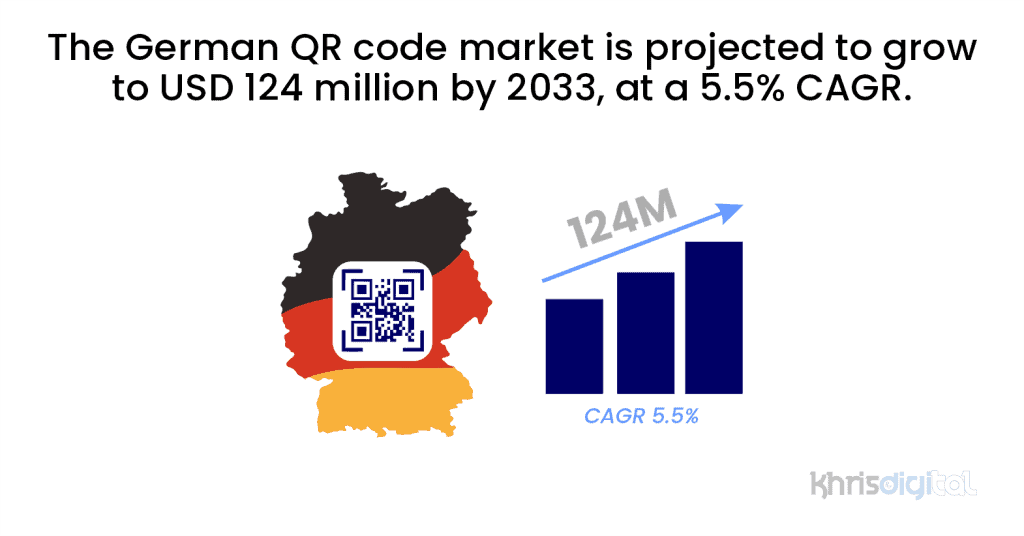
German businesses are steadily integrating QR codes into customer experiences, product packaging, and backend logistics. As consumers embrace convenience and brands prioritize digital transformation, QR codes offer a low-friction, high-impact tool.
126. The France QR code market size is expected to grow to USD 138.3 million by 2033 over the forecast period, exhibiting a robust CAGR of 8.3%.
(Future Market Insights)
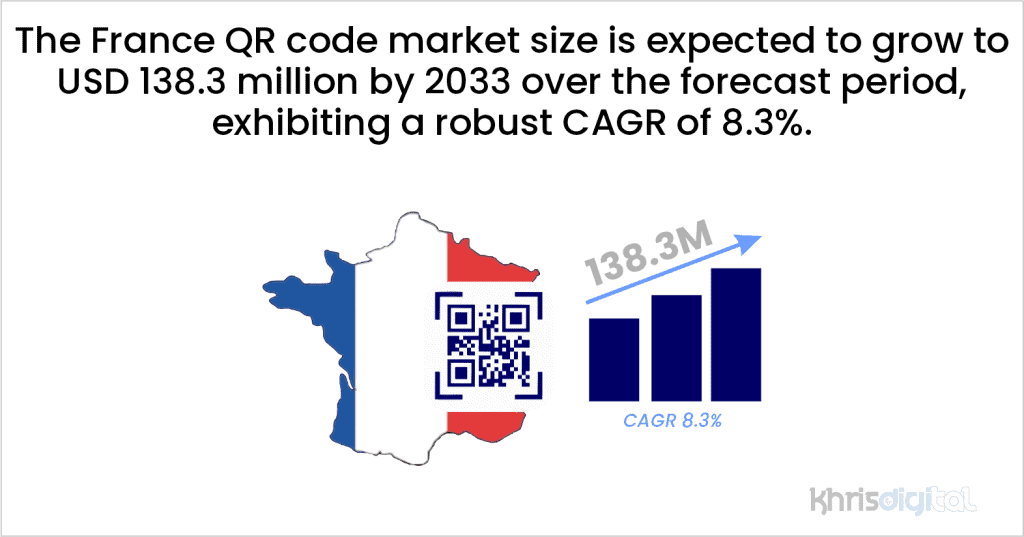
France’s QR code market is accelerating fast, driven by both consumer adoption and business innovation. From touchless menus in cafes to smart packaging in retail and mobile ticketing in transportation, French users are increasingly comfortable scanning for convenience and speed.
127. 91% of respondents in the U.K. had scanned a QR code at least once in their lifetime.
(Ivanti)
Whether through menus, event tickets, product packaging, or marketing campaigns, QR codes have become a common part of daily life. This level of exposure means U.K. consumers are ready to engage as long as the scan leads somewhere useful.
128. 42% in France had made a QR code transaction, and 36% in Germany had scanned a QR code that led them to unexpected experiences, such as taking them to a suspicious website.
(QR Code Chimp)
In France, 42% of users have completed a QR-based transaction, showing solid trust in mobile payments and digital access. But in Germany, over a third have experienced sketchy redirects, highlighting real concerns around QR code safety.
It’s a reminder that while adoption is growing, the need for smarter execution is growing too. Businesses must use secure QR code platforms, clearly brand their codes, and educate users about what to expect.
129. There has been a 51.14% increase in the adoption of QR codes in France.
(QR Tiger)
This uptick shows how embedded QR codes are becoming in everyday interactions. French businesses are responding by integrating QR functionality into more touchpoints, making engagement faster, easier, and more digital.
The growth also reflects shifting consumer behavior toward convenience and mobile-first access. For brands in France, now is the time to optimize those scan experiences and turn engagement into action.
130. Approximately 50% of consumers in China scan QR codes for various purposes more than once a week.
(LXA Hub)
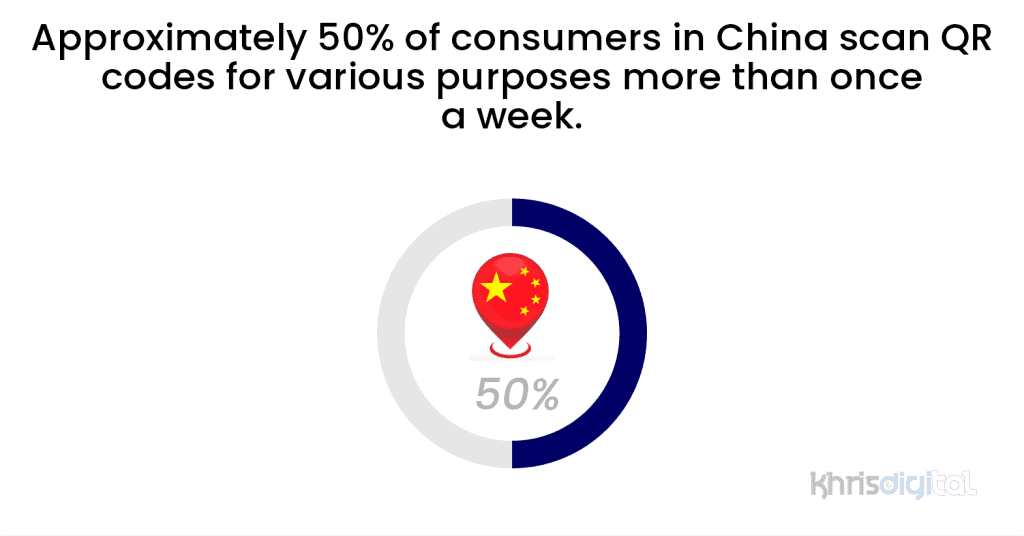
In China, QR codes are a part of everyday life. With half the population scanning multiple times a week, QR usage is deeply embedded in how people pay, travel, shop, and interact with content.
From mobile payments on street corners to digital menus in local eateries, QR codes power nearly every layer of the consumer experience.
131. 95.7% of Chinese users prefer QR code payments.
(Payment and Clearing Association of China)
Nearly the entire mobile-using population now prefers scanning over swiping or tapping. It’s fast, secure, and fully integrated into everyday transactions, from street vendors to luxury retailers.
Platforms like Alipay and WeChat Pay have normalized this behavior, making wallets almost obsolete.
132. Chinese users use QR codes 10–15 times daily.
(ElectroIQ)
Whether it’s paying for coffee, unlocking a shared bike, accessing transit, entering a building, or logging into an app, users are constantly scanning. This behavior reflects a society built around mobile ecosystems where QR codes serve as the digital key to almost everything.
133. The China QR code market is projected to reach USD 645.2 million by 2033 at a significant CAGR of 12.1%.
(Future Market Insights)
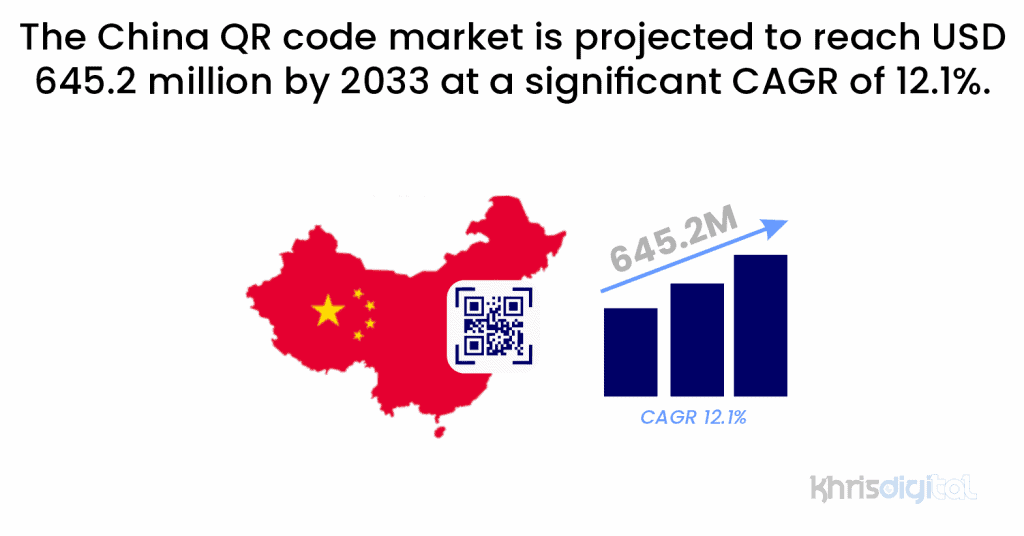
With a 12.1% CAGR, the market is set to expand rapidly, driven by innovation in mobile payments, e-commerce, public services, and smart cities. QR codes are already used for everything from healthcare access to food delivery.
Now, growth will likely come from deeper personalization, AI integration, and widespread adoption in rural areas and new sectors.
134. Over 90% of mobile payments in China rely on QR codes
(Future Market Insights)
From high-end malls to roadside stalls, users simply scan to pay. It’s fast, secure, and fully integrated with platforms like WeChat Pay and Alipay, which dominate the payment landscape.
135. The Japan QR code market is projected to reach USD 277.1 million in 2033, with a 10.3% CAGR.
(Future Market Insights)
Long known for its tech-forward culture, Japan is now embracing QR codes for payments, tourism, transport, and retail. Consumers are using them to access exclusive content, simplify transactions, and navigate services without physical touchpoints.
136. QR code payments have surpassed electronic money in Japan, becoming the second-most-popular cashless payment method.
(Komoju)
This shift marks a major turning point in Japan’s payment landscape. Long dominated by electronic money cards like Suica or PASMO, the rise of QR code payments reflects changing consumer preferences toward mobile convenience and app-based ecosystems.
With platforms like PayPay and LINE Pay gaining traction, QR codes are now the go-to method behind credit cards.
137. 61% of Japanese consumers have scanned a QR code.
(Ivanti)
The rise of mobile wallets, digital menus, and contactless access points has normalized QR scanning across age groups. Whether in convenience stores, train stations, or retail shops, QR codes are increasingly part of daily routines.
138. During the COVID-19 pandemic, QR code usage in Thailand increased by 40%.
(Scantrust)
From scanning menus and making mobile payments to checking in at venues and accessing public health info, QR codes quickly became part of everyday life. Government-backed campaigns and mobile wallet adoption also played a big role in normalizing this behavior.
139. In Cambodia, QR code usage increased threefold during the pandemic.
The pandemic accelerated digital adoption in Cambodia, with QR code adoption skyrocketing. As the need for contactless transactions and safer interactions grew, QR codes filled the gap, enabling everything from mobile payments to health declarations.
140. Over 9 million merchants accept QR code payments in India.
(Lyra)
The success of platforms like UPI, PhonePe, and Paytm has made QR scanning not just common but expected. For many merchants, QR codes offer a cost-effective, low-maintenance way to accept payments without the need for expensive hardware.
141. 43% of Canadian consumers scanned a food QR code to visit a brand’s website.
(Statista)
Whether it’s for recipes, sourcing details, or promotions, consumers are clearly willing to engage beyond the shelf. This behavior gives brands a golden opportunity to tell their story, drive loyalty, and offer more value, starting with a simple scan.
Final Thoughts on QR Code Statistics
QR codes have become one of the most powerful, flexible tools in modern business and daily life. From driving sales and simplifying payments to enhancing customer experiences and bridging online and offline gaps, their impact is everywhere.
The stats speak volumes.
Adoption is rising fast across countries, age groups, and industries. Whether it’s marketing, retail, healthcare, or finance, QR codes are quietly reshaping how we engage with the world, one scan at a time.
But with that growth comes a new responsibility to make QR interactions meaningful, secure, and valuable.
Brands that focus on clarity, trust, and user experience will continue to see strong returns.
The future of QR codes is already here, and it’s evolving fast.
Sources:
Check out my other Statistics round up:
