

Short-form video is taking over. With 1.6 billion people already watching and sharing bite-sized content, the format has redefined how we consume, connect, and convert online.
What started as a Gen Z pastime has now become the backbone of brand strategies, content marketing, and even search behavior.
And it’s not slowing down. By next year, short-form video is expected to drive 90% of all internet traffic. That’s a takeover.
This post breaks down the most eye-opening, relevant, and game-changing short-form video statistics you need to understand where short-form video is headed and why it matters more than ever.
Every stat you’ll read here is sourced from verified, reputable studies, with full credit and links listed at the bottom of the article.
1. 1.6 billion people have used short-form videos.
(Yaguara)
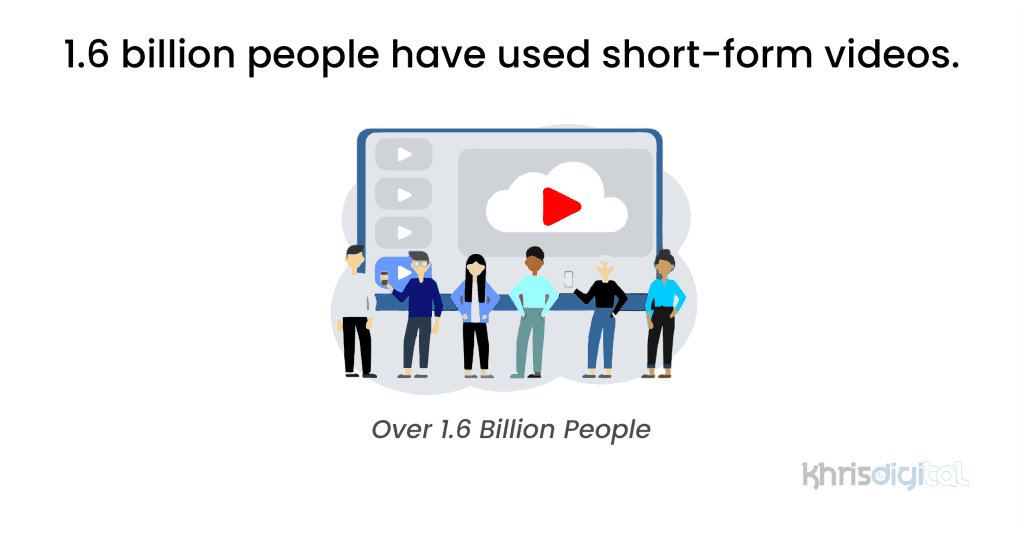
Short-form video has moved beyond trend status and into global behavior. Its explosive rise is mainly due to its low barrier to entry. It is quick to make, easier to consume, and endlessly shareable.
From TikTok and Instagram Reels to YouTube Shorts, platforms have optimized for vertical video because it works. The format taps into dopamine-driven viewing habits, making it addictive, relatable, and nearly impossible to ignore.
Its popularity isn’t confined to any one age group or region, and it’s become the default content style for creators, marketers, educators, and entertainers worldwide.
2. The global short video platforms market was worth USD 53.48 billion in 2025 and is expected to grow to USD 106.22 billion by 2032, with a compound annual growth rate (CAGR) of 10.3%.
(Coherent Marketing Insights)
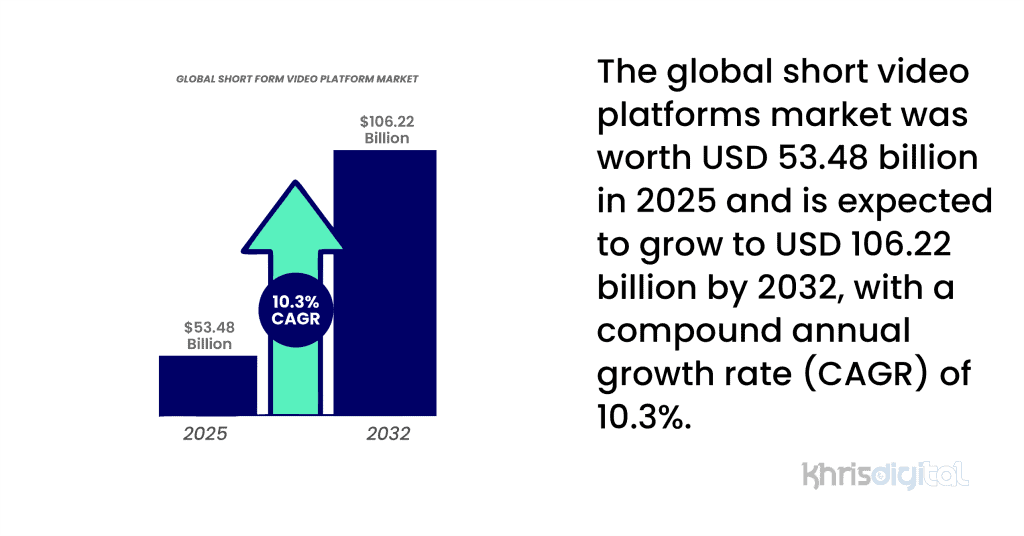
Tech giants, advertisers, and content creators are pouring money into short-form video platforms because the returns are undeniable. The format drives engagement, retention, and purchase behavior at rates long-form content struggles to match.
A 10.3% CAGR also points to long-term viability, not a temporary spike. As more brands adopt a video-first approach, and platforms compete to attract creators with monetization tools, the ecosystem is only going to get bigger, faster, and more lucrative.
3. 90% of all internet traffic is projected to be made by short-form video.
(WooSuite)
This projection reveals just how dominant short-form content is becoming in the digital space.
With algorithms prioritizing video, user behavior shifting toward bite-sized content, and mobile-first design fueling vertical viewing, this growth is inevitable. The internet is evolving into a video-first experience, and short-form is leading the charge.
4. The ad spending on short-form video advertising is forecasted to reach $145.8 billion by 2028 from $111 billion in 2025 at a CAGR of 9.52%.
(Statista)
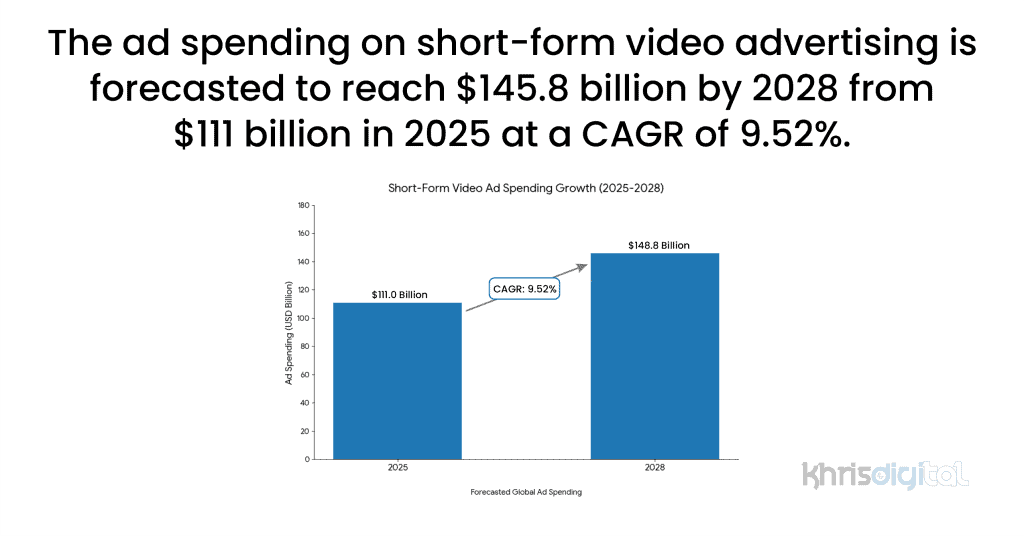
Marketers aren’t just experimenting with short-form video anymore; they’re budgeting around it. Short-form video consistently outperforms other formats in engagement, making it a no-brainer for ad dollars.
As platforms refine targeting and creators grow influence, short-form ads are becoming smarter, faster, and more profitable.
5. The average per-user spending on short-form videos will rise to $23.6 by 2028.
(Marketing Tech News)
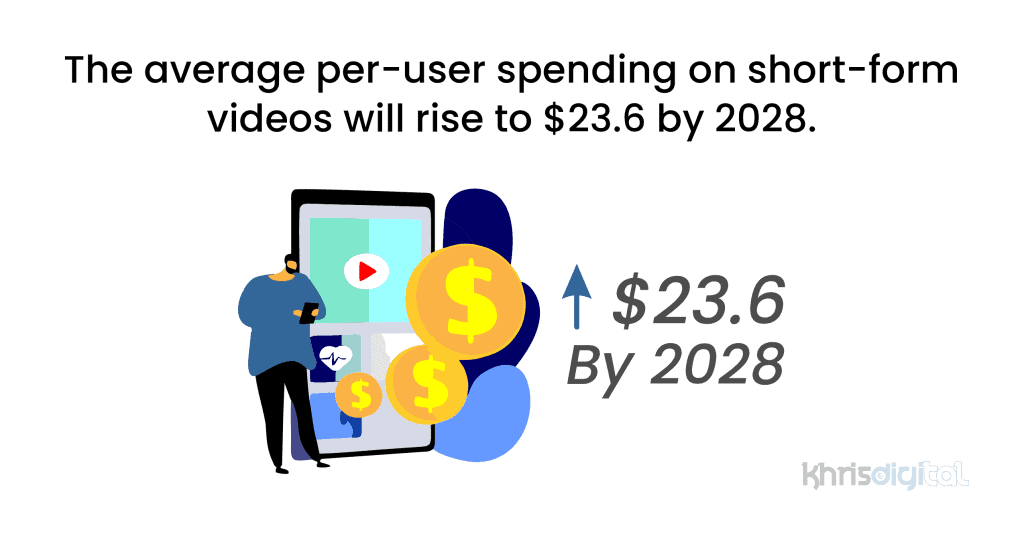
This rise in per-user spending reflects a shift from passive watching to active buying. Audiences are no longer just scrolling. They’re shopping, subscribing, tipping, and paying for premium content directly through short-form video.
Whether it’s creator merch, in-app purchases, or shoppable links, the monetization potential is growing fast.
As platforms streamline in-video transactions and creators build stronger parasocial bonds, that $23.6 figure is a signal of how short-form is turning attention into revenue.
6. By 2028, short-form videos are expected to account for 60% of all digital video advertising spending.
(Marketing Tech News)
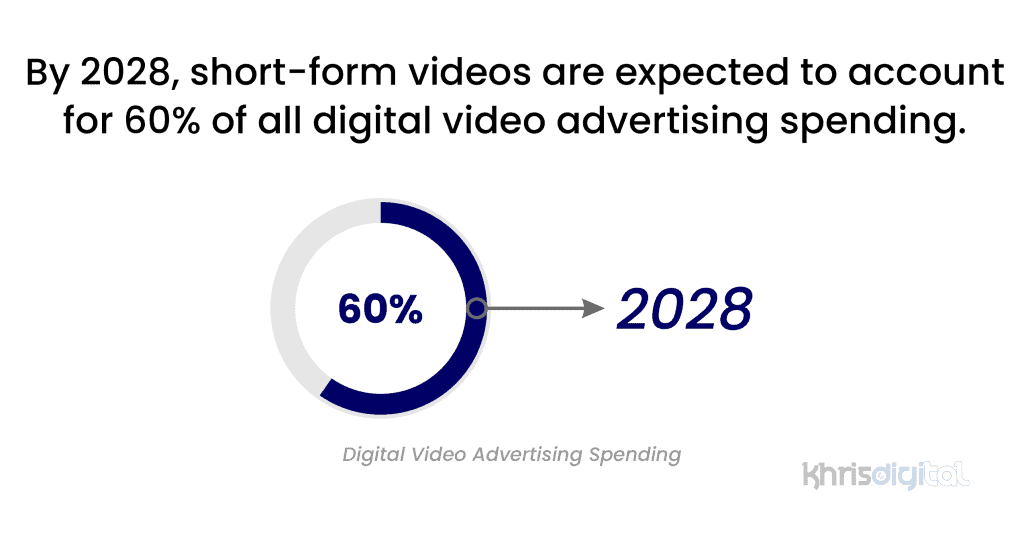
This shift marks a clear turning point in advertising strategy. Brands are going all-in on short-form because it delivers faster engagement, stronger recall, and more conversions than longer formats.
With attention spans shrinking and mobile use dominating, short-form fits perfectly into how people consume content today.
7. In 2024, social video platforms recorded around 52 minutes of daily engagement. In 2028, this number will reach 57 minutes.
(Sprout Social)

Daily engagement is one of the clearest signals of platform stickiness, and short-form video keeps people glued to the platform. As average watch time inches closer to an hour a day, it becomes evident that these platforms are habit-forming.
That five-minute increase might seem small, but at scale, it translates into billions of extra viewing hours globally, more ad impressions, more monetization, and more influence.
8. 73% of consumers prefer short-form videos to learn about products or services.
(Hootsuite)
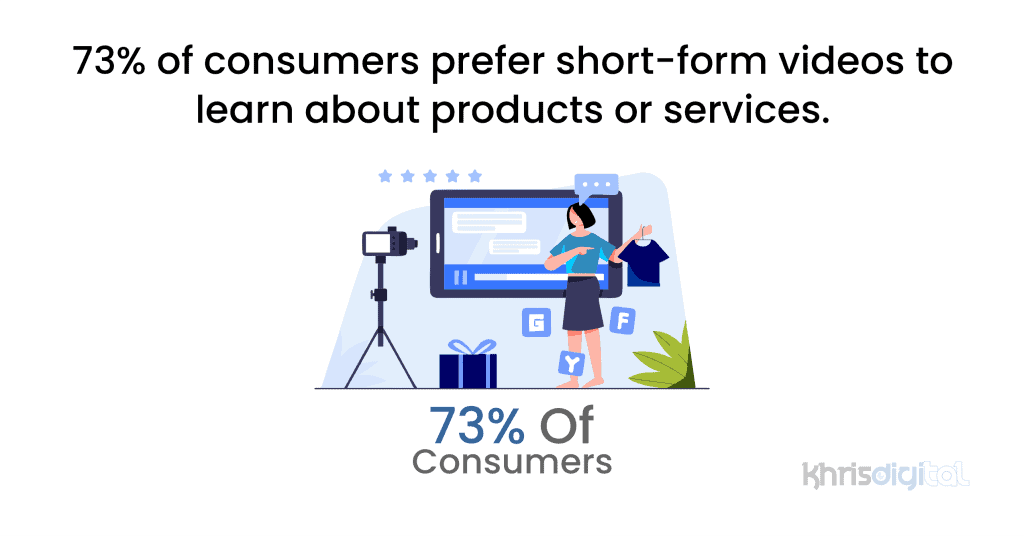
People don’t want long demos or sales pitches. They want quick clarity and short-form videos deliver fast, visual, and digestible information that gets to the point.
Whether it’s a product walkthrough, a “how it works” clip, or a creator review, this format gives consumers what they need to decide in seconds.
9. The presence of short-form videos in search results has increased by 183% over the past two years.
(Wistia)

Search engines are prioritizing what users are engaging with, and that’s short-form video.
Platforms like Google are surfacing YouTube Shorts, TikToks, and Instagram Reels directly in search results, especially for product reviews, how-tos, and trending topics.
This shift gives creators and brands a new, powerful route to visibility, one that’s faster, more dynamic, and better aligned with how people actually want to consume information.
10. According to HubSpot, short-form videos rank number 1 for engagement and lead generation.
(Hubspot)
When it comes to driving action, short-form videos outperform every other content type. HubSpot’s data confirms that these videos grab attention fast and turn viewers into leads faster than blogs, emails, or static posts.
Their scroll-stopping power, paired with sharp calls to action, makes them ideal for both top-of-funnel awareness and bottom-of-funnel conversions.
11. People are 2x more likely to share short-form videos than any other content type.
(App Nova)
Sharing is the strongest signal of content value, and short-form video nails it. Its quick, emotional, and entertaining nature makes it perfect for sharing with friends, followers, or in group chats.
Whether it’s funny, relatable, inspiring, or informative, short-form hits the sweet spot that compels people to say, “You’ve got to see this.” The fact that it doubles the share rate of other formats is strategic gold for anyone looking to grow reach organically.
12. Video increases conversions and sales by up to 80%.
(Wordstream)
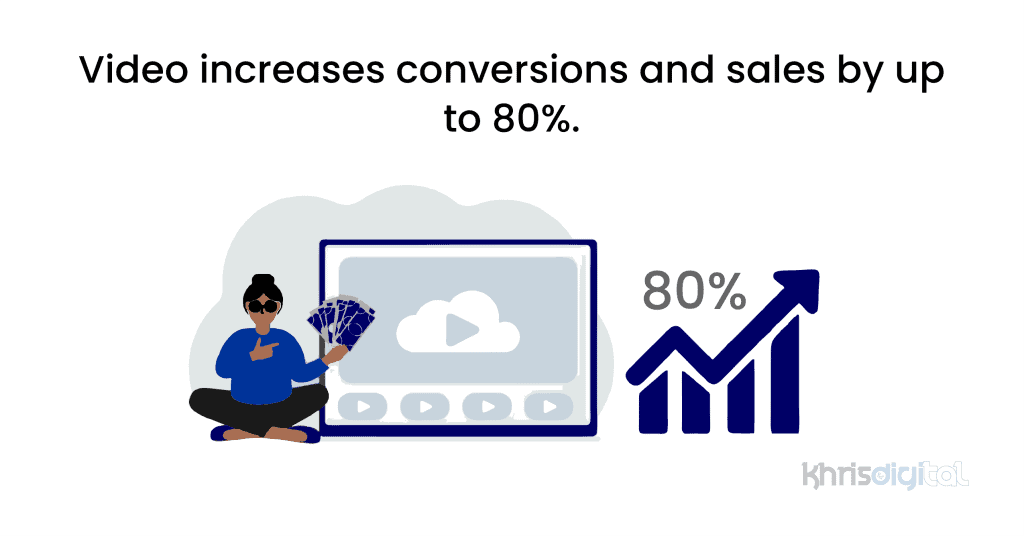
This stat is the reason video is now baked into landing pages, product pages, and ad funnels everywhere.
When potential customers see a product or service in action, especially in a short, punchy format, they’re far more likely to take the next step. Short-form video builds trust fast, explains value clearly, and sparks action without overwhelming.
13. Video content marketing generates 49% faster revenue growth for brands compared to non-video strategies.
(Wordstream)
Brands using video are getting more views and also getting paid faster. From product teasers to testimonials, this content drives more clicks, conversions, and customer loyalty.
It shortens the sales cycle by making information precise and the emotional connection instant. For brands still clinging to static posts or long-winded blogs, this stat is a nudge to level up or fall behind.
14. 56% of videos created by businesses today are two minutes or less.
(Synthesia)

Whether it’s a product demo, explainer, or customer story, brevity wins. Shorter videos are quicker to produce, easier to distribute, and more likely to be watched all the way through.
15. 96% of viewers prefer watching a short video over reading about a topic.
Nearly everyone would rather watch a short video that explains or showcases something than scroll through paragraphs. It’s about ease, speed, and clarity.
Video delivers tone, visuals, and context instantly, making it the go-to format for learning, discovery, and decision-making.
16. 72% of consumers would rather watch a video than read a text to learn about a new product or service.
(Retail Dive)
When someone’s exploring something new, they don’t want a manual, but they want a quick, visual rundown. Video simplifies learning by showing rather than telling, making it the preferred method for over 7 out of 10 consumers.
Whether it’s a product demo, feature breakdown, or use case, short-form video removes friction and builds confidence fast.
17. 90% of consumers say they watch short-form videos on their phones daily.
(Vidico)
Short-form video is built for mobile, and that’s exactly where people are watching. The vertical format, swipe mechanics, and snackable length perfectly match how users interact with their phones.
A 90% daily view rate shows how deeply this behavior is embedded in everyday routines, from morning commutes to late-night scrolls.
18. People spend an average of 1 hour and 16 minutes daily watching short-form videos.
(Vidico)
That’s more than 75 minutes a day just on short-form. The endless scroll, hyper-personalized feeds, and constant dopamine hits keep users hooked far longer than they realize.
For marketers and creators, this means more opportunities to show up, connect, and influence, not with one big video, but with consistent, bite-sized hits that stack up over time.
19. On Instagram and X, very short videos (under 15 seconds) do well; on TikTok, videos of 15–60 seconds are preferred; and on YouTube, longer videos (over 60 seconds) are most popular.
(Sprout Social)
Each platform has its sweet spot for video length.
Instagram and X thrive on ultra-short bursts that get straight to the point. TikTok gives more breathing room, rewarding creative depth without dragging on. YouTube Shorts leans toward slightly longer content, where users expect more context or a story.
Understanding these timing windows is key, as not every video needs to be one-size-fits-all. Tailoring length to the platform can dramatically boost watch time and engagement.
20. 69% of U.S. consumers prefer watching videos using their smartphones.
(Emplifi)

Smartphones are the go-to screen for video. With optimized apps, vertical formats, and always-on access, it’s no surprise that nearly 7 out of 10 U.S. consumers prefer watching videos on mobile.
This habit shapes everything from how videos are framed to where captions are placed. If the content doesn’t feel mobile-native, fast, clear, and vertical, it risks getting skipped entirely.
21. Short-form videos receive 2.5 times more engagement than long-form videos.
(Sprout Social)
Engagement is where short-form wins big. With tighter edits, quicker payoffs, and content that matches shrinking attention spans, these videos spark more likes, comments, and shares per second watched.
They get straight to the hook, which keeps viewers interested and interacting. While long-form may have depth, short-form has momentum.
22. 59% of short-form videos are watched for 41% to 80% of their total length.
(HubSpot)
This retention range shows that most viewers stay long enough to absorb the message when the content is tight and engaging.
In a digital world where skipping is second nature, holding attention for even half the video is a strong signal of quality and relevance.
23. 30% of short-form videos have an average watch rate of over 81%.
(Yaguara)
Nearly a third of short-form videos keep viewers locked in almost the entire way through. That kind of watch rate is rare and powerful. It means the content is resonating, flowing, and delivering value without drop-off.
24. 50% of viewers who watch videos 90 seconds or less finish them.
(HubSpot)

Attention spans are tight, and completion rates drop fast when videos drag on. Short-form gives just enough time to hook, deliver value, and leave an impression before interest fades.
If the goal is to get your full message across, staying under the 90-second limit significantly increases the odds.
25. There is a 10% completion rate for videos that are 30 minutes or longer.
Long videos may offer depth, but they come at a cost — viewer drop-off. Only 1 in 10 people make it to the end of a 30-minute video, which severely limits impact and retention.
In contrast, short-form content keeps the pace brisk and the audience engaged, increasing the chances that the whole message actually lands.
26. Audiences will watch at least 50% of your video on average for videos that last up to five minutes.
(Wistia)
Short-form doesn’t have to mean ultra-short. Videos up to five minutes still hold strong, with average viewers sticking around for at least half the runtime.
That gives enough space to tell a story, show a product, or explain a concept without overwhelming or losing the viewer.
27. Regarding short-form social media videos, Instagram is the platform people spend the most time on, with 53 minutes.
(Statista)
Instagram may not have been the first to lean into short-form video, but it’s become a major player.
With Reels front and center in the app, users are spending nearly an hour a day watching short videos, more than on any other platform.
The mix of entertainment, shopping, and social content keeps users engaged longer, giving brands and creators a prime space to show up consistently in the scroll.
28. 44% of people prefer learning about a new product through short-form video.
(Dash)
When it comes to discovering something new, nearly half of consumers would rather watch a short video than read specs or scroll through images.
A well-made video can show what a product does, how it works, and why it matters in under a minute. That’s why short-form has become the go-to for product launches, reviews, and quick explainers.
29. 82% of people say watching a video influenced a purchase decision.
(Wyzowl)
The vast majority of consumers say watching a video played a direct role in their decision to buy. It builds confidence, answers questions, and creates an emotional pull that static content can’t match.
Whether it’s a product demo, testimonial, or behind-the-scenes clip, short-form video moves people from interest to action faster than anything else.
30. Instagram videos around 26 seconds long get the most comments
(Forbes)
There’s a sweet spot for sparking conversation, and on Instagram, it’s right around the 26-second mark. These ultra-compact videos hit fast, hold attention, and leave just enough room for viewers to react, question, or engage.
Too short, and there’s no substance; too long, and people scroll past. When crafted right, that half-minute window becomes a prime zone for driving real interaction.
31. Most Gen Z (57%) and a significant portion of Millennials (42%) prefer short-form videos over other formats to learn about products and their features.
(HubSpot)

Younger audiences don’t want to read manuals or sit through long videos; they want quick, visual proof.
For Gen Z and Millennials, it’s the expectation. If brands want to earn their attention and trust, short-form video needs to be the first line of communication, not an afterthought.
32. Over 70% of Gen Z spend more than three hours daily watching online videos.
(Vidico)
Gen Z lives on video, using it to learn, laugh, shop, and stay connected. With over three hours a day spent watching, short-form content has become their default way of consuming information and culture.
33. Mobile YouTube videos have a wider reach among 18 – 19 year-olds than any TV network.
(Vidico)
Traditional TV has lost its grip on younger viewers, and mobile YouTube now commands their attention.
Short-form creators speak their language, deliver content on demand, and offer real-time trends that TV can’t match. For 18 – 19 year-olds, YouTube is the new prime time, and the phone is the new remote.
34. Online marketing videos are preferred over television by 60% of viewers.
(Vidico)
More than half of viewers now choose online marketing videos over traditional TV ads, and it’s easy to see why. Online content is shorter, more targeted, and often more entertaining. It feels personal, not scripted.
Viewers can watch what they want, when they want, without waiting through commercial breaks. For marketers, this is a signal to shift budgets and creativity toward platforms where people are actually paying attention.
35. More than 50% of marketers report their companies use short-form videos in digital marketing.
(Vidico)
Over half of marketers say their companies are actively using short-form videos, and that number keeps climbing. Why? Because it works. It’s quick to produce, easy to test, and delivers strong results across platforms.
36. Short-form videos, including TikTok, Instagram Reels, and YouTube Shorts, constitute the primary video format leveraged by 58% of marketers.
(HubSpot)
More than half of marketers now lead with short-form video, not as a supplement, but as the main event.
Whether it’s TikTok trends, Reels campaigns, or YouTube Shorts, these formats offer the perfect mix of speed, reach, and ROI. They’re designed for high engagement and built for mobile, which makes them ideal for today’s attention economy.
37. 85% of marketers believe short-form videos are the most effective format on social media.
(Neal Schaffer)

Short-form videos grab attention in seconds, encourage engagement, and fit perfectly into how people scroll. Whether it’s building awareness, driving clicks, or sparking conversation, short-form gets results where static posts and long captions fall flat.
38. The importance of video length grew significantly, with 35% of people now citing it as the second most influential factor in their decision-making, up from 25%.
(TechSmith)
Length matters more than ever. A growing number of viewers say it’s a key factor in whether they’ll engage with a video at all. If it looks too long, many won’t even hit play.
39. 50% of viewers prefer very short videos, 30 seconds or less, when learning about general topics like a product.
(TechSmith)
When it comes to quick education, half of all viewers want it done in 30 seconds or less.
These bite-sized clips are perfect for product intros, feature highlights, or fast answers to common questions. If a brand can explain the “what” and “why” in under half a minute, it’s far more likely to hold attention and drive action.
40. 1% of marketers believe the ideal length for a short-form video is less than 10 seconds, 18% believe it’s 11 to 20 seconds, 31% believe it’s between 21 to 30 seconds, 33% of marketers believe the optimal length for a short-form video is 31 to 60 seconds, 13% believe it’s 1–2 minutes and 3% believe it’s 2–3 minutes.
(HubSpot)

The majority agree that the sweet spot for short-form content is between 21 and 60 seconds. That window gives just enough time to hook viewers, deliver value, and add a call to action without losing interest.
The extremes (ultra-brief or stretching into multiple minutes) aren’t the top picks. For most campaigns, that 30 to 60-second zone is where attention and message balance best.
41. According to marketers, short-form videos offer the highest ROI at 31%, followed by images at 22%, blog posts at 15%, case studies at 15%, and podcasts or other audio content at 14%.
(HubSpot)

When it comes to return on investment, short-form video leads the pack. Marketers say it delivers more impact per dollar than any other format.
It combines reach, engagement, and conversion potential in a way that static content struggles to match. While blog posts and case studies still have value, they don’t offer the immediacy and scroll-stopping power of a 30–60 second video.
42. 66% of marketers consider short-form content as the most engaging format.
(Marketing Interactive)
Whether it’s a reaction, a comment, a share, or a tap to learn more, short-form drives action fast. That kind of responsiveness is why marketers consistently rank it as the most engaging content type on social.
43. 47% of marketers say short-form videos are more likely to go viral.
(HubSpot)
Short-form content spreads fast, and nearly half of marketers say it’s their best shot at going viral. The format thrives on trends, punchy storytelling, and emotional hooks that catch fire quickly.
With platforms like TikTok and Instagram Reels designed to amplify what resonates, a single short video can reach millions overnight.
44. 44% of marketers are expected to use short-form videos now, compared to 26% in 2022.
(HubSpot)
In just a couple of years, short-form video has nearly doubled in adoption among marketers. What was once an emerging trend is now a core strategy.
As the format proves its value in reach, engagement, and ROI, expect this percentage to keep climbing.
45. About 93% of marketers say they’ve landed new customers due to short video ads on social media.
(Animoto)
The overwhelming majority of marketers credit short video ads with bringing in new business. These ads are quick to watch, easy to share, and built to convert. They show up where people are already scrolling and make an impression fast.
46. 39% of marketers believe that videos between 30 and 60 seconds get the most engagement.
(Rev)
That 30–60 second window is where short-form content shines brightest. It’s long enough to deliver value but short enough to keep viewers hooked.
It’s the perfect balance with enough time to tell a story, showcase a product, or drop a punchline without losing attention.
47. Extended long-form videos exceeding 30 minutes tend to experience lower engagement rates. However, they do attract high-quality leads.
(Wistia)
While longer videos often struggle to keep broad audiences engaged, they serve a different purpose — depth.
For viewers who stick around, these videos offer detailed insights and value that build serious trust. That’s why they tend to pull in more qualified leads, especially in B2B, education, or high-ticket industries.
48. Videos spanning five to 30 minutes maintain an average engagement rate of 38%.
(Wistia)
This range offers a balance between depth and attention. While shorter videos dominate in volume, mid-length content still holds solid ground, especially when it delivers real value.
It’s a strong format for tutorials, interviews, or layered storytelling that needs more than a minute to land.
49. Videos ranging from 30 to 60 minutes maintain an average engagement rate of 26%.
(Wistia)
As video length stretches past the half-hour mark, engagement naturally drops. With only 26% sticking around on average, these longer formats demand a highly invested audience.
They’re best reserved for deep dives, webinars, or niche content where viewers are already motivated to stay. For general audiences, though, shorter formats still deliver better traction and interaction.
50. After five minutes, video engagement declines steadily.
(Wistia)
The five-minute mark is a tipping point. Beyond that, viewer attention starts to fade, even if the content is strong. It’s not that longer videos can’t work, but they need to work harder to keep people interested.
For most use cases, especially on social media, keeping it under five minutes gives content the best shot at holding attention and driving action.
51. Users are most likely to engage with short-form videos (less than 15 seconds) and static images when interacting with brands on Instagram.
(Sprout Social)
Quick hits win on Instagram. Whether it’s a 15-second Reel or a bold static image, users respond best to fast, punchy content that fits their scroll rhythm.
Short-form video grabs attention with movement and sound, while images deliver immediate visual impact.
52. X video ads that are 15 seconds long garner three times higher completion rates compared to 30-second video ads.
(Yans Media)
On X, where the pace is fast and attention is fragile, bite-sized ads drastically outperform their longer counterparts in completion rates. A threefold increase means viewers are far more likely to watch the whole message when it’s quick and to the point.
53. Long-form video is making a splash on X, with users watching 130 years’ worth of videos 30 minutes or longer.
(X)
While short-form dominates most platforms, long-form is carving out serious space on X.
Users have collectively spent the equivalent of 130 years watching videos that run 30 minutes or more, a clear sign that depth has a place, even on fast-paced platforms.
54. 51% of YouTube users are most likely to engage with brands’ long-form videos (longer than 60 seconds). Next, 31–60 second videos are the second most popular format for brand content on YouTube.
(Sprout Social)

On YouTube, substance matters. Over half of users prefer brand videos that go beyond the one-minute mark, showing that this platform supports more detailed storytelling and value-packed content.
Still, shorter clips of 31-60 seconds also perform well, especially for teasers, highlights, or intros.
55. On Facebook, users are most likely to engage with text posts, followed by static images and then short-form video (less than 15 seconds).
(Sprout Social)
While video rules many platforms, Facebook’s engagement still leans toward simplicity.
Text posts and images grab the most interaction, with short-form video coming in third. But that doesn’t mean video isn’t valuable. It just means it needs to be extra relevant, eye-catching, and fast.
56. Over half of all marketers (51%) find Facebook to be the most effective video marketing channel, after Instagram and LinkedIn.
(WyzOwl)
Despite shifting trends, Facebook still delivers for video marketers. It ranks just behind Instagram and LinkedIn in effectiveness, with 51% of marketers seeing strong results.
Its broad reach, mature ad tools, and diverse audience make it a reliable space for video, especially when paired with targeting and retargeting strategies.
57. Users who watched under three seconds of a video ad on Facebook created up to 47% of the total campaign value. Users who watched a Facebook video ad for fewer than 10 seconds accounted for up to 74% of the total campaign value.
(Facebook)
Attention doesn’t have to last long to drive results. Even ultra-short views under three or ten seconds can contribute massively to a campaign’s total impact.
On Facebook, the first few seconds matter more than most marketers realize. If the message lands early and clearly, you can influence behavior, build brand awareness, and drive conversions even before the viewer finishes the video.
58. Users will engage with video ads for nearly 3x longer than other types of ads on LinkedIn.
(Sprout Social)
On a platform built for professionals, video cuts through the noise. LinkedIn users spend nearly three times as much time engaging with video ads as with static ones.
The format offers a more dynamic way to tell stories, explain complex ideas, or highlight thought leadership, all of which resonate in a B2B setting.
59. Most B2B marketers (73%) say that video positively impacts their marketing return on investment on LinkedIn.
(Sprout Social)
In the B2B world, trust and clarity are everything, and video delivers both. Whether it’s a product overview, testimonial, or thought leadership clip, video helps brands cut through corporate noise and connect on a human level.
60. Live video on LinkedIn gets 24x more comments than native video.
(LinkedIn)
Live video brings urgency and authenticity that pre-recorded content can’t match, and on LinkedIn, it sparks serious conversation. With 24 times as many comments as native uploads, going live turns passive viewers into active participants.
Whether it’s a panel, Q&A, or product launch, live content invites connection, boosts visibility, and drives deeper engagement with professional audiences.
61. The average video watch time on LinkedIn is between 13 and 15 seconds.
(Statista)
Even on a platform built for professionals, attention drops off fast. This makes the opening frame, the hook, the headline, and the first few words absolutely critical.
To make an impact, videos need to deliver value right away or risk getting skipped.
62. 26% of marketers plan to invest more in short-form video content.
(HubSpot)
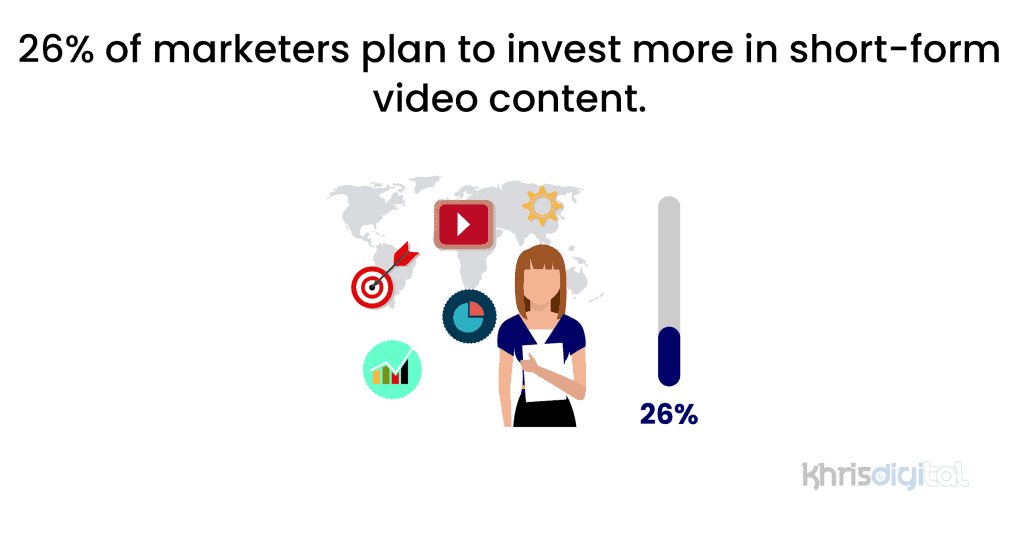
Short-form video is a growing priority. As performance data keeps proving its value, brands are shifting more budget toward quick, engaging clips that drive action. It’s a clear sign that short-form is scaling.
63. 57% of the marketers who are already taking advantage of short-form videos will increase their investment in the format. 30% of the marketers who did not invest in short-form videos will start investing in the future.
(HubSpot)
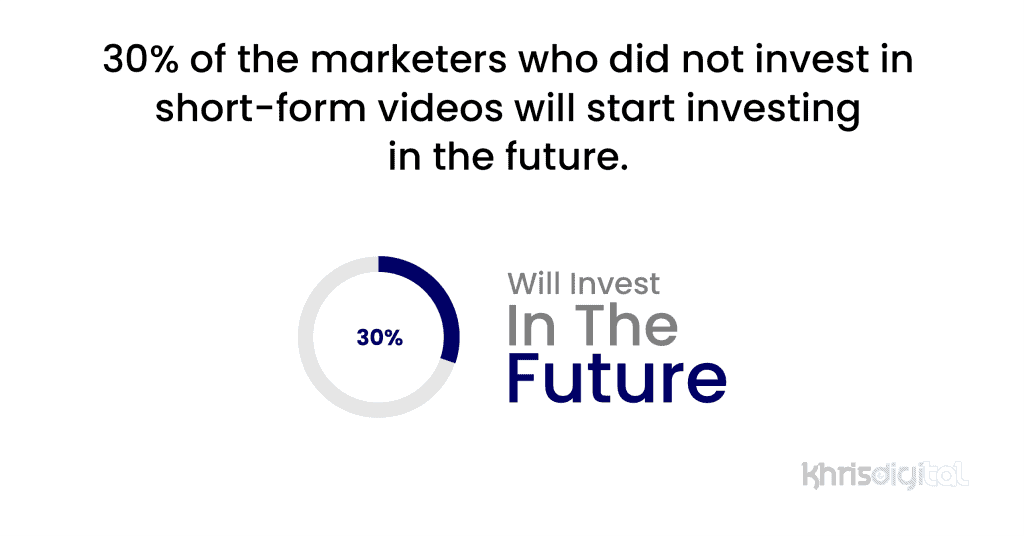
Marketers are doubling down with short-form. Over half of those already using it plan to invest even more, while nearly a third of non-users are preparing to jump in.
This dual movement shows both confidence in results and pressure to catch up. Short-form has proven itself, and now it’s becoming a must-have in every smart content strategy.
64. 71% of video marketers believe short-form videos provide the highest ROI, followed by long-form videos (22%) and live videos (6%).
(Statista)

Short-form video is leading the ROI race by a landslide. The vast majority of video marketers say it delivers the most bang for their buck, thanks to high engagement, faster production, and better performance across platforms.
Long-form and live video still have their place, especially for depth and community building, but when it comes to quick wins and broad impact, short-form is the clear frontrunner.
65. Video content on Instagram receives 49% higher engagement rates.
(Colormatics)
With Reels front and center and users craving quick, dynamic content, video gives brands a clear advantage.
Whether it’s behind-the-scenes clips, product demos, or trend-based posts, motion captures attention and sparks more likes, comments, and shares than still images alone.
66. Videos up to 2 minutes long get the most engagement.
(Wistia)
Two minutes is the sweet spot where attention and depth meet. It’s just enough time to tell a story, make a point, or show off a product without losing viewers.
Whether it’s on social or embedded in a landing page, videos under two minutes consistently outperform longer formats.
67. 54% of surveyed marketers say their companies use short-form videos in their marketing strategy.
(HubSpot)
Short-form video has officially gone mainstream. More than half of marketers now include it in their content mix. It’s fast to produce, easy to test, and consistently drives high engagement across platforms.
68. Video viewers retain 95% of a message.
(Vidico)

If you want your message to stick, put it in a video. Viewers remember nearly everything they see and hear in a well-crafted clip, compared to much lower retention from reading or listening alone.
That 95% retention rate is what makes short-form video so effective for product education, brand storytelling, and calls to action.
69. 54% of people desire more video content from brands than other types.
(Vidico)
Over half of consumers are actively asking for more video. It’s the format they prefer to see from brands, above blog posts, emails, or static graphics. Video is faster to understand, more engaging to watch, and easier to connect with emotionally.
70. 35% of video viewers agreed that high-quality, easy-to-hear audio narration is a key factor in keeping them engaged with a video.
(TechSmith)
Visuals matter, but sound seals the deal. Clear, well-paced narration helps guide the message, build trust, and keep viewers locked in. In short-form content where every second counts, crisp audio can be the difference between a full view and a quick swipe.
71. 86% of businesses now use video as part of their marketing tool.
(WyzOwl)
From startups to global brands, video is being used to educate, sell, engage, and build trust. With audiences demanding more visual content and platforms favoring video in their algorithms, it’s become a non-negotiable piece of modern marketing.
72. 82% of businesses feel video marketing is an integral part of their strategy.
(GoodFellas)
A vast majority of businesses now see it as a critical piece of their overall marketing approach. Whether it’s boosting brand awareness, explaining products, or driving conversions, video consistently proves its value.
73. 83% of consumers expect to see more videos in the upcoming year.
(WyzOwl)
Audiences are actively expecting more video content. With 83% anticipating an increase, brands need to stay ahead of the curve.
This expectation isn’t just about quantity; it’s about relevance, creativity, and value. As demand grows, so does the opportunity to stand out or get left behind.
74. More than 40% of businesses produce at least one video each week, with mid-sized companies averaging around three videos weekly.
(Wistia)
This kind of consistency keeps brands visible, fuels social algorithms, and helps build stronger audience connections. The message is clear: staying active with video is now part of staying relevant.
75. Positive human interactions in videos can boost response rates by 40%, and videos that convey their message within the first three seconds see a 13% increase in breakthrough metrics.
(Forbes)
People connect with people, and it shows in the numbers. When videos feature warm, relatable human interaction, response rates climb significantly.
Pair that with a message delivered in the first three seconds, and the video is far more likely to cut through the noise.
76. Microlearning, characterized by short, engaging 2–5 minute lessons, has solidified its position as a leading educational format.
(Vidico)
When it comes to learning, shorter is smarter. Microlearning breaks down complex topics into digestible, focused lessons that fit into busy schedules and short attention spans.
This 2–5 minute format keeps learners engaged, improves retention, and works exceptionally well on mobile.
77. Instagram users spent an average of 53 minutes on short-form videos, TikTok users spent an estimated 45 minutes per session, Snapchat Spotlight users spent an average of 30 minutes, and Triller users spent 22 minutes.
(Statista)
Short-form video is dominating daily screen time across platforms. Instagram leads with nearly an hour of daily viewing, followed closely by TikTok’s deep session time.
Even smaller players like Snapchat Spotlight and Triller are holding attention for 20–30 minutes. These numbers show how sticky the format has become.
78. Over 75% of U.S. adults spend up to two hours daily consuming short-form digital video content.
(eMarketer)
The fact that more than three-quarters of U.S. adults dedicate up to two hours to it daily shows just how deeply this format is woven into routines.
Whether for news, entertainment, or shopping, short-form video has become a go-to source and a massive opportunity for creators and brands.
79. Adults in the United States are estimated to spend 58.4 hours monthly on TikTok.
(Statista)
That’s nearly two hours every single day, just on TikTok. This platform’s ability to capture and hold attention is unmatched, especially among adults. The endless scroll, personalized content, and quick-hit entertainment make it easy to lose track of time.
80. Among U.S. users, TikTok is the most used social media platform for short-form videos, with approximately 40% of people, followed by YouTube Shorts (23%) and Instagram Reels (3%).
(Statista)
TikTok continues to dominate the short-form space in the U.S., leading by a wide margin. Its early lead, trend culture, and creator-first design have made it the go-to for nearly half of short-form video viewers. YouTube Shorts is gaining ground, but still trails significantly.
Instagram Reels, despite being widely available, capture a surprisingly small share, showing that being on a platform isn’t enough if the audience isn’t engaging.
81. Global users spend over 27 hours per month on the YouTube mobile app. South Korea has the highest usage at around 43 hours and 26 minutes, while Switzerland has the lowest at under 10 hours. In the U.S., users averaged 24.43 hours per month.
(Statista)
YouTube’s mobile app remains a global powerhouse for video consumption. With an average of 27 hours watched monthly, it’s clear users are staying.
South Korea tops the chart with a staggering 43+ hours, while U.S. users aren’t far behind. This consistent engagement shows YouTube’s strength not just in long-form content but also in Shorts and hybrid video.
82. YouTube is the leading social video platform in the U.S., with about 211 million viewers. Facebook ranked second, followed by Instagram with around 143 million monthly users, and TikTok with an estimated 112 million.
(Statista)
Despite TikTok’s rising influence, YouTube still holds the crown in the U.S. for sheer viewership. With 211 million users, its dominance spans generations and content types.
Facebook remains strong, especially with older demographics, while Instagram and TikTok cater more to younger users.
83. With 70% of U.S. consumers following influencers, the use of short-form videos in influencer campaigns is set to grow significantly.
(Vidico)
Influencers are popular and trusted. And with the majority of U.S. consumers following at least one, short-form video becomes the perfect delivery tool for brand collaborations. It’s fast, personal, and easily shareable, making it ideal for influencer-driven content.
As creators lean into Reels, TikToks, and Shorts, expect short-form to become the go-to format for influencer campaigns that actually convert.
84. Short-form video platforms in India are projected to generate $10 billion in revenue by 2030.
(Statista)
India’s short-form video market is booming, and it’s just getting started. With a massive user base, growing internet access, and a surge in local creators, platforms are set to generate $10 billion in revenue by the end of the decade.
This growth is fueled by ad spending, creator monetization, and regional demand for content.
Final Thoughts on Short-Form Video Statistics
Short-form video is reshaping content and behavior. The numbers make it clear that people want faster, more engaging ways to learn, connect, and decide.
And brands, marketers, and platforms are responding in a big way.
This format delivers reach, retention, and results in under a minute. Whether you’re a marketer, business owner, or creator, one thing’s certain— the future of digital storytelling is short, sharp, and scroll-stopping. And it’s already here.
Whether you’re just starting or doubling down, now’s the time to think short, move fast, and create with purpose.
The scroll won’t slow down, but if your video stops the thumb, you’re in the game.
Sources:
Check out my other Statistics round up:
