


Word of mouth is a serious business, influencing 20% to 50% of purchasing decisions. Whether it’s a TikTok trend blowing up or a casual chat between friends, recommendations now travel faster and hit harder than most paid ads ever could.
Brands can spend millions on slick campaigns, but a single genuine referral often carries more weight.
Consumers are turning to people they trust, not just polished marketing copy, to decide what to buy, download, or try. A massive 88% of consumers trust recommendations from friends and family over ads.
This post breaks down the most up-to-date and eye-opening word of mouth marketing statistics available right now. Every stat here comes from reliable, verified sources. You’ll find the full list of citations at the bottom of the article.
1. Word of mouth influences about 20%-50% of our buying decisions.
(McKinsey)
This range shows just how powerful personal recommendations are in shaping what people choose to spend money on.
Shoppers aren’t just scanning ads or reading product pages. They’re listening to what their friends, family, and peers are saying. Whether someone is choosing a new phone, trying a skincare brand, or deciding where to eat, they often rely on trusted opinions.
Even without realizing it, people are strongly influenced by what those around them recommend. This statistic also indicates that trust and relatability play a much larger role in purchase behavior than brand messaging.
2. Word of Mouth drives $6 Trillion of annual customer spending.
(Invesp)
This number puts word of mouth in the same league as some of the world’s largest industries. Brands that build loyalty, spark conversations, and deliver share-worthy experiences are tapping into a massive revenue engine.
This kind of influence happens across all types of purchases, from daily essentials to big-ticket items. When people talk, others listen, and that turns casual conversations into real transactions.
It also shows why brands invest in community, referrals, and user-generated content. They know that a single recommendation can trigger a chain reaction that drives billions in sales.
3. Word-of-mouth marketing drives nearly 13% of all consumer sales.
(Invesp)
That’s a significant slice of the pie, especially considering how little budget some brands actually allocate to it. Word of mouth isn’t flashy, but it works, quietly influencing decisions across every industry.
From tech gadgets to toothpaste, conversations are converting into cash. Unlike paid ads, which lose impact the moment the budget dries up, word of mouth keeps working long after the initial spark. It builds momentum over time.
4. The ROI on every dollar spent through word-of-mouth marketing is $6.50.
(WebFX)
When a brand earns attention through authentic conversations, the cost to convert is dramatically lower. Instead of paying to interrupt, it gets invited into the conversation.
That’s why campaigns that encourage sharing, referrals, or community building often outperform traditional ads over time. People pass along what they believe in, and that ripple effect continues to deliver results.
5. People are 90% more likely to trust and buy from a brand recommended by a friend.
(Invesp)
When a friend vouches for a brand, it shortcuts the entire decision process. There’s no need to dig through reviews or question the quality, the recommendation feels safe, familiar, and credible.
This kind of trust can’t be built overnight or forced with ads. It’s earned through consistent value and real customer experiences. That’s why brands with strong communities and loyal customers often grow faster.
A single referral from someone close can beat a dozen sales emails. This stat makes it clear: if a brand wants to win hearts and wallets, it needs people talking and trusting enough to pass the message along.
6. 88% of people worldwide trust recommendations from friends and family more than any other form of marketing.
(Nielsen)

This shows how personal connection outweighs even the most polished campaigns. People don’t just want information, they want confidence. And nothing builds that faster than a trusted voice.
While ads, influencers, and branded content fight for attention, a simple suggestion from someone close cuts through the noise. It feels real, not rehearsed.
It’s not about reaching the most people; it’s about reaching the right people who will talk, share, and influence others. When friends and family speak, consumers listen, and they believe.
7. 92% of consumers trust recommendations from friends and family over traditional advertising.
(Nielsen)
This gap reveals a major trust divide between personal advice and paid promotions. While ads try to persuade, real-world conversations already hold credibility. People know ads are designed to sell, but a friend’s recommendation feels genuine.
This statistic reinforces the idea that consumers rely on people, not just messaging, when making decisions. Traditional ads still have a role, but without word-of-mouth support, they often lack staying power.
8. Word of mouth leads to almost 5 times more sales than paid advertisements.
(Electro IQ)
While ads can generate visibility, word of mouth generates belief. It’s that belief that turns interest into action. People don’t just want to hear what a brand says about itself, they want proof from someone who’s already experienced it.
When a recommendation comes from a peer, it carries emotional weight and practical value. This statistic shows that genuine conversations outperform even the most targeted ad campaigns in terms of conversions.
9. Brands that successfully engage in word-of-mouth marketing see an average annual sales increase of 5-10%.
(Invesp)

This kind of growth comes from momentum that advertising alone can’t buy. When a brand sparks ongoing conversations, it stays relevant without constantly pushing promotions. That steady buzz creates loyalty, brings in new customers, and deepens trust.
The increase may seem modest at first glance, but it’s consistent and compounding, especially when fueled by authentic customer experiences.
10. 28% of consumers prefer to learn about new brands, products, and services through word of mouth.
(Marketing Charts)
Nearly a third of people actively choose word of mouth over other sources when discovering something new. That says a lot about how people want to be introduced to brands.
Instead of relying on ads, they turn to real stories, trusted opinions, and lived experiences. This kind of discovery feels personal and relevant. For brands, this means first impressions often happen in casual conversations, not campaigns.
11. 91% of B2B buyers trust word-of-mouth recommendations.
(Wiser Notify)
Even in professional settings, trust still drives decisions. B2B buyers are listening to peers, colleagues, and respected industry voices. When a trusted contact recommends a tool or service, it often carries more weight than a formal pitch.
12. Word of Mouth results in 200% more spending than other forms.
(Tapfiliate)
When someone hears positive feedback from someone they know, they’re more willing to invest, try premium options, or explore add-ons. That’s because the perceived risk is lower. The product already has social proof.
They’re more engaged, more loyal, and often turn into repeat customers.
13. Nearly 83 percent of consumers trust recommendations over branded ads.
(WebFX)
Consumers have become skeptical of marketing messages, especially when they feel scripted or exaggerated. Recommendations, on the other hand, come from a place of real experience.
Whether it’s a friend, family member, or even an online review, people lean toward what feels honest. This trust in peer input gives brands a massive opportunity to shift their focus from controlling the message to delivering results worth talking about.
14. Brands that inspire a higher emotional intensity receive 3x as much WOM as less emotionally connected brands.
(MarTech Alliance)
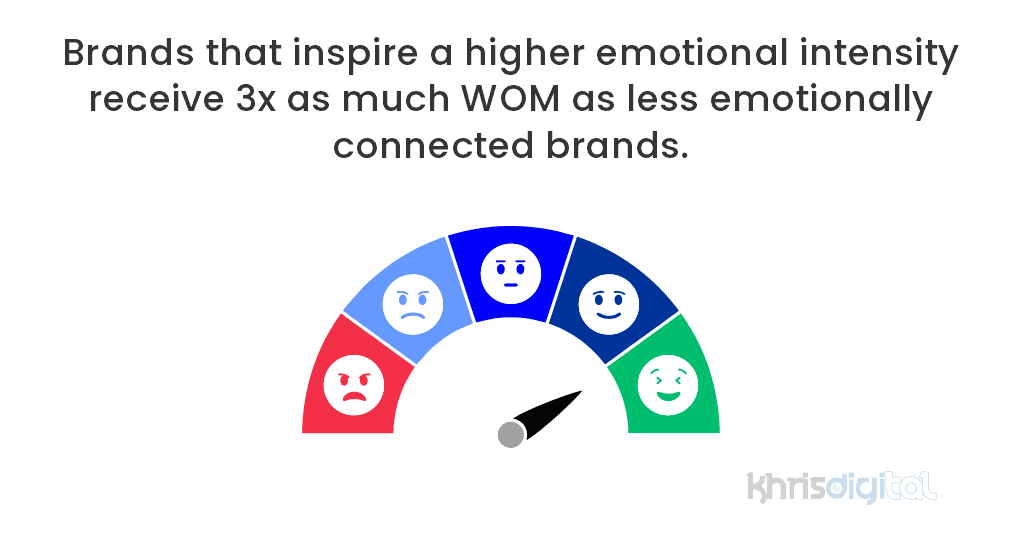
Emotions are what turn a product into a story worth sharing. When a brand makes someone feel seen, excited, or even proud, it earns a spot in their conversations. That emotional pull is what drives word-of-mouth at scale.
People don’t rush to tell others about things that feel average. They talk about what moves them, surprises them, or makes them feel something real.
Brands that create memorable moments and build emotional bonds with customers get shared more often, talked about more frequently, and remembered longer.
15. Word of mouth is 2-10 times more effective than paid ads.
(BCG)
Word of mouth cuts through the skepticism that often surrounds paid advertising. When someone hears about a brand from a trusted source, they don’t need convincing. The message is already validated.
That’s why a single authentic recommendation often outperforms even the most well-crafted ad. Effectiveness here means higher conversion rates, stronger loyalty, and longer customer retention.
16. About 50% of marketers believe that personal recommendations directly generate 20% – 40% of the leads.
(Keywords Everywhere)
When nearly half of professionals say a major chunk of their leads come from recommendations, it confirms that word of mouth is a serious pipeline builder.
Leads from recommendations are also warmer and more qualified, making them easier to convert. Instead of chasing cold prospects, brands with strong reputations are attracting leads through real relationships.
17. 23% of consumers discuss their favorite products with friends and family daily.
(SEMrush)
That kind of frequency turns everyday conversations into a constant stream of brand exposure. People bring up what they love without being prompted.
It also reflects how product satisfaction spills into social life. When something fits seamlessly into a person’s routine, they talk about it, and others start listening
18. Word-of-mouth recommendations are 37% more helpful in retaining consumers.
(WebFX)
Retention depends on trust, and nothing reinforces trust like a recommendation from someone the customer knows or respects. When a person hears about a brand through someone they trust, they arrive with confidence and stay longer.
These consumers are more likely to overlook minor issues, stick around through ups and downs, and continue choosing the brand over competitors.
19. 66% of WOM marketing happens through offline word of mouth.
(WiserNotify)
Even in a world obsessed with digital, most word-of-mouth still happens face-to-face. People trust what they hear in person. There’s tone, emotion, and context that digital reviews or posts can’t always deliver.
While online buzz matters, brands that ignore offline engagement miss a massive piece of the puzzle. In-store experiences, community events, and memorable customer service moments fuel the kind of talk that spreads naturally.
20. 70% of consumers believe the opinions of other consumers.
(HubSpot)
People believe other people who’ve been in their shoes. Whether it’s a short review, a social post, or a casual comment, consumer opinions shape perception fast.
Brands can have all the credentials in the world, but a few honest words from another shopper often speak louder.
It’s why customer feedback is a marketing tool. What real users say, others believe. And what they believe, they often act on. That ripple effect drives everything from trial to loyalty.
21. 43% of businesses expect word-of-mouth marketing strategies to increase direct sales.
(Electro IQ)
Direct sales driven by recommendations often deliver higher conversion rates and lower acquisition costs. When a buyer shows up already trusting the brand, the sales process becomes faster and smoother.
Word of mouth shortens the path to purchase and brings in customers who are already half convinced.
22. Word-of-mouth influences millennials 115% more than any other traditional means.
(WiserNotify)
This shows how differently millennials engage with brands compared to older generations. They’re not swayed by ads alone, they want real opinions from real people. That might come from a friend or someone they follow online, but the key is authenticity.
Traditional marketing feels distant to this group. This influence gap explains why brands targeting millennials prioritize community engagement and peer recommendations over mass media.
Millennials crave connection, not just promotion. When someone they trust shares a product or experience, it hits harder than any billboard or commercial ever could.
23. 64% of marketing executives indicated that they believe word of mouth is the most effective form of marketing.
(Invesp)

This belief comes from data and real-world performance. Word of mouth delivers impact that feels authentic and sticks with consumers longer. It also scales with trust instead of budget.
Executives who understand this are shifting focus to customer experience, advocacy programs, and community building.
24. 73% of Millennials feel responsible for helping friends and family choose the right purchases.
(WebFX)
This sense of responsibility turns everyday millennials into powerful influencers. Whether it’s recommending a new app, a skincare brand, or a local restaurant, they take the role seriously.
These recommendations come with context, care, and confidence. For marketers, that means creating products and experiences people feel proud to recommend. Because when millennials love something, they don’t keep it to themselves.
25. 82% of Gen-Z trust their family and friends for product advice more than any other source.
(McKinsey)
Despite growing up with endless digital content, Gen-Z still leans on the people closest to them when it comes to making purchase decisions. They scroll through feeds, but they listen to the voices they know in real life.
This trust in family and friends overrides influencer endorsements, ad campaigns, and even online reviews.
26. Millennials are reportedly 38% more likely to discover brands through recommendations.
(SEMrush)
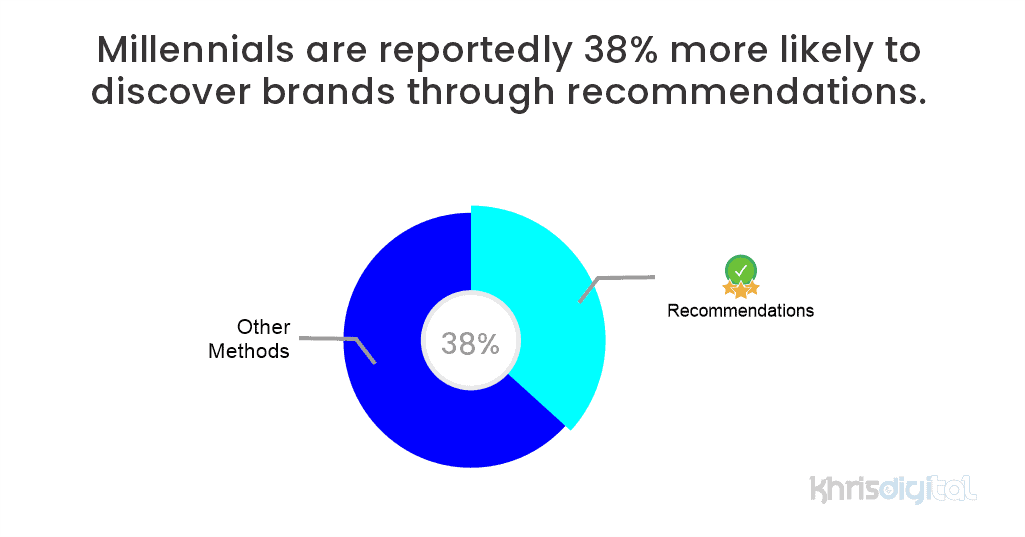
For millennials, discovery is driven by trust. They rely on people they know or follow to introduce them to what’s worth trying.
That could come from a friend, a coworker, or even a casual comment in a group chat. Brands that earn these recommendations stand out in a crowded space without needing massive ad budgets.
27. 91% of 18-34 year Olds say that they trust online reviews as much as personal recommendations.
(Bright Local)
For younger consumers, digital trust is nearly as high as real-world trust. People look for signs that the reviewer actually used the product and had a genuine experience.
For brands, this means online reputation matters as much as word of mouth. A well-written, honest review can carry just as much weight as a personal conversation, and it’s available 24/7.
28. Seventy percent of marketers plan to increase their online WOM marketing spending, and 29% will increase their offline WOM marketing spending.
(Get Ambassador)
Online word of mouth is getting the bulk of attention, and for good reason, it’s fast, scalable, and easy to track. Marketers are putting more budget into reviews, influencer partnerships, referral programs, and community-driven content.
At the same time, nearly a third still recognize the value of offline word of mouth, which often drives deeper, more lasting influence. It may be harder to measure, but it moves buyers just as effectively.
29. 82% of marketers use WOM marketing to increase their awareness, but 43% expect it to improve their direct sales.
(MarTech Alliance)
Most marketers see word of mouth as a visibility tool, something that gets people talking and builds brand recognition. But nearly half are also counting on it to drive real revenue. That gap indicates a shift in how marketers value word-of-mouth.
Awareness is the first step, but the expectation of direct sales means more teams are designing word-of-mouth strategies with conversion in mind.
Whether through referral programs, user-generated content, or community-led promotion, brands want more than chatter. They want action.
30. 95% of consumers check online reviews before making purchase decisions.
(WiserNotify)
This near-universal behavior shows just how critical online reviews have become in the buying process. Shoppers now treat them as a standard step before making a purchase. They want to know what others experienced, what went wrong, and what stood out.
Even a strong brand reputation isn’t enough without visible proof from other customers. Reviews offer context, confidence, and confirmation. They answer questions that marketing doesn’t cover and provide real-world insights.
31. 32% of consumers come across new products due to customer referrals.
(WiserNotify)
Nearly a third of product discovery occurs when someone recommends something they like. This stat shows how powerful everyday conversations are in shaping what people notice and explore.
Referrals don’t always come with a pitch, they often come naturally, woven into casual chats or social posts. That makes them feel trustworthy and relevant.
32. 28% of consumers say word of mouth is the most critical factor in strengthening or eroding brand affinity.
(MarTech Alliance)
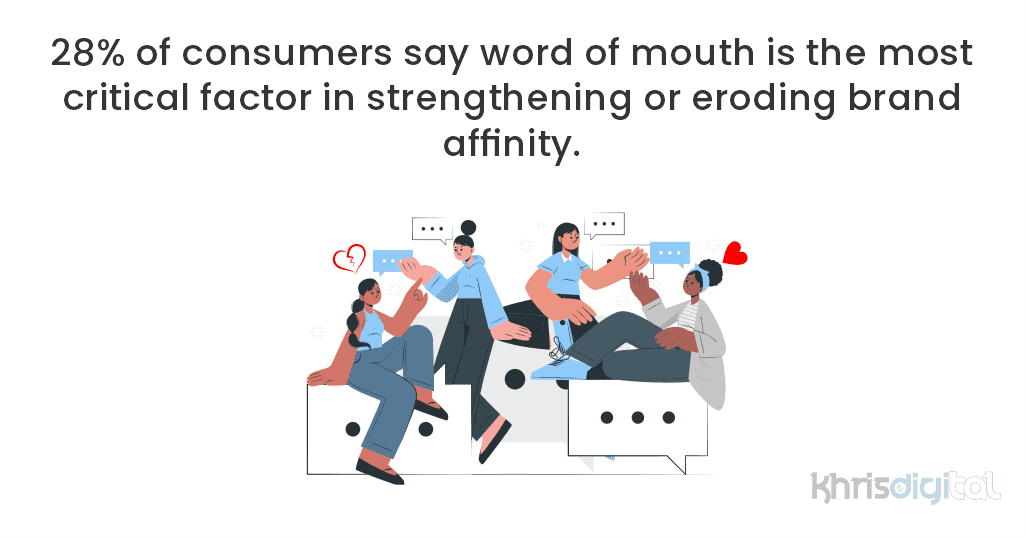
A single story about great service can boost affinity. One negative experience shared widely can tear it down. Word of mouth shapes how people feel about a brand, not just what they know.
It influences whether someone keeps coming back or walks away for good. That’s why smart brands focus on consistently delivering experiences worth talking about. Because when word of mouth is strong, brand love grows. When it turns negative, loyalty fades fast.
33. 74% of consumers identify word of mouth as a key influencer in purchasing decisions.
(Get Ambassador)
That influence can come from a personal recommendation, a shared social post, or a trusted online review. No matter the format, the power lies in the source’s relatability and authenticity.
Brands can spend heavily on ads, but if people aren’t talking, the impact is limited. When word of mouth is in play, it acts as a signal, guiding choices, reducing doubt, and accelerating decisions.
34. 78% of social media users talk about the brands they follow.
(WebFX)
These mentions can be positive, critical, or somewhere in between, but they all shape perception.
The key is earning followership that feels personal and valuable. When users feel connected to a brand, they’re far more likely to bring it up, tag it, or recommend it without being asked.
35. Only 4% of consumers trust brand-sponsored content.
Most people can spot a paid message from a mile away, and when they do, they tune out. Sponsored content might look polished, but it lacks the one thing that truly influences action: trust.
Consumers know the goal behind it is to sell, not to help. People want honesty, not spin. That’s why they turn to real reviews, personal recommendations, and unfiltered opinions.
Brands that rely too heavily on sponsored content risk sounding inauthentic. To build real trust, the message has to come from someone the audience believes, not someone paid to say it.
36. 72% of consumers will talk about a good experience.
(Salesforce)
Positive experiences lead to conversations. When something exceeds expectations, most people feel compelled to share it. That could mean telling a friend, leaving a review, or posting on social media.
For brands, this is a clear opportunity. Every good experience is a trigger for exposure that doesn’t cost extra. The more consistently those moments happen, the more people talk and keep talking.
37. Consumers discuss specific brands 90 times every week.
(HubSpot)
That’s more than a dozen brand mentions a day and it’s happening without any prompt from the companies themselves. People talk about what they buy, what they like, what annoys them, and what surprises them.
Every product interaction has the potential to start a conversation, and those conversations shape opinions faster than any campaign.
38. Recommendations are trusted by 50% more people than other channels, such as banner ads and SMS messages.
(Nielsen)
People are more likely to believe something shared by a friend or peer than a message that shows up uninvited. That difference in trust leads to better engagement, stronger consideration, and higher conversions.
Brands relying solely on paid channels risk wasting attention if trust isn’t there. Recommendations, on the other hand, come with built-in credibility. They’re not scripted. They’re earned.
39. Businesses endorsing referral programs see a 19% increase in customer retention rates.
Referral programs attract new customers and help retain existing customers longer. When people share a brand with someone they know, they’re making a personal investment in that recommendation.
That act strengthens the connection between the customer and the brand. It turns a one-time buyer into an advocate.
Plus, referred customers tend to arrive with more trust and stickiness, which strengthens the entire base.
40. Brand advocates are 55% more likely to influence purchasing decisions than regular ones.
(BzzAgent)
Not all recommendations carry the same weight. Brand advocates, the people who genuinely love and promote a brand without being asked, have a stronger impact than casual customers.
Their enthusiasm is visible, their opinions are trusted, and their voices travel further. When someone talks about a product with passion and consistency, people notice. It feels less like a review and more like advice you want to follow.
41. Around 21% of customers lose trust in a brand due to negative word of mouth.
(Electro IQ)
Bad experiences hurt feelings and reputation. People trust what others say, especially when it comes from someone they know or relate to.
If that feedback is critical, trust in the brand drops fast. It doesn’t take a viral story, just one believable complaint can shift perception. Brands that ignore customer feedback or deliver inconsistent service put themselves at risk.
Trust takes time to build, but it only takes one bad conversation to start breaking down. Protecting brand trust means making every experience count and fixing what goes wrong before it gets repeated.
42. One in every twelve B2B marketers find word of mouth effective in promoting live events.
(Keywords Everywhere)
In the B2B world, where trust and reputation carry extra weight, live events often rely on word of mouth to gain traction.
When professionals share an event with their network, it often carries more influence than any official invite. These referrals signal value, relevance, and credibility.
B2B marketers who recognize this are using satisfied past attendees, industry voices, and peer recommendations to boost turnout. Word of mouth adds a personal layer to promotion that can’t be replicated by a banner or a sales pitch.
43. User-generated content made 73% of online shoppers feel more confident in a product.
(Agility CMS)
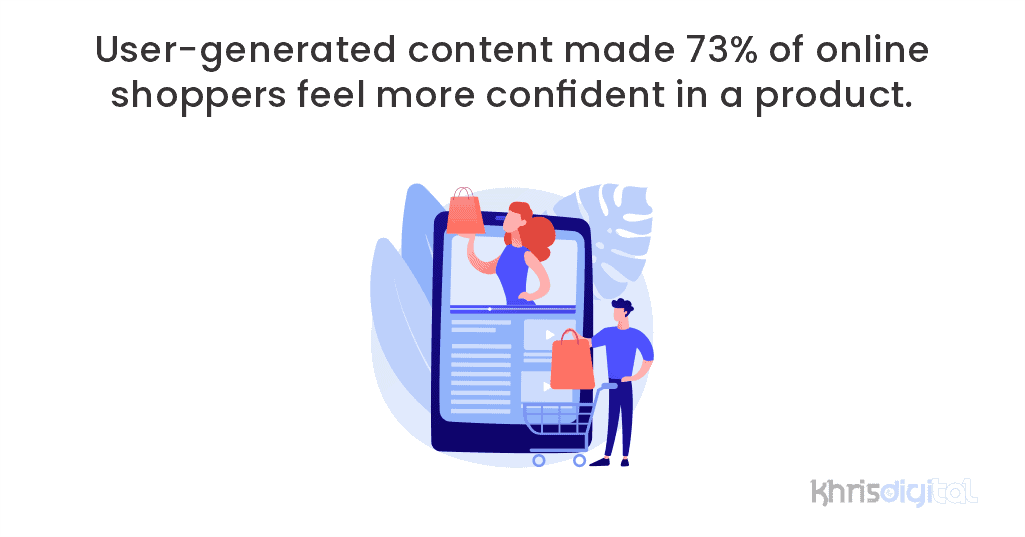
When people see real photos, videos, or reviews from other customers, their uncertainty fades.
Shoppers want to know how a product fits into real life, not just how it looks in a marketing campaign. Seeing someone similar using or enjoying a product makes it easier to trust that it will deliver.
44. Word of Mouth emerged as the leading source of brand discovery for internet users in the United States, reaching about 36 percent of respondents.
(Statista)
When someone hears about a brand through conversation, whether online or offline, it feels more natural and credible.
That kind of introduction sticks. It’s not forced, it’s not paid, and it’s often more memorable. For U.S. consumers especially, recommendations from peers beat out sponsored content, search results, and even influencer promotions.
45. 95% of people have referred a friend in the past year, and an impressive 83% have done so more than once.
Referral is part of everyday behavior, and most people naturally share what they enjoy. When nearly everyone has made a referral recently, it shows how powerful satisfied customers can be.
People love helping others find good products, save money, or have better experiences. Brands that consistently deliver value create loyal customers who promote without being asked.
46. Referrals from friends make someone four times more likely to buy.
(Impact Plus)
People don’t second-guess a recommendation from someone they know, especially when it’s based on a real experience. This is why referrals are one of the most powerful tools in a brand’s growth strategy.
They create a shortcut to conversion that no cold outreach can match. When a customer becomes a referrer, they’re influencing action. And that influence drives serious results.
47. Referral programs generate substantial leads for 60% of marketers.
(Forbes)
A referral brings in people who already believe the brand is worth their time. That means less convincing and faster movement through the funnel.
The key is making it easy and rewarding for customers to share. When done right, these programs scale word of mouth in a way that feels natural and effective. It’s influence that converts
48. Referral programs generate good or excellent leads for 78% of business-to-business (B2B) marketers.
(Forbes)
These leads come with built-in trust, often pre-qualified by someone who understands both the product and the prospect’s needs. That shortens the sales cycle and raises close rates.
In complex industries where relationships drive business, a warm introduction carries far more weight than a cold call.
49. Referred customers contribute about 25% more daily to a company’s profit margins than non-referred customers.
(Research Gate)
Referred customers tend to buy more, stay longer, and engage more deeply with the brand. They come in with trust already built, which means less hesitation and more action.
That confidence translates into higher spending and stronger loyalty over time. A single referral can deliver outsized returns compared to other acquisition methods.
The long-term profitability of referred customers makes them one of the most valuable assets a brand can have.
50. Referred customers have a 16% higher lifetime value than non-referred customers.
(Research Gate)
A customer who comes through a referral tends to stick around. They’re more loyal, spend more across their relationship with the brand, and often go on to refer others. That creates a cycle of high-value growth that paid channels struggle to match.
Lifetime value is one of the most important metrics in any business, and this increase proves that referrals don’t just bring in traffic, they build a stronger customer base.
51. Friends’ social media posts influence 81 percent of people’s purchasing decisions.
(WebFX)
Whether it’s a story about a new gadget, a restaurant photo, or a quick review, people pay attention when it comes from someone they know.
These posts feel real, not promotional, and that authenticity drives action. Unlike ads, which people often scroll past, a friend’s post grabs attention and sparks curiosity. It’s word of mouth at scale, happening publicly, instantly, and often without intention.
52. Social media provides 80% of users with advice about a product purchase.
(WebFX)
Social platforms have become one of the first places people turn when they’re unsure about what to buy. Whether it’s a product review, a how-to video, or a comment thread, advice is everywhere, and most of it comes from other users, not brands.
People trust what they see others say, do, or recommend. The advice might come from friends, influencers, or even strangers who share similar interests.
53. 53% of U.S. users share positive social media comments about companies.
(WebFX)
These posts serve as digital word of mouth, offering social proof that’s more trusted than any ad. A single positive comment can reach hundreds or even thousands, building credibility and sparking interest.
For brands, this kind of organic support is gold. It’s free, authentic, and incredibly persuasive. The key is delivering experiences worth talking about, because once someone shares it, their audience listens, and often takes action.
54. 35% of U.S. users share negative social media comments about companies.
(WebFX)
Just as people are quick to praise, they’re just as ready to call out poor experiences. Negative comments spread fast, often gaining traction before a brand has a chance to respond.
These posts can damage trust, turn away potential customers, and trigger public backlash. What makes this especially important is how visible and permanent these comments can be. For companies, it’s a reminder that every interaction matters.
Resolving issues quickly, treating customers with respect, and owning mistakes publicly can turn a bad moment into a chance to earn respect. Because silence or defensiveness only amplifies the damage.
55. 65% of TikTok users enjoy seeing creators share brands or products.
(WebFX)
On TikTok, product mentions are welcomed. Users come to the platform expecting real, creative, and entertaining content, and when creators weave products into that naturally, people respond positively.
It feels less like advertising and more like discovery. The key is authenticity. TikTok users value creators who share things they actually use or love, not just what they’re paid to post.
56. TikTok creators help 35% of users find brands and products.
(WebFX)
More than a third of TikTok users discover new products directly through creators, not ads or searches. Their content feels spontaneous, relatable, and often personal.
For users, it’s like getting a recommendation from a friend with good taste. Discovery happens in real time, often when users aren’t even looking for something to buy.
57. 94% of people with a “very good” customer experience will likely recommend the company.
(Qualtrics)
When a customer walks away feeling genuinely impressed, they’re almost guaranteed to share that with someone else. That kind of satisfaction turns into loyalty, and loyalty turns into referrals.
These recommendations come naturally and often carry more weight than any paid promotion.
58. 46% of People will talk about a negative experience.
(WebFX)
Almost half of customers don’t stay silent when things go wrong. They talk and are often louder than they would after a good experience.
One bad moment can ripple through conversations, reviews, and social media, shaping how others see the brand. It’s not just about losing one customer, it’s about losing trust across their entire circle.
59. 76% of people who had a “friendly interaction” with a brand on X (formerly Twitter) will likely recommend the brand.
(Big Idea)
A simple, positive exchange on social media can turn a passive follower into an active promoter.
When that interaction feels human, helpful, or even funny, it builds connection. That connection turns into trust, and trust turns into word of mouth. On fast-moving platforms like X, every reply is a chance to earn a recommendation.
60. 82% of people who have had an “unfriendly interaction” with a brand on X (formerly Twitter) will likely not recommend it.
A bad tone, slow reply, or dismissive comment can do more damage than brands realize. People expect brands to be responsive and respectful, not cold or careless.
When they feel ignored or mistreated, they not only walk away but also carry their silence or complaints with them. That moment sticks, and it shapes what they say (or don’t say) to others.
61. Word-of-mouth’s reach in Germany is 31.8%.
(Statista)
Nearly a third of brand exposure in Germany comes from conversations, not campaigns. Whether it’s a product mention over coffee, a WhatsApp chat, or online reviews from fellow Germans, people rely on what others say before they decide. For brands looking to grow in this market, visibility alone isn’t enough.
62. Word-of-mouth’s reach in Japan is 21.1%.
(Statista)
In Japan, one in five brand exposures comes through word of mouth, showing that even in a market known for high-quality advertising and brand loyalty, personal recommendations still matter.
While this percentage is lower than in some other regions, it reflects a culture where trust is earned slowly and quietly. Japanese consumers often rely on the experiences of close friends, family, or respected reviewers before trying something new.
Word of mouth here tends to be more subtle and deliberate, but when it happens, it carries serious weight.
63. Word-of-mouth’s reach in the UK is 34%.
(Statista)
Over a third of brand exposure in the UK happens through word of mouth. British consumers often rely on personal conversations, peer reviews, and trusted opinions before making decisions. From pub chats to group texts, brand opinions spread fast and stick.
64. Word-of-mouth’s reach in Brazil is 33.2%.
(Statista)
In Brazil, word of mouth plays a powerful role in shaping consumer behavior, influencing one in every three brand exposures. Whether it’s through family gatherings, group chats, or everyday conversations, people are constantly sharing opinions and experiences.
Brazilians are highly engaged online and offline, and when a product earns their approval, they don’t keep it to themselves.
For brands in Brazil, success often depends not just on visibility, but on being worth recommending to others.
65. Word-of-mouth’s reach in Italy is 30.7%.
(Statista)
In Italy, nearly one-third of consumers discover brands through word of mouth, showing how much personal relationships drive buying behavior. Italians tend to value trust, tradition, and close-knit communities.
A recommendation from a friend or family member often carries more influence than any formal ad.
66. Word-of-mouth’s reach in Canada is 36%.
(Statista)
More than a third of Canadian consumers hear about brands through personal conversations and recommendations.
Whether it’s a casual mention, an online review, or a social media post from someone they know, these interactions shape what people buy and talk about.
For brands, earning a good reputation in Canada means more than being visible, it means being credible. When people have a great experience, they share it. And in this market, that sharing matters.
67. Word-of-mouth’s reach in Spain is 34.6%.
(Statista)
In Spain, personal recommendations account for more than a third of brand awareness, underscoring the influence of everyday conversations on consumer behavior.
Trust runs deep in Spanish culture, and people often turn to their inner circles for advice before trying something new. Whether it’s chatting over a meal or reacting to a friend’s post, these informal exchanges shape decisions in powerful ways.
This stat reinforces that brands in Spain can’t rely on advertising alone, they need to earn a place in real conversations. Quality, consistency, and connection all play a role in whether people choose to talk about a product.
68. Word-of-mouth’s reach in Mexico is 31%.
(Statista)
In Mexico, nearly one-third of brand discovery occurs through word of mouth, underscoring the influence of personal networks. Family, friends, and close community ties often guide buying decisions more than formal advertising.
Conversations, whether in person or on social media, carry weight because they come from a place of trust. This statistic underscores the importance of reputation in a market where loyalty runs deep and people rely on shared experiences to inform decisions.
Brands that deliver real value and build emotional connections are the ones people talk about. In Mexico, a strong word-of-mouth presence doesn’t just spread awareness, it builds credibility that lasts.
Final Thoughts on Word of Mouth Marketing Statistics
Word of mouth is the backbone of influence. From casual chats to social media posts, people trust people more than any ad or branded message.
Whether it’s driving discovery, boosting retention, or shaping brand perception, word of mouth consistently outperforms paid strategies in impact and cost-efficiency.
For brands serious about long-term growth, the focus has to shift from promotion to connection. Give customers a reason to talk. Then make it easy for them to share because the strongest campaigns start in everyday conversations.
Frequently Asked Questions
How effective is word-of-mouth marketing compared to other forms of advertising?
Word-of-mouth marketing is often more effective than traditional advertising. Recommendations from friends and family carry significant weight, with a high trust level among consumers. Research indicates that individuals rely more on personal connections than advertisements, making WOM a powerful tool.
What are some successful word-of-mouth marketing strategies in recent years?
Brands like Airbnb and Dropbox have effectively harnessed user referrals to gain new customers. These strategies rely on existing users sharing their positive experiences to attract new ones.
What core principles drive the success of word-of-mouth marketing?
Key principles include building trust, rewarding referrals, and fostering community. Creating authentic customer experiences encourages sharing. Brands that engage and listen to their customers are more likely to generate positive word of mouth.
How do sales generated through word-of-mouth marketing compare to those from paid media impressions?
Sales from word of mouth often outpace those generated by paid media impressions almost five times. Recommendations can lead to higher conversion rates, as consumers feel more inclined to purchase based on referrals. WOM can drive consistent growth without reliance on extensive paid advertising.
What is the demonstrated importance of word-of-mouth marketing in consumer decision-making?
Many consumers seek the opinions of friends and family before making a purchase. Relying on personal recommendations can shift brand perception and increase customer loyalty.
How do marketers measure the impact of word-of-mouth marketing on their overall brand performance?
Marketers utilize metrics like Net Promoter Score (NPS) and referral tracking to gauge WOM impact. Social listening tools help identify brand mentions and sentiment across channels.
Sources:
Check out my other Statistics round up:
