


Ever feel like blogging is a mystery game? For example, your post flies one day, and the next, it’s crickets.
Trust me, after ten years of blogging, I’ve seen it all: the trends, the myths, the “blogging is dead” headlines.
But the truth is that blogging is very much alive, and the numbers prove it.
In this post, I’m breaking down 81 blogging statistics that show where blogging stands today, what’s working, and where the real opportunities are hiding.
Some stats will surprise you. Others might punch you in the gut (in a good way). Either way, by the end, you’ll have a clear, honest snapshot of what’s happening in the blogging world.
These statistics are verified and from reputable sources, you will find a complete list of the sources at the bottom of this article.
Let’s jump in.
1. An estimated 6 million blog posts are published every day
(WebTribunal)
That’s like trying to shout in a stadium of people shouting back at the same time. The blogging world is noisy, and this statistic proves it.
So what does that mean for you? You can’t just hit publish and hope people magically find your post. You need to stand out with a strong voice, absolute value, and content that connects.
If you’re not offering something unique, someone else probably is… six million times over.
But blogging is far from dead. If anything, it’s booming. People still crave information, opinions, and stories. So yes, the competition is fierce, but the opportunity is still massive for those who show up with something worth reading.
2. The content marketing industry is projected to reach $107.5 billion by 2026.
(Keywords Everywhere)
There is a tidal wave of cash flowing straight into blog posts, videos, newsletters, and every other piece of content you scroll past daily.
And blogging? It’s a massive slice of that pie.
This projection isn’t just some fancy number. It’s a crystal-clear signal that businesses are betting big on content.
Not ads, not billboards, not cold calls. Content. Because it works. It builds trust, boosts visibility, and brings in long-term traffic.
If you’re writing posts just for fun, cool. But if you’re trying to grow a business, a personal brand, or make money online, this stat should wake you up. There’s serious investment happening in this space.
3. The total number of bloggers worldwide stands at 104 million, including 32 million in the US alone.
(Backlinko)
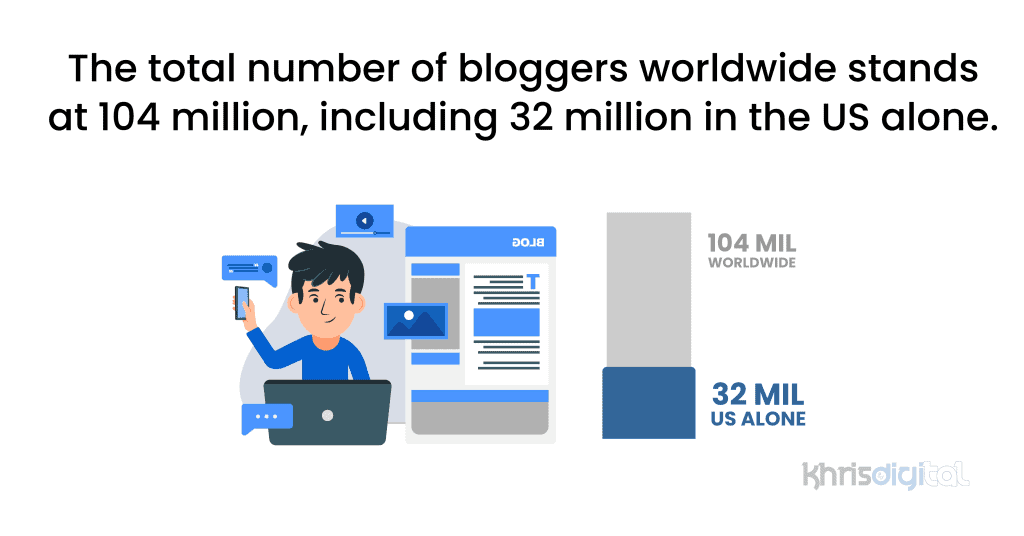
What this statistic highlights is how accessible blogging has become. You don’t need a fancy degree or a giant media team, just a keyboard, an idea, and the guts to hit publish. But it also means standing out is way more complicated than it used to be.
So, what do successful bloggers do differently?
They show up consistently. They build trust. And they focus on what their readers care about, not just what the algorithm wants. If you’re considering starting a blog, let this motivate you to improve.
4. 83% of internet users claim to read blogs at least once a month.
(HubSpot)
Whether they realize it or not, people are constantly landing on blogs when they Google how to fix a leaky faucet, look for travel tips, or search for product reviews.
Blogs are the quiet workhorses of the internet. They’re where trust is built, where stories live, and where real answers are found.
So, if you’re wondering whether it’s worth it to keep writing, this stat is your green light. Readers are still here and hungry for helpful, honest, human content. And if you give them that? They’ll come back for more.
5. On average, it takes 3 hours 51 minutes to write a blog post.
(Orbit Media)

Good writing isn’t just about typing; it’s brainstorming, researching, editing, and second-guessing your title 17 times before you hit publish.
This stat speaks volumes about what blogging is: work. It’s not some throwaway thing you do between coffee breaks. It takes real thought and effort to create something worth reading. And yet, most readers will skim your masterpiece in under two minutes.
But those nearly 4 hours? They’re not wasted. Every post you write builds your voice, grows your traffic, strengthens your SEO, and earns your readers’ trust. You’re planting seeds. And with time, those posts start doing the heavy lifting for you.
6. The average reader spends 52 seconds reading a blog post.
(OptinMonster)
Less than a minute. That’s how long the average person sticks around on your blog. So, while you’re pouring nearly four hours into crafting something amazing, most readers are speed-skimming like they’re late for a meeting.
But don’t let that discourage you, let it challenge you.
It means your headline needs to slap. Your intro has to grab attention. And your formatting? Make it easy on the eyes with short paragraphs, bold ideas, and scroll-stopping subheads. You’re not just writing for readers, you’re fighting for their time.
7. There are over 600 million blogs in the world.
(Wix)

That’s more than double the population of the U.S. in blogs. Which means there’s a blog for everything and everyone. Whether it’s minimalist parenting, mushroom foraging, or conspiracy theories about your favorite cereal mascots… someone’s blogging about it.
The bright side? Even in a sea of 600 million, people still carve out niches. Your perspective, your story and your tone is your edge. No one else can blog exactly like you.
8. Marketers who prioritize blogging are 13x more likely to have a positive ROI on their efforts.
(OptinMonster)
That stat makes you want to drop everything and write a blog post right now. And it all comes back to one simple truth that blogging builds trust and authority over time. It’s not a quick win, but it’s a lasting one.
Marketers who win with blogging usually have one thing in common: consistency. They treat their blog like an asset, not an afterthought. They publish regularly, optimize for search, and serve their audience, not the algorithm.
9. The typical length of a blog post is 1427 words.
(Orbit Media)
That sweet spot hits the balance between being deep enough to deliver value and short enough to keep readers from bouncing. Longer posts tend to perform better in search, too. Google loves content that fully answers a question and not just dances around it.
More words don’t automatically mean more value. Readers aren’t looking for fluff, they want clarity, insight, and entertainment.
So, if you’re aiming for that word count, make every sentence earn its place. Be helpful. Be human. And don’t be afraid to cut the fat. Also, don’t stress if your post falls short — say what needs saying, then stop.
10. 61% of bloggers typically publish content between 500 and 1500 words long.
(Orbit Media)

Why? Because it’s manageable. It hits that sweet spot where you can go deeper than a tweet but not so deep you drown your reader in details.
For many, this range is the happy medium. It’s enough space to be helpful and thorough without requiring a whole afternoon and three pots of coffee to write. It’s also perfect for busy readers who want quick, skimmable value.
The key? It’s not about hitting an exact word count. It’s about making every word count. If you can deliver real insight in 800 words, do it. If the topic needs 1,400, go for it. Length is a tool, not the goal.
11. Only 14% of blogs typically publish 2000+ word posts.
(Orbit Media)
Think about it: if everyone’s writing 800-word blurbs, and you come in with a 2,300-word powerhouse that answers every reader’s question? You instantly become more useful, trustworthy, and likely to rank in search results.
Long-form blogging is about depth. You get more space to explain, teach, tell stories, and build a real connection with your audience. But yeah, it’s more work. And that’s why fewer people do it.
12. 76% of B2C marketers claim to have used blogs to distribute content in the past 12 months, making it the 2nd most popular distribution channel behind organic social media.
(Content Marketing Institute)

Blogs aren’t just for hobbyists anymore, they’re a core marketing channel.
Why? Because blogs offer something social media can’t: depth. While social platforms are great for quick hits and engagement, blogs are where you tell the whole story, drive search traffic, and guide people through your funnel.
Think of social as the handshake and your blog is the conversation that follows. So, if you’re marketing to consumers and not using your blog? You’re missing out on one of the most trusted, flexible, and SEO-friendly ways to connect with your audience.
13. 79% of B2B marketers use blogs to distribute content.
(Content Marketing Institute)
If you thought blogs were just for lifestyle brands and influencers, think again. In the B2B world where trust, authority, and in-depth knowledge matter, 79% of marketers still rely on blogs to get their message out.
Because decision-makers aren’t just scrolling Instagram for solutions. They’re Googling complex questions. They’re looking for content that educates, builds credibility, and helps them solve actual business problems. That’s where blogs shine.
Blogs give B2B brands a platform to flex expertise, share thought leadership, and rank for high-intent keywords all while building a relationship with their audience. Plus, blog content can be repurposed into whitepapers, newsletters, LinkedIn posts, you name it.
14. Social media (92%), email marketing (67%) and SEO (66%) are the most popular channels to promote blog content.
(Orbit Media)
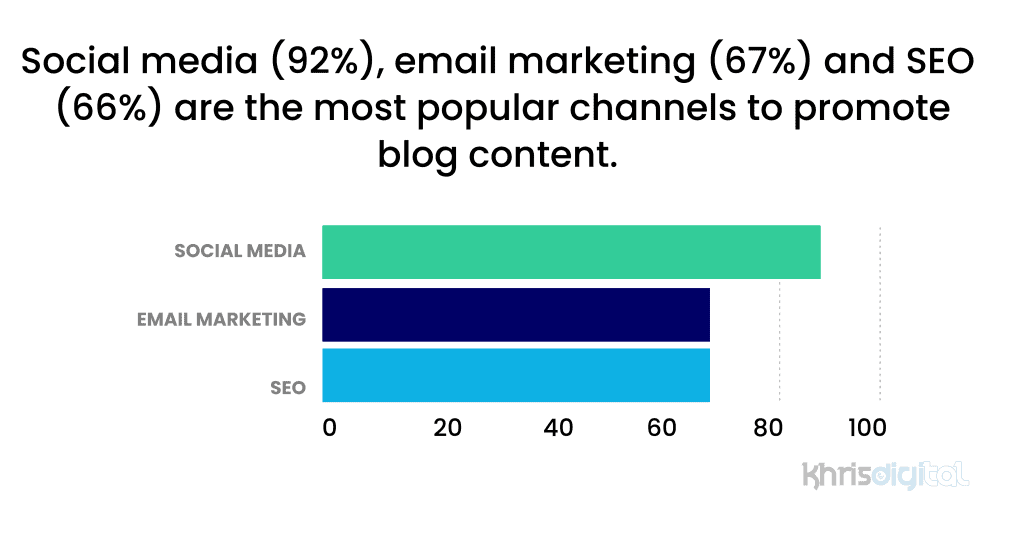
Social media instantly boosts your blog with quick shares, eyeballs, and engagement. Email? That’s your direct line to people who want to hear from you. And SEO? That’s your long game for bringing in traffic while you sleep.
Most successful bloggers aren’t picking just one. They blend all three, stacking traffic streams, and staying visible across platforms. So don’t just hit publish and hope for the best, have a promotion plan. That’s how your content gets traction.
15. 44% of surveyed tech marketers say blog as a distribution channel produces the best results for their organization, more than email or organic social media platforms.
(Content Marketing Institute)
When nearly half of tech marketers say blogs outperform email and social media, blogging is a results machine. Tech audiences are picky. They want depth, accuracy, and answers, not fluff. And blogs deliver that in spades.
Unlike social media posts that vanish in hours or emails that go unopened, a well-optimized blog post keeps working, ranking in search, attracting leads, and building authority long-term.
So, if the most analytical, ROI-focused marketers are betting on blogs? That says everything. For tech brands especially, a blog is an asset. It educates potential customers, addresses objections, and becomes part of the sales funnel.
16. 70% of marketers say blog posts are the most effective content type when used for demand generation in the early stage (awareness), more than any other content type.
(Content Marketing Institute)

At the top of the funnel, people aren’t ready to buy. They’re still figuring out their problem, Googling questions, and comparing ideas. And blog posts meet them exactly there.
A solid blog post can educate, plant a seed, and subtly guide someone deeper into your world while building trust. That’s powerful. And it’s precisely why brands that win at content marketing rarely skip the blog. They know that this is where relationships begin.
17. According to 31% of marketers and business owners, short-form articles as a content format tend to perform the best.
(SEMrush)

People are busy. Attention spans are shorter than ever. And in many cases, readers want a fast answer, not a deep dive. A brief article delivers value without fluff and that speed can win loyalty.
This stat is also a reminder that “best” doesn’t always mean “longest.” It’s about what your audience needs. Sometimes, that’s a detailed guide. Sometimes, it’s a 400-word hit of insight.
The takeaway? Test and mix it up. Short posts can punch way above their weight mainly when focused, practical, and written.
18. Another 24% of respondents say long-form blog posts are the most effective when it comes to content production
(SEMrush)
So, while short-form gets a lot of love, 24% of marketers still swear by long-form blog posts. Because when done right, longer content dominates.
Long-form posts give you room to dive deep, answer every possible question, and become the go-to resource on a topic. They build authority, keep readers on your site longer, and perform better in search.
Google eats them up, primarily when they’re structured well and genuinely helpful. And here’s the magic: one in-depth blog post can fuel a whole content strategy. You can slice it into social posts, repurpose it into videos, and turn it into a lead magnet.
19. Users create around 70 million posts on WordPress.com alone.
(WordPress)
Everyone from solo creators to Fortune 500s are showing up, hitting “publish,” and fighting for attention.
But most of those 70 million are forgettable, rushed and generic. This means the opportunity is still wide open if you’re willing to put in the effort, be real, and bring actual value.
Blogging isn’t oversaturated but bad blogging is. So take this stat not as a warning but as motivation to rise above the noise.
20. Tumblr hosts more than 600 million blogs.
(Tumblr)
Wait, Tumblr?
Yes, still very much alive and massive. With over 600 million blogs, Tumblr quietly hosts more digital diaries, fan pages, micro-blogs, and niche obsessions than any other platform on Earth.
It’s easy to forget, but Tumblr has a unique vibe. It’s about culture, community, and expression. People blog there for different reasons — to share art, join fandoms, vent, or exist online in a more raw, unfiltered way.
21. More than 409 million people view over 20 billion pages each month on WordPress.com.
(DiviFlash)
That’s almost like saying the entire U.S. population casually scrolls blog posts, multiple times, every month.
This stat is blogging’s mic drop moment. It shows that, despite the rise of video and social media, blogs remain part of people’s daily lives. Whether researching a product, learning a skill, or just killing time, they’re landing on blogs. Constantly.
And with numbers this big, there’s room for everyone. You don’t need millions of readers to make blogging worth it. You need your audience to show up consistently, find what they need, and return for more.
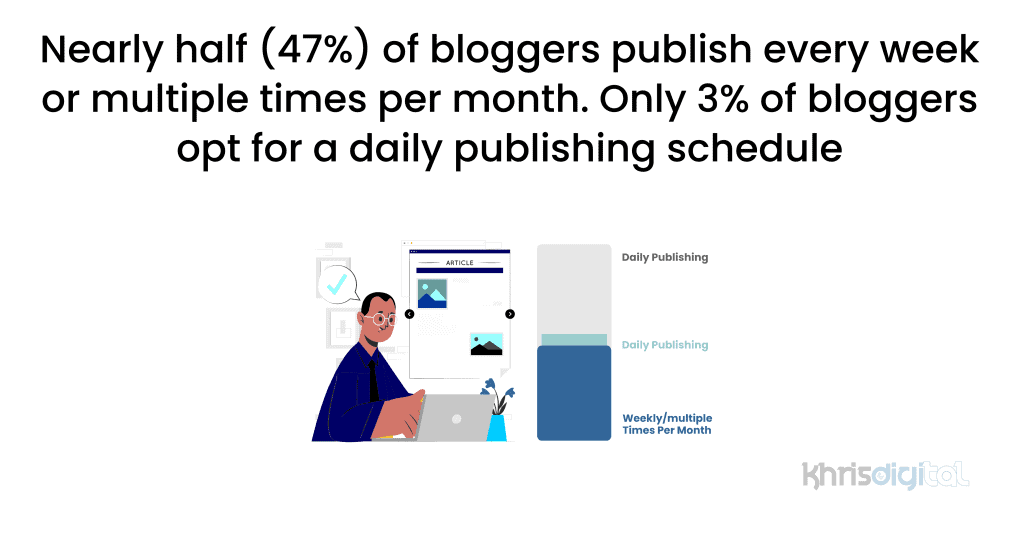
22. Nearly half (47%) of bloggers publish every week or multiple times per month.
(Orbit Media)
Consistency builds momentum, keeps your audience engaged, helps you rank in search, and trains the algorithm (and your readers) to expect fresh content from you. And when you publish often, you also sharpen your skills faster.
Blogging regularly is hard. Life gets busy. Creativity burns out. Still, nearly half of bloggers are making it work by planning, repurposing content, or sticking to a schedule they can manage.
The key takeaway? You don’t have to post daily, but you do have to be consistent. Blogging is a long game; regular publishing is how you stay in it.
23. Only 3% of bloggers opt for a daily publishing schedule.
(Orbit Media)
Daily blogging sounds intense, because it is. Only 3% of bloggers pull it off, and honestly? That makes sense. Writing, editing, formatting, and promoting a post daily is a full-on job. It’s not for the faint of heart.
But you don’t have to post daily to be successful. Most top-performing blogs focus on quality over quantity. They publish consistently, even once a week or twice a month, and make every post count.
This stat is your permission slip to let go of the pressure to blog every day. Focus on delivering value with each post, and keep your schedule realistic. Burnout helps no one but consistency, even at a slower pace, builds serious traction over time.
24. How-to articles (76%) and lists (55%) rank as the most popular blogging formats.
(Orbit Media)

How-to posts are gold because they solve problems. Whether “how to change a flat tire” or “how to launch a side hustle,” this format is practical, scannable, and shareable.
Lists, on the other hand, are irresistible because they feel quick and digestible. “Top 10 reasons,” “5 simple steps,” “81 blogging stats”.
Hey, just like this one!
If you’re blogging and not using these formats, you’re missing low-hanging fruit. These structures make content easier to write, easier to read, and easier to rank. Win-win-win.
So, the next time you’re stuck, start with a list or a how-to.
25. 82% of bloggers report at least “some results” from their blogs. 26% of respondents claim blogs deliver “strong marketing results.
(Orbit Media)
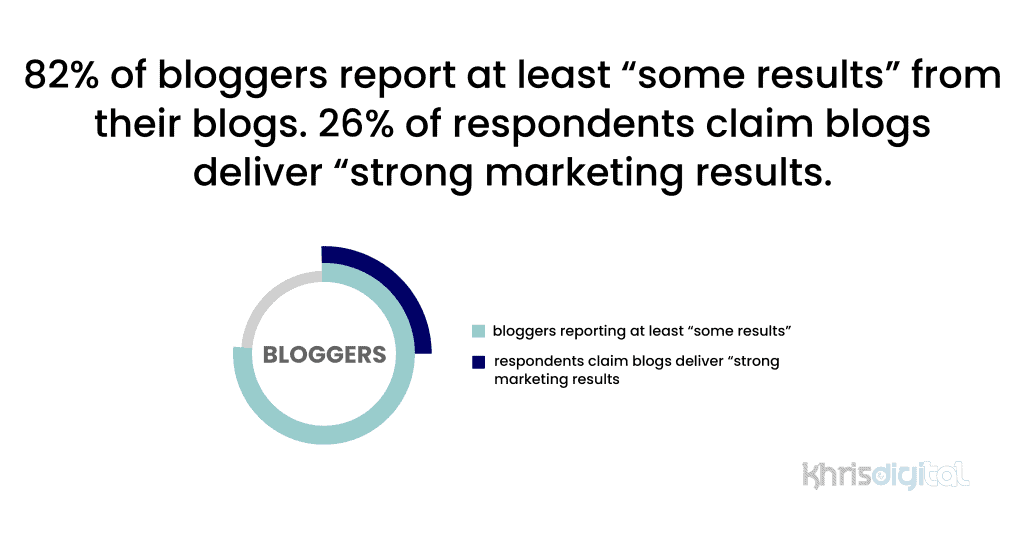
What kind of results are we talking about? Think traffic, leads, email signups, backlinks, and social shares — the building blocks of online growth. And the “strong” results crowd? They publish consistently, optimize for SEO, and focus on solving real problems.
So, if your blog’s not blowing up yet, don’t panic. Most people are in the “slow and steady” lane, watching their results compound over time.
26. Blog posts that featured 7 or more images received 55% more backlinks than those without any visual content.
(SEMrush)
Want more backlinks? Use more pictures. Images break up text, make posts easier to scan, and help illustrate complex ideas.
But it’s not just about pretty pictures, it’s about enhancing understanding and engagement. Charts, screenshots, infographics, and step-by-step visuals keep readers around longer and make your content more “link-worthy.”
When someone is writing their post and needs a source to reference, they’ll link to content that’s clear, well-structured, and visually supported. It feels more trustworthy and complete.
27. 50% of bloggers claim to include statistics in their typical blog posts. Other common elements include contributor quotes (36%), video (24%).
(Orbit Media)

Half of all bloggers use statistics in their content and with good reason. Numbers build trust. They back up your claims, show real-world relevance, and give readers that “oh wow” moment. It’s proof, not just opinion.
But that’s not all. 36% of bloggers add contributor quotes, bringing expert voices and fresh perspectives. It’s a subtle way to boost authority and build relationships especially when those contributors share the post.
24% are embedding video which is another smart move. Videos add energy, improve page time, and give your audience more ways to engage.
28. Bloggers who add video or audio report more commonly “strong results” with their blog performance – 34% and 38%, respectively vs. an average of 26%.
(Orbit Media)
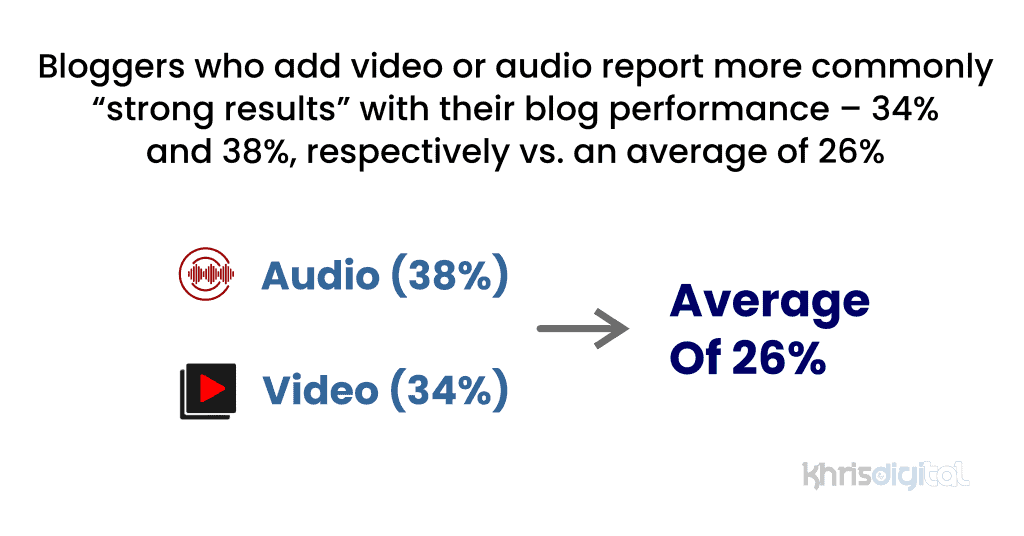
Video brings your content to life. It builds connections faster, keeps visitors around longer, and boosts engagement like crazy. Audio, like podcast clips, voice notes, and embedded interviews, adds depth and makes your post accessible to people who’d rather listen than scroll.
The internet’s noisy. Multimedia gives your blog an edge.
29. More than 9 in 10 (92%) bloggers say they add images to their blog posts.
(Orbit Media)
Images break up text, draw the eye, explain complex ideas, and make your content more shareable and readable.
Would you rather scroll through a wall of plain text or a beautifully formatted post with charts, screenshots, and custom graphics? Readers vote with their attention, and images win every time.
Plus, visuals boost SEO (yep, Google loves image-rich content), making your posts more link-worthy, especially if you create unique, branded images.
30. Nearly half (47%) of bloggers claim to have published original research in the past 12 months.
(Orbit Media)
Want to stand out in a crowded blogging world instantly? Do your research. Why does that matter? Because original research is content gold. It gives you something no one else has — exclusive insights.
It positions you as an authority.
It also attracts backlinks like a magnet because other bloggers and journalists love citing fresh data. Even small-scale research counts. A simple poll, a niche survey, or internal data analysis can become a shared, linked, and bookmarked post.
31. 74% of bloggers report updating their old blog content.
(Orbit Media)
Why? Because Google loves freshness. An older post with updated stats, clearer writing, and new links can increase rankings. Plus, it’s way easier (and faster) than creating something new from scratch.
Updating posts can mean fixing broken links, swapping in newer data, optimizing for keywords, or tightening the writing so it reads, better. And guess what? Readers appreciate it, too. Outdated info kills trust and fresh updates build it.
32. 65% of content marketers say they have a documented content strategy.
(Content Marketing Institute)
Do you know what separates the bloggers who post and hope from the ones who see results? Strategy. And 65% of content marketers say they’ve got a documented one. Not in their head. It’s not scribbled on a napkin but written down.
That matters more than you think. Having a strategy helps you stay consistent, create with purpose, and measure what’s working. It’s how you move from “I should post something this week” to “This post supports our Q2 goals and targets this keyword.”
A documented strategy also keeps your team aligned, your voice consistent, and your efforts trackable.
33. 71% of B2B buyers consume blog content during their buyer journey.
(OptinMonster)
In B2B, trust is everything. Buyers aren’t swiping credit cards on a whim. They’re comparing options, vetting vendors, and looking for expertise.
Blogs let you show up at that moment with helpful answers, industry insight, and proof that you get it. It’s your chance to educate before the sales call even happens. And the companies that win? They’re the ones already meeting their buyers in the search bar.
34. A blog increases your chances of ranking higher in search by 434%.
(OptinMonster)
Why? Because Google loves fresh, relevant, keyword-rich content. And blogs are the easiest, most natural way to give it that, regularly. Every post is a new opportunity to rank, answer a question, attract backlinks, and build topical authority.
Plus, blogs keep people on your site longer, which signals value to search engines. They give you internal linking power. They help you rank for long-tail keywords.
35. 61% of Americans spend 3X more time-consuming blog content than emails.
(Up Inc)
Blogs give readers more control. No spam filters. No cluttered inbox. Just search, click, and choose what to read. And when they land on a blog that delivers with depth, personality, and absolute value, they stay. Way longer than they do in an email.
36. Blog posts with 6-13 word long headlines tend to drive more traffic.
(Express Writers)
They’re long enough to be clear but short enough to stay snappy. They give readers just enough to understand what they’re clicking, and that’s the key to winning clicks in a crowded feed or search results page.
Imagine this: you’re scrolling fast. What grabs your eye? Something like, “How to Start a Blog That Gets Traffic” (9 words)? Or “10 Signs You’re Doing Content Marketing Right” (8 words)? Clean, punchy, clickable.
This stat is your cheat code. Spend time on your headlines. A killer title can be the difference between 10 views and 10,000.
37. Odd-numbered headlines perform better than their even-numbered counterparts.
(Content Marketing Institute)
Psychologically, odd numbers feel more natural and specific. “10 ways” sounds a little too perfect. But “9 ways”? That feels real like you stopped when you ran out of good ideas. And that subtle authenticity draws people in.
If you’re writing listicles (and should be), leaning into odd numbers can give you a slight but meaningful edge in clicks and shares.
So, next time you draft a headline, resist the urge to round up or down. Embrace the odd. It might just make your content a little more memorable, and a lot more clickable.
38. 34% of bloggers say that updating content produces strong results.
(OptinMonster)
When you update an old post, you’re building on something that already has traction, maybe ranking, getting clicks, or having backlinks.
Instead of starting from scratch, you’re giving it a boost by swapping outdated stats, improving SEO, tightening your writing, and maybe adding a new image or section.
Google loves updated content, and so do readers. A post that says, “Updated April 2025” instantly feels more trustworthy than one from 2018.
39. Around 5% of bloggers don’t have access to analytics.
(Wix)
It might seem like a small percentage, but it’s a big missed opportunity. Without analytics, you can’t tell which posts bring traffic, what keywords rank, how long people stay, or where they bounce off. It’s like guessing in the dark.
The good news? Free tools like Google Analytics or Search Console can tell you everything you need to know from traffic trends to reader behavior. Once you see the data, you can double down on what’s working and ditch what’s not.
40. SEO leads have a 14.6% close rate, while outbound leads (such as direct mail or print advertising) have a 1.7% close rate.
(Digital Marketing Institute)
If you need one reason to take SEO (and blogging) seriously, this is it. SEO leads (people who find you through search) close at an average rate of 14.6%. Compare that to old-school outbound methods like direct mail or print ads, which limp in at just 1.7%.
Why the massive difference? Because search traffic is intent-driven. People who land on your blog through Google actively seek what you offer. They’re curious. Ready to learn. Maybe even ready to buy.
Outbound? It’s an interruption and that rarely converts.
41. Businesses that blog experience twice as much email traffic as businesses who don’t.
(OptinMonster)
Blogging boosts your email list, big time. That’s not just more clicks. That’s more subscribers. More leads. More opportunities to nurture and convert.
Your blog is where trust begins. Someone finds your post, gets value, and boom, they’re way more likely to sign up for your newsletter or grab that lead magnet you tucked in at the end.
42. Approximately four-fifths (80%) of blogs are likely to fail within the first 18 months, yet three-quarters (75%) of bloggers feel they are successful in what they do.
(Wix)
Blogging is a strange, beautiful paradox. 80% of blogs crash and burn within the first 18 months, yet 75% of bloggers still say they feel successful in what they do. What gives?
Simple: success isn’t always about traffic numbers or going viral. Most bloggers think it’s about growth, learning, connecting, and creating something they’re proud of. And that mindset? It’s everything.
Yes, blogging is hard. It takes time, patience, and stubborn consistency.
Many people quit before they ever hit their stride. But those who stick with it, those who define success beyond “how fast can I get famous?”, are the ones who make it.
43. More than a quarter (26%) of bloggers who spend more than six hours creating their posts reported strong results once the content was live. This fell to around a sixth (16%) for those who spent one to two hours per article.
(Orbit Media)
Why? Because deeper posts are usually better posts. More time means more research, sharper writing, better SEO, stronger visuals, basically, the whole package that makes a blog post helpful and rankable.
Quick posts can still work if you’re a pro at short-form magic, but generally? Rushing leads to surface-level content that gets lost in the noise. Readers can tell when you’ve poured real energy into something, and so can Google.
44. 20% of bloggers who took less than an hour per post still recorded decent results as a consequence.
(Orbit Media)
How? They likely had a system. It could be repurposed content, templated formats, or laser-focused how-tos. Or they knew their audience so well they could write what worked without overthinking.
The key here is clarity. Can you write something helpful, well-structured, and targeted in 45 minutes? That’s a win. Every post doesn’t have to be a novel. Some of the best-performing blogs thrive on short, snappy, high-frequency content.
45. Almost two-fifths (37%) of blogs with ‘strong results’ contained between 2,000 and 3,000 words. This was contrasted by just 10% for those containing less than 500 words.
(Wix)
Longer posts give you the space to fully answer questions, build authority, and rank for more keywords. They also keep readers on your page longer, signaling to Google that your content is valuable.
Meanwhile, super short posts often struggle because they don’t give enough value. Readers click in, realize it’s thin, and bounce. And if your audience bounces, so will your rankings.
This stat is a reminder that depth matters. If you want your posts to work harder for you in traffic, engagement, or sales, don’t be afraid to write the ultimate guide.
46. Having a hyphen or colon in the headline increased click-through rates by 9%.
(OptinMonster)
Why does it work? These little symbols help break your title into two digestible parts, usually a hook followed by context or benefit. It’s like telling readers, “Here’s what this is about and why it matters.”
Think:
- “Productivity Hacks: 7 Ways to Win Your Morning”
- “The Secret to SEO Success – It’s Not What You Think”
It gives the eye a break and the brain a reason to click.
47. Making your headline 6-8 words can increase your CTR by 21%.
(Logic Digital)
Why does this range work so well? It’s short enough to be clear and punchy but long enough to give real context and value. It forces you to get to the point, which is precisely what scrolling readers seek.
Too short, and you’re vague. Too long, and you lose attention. But 6–8 words? That’s just enough space to promise something specific and clickable.
So, the next time you write a blog title, count those words. Tighten the fluff. Sharpen the hook. And remember, your headline is your first impression, so make every word earn its place.
48. Blogs with fairly easy-to-read text tend to perform better than those that are less readable. In a sample of high-performing blogs, 33.45% were “easy to read” vs. 16.73% which were “difficult to read”.
(SEMrush)
People don’t come to blogs to be impressed by your vocabulary. They come to get value quickly and effortlessly. If they have to reread a sentence three times, they’re gone.
This stat reminds you to ditch the jargon, shorten your sentences, and write like you’re talking to a smart friend, not trying to win a Pulitzer. Use active voice. Break things up. Make your content feel like a conversation, not a lecture.
If your post reads like a textbook, it’s time to edit. Because the easier it is to read, the more likely people are to stick around, and share.
49. Blog posts that include at least one video generate 70% more organic traffic than those without.
(SEMrush)
Video makes your post stickier. It keeps readers on the page longer (which Google loves), explains things faster, and makes the whole experience feel more dynamic. Whether it’s a demo, tutorial, explainer, or even a quick talking-head clip. Video adds real, measurable value.
The best part? You don’t need a Hollywood setup. A decent phone and clear audio can go a long way. Just make sure the video complements the post and don’t toss it in just to tick a box.
50. Articles with images get 94% more views as opposed to those with no visuals.
(BlueTone Media)
Why? Because images grab attention, help explain complex points, and make scrolling feel less like a chore. Visuals keep people reading, whether it’s a chart, a screenshot, or a simple graphic. They break up the monotony and make your post look more professional and trustworthy.
And it’s also about user experience. The easier and more enjoyable your post is to consume, the more people will stick around, share it, and return for more.
51. 71% of bloggers report using visuals as part of their marketing strategy.
(OptinMonster)
Blogging isn’t just about writing anymore; it’s about creating an experience. It’s not just about slapping in a stock photo and calling it a day.
Smart bloggers design branded graphics, add charts, use infographics to explain concepts, and even embed short videos or GIFs. Visuals make your content easier to digest, memorable, and shareable.
Visuals also boost SEO, increase time on the page, and improve your chances of getting backlinks.
52. Using photos of real people instead of stock photos can result in a 35% conversion increase.
(Marketing Experiments)
Why? Because people trust people. A genuine photo feels personal, relatable, and human. Stock photos, the overly happy business handshake ones, feel staged and disconnected.
When readers see real faces behind a brand or blog, they’re likelier to stick around, believe the message, and take action. It’s a subtle but powerful trust signal that makes a huge difference.
This stat is your cue to ditch the cookie-cutter stock pics whenever you can. Use real team photos, client images (with permission), behind-the-scenes shots, anything that makes your blog feel more like you and less like everyone else.
53. 19% of bloggers are now including video in their typical posts.
(OptinMonster)
Video isn’t just for YouTubers and TikTok stars anymore, it’s creeping into blogs, too.
Video brings a whole new level of engagement. It lets you explain complex topics faster, connect with your audience more personally, and keep people on your page longer (which Google absolutely loves).
Plus, it gives your readers options as some prefer to watch instead of read. The best part? You don’t need a professional studio. Quick tutorials, mini-explainers, and even casual behind-the-scenes clips can add massive value without massive effort.
54. 45% of bloggers who add audio to their posts such as podcast see better results.
(OptinMonster)
Adding audio to your blog is effective.
And it makes total sense. Audio gives your audience another way to engage, especially the busy ones who’d rather listen while driving, cooking, or working out. It’s about meeting people where they are and making your content easier to consume.
Adding a podcast or even a short audio clip boosts time on the page (great for SEO) and deepens the personal connection between you and your readers. Hearing your voice builds trust in a way text alone sometimes can’t.
55. Over 50% of bloggers report that it has gotten harder to get traffic from Facebook over the past two years, and nearly one-fifth say it has gotten harder to get traffic from Google.
(OptinMonster)
Platforms are more crowded. Algorithms are tighter. Organic reach is shrinking, especially on social media. And SEO? It’s getting more competitive by the day.
But this isn’t a reason to quit. It’s a reason to get smarter. Bloggers who succeed today focus on building email lists, nurturing true fans, niching down, and creating beneficial content that earns trust (and backlinks) over time.
This stat reminds you not to put all your traffic eggs in one basket. The best strategy today is to play the long game, diversify your traffic sources, and own your audience.
56. Over the past year, there’s been a 93% increase in blogs using promotional techniques to drive traffic to their post including paid ads.
(OptinMonster)
Because competition is fierce. Even great posts can get buried without a little extra push. Smart bloggers are realizing that promotion is half the job. They’re investing in ads, building distribution systems, and ensuring their content reaches the people it was created for.
Creating amazing blog content is step one. But if you want serious traffic, you must also put muscle behind the distribution. Paid ads are amplifying your hard work.
57. 60% of blogs write 1-5 guest posts per month and 3% of blogs write over 100 guest posts per month.
(OptinMonster)
Guest blogging works because it’s a triple win: you get exposure, credibility, and SEO juice. It puts you before new readers, earns valuable backlinks that boost your search rankings and builds relationships with other creators and brands.
A brilliant guest post strategy can open doors faster than anything else in content marketing.
58. Only 6% of bloggers publish the majority of their original content as guest posts.
(IsItWP)
Guest posting is powerful, but it’s not the main stage for most bloggers. While guest posts help you grow your audience and build authority, your blog is where you own the relationship. It’s your platform. Your voice. Your brand.
Guest posting should support your strategy, not replace it. Think of it like sending postcards from cool places you’ve visited… but your blog? That’s your house. That’s where you invite people to stay longer, explore deeper, and truly connect.
59. 62.96% of readers perceive blogs with multiple authors to be more credible.
(OptinMonster)
This doesn’t mean solo bloggers can’t build credibility, you absolutely can. But bringing in guest contributors, collaborating with other experts, or even showcasing a few different team members can give your blog that extra layer of trust.
Bottom line is that credibility matters. And if you’re looking for ways to boost your blog’s trustworthiness, adding a few more author voices to the mix could be a game-changer.
60. 79% of editors say guest content is too promotional.
(OptinMonster)
Editors aren’t impressed when you send guest posts that read like sales pitches. What is the most prominent mistake guest bloggers make? Writing articles that are thinly veiled ads for their product, service, or personal brand.
But great guest posts put the audience first, they educate, inspire, and entertain. They help without immediately trying to sell.
Editors want content that fits their voice, serves their readers, and feels natural, not another commercial squeezed into their blog.
61. Guest content is in higher demand in the summer months of June, July, and August.
(OptinMonster)
Summer is when a lot of regular contributors take time off. People go on vacations, teams shrink temporarily, and the publishing calendar still needs to keep rolling. That’s when fresh, high-quality guest posts become a lifeline.
This is your chance to swoop in and fill that gap. Smart bloggers time their pitches to hit when editors actively seek help, not when inboxes are overflowing in the busier fall and winter seasons.
62. According to 45% of surveyed marketers and business owners, “researching and adding relevant keywords in addition to the primary keywords” helps improve their blog rankings.
(SEMrush)
Why does it work? Because search engines aren’t just looking for exact matches anymore. They’re scanning your post for a complete picture with related terms, synonyms, and phrases proving your understanding.
It’s called semantic SEO, and it’s how you show Google (and readers) that your content is deep and authoritative.
So, instead of just repeating “content marketing” a million times, sprinkle in terms like “content strategy,” “blog promotion,” “lead generation through content,” and more.
63. 45% of marketers and business owners claim that “analyzing and addressing customer questions in blog posts” boosts their rankings.
(SEMrush)
Do you want to know a simple trick that savvy marketers and business owners use to climb the search rankings? Answer your customers’ questions. Directly. Clearly. Right inside your blog posts.
People aren’t just searching random keywords, they’re typing questions into Google. “How do I start a blog?” “What’s the best time to post on Instagram?” “Why does my sourdough starter smell weird?” (Hey, we’ve all been there.)
When your blog post answers real, specific questions, two extraordinary things happen:
- Readers stay longer because you’re helping them.
- Google notices because you’re providing helpful, detailed content it loves to serve up.
64. 61% of the most effective B2B content marketers meet with their content team daily or weekly.
(Content Marketing Institute)
Regular meetings keep everyone aligned, spark new ideas, and help spot problems early before they turn into traffic-killing mistakes.
It’s about staying in sync. If you’re working with a team (or even just collaborating with a VA or freelance writer), regular check-ins can seriously improve your results.
65. 64% of B2B marketers outsource blog copywriting.
(OptinMonster)
Consistent, high-quality blogging takes time, skill, and serious bandwidth, and most internal teams are already juggling a thousand other things. Outsourcing lets them scale content production without sacrificing quality (or burning out their team).
Plus, pro writers bring an outside perspective, fresh ideas, and SEO expertise that can sharpen a brand’s message and make blog posts work harder.
If you want to blog consistently but feel overwhelmed, outsourcing is smart. It frees you up to focus on strategy, promotion, and growth while the writing gets handled by someone who lives and breathes words.
66. 60% of marketers have a documented personalization strategy.
It’s about creating blog posts, emails, and landing pages that feel like they were written specifically for the person reading them. This could involve using their name, tailoring content to their behavior, or suggesting the perfect next step based on what they’ve already shown interest in.
Personalization turns “just another blog post” into “this was made for me.” And when readers feel understood, they stick around longer, trust you more, and buy faster.
67. 57% of marketers say they’ve gained customers specifically through blogging.
(OptinMonster)
Blogging is about building brand awareness, ranking in Google, and winning real customers.
Agood blog post is a silent salesperson. It nurtures leads, builds trust, answers objections, and guides readers toward a “yes”, all without a single cold call.
Whether it’s a helpful how-to, an in-depth guide, or a customer story, blog posts create a warm, organic pathway to conversion. Readers find you, like what you say, trust your expertise and eventually, they buy.
68. 53% of marketers say blogging is their top content marketing priority.
(Cision)
Blogs are the foundation of long-term content success. They drive organic traffic, build authority, support SEO, feed email lists, and give you endless material to repurpose across social media, podcasts, and beyond.
A strong blog makes everything else you do easier and more effective. This stat is a reminder that while TikTok trends come and go, your blog is an owned asset that works for you day after day.
69. B2B marketers who have blogs get 67% more leads than those who don’t.
(HubSpot)
If you’re in B2B and you’re not blogging? You’re leaving leads on the table because blogs build trust before the pitch.
They educate prospects, answer objections, showcase expertise, and nurture relationships before a sales call ever happens. Instead of chasing cold leads, you’re warming them up with value.
70. Around 60% of marketers will reuse blog content 2-3 times.
(OptinMonster)
Creating content once and using it twice (or three times)? Smart. Why? Because good content deserves a second (and third) life.
A blog post can easily turn into a LinkedIn article, a Twitter thread, a YouTube script, an infographic, or an email series. It’s meeting your audience where they are without constantly reinventing the wheel.
71. 60% of B2B marketers struggle with creating engaging content.
And honestly? It makes sense. Writing about cybersecurity protocols, supply chain logistics, or enterprise software isn’t exactly easy to make fun.
But engagement matters. Big time. Because if your audience isn’t leaning in, clicking, commenting, or sharing, then your blog post might as well be invisible.
The trick is to focus on storytelling, real-world examples, clear benefits, and human language. Even the driest topics can come to life if you anchor them in relatable problems and everyday language.
72. 65% of bloggers use AI at least sometimes.
(Orbit Media)
Whether generating ideas, writing first drafts, fine-tuning headlines, or speeding up research, AI is quickly becoming a blogging sidekick.
But the best bloggers use AI as a tool, not a crutch. They still bring their voice, personal stories, and expertise, because that truly connects with readers.
73. AI is used by 43% of bloggers to generate ideas. Other common AI use cases among bloggers include writing headlines (29%), outlines (28%).
(Orbit Media)
It makes sense. Coming up with fresh, engaging topics (week after week) is one of the most complex parts of blogging. AI brainstorming tools can break through writer’s block, surface trending angles, and spark ideas you might not have found on your own.
Same with headlines and outlines, AI can help structure your thoughts, suggest sharper hooks, and give you a running start without staring at a blinking cursor for hours.
74. Food blogs earn the highest median monthly income among major niches.
(Crazy Egg)
Of all the blogs, those in the food niche earned a monthly median income of $9,169. Why? Food is evergreen. People always look for new recipes, meal prep ideas, restaurant reviews, and kitchen hacks.
Food blogging offers endless monetization opportunities from affiliate links (think cookware and ingredients) to brand sponsorships, ad revenue, ebooks, and even online cooking courses.
And let’s not forget, food content is highly shareable. Beautiful images, drool-worthy videos, and easy-to-follow recipes naturally go viral on Pinterest, Instagram, and YouTube, giving food bloggers multiple ways to grow.
75. 59% of travel bloggers run more than one travel blog.
(OptinMonster)
Why multiple blogs? Because diversification equals smart business. Some bloggers create niche-specific sites (like budget travel, luxury resorts, or adventure tourism) to target different audiences.
Others start second (or third) blogs to capture new SEO opportunities, build multiple income streams, or test new ideas without risking their leading brand.
Once you master traffic, content creation, and monetization on one site, it’s often easier (and faster) to launch and grow another.
76. 33% of US travelers use travel blogs for travel advice.
(OptinMonster)
Why? Because travel blogs feel personal. They offer honest experiences, hidden gems, and practical tips that you can’t get from a five-star review or a corporate travel site.
Readers want the inside scoop on where to eat, what to avoid, and how to make the most of their trip, and bloggers deliver that authenticity.
77. The majority of travel blogs are between 1-4 years old.
(OptinMonster)
This is important because it shows that there’s still room for new voices. Travel blogging isn’t an old boys’ club, it’s constantly refreshing with new creators, fresh perspectives, and evolving trends.
The world and travel styles change and people are hungry for up-to-date, relatable advice. It also means many bloggers are still building momentum.
Many haven’t yet tapped into their full traffic or income potential, and that’s exciting if you’re just getting started, too. The travel blog space is alive, growing, and welcoming new storytellers every year.
78. Most travel blogs use publication and sponsored posts as one of the main income sources.
(OptinMonster)
Sponsored posts usually mean working with tourism boards, hotels, travel gear companies, airlines, you name it, to create authentic content highlighting the sponsor’s offerings. And if it’s done well? It feels like a natural part of the blog, not a hard sell.
Publications, such as freelance articles for magazines or travel sites, also generate income while building credibility and backlinks.
79. The average travel blogger will charge an average of $200 per sponsored post.
(OptinMonster)
Of course, rates vary based on audience size, niche, engagement, and the deliverables involved (like social shares, videos, or additional photos).
Bigger bloggers with stronger authority can charge way more, sometimes $500, $1,000, or even more for a single collaboration. But even smaller bloggers with a loyal niche following can command solid fees if they deliver quality content that brands love.
80. 94% of travel blogs sell advertising.
(OptinMonster)
Want to know one of the most common ways travel bloggers make money? Advertising. A whopping 94% of travel blogs sell ad space through ad networks like Mediavine or direct partnerships with brands.
And honestly, it makes sense. Ads offer consistent, mostly passive income once you hit a steady stream of traffic. Every time a reader lands on a blog post and scrolls past a few ads? That’s money in the bank.
The trick, of course, is balancing user experience. Smart bloggers ensure that their ads don’t overwhelm their content. They keep layouts clean and mobile-friendly and prioritize reader trust first.
81. Most travel blog’s traffic mainly stems from non-brand search with direct traffic a distant second.
Regarding travel blogs, non-brand search traffic ( meaning people finding your site through keywords, not by typing in your brand name) is the #1 traffic source. Direct traffic (people typing in your URL) comes in a distant second.
Because most travelers aren’t searching for your blog specifically, they’re googling “best cafes in Barcelona” or “how to pack for Iceland in winter.”
They’re looking for answers, not brands.
Final Thoughts on Blogging Statistics
Blogging isn’t easy. If it were, everyone who started a blog would still be publishing today, not just the persistent few.
The numbers we just walked through make one thing clear: success doesn’t come from luck. It comes from strategy, consistency, and a willingness to adapt.
Whether it’s writing longer posts, updating old content, using more visuals, or simply showing up week after week, the bloggers who thrive are the ones who keep learning, keep testing, and keep going.
After ten years in this game, blogging still works. Not because it’s trendy but because, when done right, it builds absolute trust, drives real traffic, and opens real doors.
So take these blogging statistics, let them guide you, and then get back to what matters most, creating content that actually helps people.
Because in the end? That’s what blogging has always been about.
Frequently Asked Questions on Blogging Statistics
Is blogging still worth it?
Absolutely. The stats show blogging is alive and thriving, especially for those focusing on quality, SEO, and building absolute audience trust. It’s harder now, sure, but the opportunity is bigger than ever for bloggers who commit.
How long does it take to see results from a blog?
Most bloggers don’t see significant traction overnight. Building real momentum usually takes 6–12 months (or more) of consistent publishing, smart promotion, and patience. Think of it like planting a garden — not flipping a switch.
How important is SEO for blogging success?
It’s massive. The majority of blog traffic comes from organic search. Optimizing your posts for keywords, answering fundamental questions, and updating content regularly can make or break your blog’s long-term growth.
Should I start a blog even if my niche is crowded?
Yes, but you need a unique angle. Crowded niches prove there’s demand. Stand out by bringing your voice, stories, experience, and deep understanding of your audience’s needs.
What’s the best way to make money blogging today?
The top income sources are still ad revenue, affiliate marketing, sponsored posts, selling services, and creating digital products. But the real key? Build an audience first. Once you have loyal readers, monetization becomes 10x easier.
Sources:
Check out my other Statistics round-up:
